5
Muscles
4
Joints
2
Organs
2
Mental
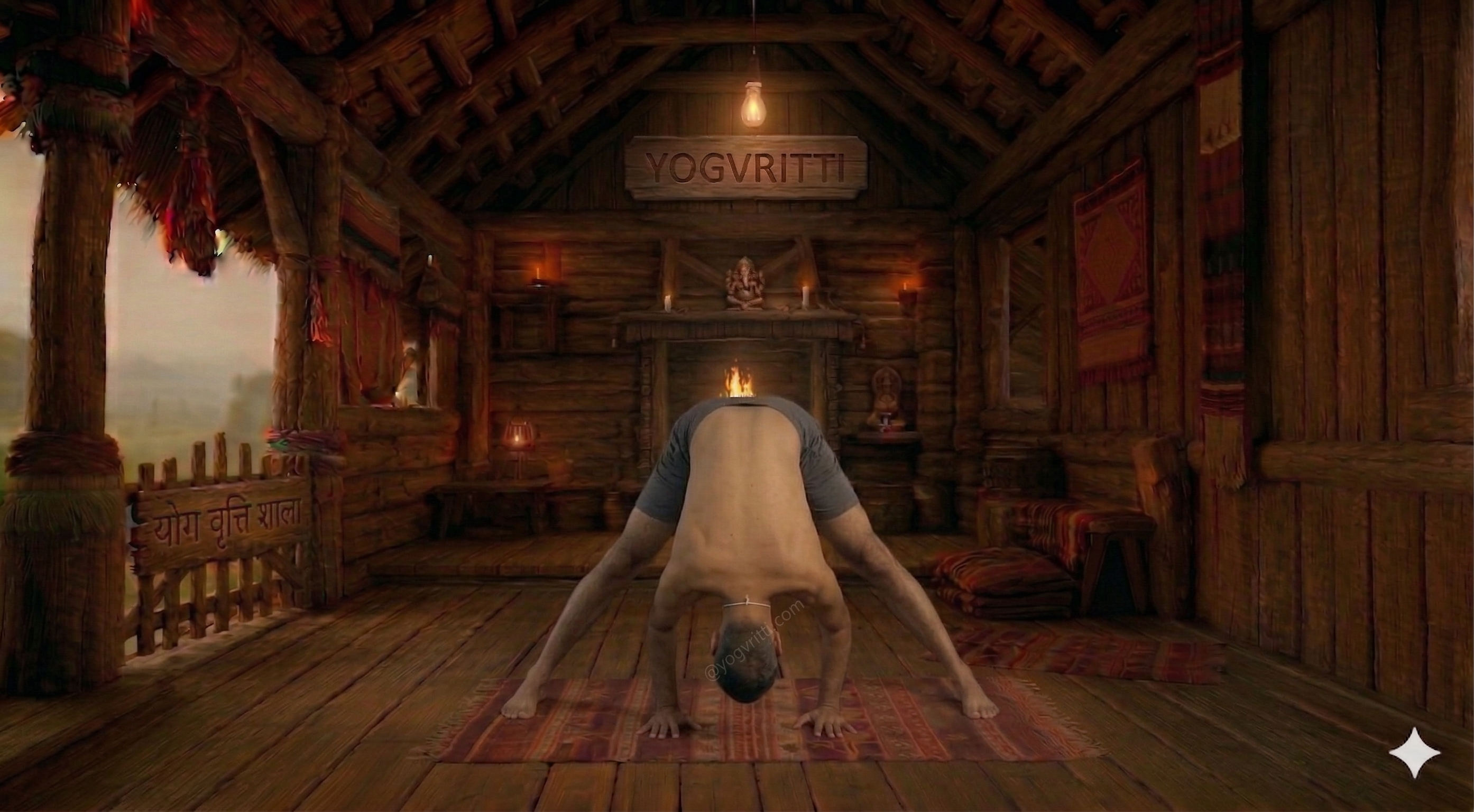
Prasarita Padottanasana I
प्रसारित पादोत्तानासन १
Prasarita Padottanasana I is a profound wide-legged forward bend that masterfully integrates stability with surrender, creating a deeply grounding and introspective experience. Physiologically, it offers a comprehensive lengthening of the entire posterior kinetic chain, from the calves and hamstrings to the spinal erectors, while simultaneously decompressing the spine. Energetically, this mild inversion calms the brain, reverses the flow of prana to soothe the nervous system, and encourages a release of stored tension in the hips and lower back. For both teachers and students, it's a foundational pose for cultivating flexibility, mental clarity, and a profound sense of inner quiet.
Wide-Legged Forward Bend I, also called Prasarita I is a classical yoga posture. Its Sanskrit name Prasarita Padottanasana I translates word-for-word as: Prasarita (Spread) · Pada (Feet) · Uttana (Intense Stretch) · Asana (Pose). From a standing position, the body roots firmly through the feet while the spine extends upward. The posture works to lengthen the hamstrings and stretch the calves. Calms the brain. Relieves mild depression. It is particularly valued for developing greater flexibility and improving overall posture. Suitable for beginners and regular practitioners alike, it is an excellent warm-up, particularly beneficial for beginners and desk workers. A block can be used to make the posture more accessible and support correct alignment. Practitioners with back pain and glaucoma should approach with care or consult a qualified teacher.
Helps with
Muscles Worked
Hamstrings
Biceps femoris, Semitendinosus, Semimembranosus
The powerful muscles running along the back of your thighs (hamstrings) receive a deep, sustained stretch in this posture, gently unwinding years of accumulated tension.
As the pelvis tilts forward from the hip joints, gravity assists in elongating these muscles, which are eccentrically loaded to control the descent of the torso.
This release in the posterior chain not only improves flexibility but also frees up the apana vayu, the downward-moving energy, fostering a profound sense of grounding and ease in the lower body.
Adductors
Adductor magnus, longus, brevis, Gracilis, Pectineus
The inner thigh muscles (adductors) are meticulously lengthened as the legs are spread wide and the pelvis folds forward.
This action gently stretches the connective tissue and muscle fibers that often hold tightness from prolonged sitting or athletic activity.
Anatomically, the origins on the pelvis are drawn away from their insertions on the femur, creating space in the inner groin and hips.
Yogically, this opening in the pelvic region can release emotional blockages, promoting a sense of liberation and energetic flow in the root and sacral chakras.
Spinal Erectors
Erector Spinae group (Iliocostalis, Longissimus, Spinalis)
The deep muscles that run parallel to your spine (spinal erectors) are elongated and released as the torso folds forward with a long, straight back.
Instead of collapsing, the intention is to maintain length through the spine, requiring these muscles to work eccentrically to prevent rounding.
This gentle traction creates vital space between the vertebrae, allowing for decompression of the intervertebral discs.
From a yogic perspective, this fosters an unobstructed flow of prana along the sushumna nadi, promoting mental clarity and reducing stiffness throughout the entire spinal column.
Calves
Gastrocnemius, Soleus
The large muscles at the back of your lower legs (gastrocnemius and soleus) receive a significant stretch, particularly as you press actively through the outer edges of your feet and lift the arches.
This gentle dorsiflexion of the ankle joint, combined with the grounding action of the feet, helps to release tightness in the posterior lower leg.
This foundational stretch improves ankle mobility and stability, which is crucial for balance, and energetically connects you more deeply to the earth, enhancing a sense of stability and rootedness.
Quadriceps
Rectus Femoris, Vastus Lateralis, Medialis, Intermedius
The front thigh muscles (quadriceps) are actively engaged in this pose, particularly to lift the kneecaps and firm the thighs.
This isometric contraction stabilizes the knee joint, preventing hyperextension and allowing for a safer, deeper stretch in the hamstrings.
This intelligent engagement creates a sense of strength and integrity in the legs, channeling energy upwards from the earth and providing a stable foundation from which the torso can release into the forward fold.
Joints Mobilized
Hip Joint
mobilizingThe ball-and-socket joints where your thigh bones meet your pelvis (hip joints) are the primary hinges for the deep flexion in Prasarita Padottanasana I.
As you fold forward, the femoral heads move deeply within the acetabulum, facilitating an anterior pelvic tilt and increasing the range of motion in hip flexion.
This mobilization not only improves flexibility in the entire hip girdle but also releases chronic tension often held in this area, which yogically correlates to stored emotional patterns and a sense of freedom in movement.
Sacroiliac (SI) Joint
stabilizingThe joints connecting your sacrum to your pelvis (sacroiliac joints) are subtly stabilized in this pose through the intelligent engagement of the legs and the careful articulation of the pelvis.
While allowing for the natural nutation of the sacrum during the forward tilt, the muscular actions around the hips ensure these joints remain supported and aligned.
This fosters a sense of integrated stability in the pelvic bowl, connecting to a foundational strength that supports the entire spine and allows for a deeper, safer exploration of the forward bend.
Spine (Vertebral Joints)
decompressingThe many small joints along your spine (vertebral joints) receive a gentle decompression and lengthening as you fold forward with a long, extended torso.
The natural pull of gravity, when combined with the intention to lengthen from the tailbone to the crown of the head, creates space between the vertebral bodies and discs.
This gentle traction can alleviate stiffness, improve spinal mobility, and yogically encourages an unobstructed flow of prana through the central energetic channel, fostering clarity and vitality.
Ankle Joint
mobilizingThe joints where your lower leg meets your foot (ankle joints) are subtly mobilized and stabilized in this pose as you press firmly through the feet.
The action of lifting the arches and pressing the outer edges of the feet helps to create a stable foundation while allowing for the necessary dorsiflexion that stretches the calves.
This engagement not only improves the flexibility and strength of the ankles but also deeply connects you to the earth, enhancing your sense of grounding and energetic stability throughout the entire posture.
Organ & System Benefits
Abdominal Organs (Digestive System)
As the torso folds deeply towards the legs, the abdominal organs receive a gentle, internal compression.
This mild pressure, followed by the release upon exiting the pose, acts like a gentle internal massage, stimulating peristalsis and enhancing circulation within the digestive tract.
This 'wringing out' action can help to alleviate stagnation, support healthy digestion, and is particularly beneficial for those experiencing mild digestive sluggishness or discomfort, contributing to the balance of samana vayu.
Brain
In Prasarita Padottanasana I, the head is positioned below the heart, creating a mild inversion that gently encourages blood flow to the brain.
This subtle increase in cerebral circulation has a profoundly calming effect on the nervous system, helping to quiet the incessant chatter of the mind.
This gentle inversion alleviates mental fatigue, sharpens focus, and offers a fresh perspective, making it a powerful antidote for anxiety and mild depression, inviting a state of inner tranquility.
Nervous System
As you fold forward and the head descends below the heart, the nervous system naturally shifts towards a parasympathetic dominance, initiating the 'rest and digest' response.
This deep forward bend gently calms the brain, reducing the constant input of external stimuli and allowing the mind to turn inward.
The sustained stretch in the posterior body, coupled with the rhythmic breathing, directly signals the nervous system to release tension, leading to a palpable sense of peace and reduced anxiety.
The introspective nature of the pose, combined with the mild inversion, helps to quiet the fluctuations of the mind (chitta vritti nirodhah).
This internal focus allows the practitioner to become more present and less reactive to external stressors.
The gentle pressure on the forehead, when the crown is on the floor or a block, can also stimulate the frontal lobe, further enhancing a meditative state and promoting mental clarity, offering a respite from an overstimulated mind.
Mental & Emotional
Prasarita Padottanasana I is a deeply introspective pose that encourages a turning inward (pratyahara), shifting awareness from the external world to the inner landscape.
The physical act of folding forward naturally quiets the mind, fostering a sense of humility and surrender.
This mental quietude creates fertile ground for self-reflection and allows for the release of mental and emotional tension, promoting a sense of inner peace and acceptance.
By inverting the relationship between the head and the heart, this pose subtly shifts one's perspective, both physically and psychologically.
This change in orientation can help to alleviate feelings of overwhelm or stuckness, offering a new way of viewing challenges.
The steady focus required to maintain the posture also cultivates dharana (concentration), building mental resilience and the capacity for sustained attention, which translates into greater clarity and equanimity off the mat.
Because of Its Shape
forward bend
Forward bends are inherently calming and introspective shapes that encourage the body to turn inward, away from external distractions.
Physiologically, they provide a comprehensive stretch to the entire posterior chain of the body, from the heels to the crown of the head, lengthening muscles and connective tissues.
Energetically, forward bends help to ground the practitioner, drawing energy downwards and fostering a sense of surrender and emotional release, which is deeply therapeutic for an overactive mind.
As a mild inversion, Prasarita Padottanasana I gently reverses the gravitational pull on the body, particularly benefiting the circulatory and nervous systems.
This subtle inversion encourages fresh blood flow to the brain and sense organs, calming the mind and alleviating mental fatigue.
From a yogic perspective, inversions are powerful for shifting perspective, rejuvenating the system, and promoting a sense of inner peace and clarity by rebalancing the flow of prana.
Fascial Lines
The extensive web of connective tissue that encases and interlinks all muscles and organs (fascia) receives a profound release throughout the entire posterior superficial line in this pose.
This line, running from the soles of the feet, up the calves, hamstrings, glutes, and along the spinal erectors, is meticulously lengthened.
By holding the pose with awareness, we encourage this intricate fascial network to soften and release restrictions, improving overall fluidity of movement and opening energetic channels (nadis) that may have been constricted by chronic tension or trauma.
Breathing & Respiratory
In Prasarita Padottanasana I, the forward fold naturally encourages a lengthening and deepening of the exhalation, as the diaphragm has less space to descend fully on the inhale.
This emphasis on exhalation activates the parasympathetic nervous system, promoting a profound sense of calm and relaxation.
The sustained posture invites a quiet, rhythmic breath, preparing the mind for pranayama practices that focus on exhalation retention or simply observing the natural ebb and flow, further stilling the mind (chitta vritti).
Anatomical Caution
Teachers, please guide students to approach this pose with care, especially if they have hamstring tears, acute lower back pain, or disc issues.
Emphasize folding from the hips with a long spine, rather than rounding the back, and encourage bending the knees if hamstrings are tight.
For those with high blood pressure or glaucoma, keep the head above the heart or use a block for support, ensuring the experience remains therapeutic and safe.