Benefits· लाभ
What Full Bow Pose does for you
Dhanurasana Purna · पूर्ण धनुरासन
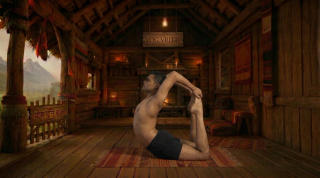
Dhanurasana Purna is a profound backbend that orchestrates a symphony of lengthening and strengthening throughout the body, particularly engaging the entire posterior chain while creating immense space across the anterior torso. This advanced posture deeply opens the chest, shoulders, and hip flexors, simultaneously strengthening the spinal extensors and quadriceps.
Muscles
- Spine Extensorsstrengthens
- Quadricepsstrengthens
- Shoulder Girdle musclesstrengthens
- Hip Flexorsstretches
- Abdominal Musclesstretches
Joints
- Spinemobilises
- Shoulder Girdlemobilises
- Hip Jointsmobilises
- Knee Jointsmobilises
Inside the body
- Abdominal Organs
- Lungs & Heart
- Breathing
Mind
The expansive, open-hearted nature of this deep backbend directly correlates with cultivating feelings of courage and self-confidence.
Take care
Teachers must approach Dhanurasana Purna with extreme care and discernment for students with any history of spinal or shoulder injury, or those experiencing acute neck pain.
The profound spinal extension and intense shoulder opening can significantly exacerbate existing conditions if not approached with meticulous preparation and precise alignment. Always prioritize stability, integrity, and comfort over depth, ensuring students understand how to actively support their lumbar spine and maintain a long, soft neck, rather than allowing any compression.
Muscles
Spine Extensors
StrengthensErector Spinae, Multifidus
These powerful muscles running along both sides of your spine, from the sacrum to the skull, work concentrically to lift and extend the torso and legs, creating the deep arc of the bow.
Read moreShow less
This sustained contraction builds remarkable strength and endurance in the spinal column, directly supporting a healthy, upright posture and mitigating the effects of gravity.
The engagement brings a vibrant, upward-moving energy (Prana) into the core, invigorating the central nervous system and fostering mental alertness.
Quadriceps
StrengthensRectus Femoris, Vastus Lateralis, Medialis, Intermedius
The large muscle group at the front of your thighs (quadriceps) powerfully contracts to lift the legs high and away from the floor, drawing the feet closer to the head and deepening the backbend.
Read moreShow less
This intense isometric engagement develops significant strength in the lower body, which is crucial for stability and balance in many advanced postures.
Beyond physical strength, this sustained effort cultivates mental discipline and unwavering focus, embodying the yogic principle of Tapas (ardor).
Shoulder Girdle muscles
StrengthensStretchesRhomboids, Middle/Lower Trapezius (strengthening); Pectoralis Major/Minor, Anterior Deltoids (lengthening)
The muscles between your shoulder blades (rhomboids, middle and lower trapezius) actively draw the shoulder blades down and back, supporting the broad opening of the chest.
Read moreShow less
Concurrently, the muscles at the front of the shoulders and chest (pectoralis major/minor, anterior deltoids) are profoundly lengthened, releasing chronic tension often held from daily activities.
This dual action cultivates an expansive feeling across the collarbones, improving posture and allowing for unrestricted breath, which is experienced as an opening of the heart chakra (Anahata Chakra).
Hip Flexors
StretchesIliopsoas (Psoas Major, Iliacus)
The deep muscles connecting your spine and pelvis to your inner thighs (iliopsoas) are profoundly lengthened as the pelvis anteriorly tilts and the thighs lift away from the floor.
Read moreShow less
This sustained stretch helps to release deep-seated tension often accumulated from prolonged sitting, which can contribute to lower back pain.
Releasing the iliopsoas creates a sense of lightness and freedom in the hips, improving mobility and allowing for a more balanced flow of Apana Vayu (downward energy).
Abdominal Muscles
StretchesRectus Abdominis, Obliques
The muscles along the front and sides of your abdomen (rectus abdominis and obliques) are significantly lengthened as the spine extends into this deep backbend.
Read moreShow less
While lengthening, they also engage eccentrically to provide crucial support, protecting the lumbar spine from excessive compression.
This action creates expansive space within the abdominal cavity, stimulating the internal organs and fostering a feeling of spaciousness and expansion within the energetic core, correlating with the vitality of Manipura Chakra.
Joints
Spine
MobilisesDecompressingEach segment of your vertebral column moves into a deep state of extension, particularly in the thoracic and lumbar regions, significantly increasing spinal mobility.
Read moreShow less
This articulation helps to decompress the anterior aspect of the vertebral discs, counteracting the effects of habitual flexion and promoting overall spinal health.
The increased flexibility translates to a more fluid and energetic upright posture, allowing for an unhindered flow of energy through the central channel.
Shoulder Girdle
MobilisesStretchesThe joints of your shoulders, including the glenohumeral and scapulothoracic joints, are actively drawn into extension and external rotation, creating profound opening across the chest.
Read moreShow less
This movement pattern improves the range of motion in the shoulders, releasing chronic tension often held in the upper back and neck from daily activities.
This expansive action cultivates a sense of emotional openness and strengthens the energetic flow through the heart center, fostering compassion and connection.
Hip Joints
MobilisesYour hip joints, where the thigh bone (femur) meets the pelvis (acetabulum), move into a deep state of extension, stretching the powerful muscles at the front of the hips and thighs.
Read moreShow less
This action significantly increases flexibility and range of motion in this often-restricted area, which can alleviate lower back strain and improve gait.
Regularly mobilizing the hip joints in this way helps to release stored emotional tension, promoting a feeling of freedom and lightness in the entire lower body.
Knee Joints
MobilisesThe knee joints are deeply flexed as you grasp your ankles or feet, drawing the heels towards the buttocks and then away as the legs lift.
Read moreShow less
This deep flexion, combined with the powerful quadriceps engagement, helps to increase the flexibility of the knee joint and strengthens the surrounding musculature.
It is vital to approach this action with meticulous awareness, ensuring even pressure and avoiding strain, allowing for a balanced development of strength and flexibility around these crucial weight-bearing joints.
Inside the body
Abdominal Organs
The deep backbend in Dhanurasana Purna creates a gentle, yet profound, compression and massage for the abdominal organs as the anterior body is stretched and lifted.
Read moreShow less
This internal massage can stimulate digestion, improve circulation to the digestive tract, kidneys, and adrenal glands, promoting their optimal function.
The gentle squeeze and release helps to clear stagnant energy, invigorating the body's internal systems and supporting the metabolic fire (Agni).
Lungs & Heart
The expansive opening of the chest in Dhanurasana Purna creates significant physical space around the lungs and heart, liberating the rib cage.
Read moreShow less
This unrestricted thoracic cavity allows for deeper, fuller inhalations, enhancing respiratory capacity and oxygen intake, which promotes cardiovascular health.
The feeling is one of vastness and capacity, inviting a sense of emotional liberation and a profound opening of the heart space, deeply resonating with the qualities of Anahata Chakra and compassion.
Breathing
The profound chest opening in Dhanurasana Purna naturally facilitates a fuller, more expansive inhalation, as the rib cage gains greater freedom to expand in all directions.
Read moreShow less
However, the compression of the abdomen against the floor can initially make the exhalation feel more challenging or restricted.
With dedicated practice, one learns to engage the diaphragm effectively, allowing for a balanced, rhythmic breath that deepens the stretch on the inhalation and helps to release more deeply into the pose on the exhalation, fostering a powerful connection to Prana Vayu and Apana Vayu.
This pose beautifully complements Ujjayi Pranayama, as the steady, audible breath helps to maintain profound focus and regulate the nervous system amidst intensity.
Fascia (connective tissue)
In Dhanurasana Purna, the entire superficial front line of fascia, which encompasses the connective tissue from the tops of your feet, up your shins, thighs, abdomen, chest, and arms, undergoes a profound lengthening and release.
Read moreShow less
Simultaneously, the deep front line and spiral lines are also engaged and stretched, particularly in the hip flexor region.
This comprehensive fascial unwinding helps to release long-held tension patterns, improving overall flexibility and allowing for a more uninhibited flow of Prana throughout the body's intricate connective tissue matrix, enhancing proprioception and ease of movement.
Mind and nervous system
- Nervous system
This advanced backbend, with its intense physical demands and profound chest opening, initially activates the sympathetic nervous system, fostering a heightened state of alertness and energizing the body.
Read moreShow less
The substantial effort required to maintain the posture builds mental fortitude and a focused intensity, stimulating our inner fire.
However, when held with a steady, conscious breath, this initial activation can transition into a more balanced state of energized calm, allowing for heightened awareness without agitation or stress.
While challenging, the sustained nature of Dhanurasana Purna, when coupled with a deep, rhythmic breath, serves as a powerful tool to modulate the nervous system.
Read moreShow less
The deliberate control of breath amidst physical intensity trains the body to find ease within effort, gradually inviting the calming influence of the parasympathetic response.
This practice cultivates a refined sense of interoception, where the practitioner becomes acutely aware of subtle internal sensations, fostering profound presence and self-regulation.
- Mind & mood
The expansive, open-hearted nature of this deep backbend directly correlates with cultivating feelings of courage and self-confidence.
Read moreShow less
Physically lifting the chest and heart towards the sky can translate into a powerful emotional uplift, challenging ingrained fears and fostering a profound sense of empowerment.
This posture demands both strength and vulnerability, teaching practitioners to lean into discomfort with grace and emerge with a stronger, more resilient sense of self.
Dhanurasana Purna demands intense focus and unwavering concentration to coordinate the intricate actions of the body and maintain stability in a challenging shape.
Read moreShow less
The profound effort required to sustain the pose naturally draws the mind away from external distractions and into the present moment, cultivating Dharana (concentration).
This unwavering attention to internal sensations and the rhythm of the breath helps to quiet the fluctuations of the mind (chitta vritti), fostering mental clarity and a deeper connection to one's inner experience.
As an advanced posture, Dhanurasana Purna often presents practitioners with perceived physical and mental limitations, making its mastery a journey of perseverance.
Read moreShow less
The process of gradually refining and deepening the pose teaches resilience and determination, demonstrating that consistent effort can lead to overcoming what once seemed impossible.
This journey builds a profound sense of accomplishment and teaches the invaluable lesson that true growth and transformation often lie just beyond our perceived comfort zone.
Because it is a backbend pose
This deep backbend directly counteracts the pervasive effects of prolonged sitting and forward-bending common in modern life, which can lead to spinal stiffness and poor posture.
Read moreShow less
It restores the natural curvature and mobility of the spine, strengthening the entire posterior chain, especially the spine's supporting muscles (erector spinae).
Energetically, it stimulates the central energetic channel (Sushumna Nadi), invigorating the entire energetic system and fostering vitality.
The expansive nature of a backbend, particularly in Dhanurasana Purna, profoundly opens the chest and anterior torso, creating immense physical space for the lungs and heart.
Read moreShow less
This liberation of the thoracic cavity improves respiratory capacity and promotes healthy circulation.
On a subtler level, it is believed to open the Anahata Chakra, fostering emotional release, cultivating compassion, and enhancing one's capacity for joy and deep connection.
Backbends are inherently energizing postures, specifically designed to increase the flow of Prana (life force) throughout the body, combating lethargy and mental dullness.
Read moreShow less
The upward and outward expansion of the chest and limbs stimulates the nervous system, cultivating a profound sense of vitality, optimism, and an uplifting spirit.
This energetic lift can powerfully shift stagnant moods and inspire a feeling of lightness and enthusiasm for life.