6
Muscles
4
Joints
4
Organs
3
Mental
Savasana
शवासन
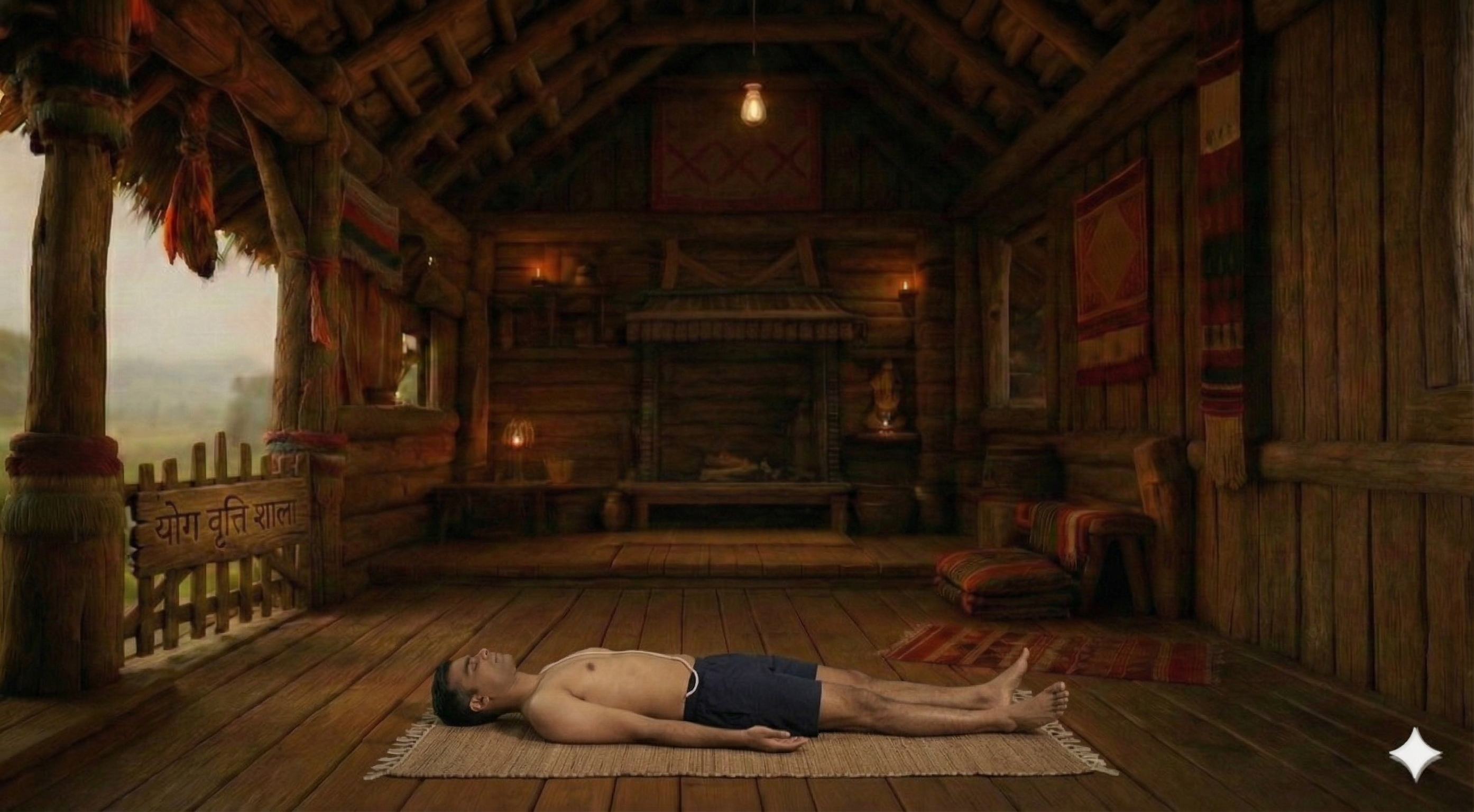
Savasana, the Corpse Pose, is the profound art of conscious surrender, a supine posture that invites the entire musculoskeletal system into a state of deep release. It gently lengthens the posterior and anterior chains of the body, allowing the spine to decompress and the major joints to find their natural resting alignment. Energetically, it grounds the practitioner, calming the agitated mind (chitta vritti) and integrating the prana cultivated in the preceding practice, making it indispensable for nervous system regulation and profound mental clarity. This pose teaches us how to truly rest, not just sleep, fostering an internal environment conducive to healing and self-awareness.
Corpse Pose, also called Savasana is a classical yoga posture. Its Sanskrit name Savasana translates word-for-word as: Sava (Corpse) · Asana (Pose). In this posture, the body releases into the support of the floor, allowing gravity to assist. Induces deep physical and mental relaxation. Lowers blood pressure, heart rate, and cortisol. Integrates the benefits of the entire practice. It is particularly valued for quieting an anxious mind and supporting restful sleep. Suitable for beginners and regular practitioners alike, it is a calming cool-down, particularly beneficial for seniors and prenatal. A blanket can be used to make the posture more accessible and support correct alignment.
Helps with
Muscles Worked
Hamstrings
Biceps femoris, Semitendinosus, Semimembranosus
These powerful muscles at the back of your thighs are often chronically shortened from sitting and standing.
In Savasana, with the legs extended and the hips in a neutral position, they are invited to fully release and lengthen without active stretching.
This passive unwinding allows deep-seated tension to dissipate, improving posterior chain flexibility and reducing pull on the pelvis and lower back (lumbar spine).
From a yogic perspective, this release helps to ground apana vayu, bringing a sense of stability and ease to the lower extremities.
Quadriceps
Rectus femoris, Vastus lateralis, Vastus medialis, Vastus intermedius
The large muscle group at the front of your thighs, the quadriceps, often holds residual tension, especially after active standing or leg-focused poses.
In Savasana, these muscles are completely passive, allowing them to soften and release their grip on the kneecap (patella) and the hip joint.
This deep relaxation helps to restore proper muscle length and reduces unnecessary strain on the knee and hip, fostering a feeling of lightness and freedom in the legs.
Yogically, this surrender helps to quiet the active, outward-moving energy, drawing awareness inward.
Psoas Major
Iliopsoas
The deep hip flexor, the psoas, connects your lower spine to your inner thigh bone (femur) and is often a major reservoir of stress and 'fight or flight' tension.
In Savasana, lying supine with legs extended, the psoas is given the opportunity to release its habitual shortening and lengthen passively.
This release can profoundly decompress the lower back (lumbar spine) and pelvis, easing chronic back pain and stiffness.
Energetically, a relaxed psoas allows for a freer flow of prana through the core, fostering a sense of emotional release and deep calm.
Spinal Erectors
Erector Spinae group
These long muscles running alongside your spine work constantly to maintain upright posture and protect the vertebral column.
In Savasana, with the full support of the floor, these muscles can finally disengage from their postural duties and fully release.
This allows for a gentle decompression of the spinal discs and a natural lengthening of the entire back body.
The deep release in the spinal muscles facilitates a profound relaxation throughout the nervous system, allowing the subtle energy (prana) to flow unimpeded along the central axis (sushumna nadi).
Diaphragm
Diaphragm
Your primary breathing muscle, the diaphragm, is positioned optimally in Savasana, free from the constraints of gravity or active engagement.
Lying supine encourages a full, uninhibited downward excursion of the diaphragm on inhalation and a complete ascent on exhalation.
This natural, diaphragmatic breathing massages the internal organs, promotes deep oxygen exchange, and is a direct pathway to activating the parasympathetic nervous system.
From a yogic perspective, this effortless breath deepens the connection to our vital life force (prana) and stills the fluctuations of the mind.
Muscles of the Face
Orbicularis oculi, Masseter, Temporalis
The muscles of the face and jaw (masseter, temporalis, orbicularis oculi) often unknowingly hold significant tension, reflecting mental stress and emotional patterns.
In Savasana, the instruction to soften the eyes, relax the jaw, and release the tongue from the roof of the mouth encourages a complete release of these muscles.
This physical letting go directly impacts the nervous system, signaling safety and deep relaxation to the brain.
This gentle release allows the flow of prana to become smoother in the head region, promoting mental clarity and a sense of inner peace.
Joints Mobilized
Hip joints
decompressingIn Savasana, with the legs gently splayed and feet falling outwards, the hip joints naturally move into a position of mild external rotation and neutral flexion.
This position allows for a gentle decompression of the joint capsule and surrounding ligaments, releasing any habitual gripping or tension held deep within the hips.
Over time, this sustained relaxation can improve the resting mobility of the hips and alleviate stiffness, fostering a sense of freedom and openness in the pelvic region, which yogically is associated with releasing emotional blockages.
Spine
decompressingThe entire length of the spine (vertebral column), from the tailbone (coccyx) to the skull (cranium), is fully supported by the ground in Savasana, allowing the muscles that typically hold it upright to relax.
This complete support encourages a natural lengthening and decompression of the intervertebral discs, gently restoring the spine's natural curves without muscular effort.
This passive elongation helps to alleviate spinal compression and tension, promoting a feeling of spaciousness and ease along the central axis, which is crucial for the unhindered flow of prana through the chakras.
Shoulder joints
decompressingWith the arms resting slightly away from the body and palms facing up, the shoulder joints (glenohumeral joints) are allowed to settle into a neutral, slightly externally rotated position in Savasana.
This passive alignment encourages the muscles surrounding the shoulder blade (scapula) and upper arm (humerus) to release, decompressing the joint and alleviating tension in the upper back and neck.
This release can significantly reduce habitual hunching and improve postural awareness, allowing the breath to flow more freely into the chest and cultivate a sense of openness in the heart space.
Temporomandibular joint
decompressingThe temporomandibular joint (TMJ), connecting your jawbone (mandible) to your skull, is a common site for holding unconscious tension, often linked to stress and teeth grinding.
In Savasana, the deliberate instruction to relax the jaw and allow the teeth to gently separate encourages a complete release of the muscles surrounding the TMJ.
This targeted relaxation can alleviate headaches, jaw pain, and facial tension.
From a yogic perspective, releasing tension in the jaw is deeply connected to releasing mental and emotional stress, promoting a profound sense of calm throughout the entire head and neck.
Organ & System Benefits
Heart
In Savasana, the body is completely at rest, requiring minimal effort from the cardiovascular system.
The supine position reduces the workload on the heart, as it no longer has to pump against gravity to the same extent as in an upright position.
This allows for a reduction in heart rate and blood pressure, promoting a state of deep physiological calm and recovery.
Yogically, this quietude of the heart fosters a sense of inner peace and allows us to connect more deeply with the subtle rhythms of our being.
Lungs
The supine position in Savasana, with the chest open and unconstrained, allows the lungs (pulmonary system) to expand fully and effortlessly.
There is no gravitational pull restricting the diaphragm or the rib cage muscles, leading to deeper, more efficient breathing.
This enhanced oxygen exchange supports cellular repair and overall vitality.
From a yogic perspective, this unrestricted breath allows prana to permeate every cell, cleansing and rejuvenating the entire system and fostering a profound sense of inner spaciousness.
Digestive organs
The deep relaxation of Savasana, particularly the activation of the parasympathetic nervous system, signals to the body that it is safe to 'rest and digest.' This shift directs energy towards the digestive organs (gastrointestinal system), enhancing peristalsis, nutrient absorption, and waste elimination.
By reducing the stress response, Savasana helps to alleviate symptoms of indigestion, irritable bowel syndrome, and other stress-related digestive issues.
This internal calm allows the body's innate healing mechanisms to function optimally.
Brain
In Savasana, the conscious effort to remain still and withdraw from external stimuli significantly reduces sensory input to the brain (central nervous system).
This allows the brain to shift from a state of active processing to one of integration and quiet reflection.
The reduction in neural activity helps to calm the 'monkey mind' (chitta vritti), fostering mental clarity and reducing cognitive load.
This profound rest for the brain supports improved concentration, emotional regulation, and a deeper connection to one's inner wisdom.
Nervous System
The conscious relaxation in Savasana is a direct pathway to activating the parasympathetic nervous system (PNS), often called the 'rest and digest' system.
As you lie still and soften, your body receives a clear signal of safety, allowing the heart rate to slow, blood pressure to decrease, and muscle tension to dissipate.
This shift from sympathetic (fight or flight) dominance to parasympathetic calm is crucial for stress reduction, promoting healing, and restoring internal balance.
The sustained state of calm allows the nervous system to integrate the effects of the entire yoga practice.
The deliberate slowing and deepening of the breath, which naturally occurs in Savasana, directly stimulates the vagus nerve (Cranial Nerve X), a key component of the parasympathetic nervous system.
This vagal tone enhancement helps to regulate various bodily functions, including heart rate, digestion, and mood.
The practitioner feels a profound sense of peace spreading throughout the body, a gentle unwinding of chronic tension that often goes unnoticed in daily life.
This deep neurological reset rebalances the autonomic nervous system, fostering resilience against future stressors.
Savasana cultivates a state of alert relaxation, where the body is completely still, yet the mind remains aware and present, not drifting into sleep.
This unique state allows for the integration of physical sensations and mental experiences, processing emotions and insights that may have arisen during the active practice.
This conscious awareness amidst deep rest helps to dissolve patterns of anxiety and restlessness (rajas), promoting a profound sense of inner tranquility and mental clarity (sattva).
It's a powerful practice for reducing overthinking and promoting a sense of grounded presence.
Mental & Emotional
Savasana is a profound practice in cultivating sensory withdrawal (pratyahara), where you consciously disengage from external stimuli and turn your attention inward.
As the body becomes still, the mind is encouraged to follow, moving beyond the constant stream of thoughts and external distractions.
This internal focus allows for a deeper connection to your inner landscape, fostering a sense of detachment from the outside world and promoting profound inner quietude.
It's a powerful tool for reducing mental noise and cultivating a state of deep introspection.
The sustained stillness and conscious relaxation in Savasana directly address the restless fluctuations of the mind (chitta vritti), helping to quiet mental chatter and cultivate a state of mental clarity.
By consciously choosing to remain alert yet completely at ease, the practitioner trains the mind to observe thoughts without attachment, allowing them to pass like clouds.
This practice builds mental resilience and self-awareness, offering a sanctuary from the demands of daily life and fostering a deep sense of inner peace.
It's a direct path to developing concentration (dharana) and preparing for meditation.
Savasana offers a unique opportunity for emotional processing and integration, as the release of physical tension often allows buried emotions to surface and be acknowledged.
In this safe and supportive pose, practitioners can gently observe these feelings without judgment, allowing them to dissipate naturally.
This capacity for emotional release and regulation is invaluable for managing anxiety, depression, and stress, leading to a profound sense of emotional balance and well-being.
It helps to dissolve the energetic blockages (granthis) that inhibit our true nature.
Because of Its Shape
restorative
Lying supine, flat on your back, provides complete and even support for the entire posterior chain of the body, allowing gravity to work with you, not against you.
This supportive contact with the earth encourages a deep sense of grounding and security, signaling to the nervous system that it is safe to completely let go.
Physiologically, this position allows for optimal spinal decompression and muscular release throughout the back, fostering a profound sense of physical and energetic surrender.
It cultivates sthira (steadiness) and sukha (ease) in the most fundamental way.
Savasana is the quintessential restorative pose, designed not for stretching or strengthening, but for profound rest and rejuvenation at a cellular level.
The complete stillness and support allow the body's natural healing mechanisms to activate, repairing tissues and restoring energy reserves.
Energetically, this restorative quality helps to integrate the prana that has been activated during the active practice, allowing it to settle and nourish every part of the being.
It is an essential practice for deep recovery, stress reduction, and cultivating a sense of inner calm and balance.
Fascial Lines
Fascia, the intricate web of connective tissue that encases every muscle, organ, and bone, is a key player in Savasana's profound effects.
In this pose, the sustained, passive stillness allows the entire fascial network to gradually soften and release any ingrained patterns of tension or holding.
This global unwinding of the superficial and deep fascial layers helps to restore fluidity to the body's internal landscape, improving circulation and nerve function.
Yogically, this release opens the energetic channels (nadis), allowing prana to flow more freely and dissolve restrictions that limit movement and vitality.
Breathing & Respiratory
In Savasana, the body's supine position inherently encourages a natural, uninhibited diaphragmatic breath, free from the constraints of gravity or muscular effort.
The abdomen can rise and fall fully with each inhalation and exhalation, allowing the diaphragm to move through its complete range of motion.
This deep, rhythmic breathing naturally lengthens the exhalation, which is a direct signal to the parasympathetic nervous system to relax and calm.
This effortless breath deepens the connection to our vital life force (prana) and stills the fluctuations of the mind (chitta vritti), preparing for higher states of awareness.
Anatomical Caution
While Savasana is generally safe, teachers should be mindful of students with lower back discomfort or neck issues.
For lower back sensitivity, placing a rolled blanket or bolster under the knees can reduce the lumbar curve and provide crucial support.
For neck discomfort, a thin, folded blanket under the head, ensuring the chin is slightly tucked and the neck is long, can prevent strain.
The goal is complete ease; no student should feel pain or tension.