5
Muscles
4
Joints
3
Organs
3
Mental
Bridge Pose
सेतु बन्ध सर्वाङ्गासन
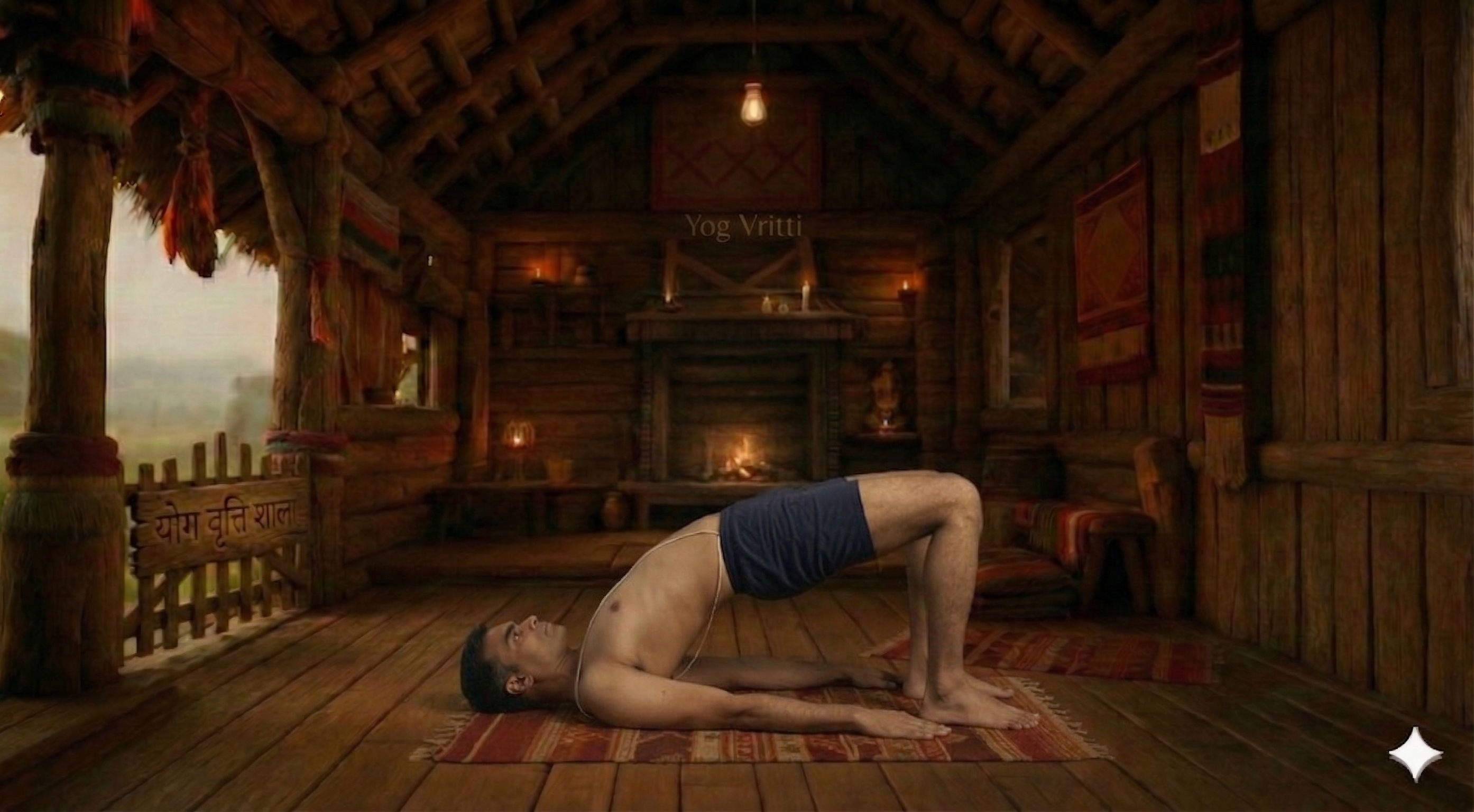
Setu Bandha Sarvangasana, or Bridge Pose, is a foundational backbend that gently lifts the spine, creating length and opening across the front of the body while strengthening the posterior chain. It engages the glutes and hamstrings to elevate the hips, promoting spinal mobility and stability. This pose offers a mild inversion, calming the nervous system and drawing energy inward, making it deeply grounding and restorative. For any practitioner or teacher, it’s invaluable for cultivating spinal awareness, releasing tension, and fostering a sense of inner strength and tranquility.
Bridge Pose, also called Setu Bandha is a classical yoga posture whose Sanskrit roots break down as: Setu (Bridge) · Bandha (Lock) · Sarva (All) · Anga (Limbs). In this posture, the body opens the chest and stretches the entire front body. The posture works to activate the glutes, lengthen the hamstrings and strengthen and extend the back. Opens the chest and improves breathing. Stimulates abdominal organs. It is particularly valued for building full-body strength and quieting an anxious mind. Suitable for beginners and regular practitioners alike, it is an excellent warm-up, particularly beneficial for seniors and prenatal. A block and blanket can be used to make the posture more accessible and support correct alignment. Practitioners with neck pain and spinal injury should approach with care or consult a qualified teacher.
Helps with
Muscles Worked
Buttocks (Glutes)
Gluteus Maximus
The large muscles of your buttocks are powerfully engaged here, initiating the lift of the pelvis away from the floor.
This activation provides critical support for the lower back and sacrum, ensuring a safe and stable arch in the spine.
Energetically, strong glutes anchor the base, fostering a sense of groundedness and stability in the lower body, which is essential for upward energetic flow.
Back of Thighs (Hamstrings)
Biceps femoris, Semitendinosus, Semimembranosus
These muscles, running along the back of your thighs, work in concert with the glutes to lift and sustain the hips in the pose.
They engage to extend the hip and flex the knee, creating a balanced tension that prevents strain in the lower back.
This controlled engagement helps to tone the posterior chain, enhancing the feeling of rootedness and connection through the legs.
Spinal Erectors (Back Muscles)
Erector Spinae
The deep muscles that run parallel to your spine are actively engaged to extend and support the vertebral column in this backbend.
They create an arc, lifting the chest and creating space between the vertebrae, rather than compressing them.
This gentle strengthening builds resilience in the spine, supporting good posture and allowing prana to flow more freely along the central channel.
Abdominal Muscles (Core)
Rectus Abdominis, Transversus Abdominis, Obliques
While the back is arching, the abdominal muscles must remain subtly engaged to prevent over-arching and hyperextension of the lumbar spine.
This gentle drawing in of the navel towards the spine stabilizes the core, creating a supportive corset for the lower back.
This intelligent engagement cultivates internal awareness and helps to integrate the breath with core stability, promoting a sense of inner containment.
Front of Hip (Psoas)
Iliopsoas
As the hips lift and extend, the primary hip flexors at the front of the body, particularly the psoas, receive a gentle, indirect lengthening.
This release is crucial for counteracting the effects of prolonged sitting and can free up movement in the pelvis.
Yogically, a relaxed psoas is often associated with emotional release and a greater sense of ease in the body’s core, allowing for deeper, more expansive breathing.
Joints Mobilized
Spine (Vertebral Column)
mobilizingThe spine undergoes a gentle, even extension, particularly in the thoracic and lumbar regions.
This articulation helps to mobilize the individual vertebrae, creating space and decompressing the intervertebral discs.
Regular practice can restore natural spinal curves, alleviating stiffness and allowing the nervous system to function with greater ease and vitality.
Sacroiliac Joint (SI Joint)
stabilizingWith the intelligent engagement of the glutes and hamstrings, the powerful muscles surrounding the pelvis help to stabilize the sacroiliac joint, the junction between the sacrum and the hip bones.
This muscular support can alleviate discomfort and improve the structural integrity of the pelvis.
A stable SI joint provides a strong foundation for the entire spine, promoting a feeling of inner security and balance.
Shoulder Girdle (Scapulothoracic, Glenohumeral)
stabilizingBy pressing the upper arms and shoulders firmly into the mat, the shoulder girdle becomes a stable base from which to lift the chest.
This action helps to broaden the collarbones and open the chest, preventing slumping in the upper back.
This stability grounds the upper body, allowing for a more expansive and uninhibited breath, connecting the practitioner to a sense of openness and freedom.
Hip Joint (Coxofemoral)
mobilizingThe hip joints move into extension as the pelvis lifts, gently stretching the tissues at the front of the hips.
This movement is vital for counteracting the common pattern of hip flexion from sitting, improving range of motion and circulation.
Mobilizing the hips can release stagnation in the pelvic area, promoting a sense of lightness and fluidity in the lower body, and supporting the upward flow of prana.
Organ & System Benefits
Digestive Organs (Intestines, Stomach)
As the abdomen lifts and extends upwards, the digestive organs receive a gentle internal massage and improved blood flow.
This mild compression and release can stimulate peristalsis, aiding in the natural movement of food through the digestive tract.
Yogically, this action helps to balance Samana Vayu, the energy responsible for digestion and assimilation, promoting overall gut health and a feeling of inner warmth.
Thyroid Gland
The gentle chin lock and compression at the base of the neck, combined with the mild inversion, can stimulate the thyroid and parathyroid glands.
This action is believed to help regulate metabolism, energy levels, and hormonal balance.
In yoga, stimulating the Vishuddha Chakra (throat chakra) through such actions is thought to promote clear communication and self-expression.
Heart and Lungs (Cardiopulmonary System)
The elevated chest and open front body create more space for the lungs to expand fully, encouraging deeper and more complete breaths.
This improved respiratory capacity enhances oxygen intake and carbon dioxide release, supporting cardiovascular health.
The mild inversion also encourages venous return, lightening the load on the heart and invigorating the entire circulatory system, fostering vitality and energetic uplift.
Nervous System
The sustained engagement of the posterior chain and the grounding through the feet and shoulders send reassuring signals to the brain, activating the parasympathetic nervous system.
This shift from 'fight or flight' to 'rest and digest' calms the mind and body, reducing overall stress and anxiety.
The gentle inversion, with the heart slightly higher than the head, also helps to soothe the brain, promoting a sense of inner peace and quietude.
By subtly lifting the pelvis and opening the chest, the breath naturally deepens and lengthens, which directly influences vagal nerve tone.
A more regulated breath pattern signals safety to the nervous system, diminishing the chatter of the mind (chitta vritti) and fostering a state of focused awareness.
This mindful connection to breath cultivates a profound sense of presence and stability, both physically and mentally.
Mental & Emotional
Bridge Pose, though gentle, demands a focused awareness to maintain the lift and proper alignment, drawing the mind away from external distractions.
This sustained attention, a form of Dharana, helps to quiet mental agitation and improve concentration.
By engaging in this deliberate practice, students cultivate a sense of mental discipline and resilience, which translates into greater clarity and focus in daily life.
The opening of the chest and the subtle backbend can evoke a feeling of emotional release and courage, especially for those who tend to hunch or protect their heart space.
Physically opening the front body can symbolically and energetically open one to vulnerability and self-acceptance.
This cultivation of an open heart fosters a sense of compassion and inner strength, helping to alleviate anxiety and build self-confidence.
The mild inversion in Setu Bandha Sarvangasana offers a shift in perspective, literally and figuratively, by reversing the usual pull of gravity on the body.
This subtle energetic change can help to release mental patterns of stagnation or heaviness, refreshing the mind.
It encourages a sense of letting go, allowing for new insights and a renewed sense of optimism and lightness.
Because of Its Shape
backbend
As a backbend, Bridge Pose extends the front of the body, creating length and space along the abdominal wall, chest, and hip flexors.
This action counteracts the pervasive forward-folding postures of modern life, restoring spinal mobility and natural curvature.
Energetically, backbends are associated with opening the heart center (Anahata Chakra), cultivating courage, compassion, and a vital, uplifting quality of prana.
This pose also functions as a gentle inversion, where the head is lower than the heart, encouraging a reversal of blood flow towards the upper body and brain.
This mild inversion calms the nervous system, reduces fatigue, and can alleviate mild headaches by refreshing circulation.
In yogic philosophy, inversions are powerful for shifting perception and quieting the mind, offering clarity and a renewed sense of perspective.
The elevation of the chest and the broadening across the collarbones make this an excellent chest opener.
This expansion creates more room for the lungs to fill, improving respiratory capacity and efficiency.
Opening the chest is not just physical; it allows for emotional release, fostering a sense of freedom, self-expression, and unburdening the heart from accumulated tension and stress.
Fascial Lines
In Setu Bandha Sarvangasana, we engage and lengthen several key myofascial lines.
The Superficial Front Line, running from the tops of the feet up the front of the body to the skull, is gently elongated, particularly in the hip flexors and abdomen.
Simultaneously, the Superficial Back Line, from the soles of the feet up the back of the body, is toned and strengthened, especially in the hamstrings, glutes, and erector spinae.
This balanced action helps to release chronic tension patterns, improving overall bodily integrity and allowing for unimpeded flow of energy (prana) throughout the interconnected fascial web.
Breathing & Respiratory
The open chest and elevated diaphragm in Bridge Pose naturally encourage a fuller, deeper inhalation, creating more space for the lungs to expand.
This expansive quality of the breath helps to invigorate the body and mind, drawing in fresh prana.
The gentle abdominal lift also supports a complete exhalation, allowing for a thorough release of stale air and accumulated tension, making it an excellent preparation for more subtle pranayama practices like Ujjayi, which can be deepened and refined within this stable and open shape.
Anatomical Caution
Teachers should always guide students to lift from the glutes and hamstrings, not to push excessively through the neck or lower back.
Ensure the neck remains long and comfortable, with a blanket often used under the shoulders to protect the cervical spine.
Remind students to avoid any sharp pain, especially in the sacrum or lower back, encouraging them to find a sustainable lift that feels supportive rather than strained.