3
Muscles
2
Joints
2
Organs
1
Mental
Shoulder Rolls
कंधे घुमाना
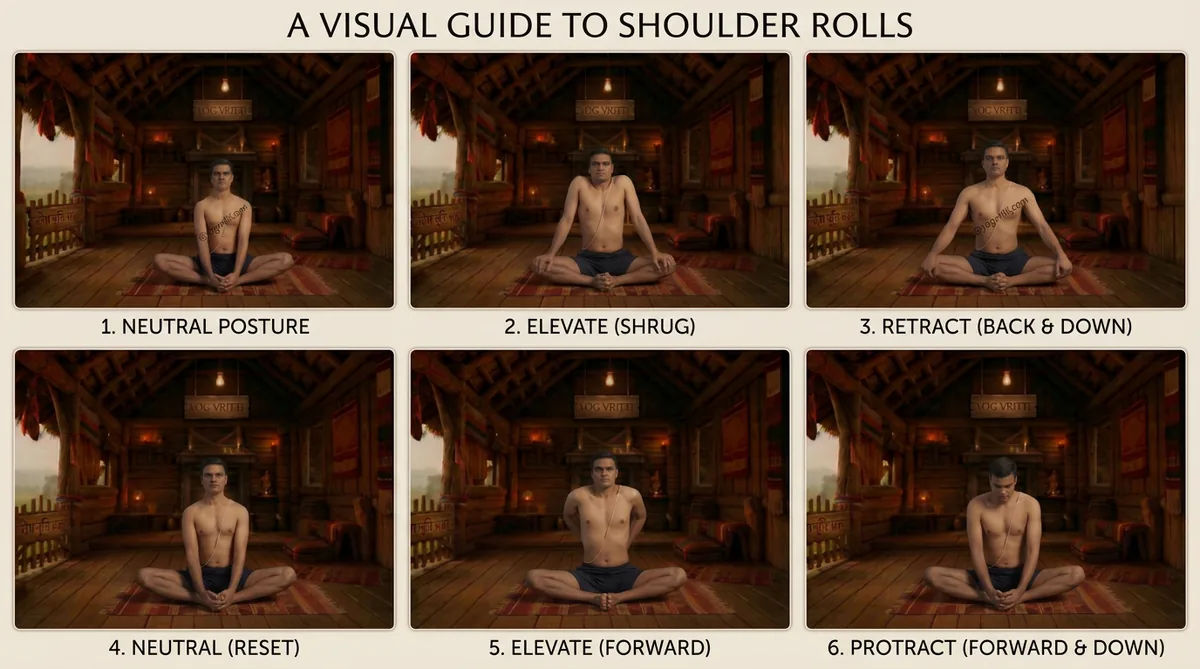
Shoulder Rolls, though deceptively simple, are a profound therapeutic movement that initiates the journey of awareness into the often-neglected shoulder girdle. This gentle circling mobilizes the complex network of muscles surrounding the shoulder joint – including the trapezius, deltoids, and rotator cuff – releasing chronic tension and improving local circulation. Energetically, it awakens prana in the upper body, cultivating a sense of lightness and freedom, which is invaluable for preparing the entire structure for more complex asanas and alleviating the stiffness of modern life. For teachers, it's a foundational tool to teach subtle body awareness and the integration of breath with movement from the very first moments of practice, fostering both physical ease and mental tranquility.
Shoulder Rolls, also called Shoulder Circles is a classical yoga posture in the Iyengar tradition. In this posture, the body roots firmly through the feet while the spine extends upward. The posture works to open and strengthen the shoulders, open the upper back and release the neck. Lubricates the shoulder joint. Improves shoulder mobility. It is particularly valued for developing greater flexibility. Suitable for beginners and regular practitioners alike, it is an excellent warm-up, particularly beneficial for seniors and prenatal. Practitioners with shoulder injury should approach with care or consult a qualified teacher.
Helps with
Muscles Worked
Trapezius (Upper fibers)
[Trapezius pars descendens]
These prominent muscles run from the base of your skull and neck down to your shoulder blades and collarbone, often feeling like heavy knots after a long day.
In shoulder rolls, the circular motion gently stretches and contracts these fibers, encouraging a release of accumulated tension.
This action helps to decompress the cervical spine indirectly and allows the shoulders to naturally drop away from the ears, fostering a sense of ease and opening in the neck and upper back.
Deltoids (Anterior, Middle, Posterior)
[Deltoideus]
The deltoids form the rounded cap of your shoulder, responsible for lifting and moving your arm in various directions.
During shoulder rolls, all three heads of the deltoid are gently engaged as the arm bone (humerus) moves through its full range of motion.
This activation brings fresh blood flow and proprioceptive awareness to the shoulder joint, preparing it for more dynamic movements and enhancing stability without overt exertion.
Rotator Cuff Muscles (Supraspinatus, Infraspinatus, Teres Minor, Subscapularis)
[SITS muscles]
Deep beneath the deltoids, these four small but mighty muscles form a cuff around the head of the upper arm bone (humerus), providing crucial stability and rotational movement to the shoulder joint.
Shoulder rolls gently engage and warm these muscles, improving their coordination and strength in a non-weight-bearing way.
This subtle activation is vital for protecting the shoulder from injury, allowing for greater freedom in arm movements, and cultivating a deep sense of internal support.
Joints Mobilized
Glenohumeral Joint (Shoulder Joint)
mobilizingThis is the primary ball-and-socket joint of your shoulder, where the head of your upper arm bone (humerus) meets the shallow socket of your shoulder blade (glenoid fossa).
The smooth, circular motion of shoulder rolls encourages the production and distribution of synovial fluid within this joint, lubricating the surfaces and nourishing the cartilage.
Practitioners experience a gradual reduction in stiffness and an increased ease of movement, improving the overall range of motion and vitality of the arm.
Scapulothoracic Joint (Shoulder Blade on Rib Cage)
mobilizingWhile not a true anatomical joint with a capsule, the scapulothoracic articulation describes the crucial movement of your shoulder blade (scapula) gliding over the back of your rib cage.
Shoulder rolls promote healthy movement patterns for the scapula, ensuring it can elevate, depress, protract, and retract smoothly.
This improved mobility of the shoulder blade is essential for optimal shoulder function and posture, allowing the upper back to feel more open and less restricted.
Organ & System Benefits
Circulatory System (Local)
The gentle, repetitive movement of shoulder rolls significantly increases local blood flow to the muscles and connective tissues surrounding the shoulder girdle.
This influx of oxygen-rich blood and nutrients helps to flush out metabolic waste products, reducing inflammation and soreness.
From a yogic perspective, this increased circulation enlivens the energy channels (nadis) in the upper body, bringing a refreshing sense of vitality and warmth.
Respiratory System (Accessory Muscles)
While not directly targeting the lungs, the release of tension in the upper trapezius and levator scapulae can indirectly improve the efficiency of accessory breathing muscles in the neck and upper chest.
When these muscles are chronically tight, they can restrict the natural expansion of the rib cage, making breathing shallower.
By releasing this tension, the shoulders can relax, allowing for deeper, more expansive breaths and a greater feeling of inner spaciousness.
Nervous System
The rhythmic, repetitive nature of shoulder rolls has a profoundly calming effect on the nervous system, shifting it from a state of 'fight or flight' (sympathetic dominance) towards 'rest and digest' (parasympathetic activation).
As you consciously link the movement with your breath, the mind becomes more centered and less prone to distraction.
This simple practice cultivates a gentle form of pratyahara, drawing awareness inward and reducing mental chatter, leaving you feeling more present and grounded.
Mental & Emotional
Shoulder rolls offer a tangible way to release mental and emotional burdens often held physically in the shoulders and neck.
The act of consciously letting the shoulders drop away from the ears can symbolize letting go of responsibilities or worries that feel heavy.
This physical release translates into a psychological lightness, fostering a sense of mental clarity and an improved capacity for focus and calm, which are foundational for deeper meditative practices.
Because of Its Shape
standing
This standing movement grounds the practitioner through the feet while simultaneously creating expansive movement in the upper body.
The upright posture encourages spinal alignment and provides a stable foundation from which to articulate the shoulder girdle.
This dual action of grounding and opening helps to integrate the lower and upper body, promoting a balanced flow of energy (prana) throughout the entire structure.
The continuous circular motion of the shoulders in a standing position is inherently mobilizing, freeing up stiffness that often accumulates from sedentary habits.
Anatomically, it improves the range of motion in the glenohumeral and scapulothoracic joints, while energetically, it breaks up stagnant energy (apana vayu) in the upper chest and shoulders.
This makes it an excellent preparation for any asana involving arm movements, enhancing both safety and efficacy.
Fascial Lines
Fascia, the intricate web of connective tissue that envelops every muscle, organ, and bone, plays a crucial role in maintaining body-wide integrity and transmitting tension.
Shoulder rolls gently engage and release the superficial back line, particularly around the upper back and neck, and the arm lines.
This subtle movement encourages hydration and elasticity within these fascial planes, helping to unravel long-held patterns of stiffness and restriction.
From a yogic perspective, this release can open up subtle energy channels, allowing for a more unhindered flow of prana.
Breathing & Respiratory
The expansive movement of the shoulders naturally invites deeper, more conscious breathing, particularly on the inhalation as the chest opens with the shoulders moving up and back.
This encourages diaphragmatic breathing, which is calmer and more efficient than shallow chest breathing.
Synchronizing the inhale with the upward and backward motion and the exhale with the downward and forward motion can become a gentle form of pranayama, calming the nervous system and deepening the connection between body and mind.
Anatomical Caution
Teachers should guide students to perform shoulder rolls with gentle awareness, avoiding any forceful or jerky movements, especially if they have a history of shoulder injury, rotator cuff issues, or impingement.
The focus should be on smooth, fluid circles within a pain-free range of motion.
Listen to the body, moving slowly and mindfully, to prevent irritation and ensure the practice remains therapeutic and beneficial.