6
Muscles
3
Joints
2
Organs
2
Mental
Supta Baddha Konasana Supported
सुप्त बद्ध कोणासन सपोर्टेड
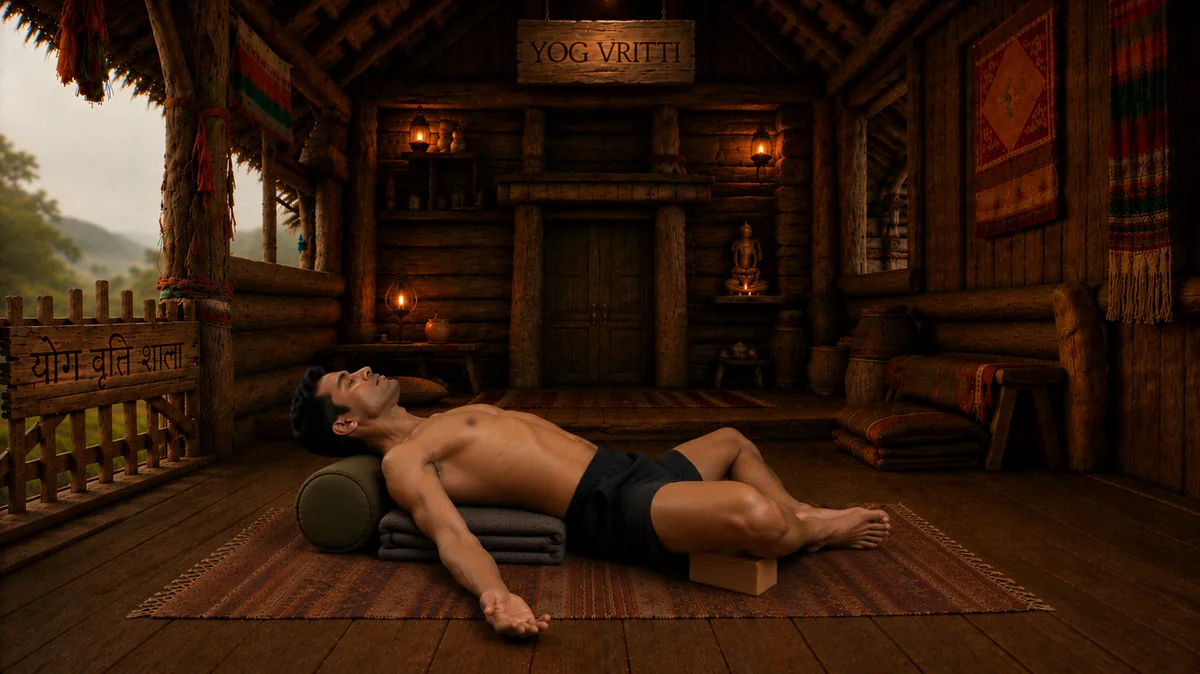
This 'Supported' variation of Supta Baddha Konasana elevates the experience from gentle opening to profound restoration and surrender. By strategically placing the bolster to support the entire length of the spine, we shift the emphasis from active engagement and mindful lengthening to a passive, gravitational release. This setup profoundly deepens the restorative qualities, inviting the nervous system into an even more quiescent state and opening the chest with ease. Supta Baddha Konasana is a profoundly grounding and opening pose that invites the entire body-mind system to surrender and restore. By gently lengthening the inner thigh muscles (adductors) and releasing the pelvic floor, it creates spaciousness and ease in the lower body, countering the effects of prolonged sitting and stress. This supine shape, generously supported by props, calms the nervous system, allowing for deep rest and an inward journey of awareness. It is an invaluable tool for cultivating flexibility, alleviating anxiety, and fostering a deep sense of peace and integration within oneself, serving as a powerful balm for a busy life.
Supported Reclined Bound Angle Pose, also called Supported Butterfly on Back is a classical yoga posture. Its Sanskrit name Supta Baddha Konasana Supported translates word-for-word as: Supta (Reclining) · Baddha (Bound) · Kona (Angle) · Asana (Pose). In this posture, the body releases into the support of the floor, allowing gravity to assist. The posture works to open the chest. Opens chest. Excellent for insomnia. It is particularly valued for supporting restful sleep and quieting an anxious mind. Suitable for beginners and regular practitioners alike, it is deeply restorative when held with support, particularly beneficial for beginners and seniors. A bolster and blanket can be used to make the posture more accessible and support correct alignment.
Helps with
What This Variation Changes
The primary prop effect in this variation is the longitudinal placement of the bolster, supporting the entire length of the spine from the sacrum to the head. This lifts the torso, allowing the chest to open significantly and the shoulders to release towards the floor. It redistributes the body's weight entirely onto the prop, effectively removing any need for muscular effort in the core or back to maintain spinal integrity, thus promoting ultimate relaxation and a deeper gravitational release in the hips.
Muscles Worked
Inner Thigh Muscles
While gently lengthened in the root, the variation allows for an even deeper, completely passive release of these muscles.
The full support under the torso removes any subtle need for abdominal or spinal engagement, allowing gravity and the body's own weight to encourage a profound surrender in the groin.
This shifts the focus from an active, mindful lengthening to a complete letting go.
Deep Hip Rotators
In the root, these muscles release with awareness, contributing to the external rotation of the thighs.
In this deeply supported variation, the intention moves beyond conscious release to a complete dissolution of residual tension.
The unwavering support beneath the spine facilitates a profound relaxation that penetrates deep into the hip socket, inviting these muscles to fully soften and surrender their hold.
Hip Flexor
The hip flexors, gently lengthened in the root pose, are invited to a state of absolute repose in the supported variation.
With the torso fully cradled by the bolster, any subtle engagement or protective tension in these muscles can finally dissipate.
This allows for an effortless lengthening and softening along the front of the hips, promoting a deep sense of ease and spaciousness in the pelvic bowl.
Pelvic Floor Muscles
While the root pose encourages a release in the pelvic floor, the enhanced support in this variation deepens that experience significantly.
The complete relaxation of the torso and hips allows for a more profound unwinding of tension in the pelvic bowl, fostering an effortless release of the pelvic floor muscles.
This creates a powerful energetic grounding and a palpable sense of inner spaciousness.
Pectoralis Major
Pectoralis major
With the bolster supporting the entire length of the spine, the chest cavity is lifted and broadened.
This gentle elevation creates a passive stretch across the pectoralis major, inviting a profound release in the front of the body.
This lengthening counters the hunched posture often adopted in daily life, fostering an expansive quality in the heart space.
Intercostal Muscles
Musculi intercostales externi et interni
As the chest expands over the bolster, the intercostal muscles, situated between the ribs, are gently stretched and encouraged to soften.
This subtle lengthening creates greater space within the rib cage, facilitating a deeper and more expansive diaphragmatic breath.
This enhanced respiratory capacity further calms the nervous system and promotes a feeling of open spaciousness.
Joints Mobilized
Hip Joints
mobilizingThese ball-and-socket joints, where the thigh bone meets the pelvis, are the primary focus of this pose.
Supta Baddha Konasana encourages gentle external rotation and abduction (opening away from the midline) of the femurs within the acetabulum, mobilizing the joint capsule.
This sustained, passive movement improves range of motion, lubricates the joint with synovial fluid, and helps to release deep fascial restrictions around the hips, fostering a sense of freedom and lightness in the lower body over time.
Sacroiliac Joints (SI joints)
stabilizingLocated at the base of the spine where the sacrum meets the iliac bones, these joints are crucial for transferring weight and maintaining pelvic stability.
While the hips are opening, the supine position with full support allows the sacrum to rest evenly on the floor or bolster, encouraging a gentle decompression and stabilization of the SI joints.
This can alleviate lower back discomfort, promoting a sense of centeredness and energetic balance in the pelvic bowl, which is vital for *muladhara chakra* stability.
Knee Joints
stabilizingThe knees are primarily stabilized in a flexed position in this pose, with care taken to ensure they are not stressed by excessive external rotation.
The support provided by blankets or bolsters underneath the outer thighs prevents undue strain on the medial collateral ligaments (MCL) and medial menisci.
This gentle flexion and support allow the muscles surrounding the knee to relax, promoting overall joint health without forceful stretching, and ensuring a comfortable and sustainable hold for deeper relaxation.
Organ & System Benefits
Abdominal Organs
Lying supine with the hips open creates a spaciousness in the lower abdominal and pelvic region, allowing the internal organs to rest without compression.
This gentle positioning encourages improved circulation to the digestive and reproductive systems, aiding in their optimal function.
The increased blood flow and reduced tension can alleviate discomfort associated with menstruation, PCOD, and digestive sluggishness, promoting a sense of internal harmony and well-being.
Diaphragm
The diaphragm, our primary muscle of respiration, is allowed to move freely and fully in this supine, relaxed posture.
With the psoas muscle gently releasing its pull on the lumbar spine and the chest open, the diaphragm's excursion during breathing becomes less restricted.
This unrestricted movement deepens the breath, facilitating optimal oxygen exchange and enhancing the rhythmic massage of the abdominal organs, which is vital for both physical and energetic vitality (*prana* distribution).
Nervous System
The deep relaxation cultivated in Supta Baddha Konasana signals safety to the brain, shifting the nervous system from a sympathetic (fight-or-flight) state towards a parasympathetic (rest-and-digest) response.
The gentle opening of the hips, often a storage site for emotional tension, contributes significantly to this release, allowing the body to truly let go.
This shift reduces heart rate and blood pressure, creating a profound sense of calm and well-being, directly addressing anxiety and stress.
By supporting the entire body with props, we minimize muscular effort, allowing the proprioceptors (sensory receptors in muscles and joints) to send signals of stillness and security to the brain.
This sensory input directly calms the *chitta vritti* (mind fluctuations), making it easier to enter a state of deep relaxation, reduce mental chatter, and cultivate *pratyahara* (withdrawal of the senses).
The sustained stillness allows the nervous system to reset and recharge, promoting deeper, more restorative sleep.
Mental & Emotional
This pose fosters deep introspection and self-awareness by creating a safe, contained space for the mind to settle.
As the body surrenders to gravity and support, the mind is encouraged to release external distractions and turn inward, observing thoughts and sensations without judgment.
This practice of *dharana* (concentration) on the internal landscape allows for mental clarity and emotional processing, helping students to feel more present and grounded.
Supta Baddha Konasana is profoundly therapeutic for alleviating anxiety and stress, as the physical release in the hips and the calming effect on the nervous system directly impact emotional states.
By consciously letting go in the physical body, we practice letting go of mental burdens, cultivating a sense of emotional spaciousness and resilience.
This fosters a deeper connection to one's inner peace, making it a cornerstone for mental well-being and emotional balance, particularly beneficial for those struggling with insomnia or overwhelm.
Because of Its Shape
hip opener
Hip openers, especially restorative ones like Supta Baddha Konasana, target the deep connective tissues and muscles surrounding the pelvis, including the adductors and external rotators.
This gentle, sustained opening enhances flexibility and range of motion in the hip joints, counteracting stiffness from prolonged sitting or athletic activities.
From a yogic perspective, opening the hips releases stored emotional tension and blockages in the *apana vayu* region, fostering emotional release and a greater sense of freedom in the lower body.
This supine hip-opening shape creates a sense of profound surrender and grounding, allowing the practitioner to release the effort of holding themselves upright.
The supported opening encourages the pelvic floor to relax and lengthen, which is vital for both physical comfort and energetic flow.
This grounding quality helps to stabilize *muladhara chakra*, promoting feelings of security, stability, and inner peace, making it an excellent pose for anxiety and overthinking, and enhancing overall body awareness.
Fascial Lines
Fascia is the intricate, interconnected web of connective tissue that encases muscles, bones, and organs, providing structure and transmitting force throughout the body.
In Supta Baddha Konasana, the deep fascial lines of the inner thighs (adductor compartment) and the pelvic floor are gently lengthened and released, not through force but through sustained, passive stretch.
This unwinding of the fascial matrix helps to release chronic tension patterns, improve hydration within the tissues, and in yogic terms, open up energetic pathways (*nadis*) that may have been restricted, allowing for a freer flow of *prana* and a greater sense of embodiment.
Breathing & Respiratory
The supine, supported position of Supta Baddha Konasana naturally encourages a deeper, more expansive breath, particularly into the lower abdomen and pelvic bowl.
With the diaphragm freed from the pull of a tight psoas and the chest open, the breath can descend more fully, stimulating the vagus nerve and further activating the parasympathetic nervous system.
This deep, diaphragmatic breathing calms the mind and body, making it an ideal pose to practice slow, conscious *ujjayi* breath, *viloma pranayama*, or even *nadi shodhana* to balance the energetic channels and cultivate profound inner quiet.
Anatomical Caution
Always ensure the knees are well-supported in this pose, especially if students experience any knee discomfort or tightness in the inner thighs.
Placing folded blankets or small bolsters directly under the outer thighs, supporting the knees from underneath, prevents excessive strain on the inner knee ligaments and allows for a more comfortable and sustainable opening in the hips.
Instruct students to listen to their bodies and never force the knees towards the floor, prioritizing comfort and ease over depth to prevent injury.