4
Muscles
3
Joints
2
Organs
3
Mental
Supta Konasana
सुप्त कोणासन
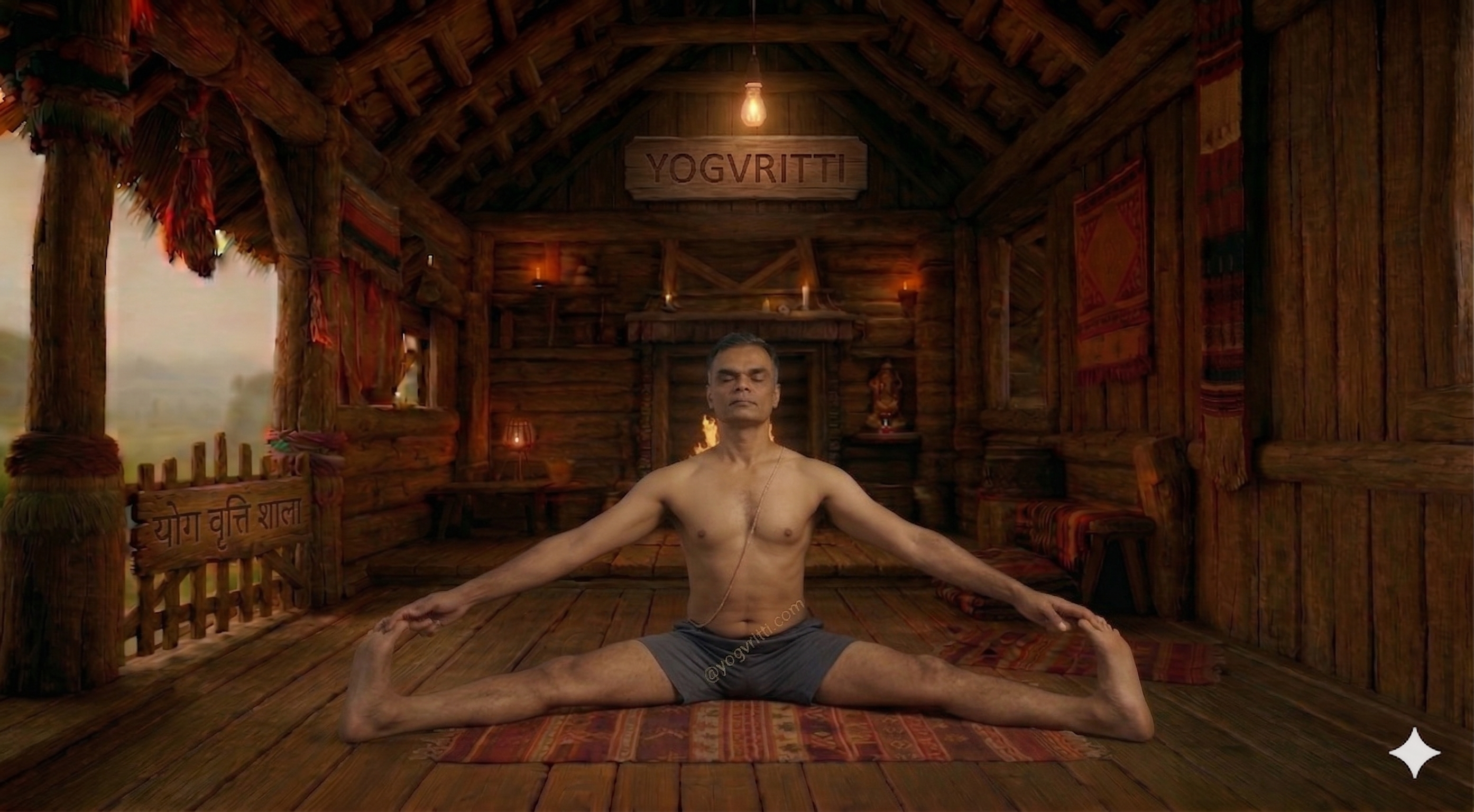
Supta Konasana is a profoundly grounding supine pose that invites deep release and expansion in the lower body, while subtly engaging the core. It meticulously lengthens the entire posterior chain, particularly the hamstrings, and creates spaciousness through the inner thighs and groin. Energetically, this posture facilitates the downward flow of apana vayu, bringing a sense of rootedness and stability, making it invaluable for improving overall flexibility, correcting postural imbalances, soothing digestive discomfort, and alleviating anxiety. For any teacher, understanding its layered benefits empowers them to guide students towards profound physical and energetic shifts.
Supine Angle Pose, also called Reclining Wide-Angle Pose is a classical yoga posture. Its Sanskrit name Supta Konasana translates word-for-word as: Supta (Reclining / Sleeping) · Konasana (Konasana) · Asana (Pose). In this posture, the body releases into the support of the floor, allowing gravity to assist. The posture works to lengthen the hamstrings and engage the core. Strengthens core muscles. Improves hip flexibility. It is particularly valued for developing greater flexibility and improving overall posture. Suitable for intermediate practitioners with foundational yoga experience, it is a calming cool-down. A strap can be used to make the posture more accessible and support correct alignment. Practitioners with hamstring injury and sciatica should approach with care or consult a qualified teacher.
Helps with
Muscles Worked
Hamstrings
[Biceps femoris, Semitendinosus, Semimembranosus]
The prominent muscles running along the back of your thighs (hamstrings) experience a profound, sustained lengthening in this pose.
This isn't a forceful stretch, but a patient unwinding, allowing the nervous system to gradually release chronic tension often accumulated from prolonged sitting.
In a yogic context, this release helps to free apana vayu, the downward-moving energy, promoting a deep sense of grounding and ease in the lower body, which in turn reduces strain on the lower back.
Hip Adductors
[Adductor longus, brevis, magnus, Pectineus, Gracilis]
The muscles of your inner thighs (hip adductors) receive a gentle yet significant stretch as the legs open to the sides.
These muscles can become tight from repetitive activities or simply from lack of movement, restricting hip mobility.
As these muscles lengthen, a sense of spaciousness is cultivated in the pelvic region, both physically and energetically, allowing for greater freedom in the hips and releasing deeply held physical and emotional tension.
Quadriceps
[Rectus femoris, Vastus lateralis, medialis, intermedius]
While the focus is on lengthening the hamstrings, the muscles on the front of your thighs (quadriceps) are subtly engaged to extend the knees and keep the legs active.
This co-activation creates a balanced action across the knee joint, protecting it from hyperextension and deepening the hamstring stretch safely.
This intelligent engagement brings awareness to the front of the body, balancing the release happening in the back and creating a holistic experience of the leg.
Core Abdominal Muscles
[Transversus abdominis, Obliques, Rectus abdominis]
The deep muscles of your abdomen (core abdominal muscles) are gently engaged to stabilize the pelvis and prevent the lower back from arching excessively off the floor.
This subtle engagement protects the lumbar spine and creates a firm foundation from which the leg stretches can unfold safely.
This internal support cultivates an awareness of Mula Bandha, the root lock, providing a sense of energetic containment and stability within the pose.
Joints Mobilized
Hip Joint
mobilizingThe ball-and-socket joints of your hips (coxofemoral joints) are gently mobilized through abduction and external rotation as the legs open.
This action increases the range of motion in multiple planes, releasing stiffness and improving overall hip flexibility.
Regular practice helps to lubricate these joints, promoting fluidity in movement and releasing the energetic blockages often stored in the hip area, which contributes to a feeling of lightness and freedom.
Knee Joint
mobilizingYour knee joints (tibiofemoral joints) experience a gentle extension, particularly as the hamstrings lengthen and the legs are supported by the strap.
This controlled extension helps to improve the flexibility around the knee, especially for those with tight hamstrings who often experience restriction here.
The mindful extension supports healthy knee tracking and contributes to a feeling of ease and stability throughout the entire leg line, preparing the knees for more complex poses.
Sacroiliac Joint
stabilizingThe joints connecting your sacrum to your pelvis (sacroiliac joints) are subtly stabilized as the entire back of the pelvis remains grounded on the mat.
This stable foundation prevents any undue twisting or shearing forces, allowing these often-sensitive joints to find a place of comfort and balance.
A stable SI joint promotes overall pelvic girdle health, which is crucial for good posture and the free flow of energy through the lower spine.
Organ & System Benefits
Digestive Organs
In this supine position, the abdominal cavity is in a state of gentle relaxation, allowing the digestive organs like the intestines and stomach to rest without the constant pull of gravity.
This reduces tension in the gut, which can often be a source of digestive discomfort and sluggishness.
The calm environment encourages healthy peristalsis and can alleviate symptoms of indigestion, promoting a sense of internal ease and well-being.
Pelvic Organs
The opening of the hips and inner thighs creates a sense of spaciousness within the pelvic bowl, benefiting the reproductive and excretory organs housed there.
This increased space and gentle relaxation can improve circulation to these vital organs, promoting their healthy function and vitality.
Energetically, this opening is believed to release stagnation in the Svadhisthana chakra, fostering creativity and emotional flow.
Nervous System
The supine nature of Supta Konasana, combined with the sustained lengthening and steady breath, profoundly activates the parasympathetic nervous system.
Students often report feeling a deep sense of calm and a reduction in anxious thoughts, as the body shifts out of 'fight or flight' mode.
This allows for a deep relaxation response, fostering a profound sense of inner peace and equilibrium.
The sustained stretches in the hamstrings and adductors stimulate a multitude of proprioceptors, sending rich feedback to the brain about the body's position and stretch levels.
This heightened sensory input enhances body awareness, allowing practitioners to develop a more refined understanding of their physical self.
This deeper connection to the physical body helps to quiet the fluctuations of the mind, known as chitta vritti, leading to greater mental clarity.
The gentle, supported nature of the pose encourages a full, diaphragmatic breath, which directly stimulates the vagus nerve.
This stimulation is key to enhancing the 'rest and digest' response, further deepening the sense of calm and well-being.
The rhythmic expansion and contraction of the diaphragm acts as an internal massage for the organs, contributing to a feeling of safety and release throughout the entire system.
Mental & Emotional
Holding Supta Konasana requires a quality of patient presence and surrender, gently drawing the mind inward away from external distractions.
This cultivates Pratyahara, the withdrawal of the senses, allowing the practitioner to focus solely on the sensations within the body and the flow of the breath.
This inward focus helps to quiet the incessant chatter of the mind, fostering a profound state of mental tranquility.
The sustained effort to maintain the pose, particularly when working with challenging tightness, builds mental resilience and the capacity for steady, unwavering attention (Dharana).
It teaches students to observe discomfort without reacting, fostering a sense of equanimity and acceptance.
This mental training translates into everyday life, enabling individuals to approach challenges with greater calm and composure.
Hips are often considered repositories of emotional tension and stored experiences; the gentle opening in Supta Konasana can facilitate a release of these deeply held emotions.
As physical tightness in the inner thighs and hamstrings begins to soften, practitioners may experience a subtle but significant emotional unburdening.
This process cultivates a sense of emotional freedom and lightness, promoting psychological well-being.
Because of Its Shape
hip opener
As a supine pose, Supta Konasana offers unparalleled grounding, with the entire back body supported by the earth.
This physical support provides a powerful sense of security and stability, allowing the nervous system to fully relax and let go of habitual tension.
Energetically, this deep connection to the earth helps to anchor the root chakra, fostering a feeling of profound safety and centeredness within the self.
This posture is a primary hip opener, specifically targeting the adductor muscles and promoting abduction of the hips.
By gently creating space in the inner groin and hip joints, it releases deep-seated tension that often restricts movement and energetic flow in the pelvis.
Yogically, opening the hips is often associated with releasing emotional blockages, promoting creativity and emotional freedom, and cultivating a sense of openness to life's experiences.
The supine orientation of this pose allows gravity to assist in the lengthening of the hamstrings and inner thighs without excessive strain on the lower back.
Unlike standing forward bends, the spine is fully supported, enabling a more passive yet profound release in the posterior chain.
This supported lengthening creates a feeling of expansion and ease throughout the entire lower body, promoting better circulation and energetic flow.
Fascial Lines
The web-like connective tissue (fascia) that envelops muscles, joints, and organs is deeply addressed in Supta Konasana, particularly along the superficial back line (hamstrings) and the deep medial line (inner thighs).
The sustained, gentle stretch helps to rehydrate and release restrictions within these fascial planes, improving overall tissue elasticity and reducing chronic stiffness.
This release in the fascial network is akin to opening energetic channels (nadis), allowing prana to flow more freely and removing ingrained patterns of holding in the body.
Breathing & Respiratory
The supine position of Supta Konasana naturally encourages a full, uninhibited diaphragmatic breath, as the abdomen is free from the compressive forces of gravity.
This allows for deeper inhalations and more complete exhalations, promoting greater lung capacity and efficient gas exchange.
This pose perfectly complements practices like Viloma Pranayama or Ujjayi breath, as the stability of the pose allows the practitioner to focus intently on the subtle nuances of breath control, deepening the meditative aspect of the practice.
Anatomical Caution
Teachers should guide students with care, especially if they have any existing lower back sensitivity or groin strain.
Ensure the student is not forcing the stretch, particularly in the inner thighs, and that the strap is used to support rather than pull.
Remind them to keep the sacrum grounded to protect the sacroiliac joints, listening intently to the body's signals of comfort and gentle release.