4
Muscles
2
Joints
2
Organs
3
Mental
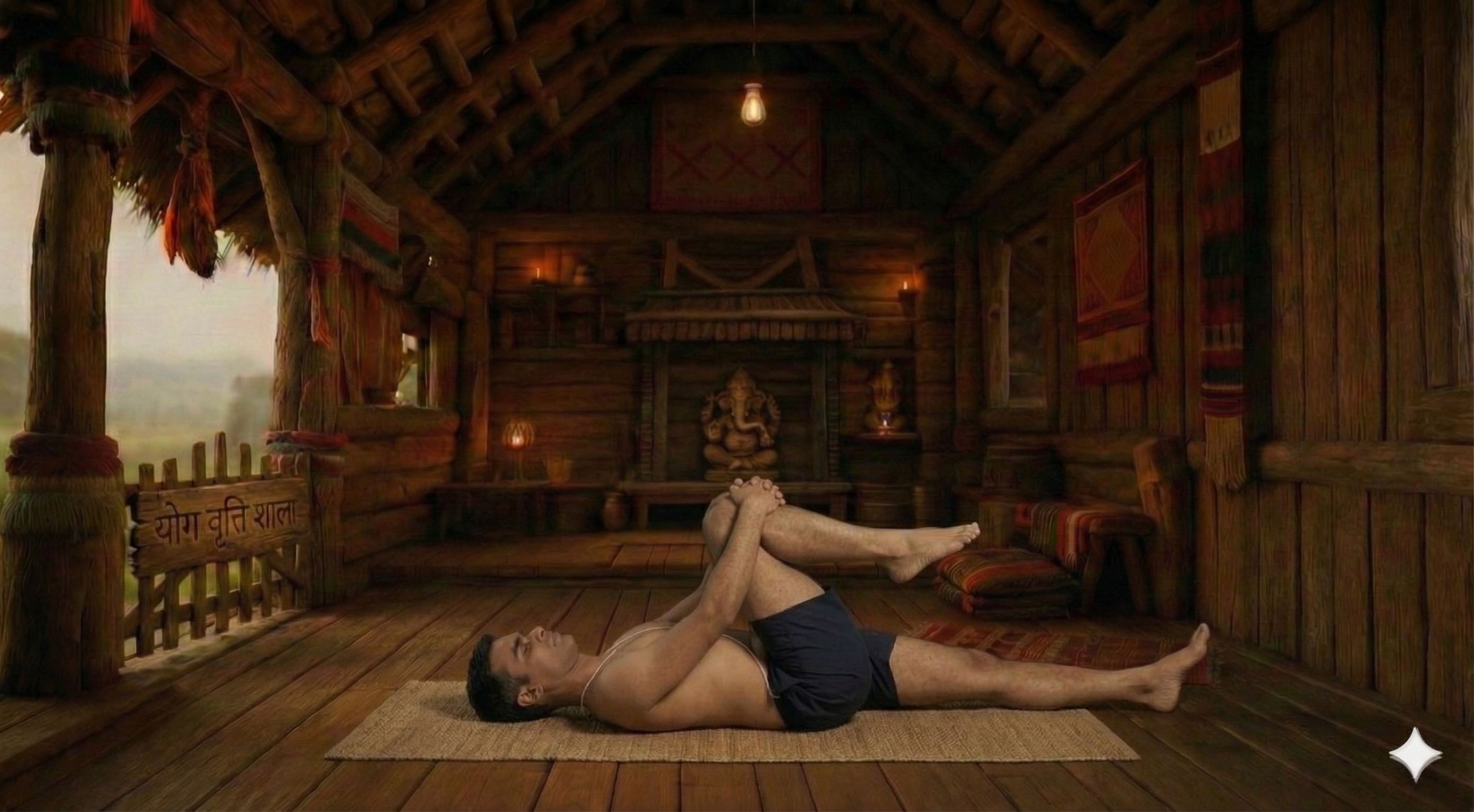
Supta Pawanmuktasana
सुप्त पवनमुक्तासन
Supta Pawanmuktasana, the Wind-Relieving Pose, is a foundational supine posture that gently draws the knees towards the chest, offering profound benefits to the entire body. It effectively massages the internal digestive organs, releases tension in the lower back and hip flexors, and calms the nervous system. This pose cultivates a deep sense of grounding and introspection, inviting practitioners to release physical stiffness and mental agitation. It is a powerful tool for promoting healthy digestion, alleviating back discomfort, and fostering inner peace and awareness for all levels of students.
Supine Wind-Relieving Pose, also called Supta Pawanmuktasana is a classical yoga posture. Its Sanskrit name Supta Pawanmuktasana translates word-for-word as: Supta (Reclining) · Pavana (Wind) · Mukta (Free / Released) · Asana (Pose). Performed lying down, the body releases into the support of the floor, allowing gravity to assist. The posture works to engage the core and release tension in the hips. Massages the digestive organs. Stretches the lower back and spine. It is particularly valued for alleviating back discomfort. Suitable for beginners and regular practitioners alike, it is a calming cool-down, particularly beneficial for beginners and seniors. Practitioners with abdominal surgery and pregnancy should approach with care or consult a qualified teacher.
Helps with
Muscles Worked
Gluteals (buttocks)
[Gluteus Maximus, Medius, Minimus]
The large muscles of your buttocks (gluteals), particularly the gluteus maximus, receive a gentle, sustained stretch as the thighs approximate the chest.
This action helps to release chronic tightness often accumulated from prolonged sitting, which can contribute to lower back stiffness and restricted hip movement.
Yogically, this release helps to unlock stored tension in the pelvic bowl, allowing for greater energetic freedom and a sense of grounding in the lower body.
Regular practice cultivates suppleness in these powerful hip extensors.
Hip Flexors (front of hips)
[Iliopsoas, Rectus Femoris]
While the hips are in flexion, the act of drawing the knees towards the chest helps to gently release chronic tension in the deep hip flexors, primarily the iliopsoas, which connect the lumbar spine to the femur.
This sustained, passive release can alleviate anterior pelvic tilt and reduce the compressive strain these muscles often exert on the lumbar spine.
Energetically, releasing these deep muscles can unblock stagnant energy in the lower abdomen and pelvis, promoting a sense of ease, mobility, and emotional freedom.
Erector Spinae (lower back muscles)
[Erector Spinae group]
The gentle rounding of the lower back in Supta Pawanmuktasana provides a mild, traction-like stretch to the erector spinae muscles, which run along either side of the spine.
This action helps to decompress the lumbar vertebrae and soften the rigidity often held in the lower back from daily upright posture and stress.
The practitioner feels a widening and softening sensation across the sacrum and lower back, fostering a profound sense of surrender and ease.
This cultivates a more pliable, responsive spine, both physically and energetically.
Abdominal Muscles (core)
[Rectus Abdominis, Obliques, Transversus Abdominis]
The act of drawing the knees towards the chest creates a gentle, sustained compression of the entire abdominal wall, engaging the rectus abdominis and obliques.
This internal pressure provides a deep, yet passive, massage to the underlying digestive organs without strenuous effort.
From a yogic perspective, this compression stimulates Samana Vayu, the digestive fire, and helps to draw awareness to the manipura chakra, promoting inner strength, purification, and vitality.
It encourages a natural drawing in of the core, supporting spinal stability.
Joints Mobilized
Lumbar Spine (lower back)
decompressingAs the knees are drawn towards the chest, the natural lordotic curve of the lower back gently flattens and rounds, creating a mild traction effect on the lumbar vertebrae.
This subtle decompression helps to alleviate pressure on the intervertebral discs and nerve roots, offering significant relief from stiffness and discomfort.
The practitioner often feels a widening and softening sensation across the sacrum and lower back, fostering a sense of release and flexibility.
Regular practice supports spinal health and reduces the cumulative strain of gravity.
Hip Joints (where leg meets pelvis)
mobilizingThe hip joints move into deep flexion as the knees come towards the chest, gently mobilizing the joint capsule and encouraging a release in the surrounding soft tissues, including the hip flexors and deep rotators.
This sustained flexion helps to improve the range of motion in the hips, which is crucial for overall pelvic health, ease in walking, and comfortable sitting.
Yogically, this action helps to release stiffness held in the outer hips and groin, allowing for a freer flow of energy through the pelvis and legs.
It cultivates both flexibility and stability in these vital joints.
Organ & System Benefits
Digestive System (intestines, stomach)
The gentle but sustained compression of the abdomen by the thighs provides an internal massage to the digestive organs, including the stomach, small intestine, and large intestine.
This mechanical action stimulates peristalsis, the natural muscular contractions that move food through the digestive tract, and encourages the release of trapped gas and toxins.
From a yogic perspective, this pose directly supports Apana Vayu, the downward-moving energy responsible for elimination, promoting detoxification, healthy bowel function, and a profound sense of inner lightness and cleanliness.
Kidneys and Adrenal Glands
While not a direct massage, the abdominal compression also creates a gentle pressure on the kidneys, which sit in the retroperitoneal space, and indirectly on the adrenal glands positioned above them.
This subtle internal pressure and subsequent release upon exiting the pose can enhance circulation to these vital organs, supporting their detoxifying and hormonal functions.
Yogically, this subtle influence contributes to a feeling of deep cleansing and a reduction in stress, as the adrenals are central to our body's stress response and energy regulation.
It helps to calm and restore these essential glands.
Nervous System
This pose is a profound invitation to the parasympathetic nervous system, our 'rest and digest' mode.
As the body is supine and the lower body is contained, the mind naturally begins to quiet, and the breath deepens and slows.
This shift helps to downregulate the fight-or-flight response, allowing for a deep release of both physical and mental tension, fostering a sense of profound calm.
The gentle pressure on the abdomen stimulates the vagus nerve, which runs through the core and plays a critical role in regulating heart rate, digestion, and mood.
This stimulation helps to calm an overactive mind and soothe anxiety, fostering a sense of inner peace and equilibrium.
The practitioner often feels a profound sense of grounding and safety, a true sanctuary for the nervous system.
By bringing the knees to the chest, the body assumes a fetal-like position, which is inherently calming and introspective, reducing external stimuli.
This posture encourages a turning inward (pratyahara), allowing the nervous system to unwind from daily stressors and sensory overload.
It provides a sanctuary for the mind to settle, promoting mental clarity, emotional balance, and a return to one's center.
Mental & Emotional
Supta Pawanmuktasana encourages a deep sense of surrender and introspection, shifting awareness from the external world to the internal landscape of the body and breath.
The contained nature of the pose helps to quiet the 'chitta vritti' – the fluctuations of the mind – allowing for a more focused and present state.
This mental grounding is invaluable for reducing mental chatter and fostering inner peace, cultivating a stable and serene mind.
The physical act of drawing inward and compressing the abdominal area can help release emotional tension often stored in the gut, sometimes referred to as our 'second brain.' By gently massaging this region and promoting release, the pose can help alleviate feelings of anxiety and worry, fostering a sense of emotional lightness and freedom.
It offers a safe, nurturing space to process and let go of mental and emotional burdens.
This pose cultivates patience and acceptance, as one holds the position with steady breath, observing sensations without judgment.
It is a practice in 'dharana' – concentration – on the breath and the internal experience, which builds mental resilience and self-awareness.
For a teacher, it highlights the profound power of stillness and internal focus in cultivating deep mental shifts and greater self-understanding in students.
Because of Its Shape
forward bend
As the knees draw towards the chest, the spine moves into a gentle flexion, creating a mild forward bend.
This shape internally compresses the front of the body and gently lengthens the back, promoting a sense of introspection and calming.
It encourages the body to soften and release, counteracting the effects of upright posture and external demands, inviting a deep sense of surrender.
Anatomically, forward bends gently lengthen the posterior fascial lines and subtly decompress the spinal column, particularly in the lumbar region.
This action helps to release tension in the erector spinae and gluteal muscles, creating space in the lower back.
From a yogic perspective, forward bends are profoundly grounding and help to draw energy inward, facilitating pratyahara and a feeling of letting go.
Energetically, forward bends are known to soothe the nervous system, activating the parasympathetic response.
The gentle pressure on the abdomen and the contained nature of the pose facilitate a release of apana vayu, the downward-moving energy, promoting elimination and a sense of lightness.
This shape helps to quiet the mind, release unnecessary tension, and cultivate inner peace and equanimity.
Fascial Lines
The superficial back line of fascia, which runs from the soles of the feet up the back of the legs, pelvis, and spine, receives a gentle but sustained lengthening in this pose.
As the lower back rounds and the hips flex, this continuous fascial sheath is encouraged to soften and release, particularly around the sacrum and lumbar region.
This release helps to alleviate chronic tension patterns that can contribute to lower back stiffness and restricted hip movement, promoting greater fluidity.
Breathing & Respiratory
The compression of the abdomen by the thighs naturally restricts the downward movement of the diaphragm, encouraging a more thoracic (chest) oriented breath.
This gentle restriction can paradoxically deepen the breath by making the exhalation more complete and sustained, which is vital for calming the nervous system.
The body learns to release more fully with each out-breath, fostering a sense of letting go.
Anatomical Caution
Teachers should always advise students with recent abdominal surgery, severe knee injuries, or acute back pain to approach this pose with extreme caution or avoid it entirely.
Students with knee issues can place hands behind the thighs rather than on the shins, and those with back pain might only bring the knees partially toward the chest, using a blanket under the head for support.
Listen deeply to the body's signals and prioritize comfort and safety above all else.