5
Muscles
4
Joints
2
Organs
2
Mental
Firefly Pose
टिट्टिभासन
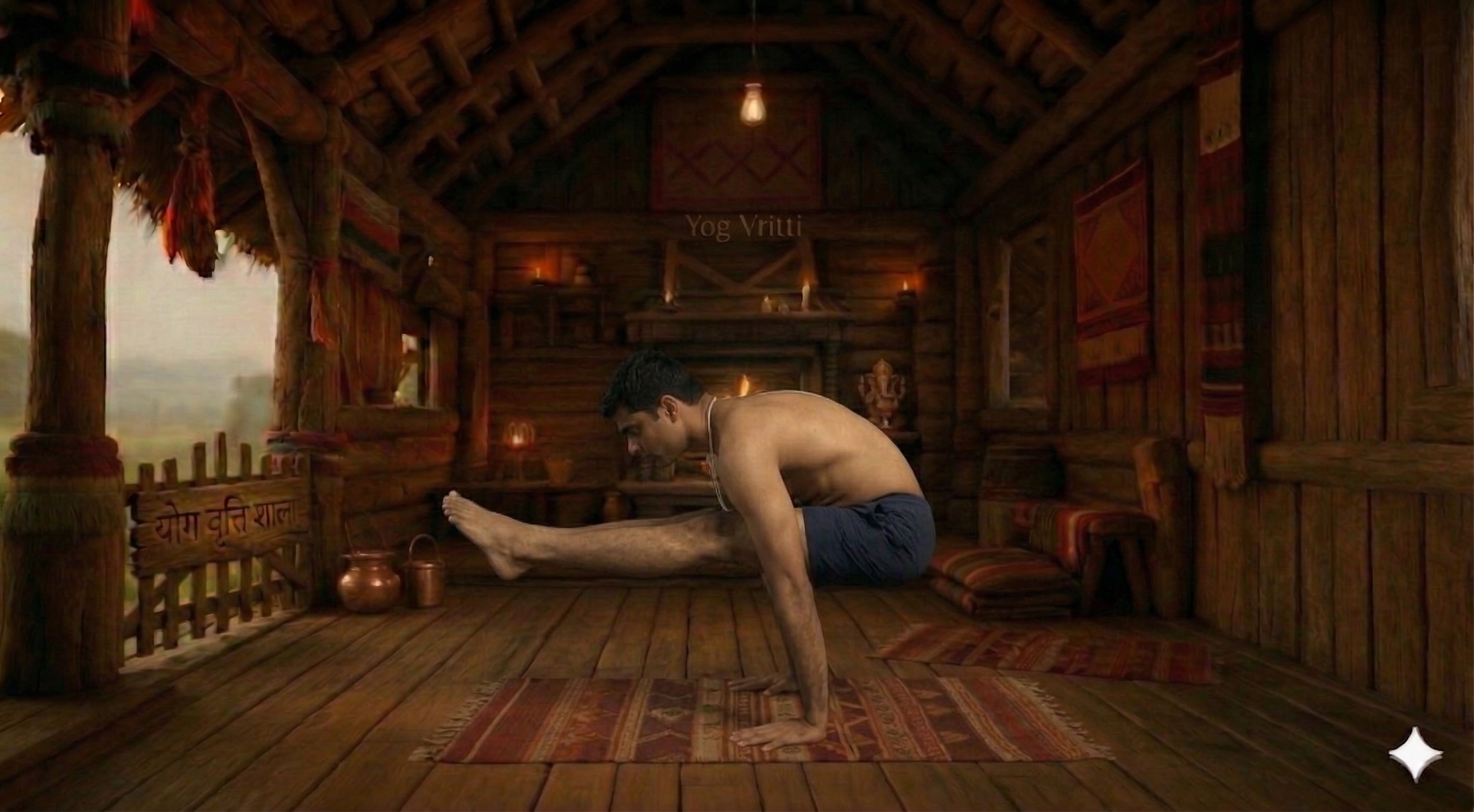
Tittibhasana, the Firefly Pose, is a profound advanced arm balance that demands a harmonious blend of strength, flexibility, and unwavering mental focus. It deeply lengthens the entire posterior chain of the legs (hamstrings) and the inner thigh muscles (adductors), while powerfully recruiting the core stabilizers (transversus abdominis) and the arm and shoulder musculature (triceps, deltoids, serratus anterior). Energetically, it grounds the practitioner through the hands while offering an invigorating inversion, cultivating a deep sense of inner quietude and self-possession. For a teacher, understanding this intricate interplay allows for precise guidance, fostering a transformative experience of balance and inner strength in students.
Firefly Pose, also called Tittibhasana is a classical yoga posture whose Sanskrit roots break down as: Tittibha (Firefly) · Asana (Pose). In this posture, the body grounds through the sit bones while the spine rises tall. The posture works to engage the core, tone the arms and open and strengthen the shoulders. Strengthens core muscles. Improves balance and coordination. It is particularly valued for building full-body strength and developing greater flexibility. Suitable for advanced practitioners with developed body awareness, it is a meaningful addition to any practice, particularly beneficial for athletes. Practitioners with wrist injury and shoulder injury should approach with care or consult a qualified teacher.
Helps with
Muscles Worked
Hamstrings
[Biceps femoris, Semitendinosus, Semimembranosus]
The powerful muscles at the back of your thighs, the hamstrings, receive an intense yet intelligent lengthening in Tittibhasana.
As the hips deeply flex and the knees extend, these muscles are asked to release and extend along their entire length, from their attachment at the sitting bones down to the lower leg.
This sustained stretch, when approached with patience and breath, helps to unwind chronic tightness, often freeing up movement in the pelvis and lower back.
From a yogic perspective, this action releases stagnant apana vayu in the lower body, promoting a feeling of lightness and openness in the legs.
Inner Thigh Muscles
[Adductor magnus, longus, brevis, Pectineus, Gracilis]
The inner thigh muscles, or adductors, are significantly lengthened as the legs abduct and extend out to the sides in this pose.
This action encourages a widening across the pelvic floor, creating space and releasing tension that often accumulates from prolonged sitting or repetitive movements.
Anatomically, these muscles are stretched from their origin on the pubic bone towards their insertion on the thigh bone, improving hip mobility.
Energetically, this opening in the inner thighs is believed to release emotional blockages, allowing for a greater sense of freedom and fluidity in the hips and sacral region.
Deep Abdominal Core
[Transversus abdominis, Obliques, Pelvic floor muscles]
The deep muscles of the core, particularly the transversus abdominis and the pelvic floor, are intensely engaged to lift and stabilize the torso in Firefly Pose.
This engagement creates a strong, supportive container for the spine, allowing the limbs to extend with stability and ease.
The sustained isometric contraction of these muscles builds profound inner strength, translating into better posture and spinal health in daily life.
In yogic terms, this activation awakens the manipura chakra, the center of personal power and will, fostering a sense of inner fire and determination.
Triceps
[Triceps brachii]
The triceps, located on the back of your upper arms, work powerfully to straighten and stabilize the elbows, providing the necessary lift to float the body off the floor.
This sustained effort builds significant strength in the back of the arms, which is crucial for many arm balances and inversions.
Anatomically, the triceps contract concentrically to extend the elbow joint, locking the arms into a stable support structure.
Yogically, this engagement cultivates 'tapas' or disciplined effort, teaching the mind to sustain exertion with grace and precision, translating into mental resilience.
Serratus Anterior
[Serratus anterior]
The serratus anterior, often called the 'boxer's muscle,' plays a critical role in stabilizing the shoulder blades against the rib cage, preventing 'winging' and providing a stable base for the arms to press down.
This muscle actively protracts the scapula, allowing for a powerful and safe lift through the arms.
Strengthening this often-underused muscle improves shoulder girdle integrity and prevents common shoulder dysfunctions.
In the context of yoga, engaging the serratus anterior creates a sense of broadness and strength across the upper back, opening the heart space and supporting a feeling of grounded expansion.
Joints Mobilized
Hip Joint
mobilizingThe hip joint undergoes significant flexion and abduction in Tittibhasana, requiring deep mobility and release in the surrounding soft tissues.
This sustained, active range of motion helps to lubricate the joint surfaces and improve the elasticity of the hip capsule and ligaments.
Regular practice in this pose can enhance overall hip health, preventing stiffness and improving functional movement patterns.
Yogically, this deep hip opening is believed to release stored emotional tension, particularly in the root and sacral chakras, promoting a sense of emotional freedom and creative flow.
Shoulder Girdle
stabilizingThe shoulder girdle, composed of the scapula and clavicle, is actively stabilized through protraction and depression in this arm balance.
This action draws the shoulder blades wide and down the back, creating a strong, secure foundation for weight-bearing through the arms.
This intelligent engagement prevents impingement and strengthens the muscles that support optimal shoulder function.
From a yogic perspective, a stable and broad shoulder girdle creates a sense of strength and openness in the upper body, fostering confidence and a feeling of grounded presence.
Wrist Joint
weight bearingThe wrist joint bears significant weight in Firefly Pose, requiring strength, flexibility, and proper alignment to prevent strain.
The hands are firmly pressed into the floor with fingers spread, distributing the load evenly and engaging the forearm muscles to stabilize the joint in extension.
Regular, mindful practice helps to strengthen the small muscles of the hand and forearm, improving wrist resilience and mobility over time.
Energetically, this grounding through the hands connects us to the earth, fostering a sense of stability and presence through our primary points of contact.
Spinal Column
flexionThe spinal column undergoes a gentle, active flexion in Tittibhasana, especially in the thoracic and lumbar regions as the torso rounds slightly to accommodate the legs and lift.
This action helps to decompress the intervertebral discs and lengthen the posterior spinal muscles, promoting flexibility and mobility throughout the back.
When performed with core engagement, it creates space between the vertebrae, alleviating compressive forces.
Yogically, this gentle rounding can be calming, encouraging introspection and drawing awareness inward, quieting the outer distractions of the mind.
Organ & System Benefits
Abdominal Organs
The abdominal organs receive a gentle, internal massage in Tittibhasana due to the deep hip flexion and core engagement.
This mild compression, followed by release, can stimulate peristalsis and improve circulation to the digestive and eliminatory organs.
This internal 'wringing' action aids in detoxification and promotes healthy organ function.
From a yogic perspective, this internal action helps to stoke Agni, the digestive fire, enhancing metabolism and vitality throughout the body, contributing to overall well-being.
Brain and Circulatory System
As a mild inversion, Tittibhasana gently reverses the flow of blood, encouraging fresh, oxygenated blood to the brain and upper body.
This increased circulation can alleviate mental fatigue, improve concentration, and provide a sense of mental clarity and rejuvenation.
The change in gravitational pull also offers a gentle challenge to the cardiovascular system, promoting circulatory health.
Yogically, inversions are revered for their ability to calm the nervous system, quiet the 'chitta vritti' (mind fluctuations), and offer a fresh perspective on life's challenges.
Nervous System
The intense focus required to balance in Tittibhasana naturally draws the mind inward, leading to a profound sense of calm and presence.
As the body works hard, the mind is compelled to concentrate, shifting attention away from external distractions and internal chatter.
This focused engagement helps to downregulate the sympathetic (fight-or-flight) nervous system and activate the parasympathetic (rest-and-digest) system, even amidst physical exertion.
The balanced effort required cultivates a 'sthiram sukham asanam' experience – steadiness and ease – which is deeply therapeutic for anxiety and restlessness.
The precise alignment and muscular engagement in this pose demand a heightened sense of proprioception and interoception, making the practitioner acutely aware of their body in space.
This deep sensory awareness creates a strong mind-body connection, grounding the nervous system and fostering a feeling of being fully embodied.
By consciously directing breath and intention, the practitioner learns to manage physical and mental challenge with equanimity.
This mastery over the self, through sustained effort and awareness, is a powerful antidote to modern-day stress and mental fragmentation.
Mental & Emotional
Firefly Pose cultivates profound mental concentration and unwavering focus, demanding that the mind be fully present and engaged in the moment.
The act of balancing and supporting one's own weight requires a quiet yet intensely alert mind, effectively quieting the 'monkey mind' (chitta vritti) and fostering a state of meditative absorption.
This practice of 'dharana' or focused attention, when sustained, enhances mental clarity and improves cognitive function in daily life.
It teaches the practitioner to find stillness amidst challenge, a valuable life skill.
Overcoming the perceived difficulty of Tittibhasana builds immense self-trust and inner courage, helping students to transcend self-imposed limitations.
The journey into and through the pose requires patience, perseverance, and a willingness to explore one's edge with compassion.
Successfully holding this advanced balance fosters a deep sense of accomplishment and resilience.
This experience translates beyond the mat, empowering individuals to approach other life challenges with greater confidence and a belief in their own capabilities, fostering 'vairagya' or detachment from outcomes.
Because of Its Shape
balance
As an arm balance, Tittibhasana significantly strengthens the entire upper body, including the arms, shoulders, and core, while simultaneously demanding full-body integration and stability.
The act of balancing on the hands requires precise muscular engagement and finely tuned proprioception, enhancing coordination and body awareness.
This intense physical challenge, when met with steady breath and concentration, cultivates mental fortitude and a deep sense of inner equilibrium.
It teaches the practitioner to find their center not just physically, but also mentally and emotionally, fostering 'ekagrata' or one-pointed focus.
Fascial Lines
Tittibhasana profoundly influences the fascial lines of the body, particularly the Superficial Back Line (SBL) through the deep hamstring stretch, and the Deep Front Line (DFL) through the adductor lengthening and core engagement.
The continuous web of connective tissue along the back of the legs and into the pelvis is encouraged to release and lengthen, unwinding chronic patterns of tension.
Simultaneously, the inner thigh fascia is opened and stretched, releasing restrictions in the hips and pelvis.
This targeted fascial release opens energetic channels (nadis), allowing prana to flow more freely, contributing to increased flexibility and a feeling of integrated lightness throughout the body.
Breathing & Respiratory
In Tittibhasana, the deep core engagement and the inverted nature of the pose naturally encourage a more diaphragmatic and controlled breath, often a gentle Ujjayi.
The abdominal compression supports a mindful exhalation, while the lift from the core creates space for a full inhalation, even in this challenging position.
Practicing this pose with conscious, steady breathing helps to calm the nervous system and sustain effort without tension.
This integration of breath with movement (vinyasa) is a cornerstone of yogic practice, deepening awareness and amplifying the energetic benefits of the asana, directing prana throughout the body.
Anatomical Caution
Teachers must exercise extreme caution with students presenting wrist, shoulder, or hamstring injuries, as Tittibhasana places significant load on these areas.
Ensure students have adequate hamstring flexibility and wrist strength before attempting, as forcing the pose can lead to tears or joint strain.
Always prioritize intelligent preparation and proper alignment over depth, guiding students to respect their body's current limitations to prevent injury and foster a safe, progressive practice.