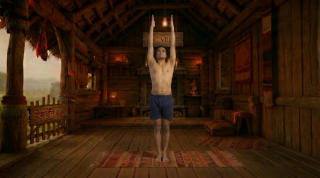
Benefits· लाभ
What Raised Arms Pose does for you
Urdhva Hastasana · ऊर्ध्व हस्तासन
This foundational standing posture, Urdhva Hastasana, elegantly integrates grounding with an expansive upward reach, creating a full-body experience of length and stability. It systematically engages the deep core muscles and the strong extensors of the back, while simultaneously lengthening the entire anterior chain of the body.
Muscles
- Shoulder Musclesstrengthens
- Spinal Musclesstrengthens
- Deep Core Musclesstabilises
- Leg and Foot Musclesstrengthens
Joints
- Spinal Jointsdecompressing
- Shoulder Jointsmobilises
- Hip Jointsstabilises
Inside the body
- Lungs and Diaphragm
- Abdominal Organs
- Breathing
Mind
Urdhva Hastasana serves as a powerful practice for cultivating focus and presence (dharana) as the mind is directed to the intricate alignment of the body from feet to fingertips.
Take care
Teachers should guide students to avoid overarching the lower back, ensuring the core remains engaged to support the lumbar spine.
For those with shoulder impingement or neck stiffness, advise a narrower arm position or keeping hands at heart center, prioritizing comfort over full overhead extension. Always emphasize listening to the body and moving without pain, particularly in the delicate shoulder and neck regions.
Muscles
Shoulder Muscles
StrengthensDeltoids, Rotator Cuff (Supraspinatus, Infraspinatus, Teres Minor, Subscapularis), Serratus Anterior
As you lift your arms, the large rounded cap of the shoulder (deltoids) initiates the upward movement, while the deeper muscles surrounding the shoulder blade (rotator cuff and serratus anterior) work synergistically.
Read moreShow less
These muscles stabilize the shoulder joint, ensuring a smooth, controlled ascent of the arms without pinching or strain.
This coordinated action helps to create space in the shoulder girdle, allowing the breath to deepen and fostering a sense of lightness and freedom in the upper body.
Regular engagement strengthens the entire shoulder complex, improving arm mobility and reducing the likelihood of impingement over time.
Spinal Muscles
StrengthensErector Spinae (Iliocostalis, Longissimus, Spinalis)
The long muscles running vertically along either side of your spine (erector spinae) actively engage to lengthen and lift your torso against gravity.
Read moreShow less
This engagement creates a gentle, continuous extension through each vertebra, counteracting the compressive forces of daily life and promoting spinal health.
As the spine extends, a sense of inner spaciousness emerges, allowing the energy (Prana) to flow unimpeded along the central channel (Sushumna Nadi).
This sustained activation builds endurance in the postural muscles, laying the foundation for improved upright posture and reducing back fatigue.
Deep Core Muscles
StabilisesTransversus Abdominis, Internal and External Obliques
Below the superficial 'six-pack' muscle, the deep corset-like muscle wrapping around your abdomen (transversus abdominis) and the side waist muscles (obliques) activate subtly to support your lower back and stabilize the pelvis.
Read moreShow less
This engagement creates a firm foundation for the upward extension of the spine, preventing excessive arching in the lumbar region.
The conscious activation of these deep core muscles cultivates a sense of inner strength and integration, connecting the lower and upper body energies.
Over time, this practice refines proprioception, teaching the body to maintain optimal spinal alignment effortlessly.
Leg and Foot Muscles
StrengthensQuadriceps, Gluteus Maximus, Intrinsic Foot Muscles
From the ground up, the muscles on the front of your thighs (quadriceps) gently lift the kneecaps, firming the legs, while your buttocks muscles (gluteus maximus) subtly engage to stabilize your hips and pelvis.
Read moreShow less
Simultaneously, the small muscles within the soles of your feet (intrinsic foot muscles) activate to create a strong arch, rooting you firmly into the earth.
This muscular engagement fosters a profound sense of grounding (Apana Vayu), connecting you deeply to the earth's energy even as you reach upwards.
This foundational strength provides stability for the entire pose, enhancing balance and overall body awareness.
Joints
Spinal Joints
DecompressingEach of the small joints between your vertebrae in the spinal column undergoes a gentle traction and extension as you lengthen upwards.
Read moreShow less
This action creates subtle space between the bony segments, decompressing the spinal discs and nerves.
The practitioner experiences a feeling of lightness and increased freedom of movement in the back, alleviating stiffness and improving overall spinal mobility.
With consistent practice, this decompression helps to maintain the natural curves of the spine and can mitigate the effects of gravity and poor posture over time.
Shoulder Joints
MobilisesThe main ball-and-socket joint of your shoulder (glenohumeral joint) and the joint where your shoulder blade moves against your rib cage (scapulothoracic joint) are actively mobilized in flexion and abduction as the arms lift.
Read moreShow less
Simultaneously, the surrounding muscles stabilize these joints, preventing impingement and encouraging optimal alignment.
This coordinated action cultivates a sense of openness and ease in the upper chest and shoulders, allowing for a fuller, more expansive breath.
Regular practice improves the range of motion in the shoulders, making everyday movements like reaching overhead feel less restricted and more fluid.
Hip Joints
StabilisesWhile not directly moving, your hip joints are subtly stabilized in a neutral position, supporting the foundation of your torso.
Read moreShow less
The deep hip flexors and extensors work in concert to hold the pelvis steady, allowing the spine to extend freely above.
This creates a sense of rootedness and stability in the lower body, which in turn allows for greater freedom and lift in the upper body.
Maintaining this neutral alignment strengthens the supporting musculature around the hips, contributing to overall pelvic stability and better balance in all standing poses.
Inside the body
Lungs and Diaphragm
As the rib cage lifts and expands with the upward reach, the space for your lungs to inflate increases significantly, allowing for deeper and fuller inhalations.
Read moreShow less
This expansion also facilitates the optimal movement of your primary breathing muscle, the diaphragm, promoting more efficient oxygen exchange.
The yogi experiences a profound sense of energetic expansion and vitality, as the vital life force (Prana) is drawn deeply into the body, invigorating every cell and calming the nervous system.
This increased lung capacity is beneficial for overall respiratory health and stress reduction.
Abdominal Organs
With the lengthening of the torso and the gentle engagement of the core, the abdominal cavity receives a subtle lift and spaciousness.
Read moreShow less
This mild internal massage and improved circulation can aid in the healthy functioning of digestive and excretory organs.
While not a forceful action, this gentle internal lift helps to prevent stagnation in the abdominal region, promoting a sense of lightness and internal harmony.
From a yogic perspective, this supports the healthy flow of Samana Vayu, which governs digestion and assimilation.
Breathing
The expansive nature of Urdhva Hastasana naturally encourages a deeper and more complete breath, particularly emphasizing the inhalation.
Read moreShow less
As the arms lift and the rib cage expands, the diaphragm has more room to descend, allowing the lungs to fill more fully with air.
This enhanced oxygen intake invigorates the body and calms the mind, making it an excellent preparatory pose for pranayama practices like Ujjayi, which benefits from an open chest and elongated spine.
The full, conscious breath cultivates a sense of presence and connection, linking the physical movement with the subtle flow of Prana.
Fascia (connective tissue)
In Urdhva Hastasana, the entire front line of the body's connective tissue (superficial front line fascia) is gently lengthened and opened, running from the tops of the feet, up the shins, thighs, torso, and into the arms and hands.
Read moreShow less
Simultaneously, the superficial back line fascia, particularly along the spine, is engaged and strengthened to support the upward extension.
This release and activation of fascial lines helps to unwind habitual tension patterns, creating a sense of fluidity and interconnectedness throughout the body.
From a yogic perspective, this opening of the fascial web allows for freer movement of Prana, dissolving energetic blocks and enhancing the body's natural resilience.
Mind and nervous system
- Nervous system
By rooting through the feet while simultaneously reaching upwards, Urdhva Hastasana creates a balance between grounding and expansion, which directly impacts the nervous system.
Read moreShow less
This dual action helps to calm an overactive mind (chitta vritti) by bringing awareness to both stability and spaciousness.
The deep, expansive breath encouraged by the pose further stimulates the parasympathetic nervous system, fostering a profound sense of ease and reducing feelings of anxiety.
This cultivates a state of alert calm, enhancing presence and reducing reactivity to external stressors.
- Mind & mood
Urdhva Hastasana serves as a powerful practice for cultivating focus and presence (dharana) as the mind is directed to the intricate alignment of the body from feet to fingertips.
Read moreShow less
The upward reach inherently inspires a sense of aspiration and expansiveness, shifting one's mental state from contraction to openness.
This physical act of reaching towards the sky, while remaining firmly rooted, can foster a feeling of inner strength and confidence, helping to overcome mental inertia.
It teaches the practitioner to find steadiness and ease even in moments of perceived challenge, translating physical alignment into mental clarity and resilience.
Because it is a standing pose
Standing poses inherently connect us to the earth, engaging the muscles of the legs and feet to create a stable foundation.
Read moreShow less
This physical grounding translates to a strong energetic connection (Apana Vayu), helping to alleviate feelings of unsteadiness or anxiety.
By establishing this firm base, the mind becomes calmer, and the body gains the support needed for upward extension.
This rootedness is fundamental for all subsequent yoga practices, building proprioception and balance.
The upward reach in Urdhva Hastasana encourages a lengthening of the entire spinal column, creating space between the vertebrae.
Read moreShow less
This gentle traction helps to decompress the discs and nerves, promoting spinal health and flexibility.
From a yogic perspective, this open spine allows for the free flow of Prana along the central energetic channel (Sushumna Nadi), enhancing vitality and mental clarity.
Regular practice can alleviate back stiffness and improve overall posture.
Lifting the arms overhead naturally opens the front of the chest and stretches the muscles around the shoulders and armpits.
Read moreShow less
This expansion increases lung capacity, inviting deeper and more complete breaths, which in turn calms the nervous system.
Energetically, opening the chest is associated with the Anahata Chakra, fostering feelings of compassion, openness, and emotional release.
It counteracts the hunched posture often adopted in daily life, promoting an uplifting and confident stance.