5
Muscles
4
Joints
3
Organs
3
Mental
Camel Pose
उष्ट्रासन
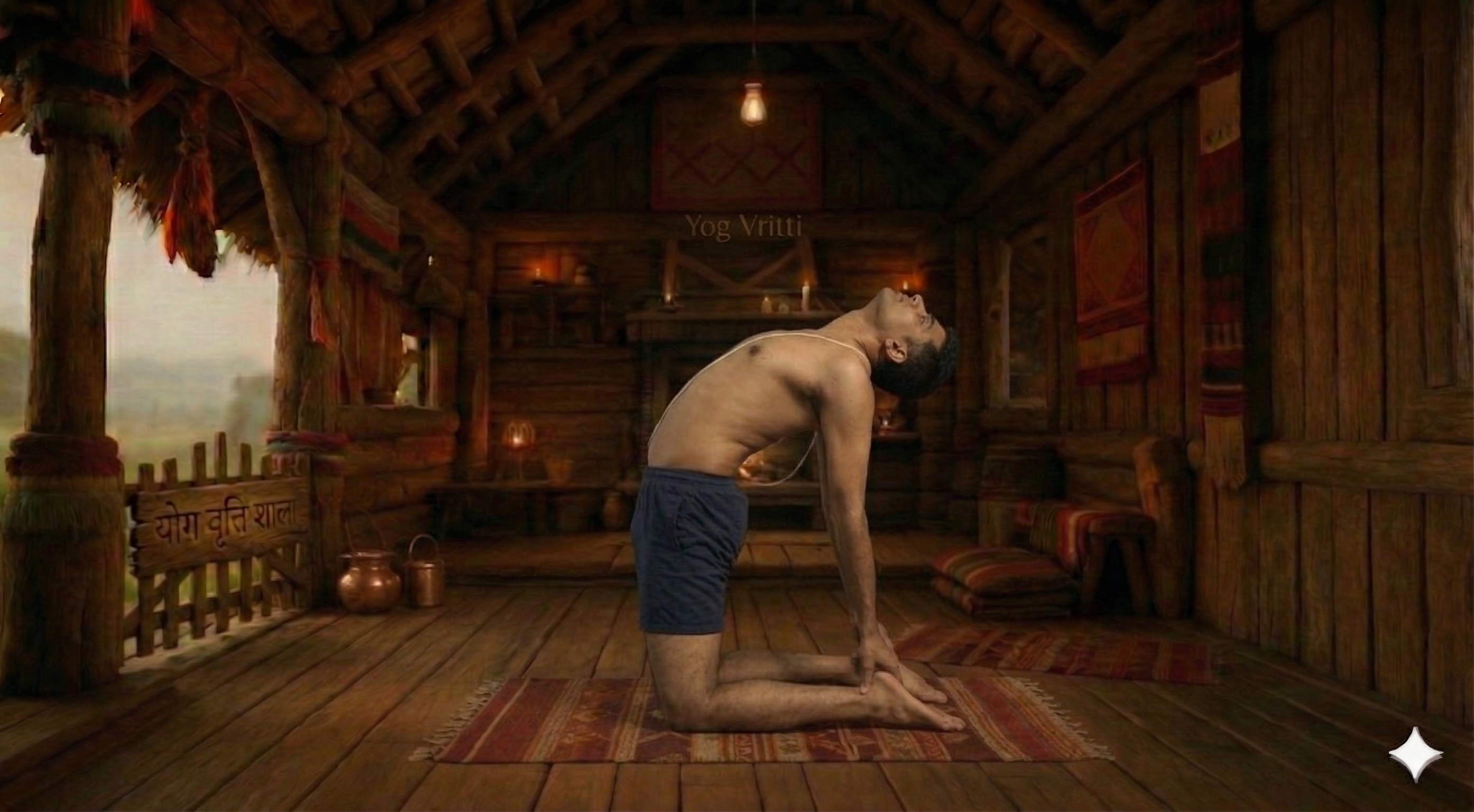
Ustrasana, or Camel Pose, is a profound backbend that meticulously lengthens the entire anterior chain of the body, from the quadriceps and hip flexors to the abdominal muscles and chest. Simultaneously, it powerfully strengthens the posterior spinal extensors, creating an intelligent and balanced arc of the spine. This deeply opening and invigorating pose cultivates an expansive energetic quality, promoting courage and emotional release, while physically improving posture, spinal mobility, and stimulating internal organs. For any practitioner or teacher, it offers a transformative journey into inner strength and open-hearted awareness.
Camel Pose, also called Camel is a classical yoga posture whose Sanskrit roots break down as: Ustra (Camel) · Asana (Pose). Beginning from a kneeling position, the practitioner opens the chest and stretches the entire front body. The posture works to strengthen the quadriceps, stretch the hip flexors and strengthen and extend the back. Stretches the hip flexors and quadriceps. Strengthens the back muscles. It is particularly valued for developing greater flexibility and building full-body strength. Suitable for intermediate practitioners with foundational yoga experience, it is a meaningful addition to any practice, particularly beneficial for athletes and desk workers. A blanket and block can be used to make the posture more accessible and support correct alignment. Practitioners with hypertension and low blood pressure should approach with care or consult a qualified teacher.
Helps with
Muscles Worked
Quadriceps
[Rectus Femoris, Vastus Lateralis, Vastus Medialis, Vastus Intermedius]
The muscles along the front of your thighs (quadriceps), particularly the rectus femoris which crosses the hip, experience a significant lengthening as the hips extend and the knees remain bent.
This deep stretch helps to release chronic tightness often stored from prolonged sitting, enhancing the range of motion in the hip joint.
Anatomically, this action allows for greater pelvic stability and freedom in hip extension.
Energetically, releasing these powerful muscles can free up stagnant energy in the lower body, cultivating a feeling of lightness and openness.
Hip Flexors
[Iliopsoas (Psoas Major, Iliacus)]
The deep muscles connecting your spine and pelvis to your thigh bone (hip flexors, primarily the iliopsoas) are profoundly lengthened as you push your pelvis forward in Ustrasana.
This sustained extension directly counteracts the shortening effect of modern lifestyles, which often contributes to lower back pain and restricted movement.
From an anatomical perspective, this restores optimal length to these key postural muscles, allowing for more balanced pelvic alignment.
Yogically, the psoas is often considered a 'muscle of the soul,' and its release can be deeply cathartic, freeing stored emotional tension and promoting a sense of inner spaciousness.
Abdominal Muscles
[Rectus Abdominis, Obliques, Transversus Abdominis]
The entire front wall of your abdomen, especially the long superficial muscle (rectus abdominis), is stretched extensively as the spine arches backward.
While lengthening, the deeper core muscles like the transversus abdominis and obliques are simultaneously engaged to support and stabilize the lumbar spine, preventing excessive compression.
This dynamic interplay builds strength in an elongated state, which is crucial for spinal health and integrity.
Energetically, this expansive stretch allows for greater flow of prana through the manipura chakra, invigorating the digestive fire and cultivating a sense of inner power and confidence.
Spinal Extensors
[Erector Spinae group (Iliocostalis, Longissimus, Spinalis), Multifidus]
The muscles running along the entire length of your spine (spinal extensors) are actively contracting to lift and extend your torso, creating the beautiful and controlled arc of the backbend.
This strengthening action builds endurance and resilience in the posterior chain, which is essential for maintaining upright posture and supporting the spine in daily activities.
Anatomically, these muscles work synergistically to articulate each vertebra into extension, improving overall spinal mobility.
From a yogic perspective, an active, supple spine is a conduit for unimpeded prana, fostering vitality and mental clarity.
Shoulder Girdle Muscles
[Deltoids, Rotator Cuff, Trapezius, Rhomboids]
The muscles surrounding your shoulder joints and shoulder blades work in concert to stabilize the arms as they reach back, while simultaneously facilitating a broad opening across the chest.
The rhomboids and lower trapezius gently draw the shoulder blades down and towards the spine, lifting the sternum and broadening the collarbones.
This action directly counteracts the common tendency of rounded shoulders and kyphosis, promoting an open and expansive posture.
Energetically, an open chest is associated with the Anahata chakra, fostering feelings of compassion, courage, and emotional freedom.
Joints Mobilized
Spine (Vertebral Joints)
mobilizingEach individual segment of your vertebral column, from the cervical to the lumbar regions, undergoes significant extension in Ustrasana.
This movement gently compresses the posterior elements of the vertebrae while opening the anterior aspect, enhancing the range of motion and nourishing the intervertebral discs.
Regular mobilization in this manner helps to maintain spinal health, preventing stiffness and promoting a feeling of fluidity and lightness in the torso.
Over time, this practice can decompress the spine, fostering a more youthful and supple back.
Hip Joints (Acetabulofemoral Joint)
mobilizingThe ball-and-socket hip joints experience deep extension as the pelvis is pushed forward and the thighs remain perpendicular to the floor.
This action stretches the anterior hip capsule and the surrounding hip flexor muscles, significantly increasing the available range of motion in the joint.
Practitioners often feel a profound release in the groin and front of the hips, which translates to greater ease and freedom in daily movements like walking or running.
Long-term, this mobilization helps to maintain the integrity of the joint capsule and may reduce the risk of degenerative changes by promoting synovial fluid circulation.
Shoulder Joints (Glenohumeral Joint)
mobilizingAs the hands reach back to the heels, the shoulder joints move into extension and often external rotation, while the shoulder blades (scapulae) retract and depress.
This combination helps to broaden the chest and open the front of the shoulders, addressing common stiffness from desk work or poor posture.
The improved mobility allows for a greater range of arm movements and can alleviate tension often held in the upper back and neck.
Yogically, this opening cultivates a sense of spaciousness and freedom in the upper body, allowing breath to flow more freely into the chest.
Knee Joints (Tibiofemoral Joint)
weight bearing | stabilizingThe knee joints are in a flexed position, bearing the weight of the upper body as the shins press firmly into the earth.
While primarily weight-bearing, the quadriceps are also engaged to protect the joint, and the connection through the shins to the floor provides a stable foundation for the backbend.
It's crucial to ensure proper alignment, with knees hip-width apart, to prevent undue stress on the ligaments and menisci.
This foundational stability allows the practitioner to deepen the backbend from a place of grounded strength, rather than relying solely on spinal flexibility.
Organ & System Benefits
Abdominal Organs (Digestive System)
As the abdomen expands and stretches deeply in this backbend, the internal organs housed within the abdominal cavity, including the stomach and intestines, experience a gentle compression posteriorly and an expansive stretch anteriorly.
This action can stimulate peristalsis, the muscular contractions that move food through the digestive tract, aiding in digestion and alleviating sluggishness.
Yogically, this internal massage is believed to stoke Agni, the digestive fire, enhancing metabolism and detoxification, leading to a feeling of lightness and improved energy throughout the body.
Thyroid and Parathyroid Glands
The gentle extension and compression at the base of the throat, where the head drops back in Ustrasana, can stimulate the thyroid and parathyroid glands.
These glands are crucial for regulating metabolism, energy levels, and calcium balance in the body.
While not a direct massage, the increased blood flow and gentle engagement of this region are thought to positively influence their function.
In yogic philosophy, the throat chakra (Vishuddha) is associated with communication and self-expression, and opening this area can facilitate a clearer voice and connection to one's inner truth.
Lungs and Diaphragm (Respiratory System)
The profound opening of the chest and the elevation of the sternum in Ustrasana create significantly more space for the lungs to expand, particularly into their upper lobes.
This encourages deeper, more expansive inhalations and can improve overall lung capacity and respiratory efficiency.
The diaphragm, the primary muscle of respiration, gains greater freedom of movement due to the abdominal stretch, enhancing its ability to draw air in.
This improved respiratory function helps to calm the nervous system and increase oxygen uptake, leaving the practitioner feeling invigorated, refreshed, and mentally clear.
Nervous System
Backbends are inherently stimulating and can initially heighten the sympathetic nervous system, creating a surge of energy and alertness.
However, the sustained hold, combined with a steady and expansive breath, gradually allows the parasympathetic nervous system to engage, promoting a sense of calm strength and groundedness.
This dynamic interplay helps to balance the nervous system, moving from an initial invigorating rush to a state of expansive, yet centered, awareness.
The deep opening of the chest and the extension of the spine directly impact the vagus nerve, which runs through the core of the body and plays a critical role in regulating stress and relaxation.
By creating space and releasing tension in the anterior body, Ustrasana can help to 'tone' the vagus nerve, improving its ability to induce a state of rest and digest.
This can lead to a profound sense of inner peace, emotional regulation, and a reduction in generalized anxiety.
The invigorating nature of Ustrasana can also help to clear mental fog and alleviate mild depressive states by increasing cerebral blood flow and stimulating the central nervous system.
The feeling of vulnerability in a deep backbend, followed by the sense of accomplishment, builds resilience and courage from within.
This energetic lift, often described as an upward flow of Prana Vayu, helps to dispel lethargy and cultivate a more optimistic and expansive outlook on life.
Mental & Emotional
Ustrasana is a powerful heart-opener, physically exposing the chest and symbolically inviting vulnerability and courage.
This direct physical opening can often lead to an emotional release, helping practitioners confront fears or anxieties they might unconsciously hold within their posture.
It cultivates a sense of fearlessness and a willingness to be open-hearted, translating into greater confidence and authenticity in daily interactions.
The intense nature of this backbend demands a focused and present mind, drawing awareness away from external distractions and into the internal sensations of the body and breath.
This practice of single-pointed concentration (dharana) helps to quiet the fluctuations of the mind (chitta vritti), fostering mental clarity and a deeper connection to one's inner strength.
It teaches us to breathe through intensity, building mental fortitude and resilience in the face of challenge.
By literally lifting the chest and gaze upwards, Ustrasana can shift one's perspective from introversion or self-doubt to an expansive, uplifting outlook.
It builds self-esteem and a profound sense of empowerment, reminding us of our inherent capacity for strength and resilience.
This mental shift can be particularly beneficial for those feeling weighed down or lacking motivation, offering a significant energetic and psychological uplift that inspires positivity and hope.
Because of Its Shape
backbend
Backbends are characterized by extension through the entire length of the spine, which effectively lengthens the anterior body and powerfully strengthens the posterior spinal muscles.
This action directly counteracts the pervasive postural tendency of forward flexion, common from sitting and technology use, helping to restore the natural curves of the spine.
Anatomically, this movement decompresses the anterior vertebral bodies and strengthens the posterior chain, significantly improving spinal health and flexibility.
Energetically, backbends are considered heating and stimulating, directing prana (life force) upwards and outwards, fostering an expansive and uplifting quality throughout the being.
They are profoundly associated with opening the Anahata (heart) chakra, promoting feelings of love, compassion, and courage, and are often used to release emotional blockages.
This energetic activation can help to cultivate a sense of joy, freedom, and deep connection within the body and mind.
The deep opening of the chest and shoulders inherent in backbends significantly improves respiratory capacity by creating more physical space for the lungs to expand fully.
This allows for deeper, more efficient breathing, which in turn oxygenates the blood more effectively and helps to calm the nervous system.
From a yogic perspective, this increased breath capacity enhances the unimpeded flow of prana throughout the entire body, vitalizing all physiological systems and promoting overall well-being.
Fascial Lines
The fascial web, an intricate network of connective tissue that wraps and connects every muscle, organ, and bone, receives a profound and comprehensive stretch in Ustrasana, particularly along the superficial and deep front lines of the body.
This includes the fascia enveloping the quadriceps, hip flexors, abdominal wall, and chest, which are often tight and restricted.
The sustained lengthening helps to release adhesions and restrictions within these fascial planes, improving overall mobility and reducing chronic tension.
Yogically, this release is akin to opening energetic channels (nadis), allowing prana to flow more freely, dissolving held patterns of tension and promoting a feeling of integrated ease and fluidity throughout the entire anterior kinetic chain.
Breathing & Respiratory
In Ustrasana, the deep opening of the chest and the expansive extension of the spine naturally facilitate a fuller, more expansive inhalation.
The elevated sternum and broadened collarbones create ample space for the lungs to fill, particularly in the upper lobes, encouraging a sense of uplifting energy.
This increased capacity for inhalation makes it an excellent pose for cultivating Ujjayi breath, as the gentle constriction in the throat is supported by the neck extension, allowing for a steady, audible breath that deepens focus, calms the mind, and enhances the flow of prana.
Anatomical Caution
Teachers must always prioritize student safety, especially in deep backbends like Ustrasana.
Pay close attention to any student with existing neck or lower back issues, ensuring they do not overarch the lumbar spine or drop the head back excessively without proper support.
Encourage a gentle, mindful approach, using props like blocks for hands or a blanket under the knees, to ensure stability and prevent strain, guiding students to find their own intelligent edge.