6
Muscles
5
Joints
3
Organs
2
Mental
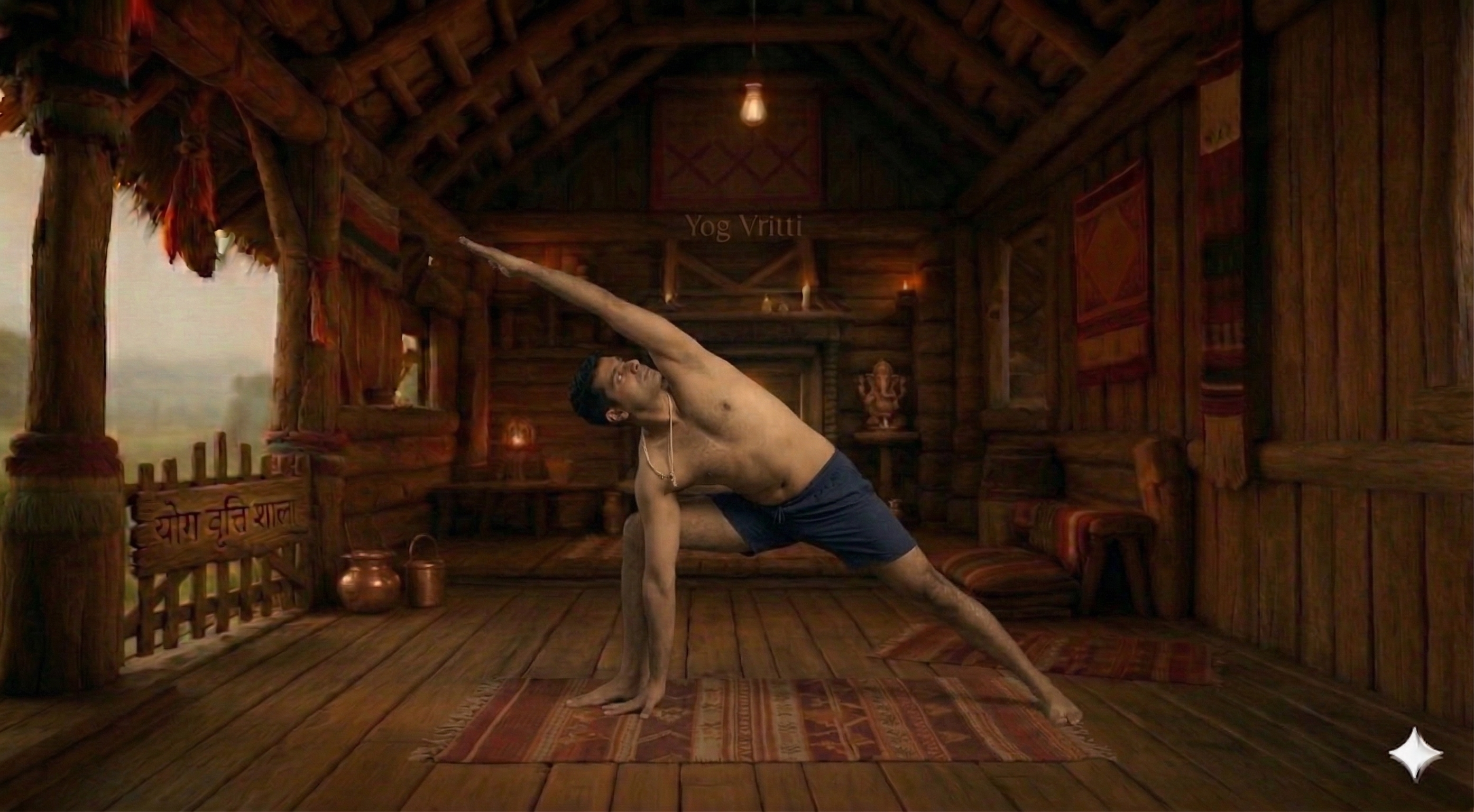
Extended Side Angle Pose
उत्थित पार्श्वकोणासन
Utthita Parsvakonasana, the Extended Side Angle Pose, is a profound standing asana that orchestrates a full-body symphony of lengthening and strengthening. It deeply opens the entire side body, from the outer heel to the fingertips, decompressing the spine and stretching the often-tight inner thighs and groins. Simultaneously, it builds immense power and stability in the legs and core, grounding the practitioner firmly to the earth. Energetically, this pose cultivates a sense of expansion and release, allowing prana to flow freely, bringing both vitality and a deeply rooted calm, making it invaluable for improving overall posture and emotional balance.
Extended Side Angle Pose, also called Side Angle Pose is a classical yoga posture whose Sanskrit roots break down as: Utthita (Extended) · Parsva (Side) · Kona (Angle) · Asana (Pose). From a standing position, the body roots firmly through the feet while the spine extends upward. The posture works to strengthen the quadriceps, lengthen the hamstrings and activate the glutes. Strengthens the legs and ankles. Improves digestion. It is particularly valued for developing greater flexibility and building full-body strength. Suitable for beginners and regular practitioners alike, it is an excellent warm-up, particularly beneficial for beginners and athletes. A block can be used to make the posture more accessible and support correct alignment. Practitioners with hypertension and migraine should approach with care or consult a qualified teacher.
Helps with
Muscles Worked
Quadriceps
[Rectus Femoris, Vastus Lateralis, Vastus Medialis, Vastus Intermedius]
The large muscles on the front of your bent thigh (quadriceps) are actively engaged here, working concentrically to maintain the deep bend in the front knee.
This sustained contraction builds endurance and strength in the thigh, creating a stable foundation for the entire posture.
From a yogic perspective, this engagement cultivates tapas, or inner fire, in the lower body, burning away inertia and instilling a sense of unwavering determination.
Hamstrings
[Biceps Femoris, Semitendinosus, Semimembranosus]
While the hamstrings of the front leg stabilize the knee, those in the back leg experience a significant lengthening, particularly as the practitioner works to straighten and root through the back heel.
This gentle, sustained stretch helps to release chronic tightness often held from sitting, improving the overall flexibility of the posterior chain.
Energetically, this release allows apana vayu, the downward-moving energy, to flow more freely, enhancing groundedness and a feeling of letting go.
Gluteal Muscles
[Gluteus Maximus, Gluteus Medius, Gluteus Minimus]
The muscles of the buttocks (gluteal muscles), especially the gluteus medius and minimus, are crucial for stabilizing the front hip and preventing the knee from collapsing inward.
They work to externally rotate the thigh and abduct the hip, maintaining proper alignment and protecting the knee joint.
This conscious engagement brings awareness to the pelvis as the center of stability, fostering a sense of rootedness and integrity in the lower body, essential for true balance.
Obliques and Transverse Abdominis
[External Oblique, Internal Oblique, Transverse Abdominis]
The deep core muscles, particularly the obliques and transverse abdominis, are powerfully engaged to support the lateral flexion of the trunk and maintain the length of the spine.
The obliques on the bottom side contract to lift the torso, while those on the top side lengthen, creating space in the waist.
This integrated core work not only protects the lower back but also centralizes prana, the vital energy, in the manipura chakra, strengthening resolve and inner power.
Latissimus Dorsi
[Latissimus Dorsi]
The broad muscle of the upper back (latissimus dorsi) on the side of the extended top arm receives a profound lengthening stretch as the arm reaches actively overhead and away from the hip.
This action helps to decompress the spine and open the entire side rib cage, often restricted by daily habits.
Through this expansive stretch, blockages in the energetic channels (nadis) along the side body are released, promoting a feeling of unburdened freedom and lightness.
Adductors
[Adductor Longus, Brevis, Magnus, Pectineus, Gracilis]
The muscles of the inner thigh (adductors) of the back leg undergo a significant lengthening as the hips open and the legs move apart.
This area frequently holds tension, restricting hip mobility and contributing to lower back issues.
The sustained stretch in Parsvakonasana helps to release this deep-seated tightness, creating more space and flexibility in the pelvic region.
Yogically, this opening in the groin can release emotional stagnation, allowing for greater ease and openness in one’s stride through life.
Joints Mobilized
Hip Joints
mobilizingThe front hip joint experiences external rotation and abduction, while the back hip remains relatively neutral but is also engaged in stabilizing the leg.
This dynamic engagement mobilizes the ball-and-socket joint, improving its range of motion and the strength of the surrounding musculature.
Practitioners often notice increased fluidity in walking and sitting, as regular practice systematically addresses stiffness and promotes a balanced distribution of energy (prana) around the pelvis.
Knee Joints
stabilizingThe front knee joint is deeply bent and held at a 90-degree angle, requiring strong activation of the quadriceps to stabilize it over the ankle, preventing inward or outward collapse.
The back knee is fully extended, requiring a different kind of stability from the hamstrings and quadriceps.
This focused engagement strengthens the ligaments and muscles supporting both knees, promoting long-term joint health and cultivating a sense of unwavering steadiness, or sthira, in the posture.
Spine (Thoracic and Lumbar)
decompressingThe spine undergoes a beautiful lateral flexion, extending and creating space between the vertebrae from the tailbone all the way to the crown of the head.
This action gently decompresses the intervertebral discs, promoting nutrient flow and relieving pressure that often accumulates from daily slouching.
The felt sensation is one of profound lengthening and lightness, allowing the central energetic channel (sushumna nadi) to align and facilitating a clearer flow of vital energy throughout the body.
Shoulder Girdle
mobilizingThe shoulder girdle on the top arm side experiences significant flexion and external rotation, while the bottom shoulder actively grounds into the front leg.
This creates broadness across the chest and upper back, improving mobility in the glenohumeral joint and strengthening the rotator cuff muscles.
The opening across the collarbones and chest can release emotional tension, allowing for a sense of expanded awareness and the ability to 'take in' more of life's experiences with an open heart.
Ankle Joints
weight bearingBoth ankle joints are actively engaged in bearing and distributing the body's weight, with the front ankle deeply dorsiflexed and the back ankle maintaining a neutral position while the foot roots down.
This active engagement strengthens the muscles of the lower legs and feet, improving balance and proprioception.
Through this grounding action, the practitioner connects deeply with the earth, fostering a sense of stability and security that translates from the physical body to the mental state.
Organ & System Benefits
Digestive Organs
The lateral bend in Utthita Parsvakonasana provides a gentle compression to the digestive organs on the bottom side of the torso, while simultaneously stretching and creating space on the top side.
This 'squeeze and release' action can stimulate peristalsis, the natural muscular contractions that move food through the intestines, aiding digestion and relieving sluggishness.
Yogically, this gentle internal massage helps to purify the internal environment, encouraging the healthy flow of prana and apana in the abdominal region.
Lungs and Diaphragm
The expansive stretch along the entire side body directly impacts the lungs and diaphragm, creating significant space for deeper breathing.
The rib cage on the top side is encouraged to expand more fully with each inhalation, increasing lung capacity and oxygen intake.
This enhanced respiratory function not only energizes the body but also calms the nervous system, allowing for a more profound and conscious connection to the breath, which is the vehicle for prana.
Kidneys and Adrenal Glands
Positioned against the back body, the kidneys and adrenal glands receive a subtle, gentle compression and release during the lateral stretch.
This can stimulate blood flow to these vital organs, supporting their function in detoxification and hormone regulation.
From a holistic perspective, this gentle stimulation can help balance the energetic flow related to fear and courage, often associated with the kidney meridian, promoting a sense of inner strength and resilience.
Nervous System
The inherent grounding quality of this standing pose, combined with the expansive side stretch, helps to balance the nervous system, drawing attention away from external distractions and into the present moment.
As the body finds its stability, the breath deepens and lengthens, which directly activates the parasympathetic nervous system, initiating a 'rest and digest' response.
This shift calms the mind (chitta vritti nirodhah), reducing anxiety and fostering a profound sense of inner peace and equilibrium.
The active engagement of the legs and core creates a stable base, which translates into a feeling of security and rootedness, counteracting feelings of flightiness or overwhelm.
This physical grounding allows the mind to settle, encouraging a mindful awareness of the body's alignment and the breath's rhythm.
As the practitioner consciously extends through the limbs while rooting through the feet, the nervous system receives clear signals of both expansion and stability, fostering a harmonious state of alert relaxation.
Mental & Emotional
Utthita Parsvakonasana cultivates mental clarity and focus by demanding full attention to alignment and the subtle actions within the body.
The extended reach of the arm and the groundedness of the legs create a dynamic tension that encourages the mind to stay present, drawing it away from past regrets or future anxieties (pratyahara).
This intense concentration acts as a form of dharana, or focused attention, strengthening mental discipline and the ability to remain undistracted.
The expansive nature of the pose, particularly the opening of the side body and chest, can evoke a feeling of courage and self-confidence.
By physically taking up more space and extending beyond one's perceived boundaries, the practitioner can mentally challenge limiting beliefs and cultivate a more expansive outlook.
This fosters a sense of empowerment, helping one to stand more firmly in their own truth and approach life's challenges with greater resilience and an open heart.
Because of Its Shape
standing
Standing poses, like Parsvakonasana, are foundational for building strength and stability throughout the entire body, particularly in the legs and core.
The continuous engagement of large muscle groups against gravity fortifies bones and connective tissues, improving overall structural integrity.
Yogically, these poses connect us deeply to the earth, rooting our energy (prana) downwards and cultivating a profound sense of grounding and unwavering steadiness, essential for both physical and mental well-being.
The upright nature of standing poses actively works to improve posture by strengthening the postural muscles of the back and core, counteracting the effects of prolonged sitting and slouching.
They teach us to find our plumb line, aligning the major joints of the body against gravity, which reduces strain and optimizes movement patterns.
This improved alignment helps to open energetic pathways, allowing for a more vibrant and confident presence, reflecting an inner sense of dignity and poise.
Standing poses are potent for cultivating balance, both physical and mental, as they require precise awareness of weight distribution and muscle activation.
The challenge of maintaining equilibrium hones proprioception and neuromuscular coordination, sharpening the mind's ability to focus and adapt.
This practice of finding balance within the pose translates into greater equanimity in daily life, helping us navigate challenges with grace and a centered mind.
Fascial Lines
The extensive lateral stretch in Utthita Parsvakonasana profoundly influences the superficial front arm line, the superficial back arm line, and the entire lateral line of the body, from the outer ankle up through the hip, torso, and arm.
This continuous fascial lengthening helps to release deep-seated tension and restrictions in the connective tissue, improving overall flexibility and fluidity of movement.
From a yogic perspective, this systematic unwinding of the fascial web helps to clear energetic blockages in the nadis, allowing prana to flow unimpeded and restoring the body's inherent lightness and resilience.
Breathing & Respiratory
The expansive nature of Utthita Parsvakonasana, with its deep side stretch and open chest, naturally invites a fuller and deeper breath, especially into the often-restricted lateral lung lobes.
The lengthening of the intercostal muscles on the top side allows for greater rib cage expansion during inhalation, while the compression on the bottom side encourages a more complete exhalation.
This enhanced diaphragmatic and intercostal breathing supports a steady Ujjayi breath, which calms the nervous system and deepens concentration, allowing the practitioner to ride the wave of prana through the pose.
Anatomical Caution
Teachers should guide students to protect the front knee by ensuring it tracks directly over the ankle, preventing it from collapsing inward or extending past the toes, which can strain ligaments.
Watch for any compression in the neck if students are gazing upwards; encourage a neutral neck or a gaze towards the front foot if discomfort arises.
Also, ensure the bottom shoulder doesn't dump weight into the front leg, but rather lifts and broadens, maintaining active engagement.