3
Muscles
3
Joints
1
Organs
2
Mental
Virasana
वीरासन
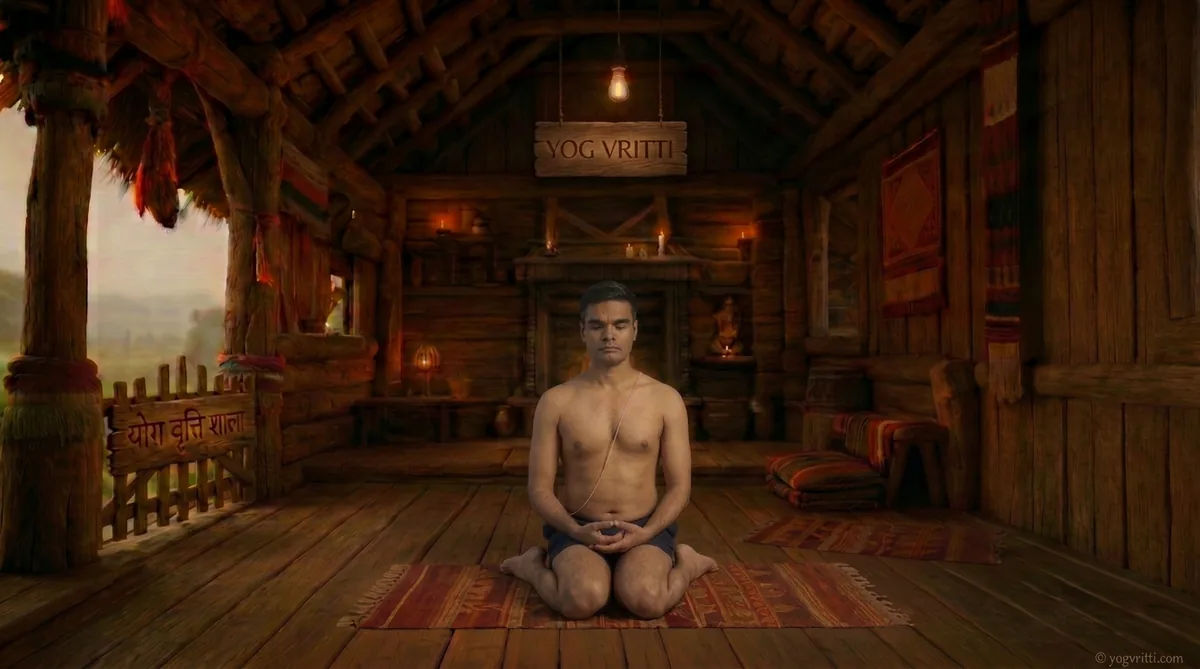
Virasana, the Hero's Pose, is a profound kneeling posture that brings deep release to the entire front line of the lower body, particularly the powerful thigh muscles and the often-neglected ankles. It cultivates a sense of grounded stability, allowing the practitioner to sit with an upright spine, promoting introspection and mental clarity. By gently stretching the quadriceps and mobilizing the knee and ankle joints, this pose not only improves flexibility but also channels apana vayu downwards, fostering a calm, centred presence essential for both physical and meditative practices. It’s a foundational pose for hip and knee health, preparing the body for deeper seated meditation.
Hero Pose, also called Virasana is a classical yoga posture. Its Sanskrit name Virasana translates word-for-word as: Vira (Hero) · Asana (Pose). Beginning from a kneeling position, the practitioner aligns the body with precision and intentional breath. The posture works to strengthen the quadriceps, stretch the hip flexors and stabilise the ankles. Promotes relaxation. Improves digestion. Suitable for beginners and regular practitioners alike, it is an excellent warm-up, particularly beneficial for beginners and desk workers. A blanket and block can be used to make the posture more accessible and support correct alignment. Practitioners with ankle injury and knee injury should approach with care or consult a qualified teacher.
Muscles Worked
Quadriceps
[Vastus Lateralis, Vastus Medialis, Vastus Intermedius]
The large muscles at the front of your thighs (quadriceps) are experiencing a significant, sustained stretch in Virasana as your knees are deeply bent.
This action, particularly for the vastus muscles, lengthens these powerful knee extensors, releasing tightness that often accumulates from daily activities like sitting or running.
This deep opening along the front of the thigh corresponds to a release of physical and energetic stagnation, allowing for a freer flow of prana into the lower limbs.
Over time, this improves flexibility and reduces strain on the knee joint.
Rectus Femoris
[Rectus Femoris]
The rectus femoris, unique among the quadriceps, crosses both the hip and knee joints.
In Virasana, while the knee is deeply flexed, the hip is also in deep flexion.
The deep knee flexion significantly lengthens this muscle, providing a profound stretch that helps release chronic tension, which can contribute to both anterior knee pain and tightness in the front of the hip.
Energetically, releasing the rectus femoris can alleviate a sense of 'holding on' in the pelvic region, promoting a feeling of surrender and ease.
Tibialis Anterior and Toe Extensors
[Tibialis Anterior, Extensor Digitorum Longus, Extensor Hallucis Longus]
The muscles along the front of your shins (tibialis anterior) and the top of your feet (extensor digitorum longus, extensor hallucis longus) are significantly lengthened as your ankles are deeply plantarflexed and the tops of your feet rest on the floor.
This provides a crucial stretch to an area often neglected, counteracting the effects of wearing shoes and allowing for greater ankle mobility.
From a yogic perspective, opening these channels in the lower leg helps to ground the energetic body, facilitating a more stable and rooted connection to the earth.
It brings awareness to the often-forgotten connection between the foot, ankle, and the rest of the leg.
Joints Mobilized
Knee Joint
mobilizingThe knee joint undergoes deep flexion in Virasana, gently mobilizing the articulation between the thigh bone (femur) and shin bone (tibia), as well as the kneecap (patella) gliding within its groove while bearing the weight of the torso.
This sustained, gentle pressure encourages synovial fluid production, nourishing the cartilage and improving the overall range of motion.
Regular practice can enhance knee health by maintaining flexibility and resilience, preventing stiffness, and preparing the knees for comfortable seated meditation.
Ankle Joint
mobilizingThe ankle joint, particularly the articulation between the shin bones (tibia and fibula) and the top of the foot (talus), experiences deep plantarflexion in Virasana while bearing the weight of the torso.
This action gently stretches the ligaments and joint capsule, increasing flexibility and mobility in an area often restricted by footwear and limited movement patterns.
From a yogic perspective, open and supple ankles are vital for stable grounding and balancing poses, allowing energy to flow freely down into the earth, fostering a sense of rootedness and connection.
Hip Joint
weight bearingWhile the hip joint is in a position of deep flexion in Virasana, it is primarily stabilizing and weight-bearing rather than undergoing a significant stretch in its external rotators or adductors.
The pose encourages the head of the thigh bone (femoral head) to settle deeply into the hip socket (acetabulum), promoting stability and proper alignment of the pelvis and spine.
This grounded positioning of the hips allows for the lengthening of the spine upwards, facilitating an erect and comfortable seated posture crucial for meditation and pranayama.
Organ & System Benefits
Abdominal Organs
In Virasana, the upright seated posture with the thighs gently compressing the lower abdomen provides a subtle internal massage to the abdominal organs.
This gentle pressure, combined with the deep, diaphragmatic breathing encouraged by the stable posture, stimulates peristalsis and improves circulation to the digestive tract.
From a yogic perspective, this action helps to stoke agni, the digestive fire, promoting efficient digestion and elimination, thus purifying the body and clearing energetic blockages in the manipura chakra.
Nervous System
The stable, grounded foundation of Virasana naturally encourages a sense of calm and quiet introspection.
As the body settles into the pose, the deep stretch in the lower body, particularly the quadriceps and ankles, provides sustained sensory input that helps to draw awareness inward, shifting focus away from external distractions.
This sustained, gentle pressure and the resulting lengthening of tissues stimulate the parasympathetic nervous system, easing the 'fight or flight' response and promoting a state of deep relaxation and receptivity.
The upright spine, supported by the grounded lower body, allows for an unobstructed flow of breath, which in turn regulates the nervous system.
As the breath deepens and slows naturally, the mind begins to quiet, reducing the fluctuations of thought (chitta vritti) and fostering a sense of presence and mental clarity.
This tranquil state is conducive to meditation, allowing the practitioner to connect more deeply with their inner self and cultivate a profound sense of inner peace.
Mental & Emotional
Virasana cultivates resilience and patience, as holding the pose requires a steady mind and a willingness to sit with sensation, particularly in the knees and ankles.
This disciplined approach to practice directly translates to mental fortitude, teaching the practitioner to observe discomfort without immediate reaction, fostering a sense of inner strength and determination.
The pose thereby becomes a training ground for the mind, enhancing focus and concentration (dharana) as attention is directed inward.
The grounded and stable nature of Virasana helps to calm an agitated mind, providing an anchor for scattered thoughts and emotions.
By establishing a firm foundation in the lower body, the pose facilitates a sense of security and rootedness, allowing the practitioner to feel more centered and less swayed by external circumstances.
This mental stability is invaluable for navigating daily challenges with greater equanimity and cultivating a peaceful disposition.
Because of Its Shape
kneeling
The kneeling shape of Virasana deeply flexes the knee and ankle joints, which are often stiff and underused in modern life.
This unique orientation provides a sustained stretch to the quadriceps and the anterior compartments of the lower leg, promoting flexibility and range of motion in these key areas.
Anatomically, it encourages the release of connective tissues around the knee and ankle, improving joint lubrication and overall health.
A kneeling posture like Virasana inherently fosters a sense of groundedness and humility, connecting the practitioner intimately with the earth.
This physical connection helps to draw energy downwards, stabilizing the root chakra (muladhara) and cultivating a feeling of security and inner strength.
It prepares the body and mind for deeper introspection and meditation by creating a stable, unmoving base.
By requiring the practitioner to sit upright with a lengthened spine from a stable kneeling foundation, this pose encourages proper postural alignment and strengthens the core muscles.
This upward lift through the torso, while remaining rooted, facilitates the energetic awakening of the central channel (sushumna nadi), allowing prana to flow freely and supporting mental clarity and spiritual awakening.
Fascial Lines
In Virasana, there is a significant lengthening and opening along the entire anterior fascial line of the lower body, particularly the superficial front line which runs from the tops of the feet, up the shins, over the knees, and along the quadriceps.
This deep, sustained stretch helps to release adhesions and restrictions within this fascial network, improving tissue hydration and elasticity.
From a yogic perspective, this opening can release long-held patterns of tension and 'holding on' in the body, allowing for a greater sense of freedom and energetic flow, helping to unbind emotional and physical tightness.
Breathing & Respiratory
Virasana, with its upright and stable seated posture, naturally supports and deepens the breath, encouraging full diaphragmatic engagement.
The grounded foundation of the lower body allows the intercostal muscles and diaphragm to work without undue strain, facilitating a smooth, even inhalation and a complete exhalation.
This natural deepening of the breath helps to calm the nervous system and draw attention inward, making it an excellent preparatory pose for pranayama practices like Ujjayi, which benefits from a stable, alert, and relaxed body.
Anatomical Caution
Teachers must approach Virasana with utmost care, especially concerning the knees and ankles.
Always advise students to listen to their bodies and never push into sharp pain, particularly if there are pre-existing knee injuries or tightness.
Using props like blankets under the sitting bones or a block between the ankles can significantly alleviate pressure and make the pose accessible and safe for a wider range of practitioners.