5
Muscles
3
Joints
2
Organs
2
Mental
Vishvamitrasana
विश्वामित्रासन
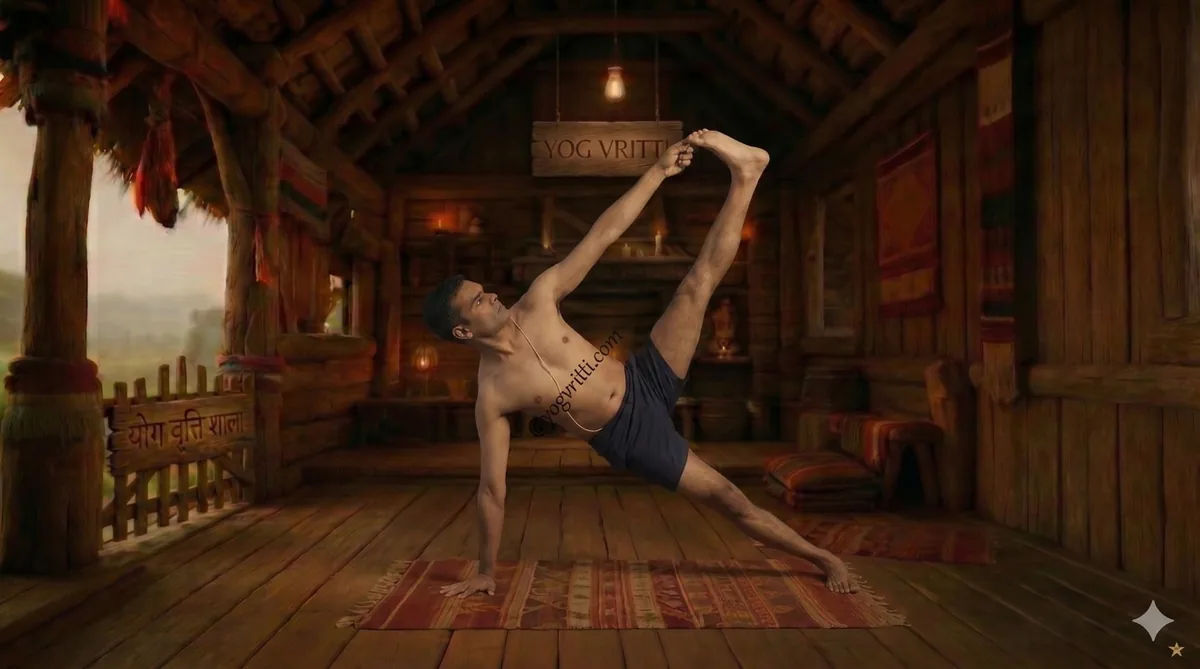
Vishvamitrasana is a magnificent testament to the body's potential for strength, flexibility, and balance, challenging us to integrate these qualities into one dynamic form. This advanced side balance deeply lengthens the hamstrings and adductors of the extended leg while powerfully engaging the core obliques and shoulder stabilizers to maintain equilibrium and spinal integrity. It cultivates a profound sense of groundedness through the supporting leg, simultaneously invigorating the internal organs with its twisting action and opening the chest to invite greater prana. For a teacher, it illuminates the intricate interconnectedness of the musculoskeletal system, offering a powerful avenue to explore physical and mental determination within a therapeutic context, fostering a holistic transformation.
Sage Vishvamitra's Pose, also called Vishvamitrasana is a classical yoga posture. Its Sanskrit name Vishvamitrasana translates word-for-word as: Vishvamitra (Sage Vishvamitra) · Asana (Pose). From a standing position, the body roots firmly through the feet while the spine extends upward. The posture works to lengthen the hamstrings, engage the obliques and open and strengthen the shoulders. Deep hamstring opening. Shoulder and core strength. It is particularly valued for building full-body strength and developing greater flexibility. Suitable for advanced practitioners with developed body awareness, it is a meaningful addition to any practice. Practitioners with hamstring injury and shoulder injury should approach with care or consult a qualified teacher.
Helps with
Muscles Worked
Hamstrings
[Biceps femoris, Semitendinosus, Semimembranosus]
The long muscles running along the back of your extended thigh (hamstrings) receive a profound, sustained lengthening in this pose, not a forced yank but a patient, intelligent unraveling.
As you consciously extend the leg, the nervous system gradually permits these powerful muscles to release chronic tightness, often accumulated from prolonged sitting.
This deep release aids in freeing the posterior chain, promoting better spinal alignment and a sense of energetic lightness in the lower limbs, fostering a deeper connection to apana vayu.
Obliques
[Internal and External Obliques]
These diagonal muscles along the sides of your waist (internal and external obliques) are intensely engaged to stabilize your torso and initiate the deep twist in Vishvamitrasana.
They work synergistically with the transverse abdominis to create a firm, supportive girdle around your core, protecting the spine while enabling the rotation.
This active engagement builds core strength, allowing for greater stability in all movements and cultivating a sense of inner power and resilience, grounding the manipura chakra.
Shoulder Stabilizers
[Rotator Cuff, Deltoids, Serratus Anterior]
The muscles surrounding and supporting your shoulder joint (rotator cuff, deltoids, serratus anterior) are actively engaged in the supporting arm, bearing significant body weight and providing a stable foundation for the pose.
This engagement strengthens the entire shoulder girdle, improving joint integrity and range of motion while preventing impingement.
From a yogic perspective, a strong, stable shoulder supports an open heart, allowing for greater energetic flow and a feeling of grounded strength in the upper body.
Hip Flexors
[Iliopsoas, Rectus Femoris]
In the extended leg, the deep muscles at the front of your hip and thigh (iliopsoas and rectus femoris) experience a significant lengthening as you open the hip into abduction and external rotation.
This unwinding releases tension often stored from sedentary lifestyles, improving pelvic mobility and reducing lower back strain.
Simultaneously, in the standing leg, these same muscles are subtly engaged to stabilize the pelvis and maintain balance, creating an intelligent interplay of release and support, which cultivates both freedom and stability in the root chakra.
Adductors
[Adductor magnus, longus, brevis, gracilis, pectineus]
The muscles along the inner thigh (adductors) of the extended leg are deeply lengthened as the leg moves into abduction and external rotation, opening the groin area.
This sustained stretch helps to release tightness that can restrict hip mobility and contribute to pelvic imbalance.
Energetically, releasing these muscles can help to free up blocked energy in the lower pelvis, allowing for a greater sense of openness and ease, connecting us more deeply to our creative and foundational energies.
Joints Mobilized
Hip Joint
mobilizingBoth hip joints are dynamically involved: the extended leg's hip (acetabulofemoral joint) undergoes deep external rotation and abduction, mobilizing the joint capsule and increasing range of motion.
The standing leg's hip is in flexion and internal rotation, bearing weight and stabilizing the pelvis.
This intricate interplay enhances hip mobility, strengthens the surrounding musculature, and improves overall pelvic stability, allowing for greater freedom in movement and a sense of spaciousness in the muladhara and svadhisthana chakras.
Spine
rotatingThe vertebral column undergoes a significant twisting action, particularly in the thoracic and lumbar regions, while simultaneously being asked to maintain length and integrity.
This controlled rotation gently mobilizes the facet joints between the vertebrae, enhancing spinal flexibility and promoting better nutrient flow to the intervertebral discs.
Yogically, this twisting action is believed to wring out stagnation, refreshing the central nervous system and allowing prana to flow more freely along the sushumna nadi, leading to a clearer mind and a more vibrant body.
Shoulder Joint
stabilizingThe shoulder joint (glenohumeral joint) of the supporting arm is under considerable load, requiring robust engagement of the surrounding muscles to keep the humerus firmly seated in the glenoid fossa.
This weight-bearing action strengthens the entire shoulder girdle, improving joint stability and proprioception, which is crucial for preventing injury and enhancing upper body strength.
Over time, this practice cultivates a strong, stable foundation in the upper body, translating to greater confidence and energetic capacity in all arm balances and inversions.
Organ & System Benefits
Abdominal Organs
The deep twist in Vishvamitrasana creates a gentle compression on the abdominal organs on one side, followed by a release as the pose is held and when it's released.
This 'squeeze and soak' action is believed to stimulate blood flow to these organs (e.g., intestines, liver, spleen), aiding in detoxification and improving digestive function.
From an energetic perspective, twisting poses help to cleanse the manipura chakra, stoking the digestive fire (agni) and promoting vitality throughout the entire system.
Lungs and Diaphragm
While the twist might initially feel constrictive, the expansive chest opening in Vishvamitrasana works to create space for the lungs, encouraging deeper and fuller breathing.
The diaphragm, the primary muscle of respiration, is engaged more intensely against the abdominal compression, strengthening its action.
This improved diaphragmatic function enhances oxygen intake and carbon dioxide release, calming the nervous system and increasing prana flow throughout the body, leading to a feeling of invigorated spaciousness.
Nervous System
The intense focus required to maintain Vishvamitrasana's intricate balance immediately draws the mind inward, effectively quieting the constant chatter (chitta vritti) and cultivating deep presence.
The challenge of the pose activates the sympathetic nervous system initially, but as stability is found and breath is deepened, the parasympathetic nervous system is gradually engaged, promoting a state of alert calm.
This delicate dance between effort and surrender teaches the body and mind to respond to stress with greater equanimity, fostering a resilient and adaptable nervous system.
The sustained engagement of multiple muscle groups and the intricate balancing act heighten proprioceptive awareness, the body's sense of its position in space.
This enhanced sensory feedback refines neuromuscular coordination, strengthening the communication pathways between the brain and muscles.
This improved bodily awareness helps to integrate the physical and mental aspects of being, leading to a more grounded and centered experience of self.
Mental & Emotional
Vishvamitrasana demands immense mental fortitude, teaching practitioners to overcome perceived limitations and cultivate unwavering determination.
The act of balancing in such an intricate shape requires profound concentration (dharana) and the ability to remain present amidst physical intensity, which directly translates to enhanced mental clarity and focus off the mat.
By consciously facing and working through the physical and mental challenges, students develop inner strength and confidence, realizing their capacity to achieve what once seemed impossible, fostering a brave and centered mind.
The sustained effort and intelligent engagement required to hold Vishvamitrasana foster a deep sense of self-awareness and patience.
It teaches the mind to observe without judgment, to ride the waves of challenge with equanimity, and to find stillness within dynamic movement.
This cultivation of inner stability and mental discipline is a profound preparation for deeper meditative practices, as it strengthens the capacity to hold a single point of focus.
Because of Its Shape
standing
Standing poses ground us deeply, connecting our physical body to the earth's stable energy, fostering a profound sense of stability and rootedness.
In Vishvamitrasana, the supporting leg acts as a firm foundation, strengthening the muscles of the foot, ankle, and leg, improving proprioception and balance.
This connection to the earth helps to anchor our energy (apana vayu), allowing the upper body to expand and open with greater ease and confidence.
Balance poses are profound teachers of equilibrium, both physical and mental, challenging our proprioceptive system and refining our body-mind connection.
Vishvamitrasana, being an advanced balance, acutely hones our ability to find a stable center amidst complexity, requiring deep focus and subtle muscular adjustments.
This practice enhances coordination and mental clarity, translating into greater steadiness and composure in all aspects of life, embodying the yogic principle of sthira sukham asanam – steady and comfortable.
Twisting actions in yoga are celebrated for their ability to mobilize the spine, detoxify the internal organs, and recalibrate the nervous system.
The deep twist in Vishvamitrasana gently compresses and then releases the abdominal organs, stimulating circulation and aiding in their natural cleansing processes.
Energetically, twists are believed to wring out stagnant energy (prana), promoting a fresh flow throughout the nadis and revitalizing the manipura chakra, leading to a sense of invigoration and mental clarity.
Hip openers are vital for releasing deep-seated tension in the pelvis, often an area where emotional stress and past experiences are stored.
Vishvamitrasana offers an intense opening of the extended leg's hip, targeting the adductors and external rotators, increasing flexibility and range of motion in the hip joint.
This physical release can lead to a profound emotional unwinding, allowing for greater freedom of movement and a sense of liberation in the lower body, fostering a more open and receptive svadhisthana chakra.
Chest opening poses counteract the effects of modern, sedentary lifestyles that often lead to slumped shoulders and restricted breathing, promoting an upright posture and expansive breath.
In Vishvamitrasana, the active engagement of the supporting arm and the twist naturally create an opening across the chest and collarbones, broadening the front of the torso.
This expansion allows for deeper lung capacity, inviting more prana into the heart space (anahata chakra), cultivating feelings of courage, compassion, and energetic openness.
Fascial Lines
Vishvamitrasana profoundly engages and releases several key fascial lines, particularly the Superficial Back Line in the extended leg, the Lateral Line along the side of the body, and the Spiral Line that integrates the twist.
As the body moves into this complex shape, the interconnected web of connective tissue (fascia) is invited to lengthen and reorganize, releasing chronic restrictions and improving overall elasticity and fluidity.
This deep fascial release not only enhances physical flexibility but also helps to unwind long-held energetic and emotional patterns, allowing for a greater sense of freedom and integration throughout the entire being, fostering a sense of inner spaciousness.
Breathing & Respiratory
The complex demands of Vishvamitrasana naturally encourage a highly focused and controlled breath, often necessitating a subtle Ujjayi pranayama to sustain the pose.
The twisting and compression of the torso might initially restrict the breath, but with practice, the body learns to breathe deeply into the sides and back of the rib cage, expanding lung capacity in new ways.
This conscious, rhythmic breathing becomes an anchor for the mind, transforming physical challenge into a meditative experience and allowing prana to flow intelligently to areas of greatest need, sustaining effort and promoting inner calm.
Anatomical Caution
Teachers should exercise extreme caution when guiding students into Vishvamitrasana, particularly if there is any history of hamstring tears, knee instability, or shoulder injuries.
The deep hamstring stretch combined with the full body weight on one arm and the twisting action places significant demands on these areas.
Always prioritize proper alignment and listen intently to your students' feedback, ensuring they build up to this pose gradually with sufficient preparatory work, never forcing the body beyond its current capacity.