 शुरुआतीपीठ के बल
आनंद बालासन
Happy Baby Pose
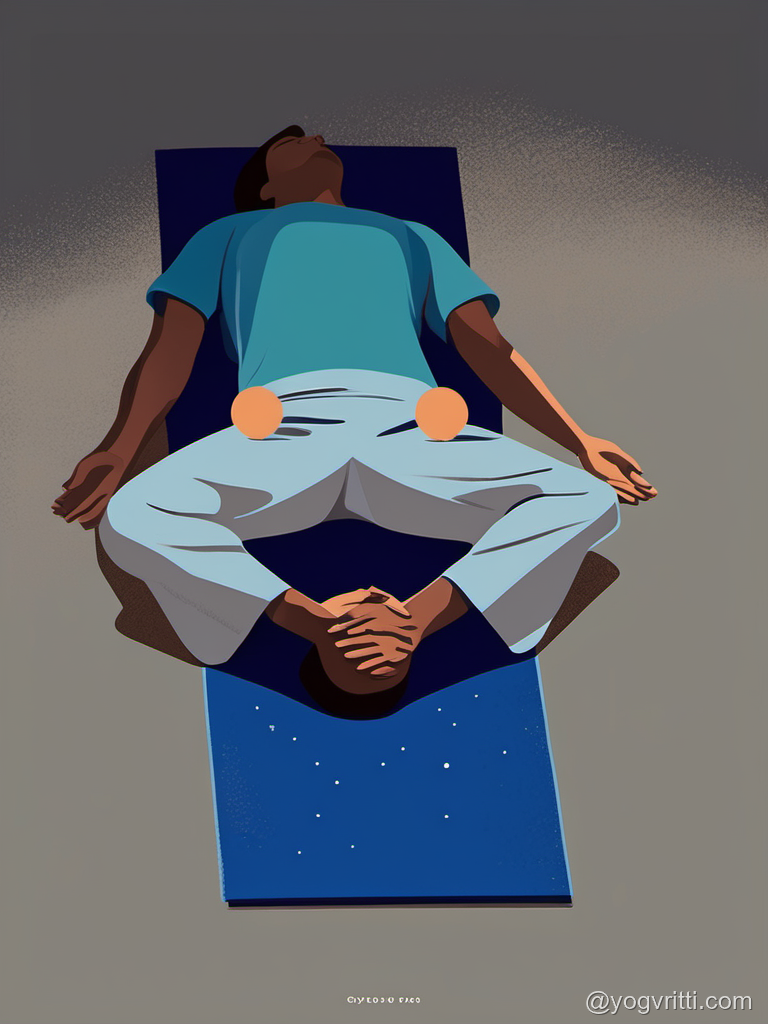
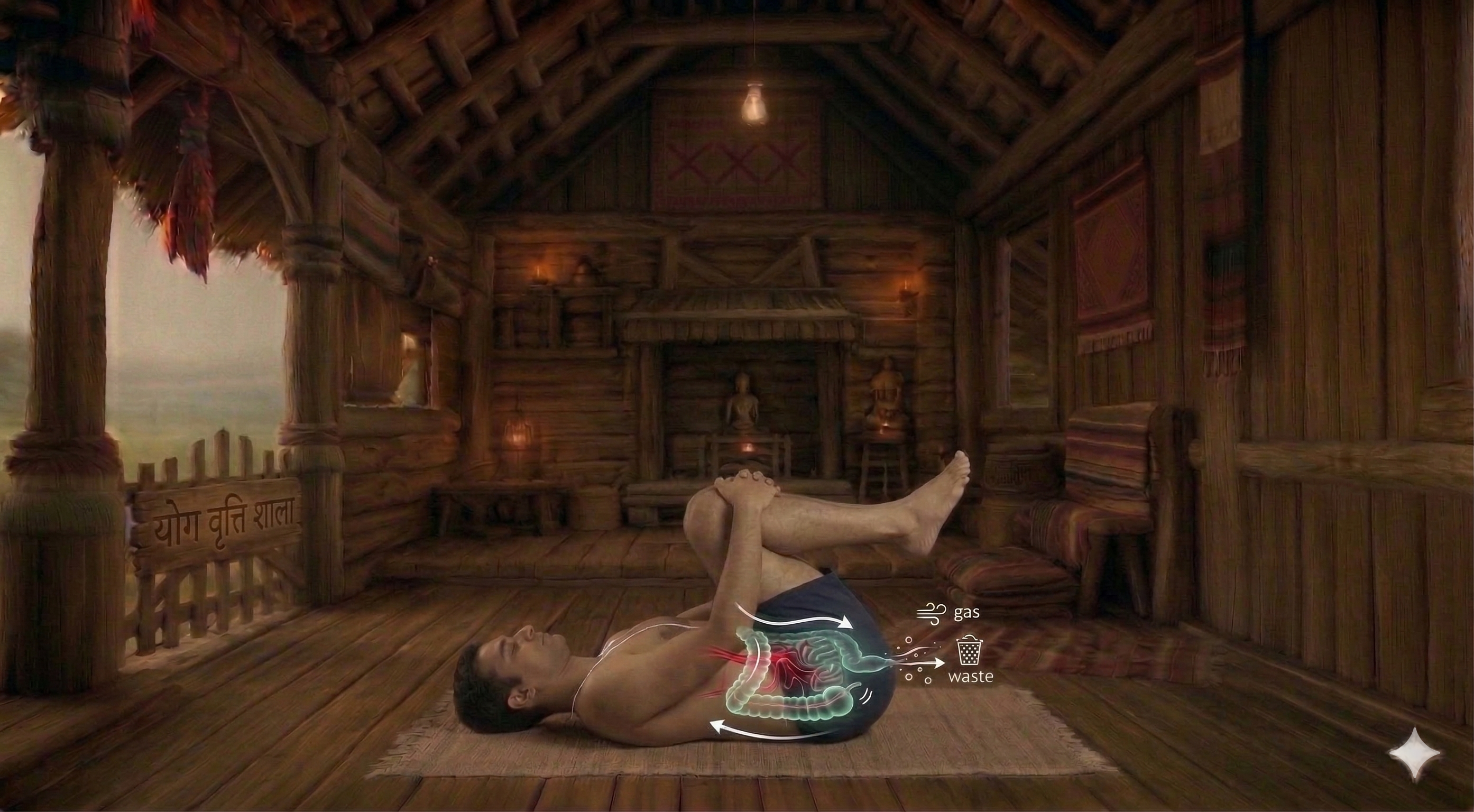
आनंद बालासन, या हैप्पी बेबी पोज़, एक कोमल सुपाइन आसन है जो कूल्हों को खोलता है और पीठ के निचले हिस्से में तनाव को दूर करता है। यह विश्राम और चंचलता की भावना को बढ़ावा देता है।
फायदे
5Hip Flexors(releasing)
This deep muscle, originating from your inner spine (lumbar vertebrae) and pelvis (iliac fossa) and inserting into your inner thigh bone (femur), often holds chronic tension from prolonged sitting. In Happy Baby, as you draw your knees towards your armpits, the hip joint is deeply flexed, allowing the iliopsoas to gently lengthen and release its grip. This release helps to alleviate anterior pelvic tilt and the associated strain on the lower back, fostering a sense of space and freedom in the pelvic bowl, which in yogic terms, encourages the free flow of apana vayu, the downward-moving energy.
Inner Thighs(lengthening)
The muscles along your inner thighs (adductor magnus, longus, brevis, pectineus, gracilis) are gently stretched as you abduct your hips in this pose, drawing the knees wide. This sustained, passive stretch improves flexibility in the inner groin, which often becomes tight from daily activities and can restrict hip mobility. From a yogic perspective, opening these deep inner thigh channels releases stagnant energy, promoting a feeling of openness and vulnerability, and preparing the legs for deeper seated postures.
Glutes(releasing)
The large muscles of your buttocks (gluteus maximus, medius, and minimus) are gently lengthened and released as the hips move into deep flexion and abduction. While not a primary target, the sustained stretch on the posterior hip capsule encourages these powerful muscles to soften, releasing deep-seated tension. This release can improve external rotation capacity and alleviate pressure on the sciatic nerve pathways, contributing to a feeling of ease and lightness in the entire lower body, allowing prana to flow more freely through the pelvic region.
- पूर्ण शारीरिक विश्लेषण →
सावधानियाँ
3Knee Injury
Deep flexion or rotation at the knee can strain ligaments, meniscus, or cartilage, especially in a compromised joint.
Place a rolled blanket under the back of the knees to release tension and avoid hyperextension.
Hip Injury
Deep hip flexion, external rotation, or weight-bearing can aggravate labral tears, impingement, or bursitis.
Support the knee with a folded blanket; do not force the leg into a position that creates clicking or sharp hip pain.
Pregnancy
Deep twists, abdominal compression, and lying flat on the back can restrict blood flow or cause discomfort as pregnancy progresses.
After the first trimester, avoid lying flat on the back; elevate the torso on a bolster or lie on the left side instead.
विधि
चरण-दर-चरण निर्देश
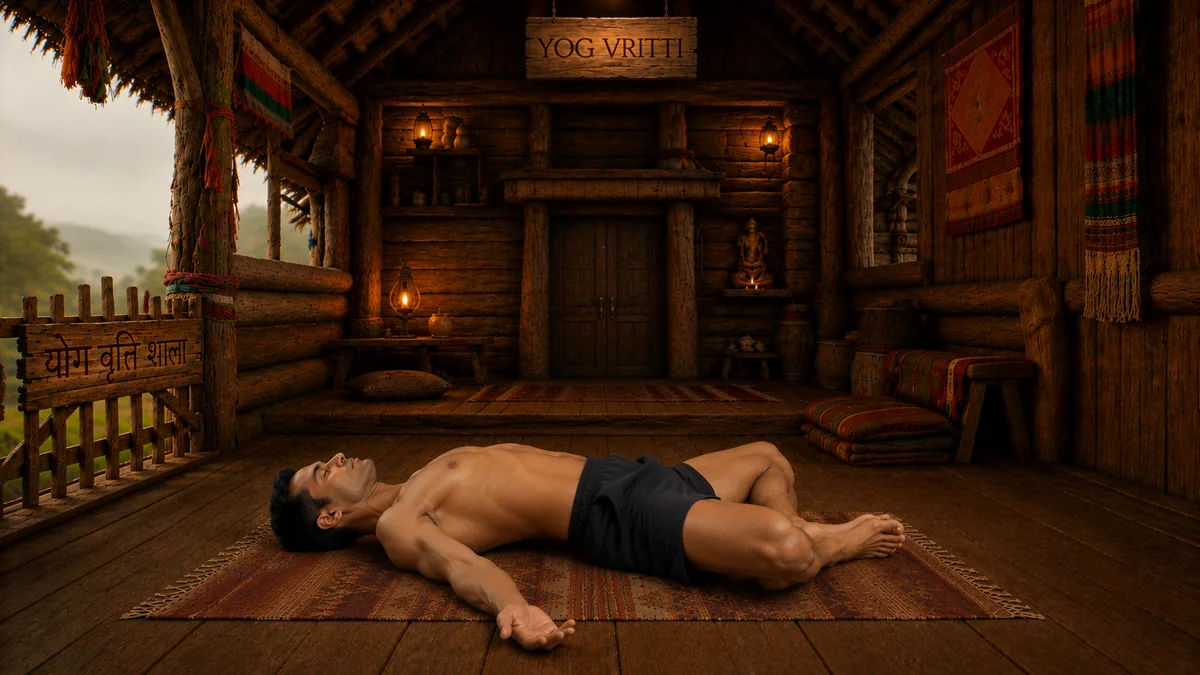
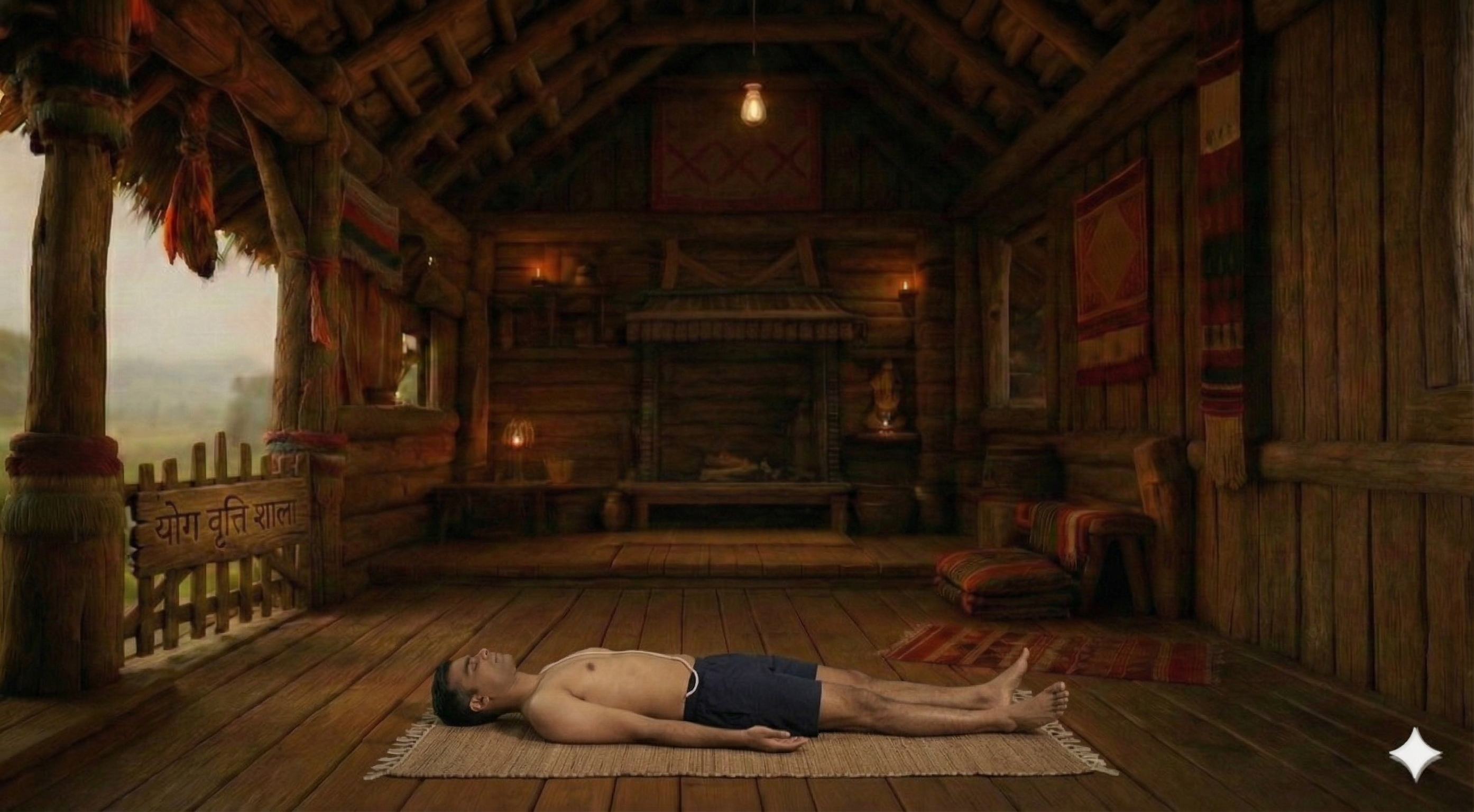
शवासन में लेट जाएं। (Shavasana mein let jaen.)
श्वास अंदर लें और घुटनों को अपनी छाती की ओर खींचें। (Shwas andar len aur ghutnon ko apni chhati ki or kheechen.)
सांस छोड़ते हुए, घुटनों को बगल की ओर ले जाएं, जैसे कि वे आपकी बगल की ओर जा रहे हों। (Saans chhodte hue, ghutnon ko bagal ki or le jaen, jaise ki ve aapki bagal ki or ja rahe hon.)
अपने हाथों से अपने पैरों के बाहरी किनारों को पकड़ें। (Apne hathon se apne pairon ke bahari kinaron ko pakden.)
सुनिश्चित करें कि आपकी एड़ियाँ घुटनों के ऊपर हों। (Sunishchit karen ki aapki ediyan ghutnon ke upar hon.)
अपनी टेलबोन को फर्श पर नीचे दबाएं। (Apni tailbone ko farsh par niche dabaen.)
अपनी पीठ के निचले हिस्से को फर्श पर सपाट रखें। (Apni peeth ke nichle hisse ko farsh par sapaat rakhen.)
अपनी गर्दन और कंधों को आराम दें। (Apni gardan aur kandhon ko aaram den.)
गहरी सांसें लें और आसन में बने रहें। (Gahri saanse len aur aasan mein bane rahen.)
धीरे-धीरे पैरों को छोड़ें और शवासन में वापस आ जाएं। (Dheere-dheere pairon ko chhoren aur shavasana mein vapas aa jaen.)
सहायक उपकरण
वैकल्पिक सहायता — आवश्यकतानुसार उपयोग करें
Folded Blanket
A blanket under the head and neck maintains the natural cervical curve; under the knees, it relieves lower back tension in Savasana.
Yoga Strap
Use a strap around the raised foot to control the leg extension without gripping or over-pulling, keeping the hip and sacrum stable.
विविधता देखें →सामान्य गलतियाँ
शिक्षण संकेत
अभ्यास क्रम
अक्सर पूछे जाने वाले प्रश्न
आनंद बालासन के बारे में सामान्य प्रश्न
आनंद बालासन क्या है?
आनंद बालासन, या हैप्पी बेबी पोज़, एक कोमल सुपाइन आसन है जो कूल्हों को खोलता है और पीठ के निचले हिस्से में तनाव को दूर करता है। यह विश्राम और चंचलता की भावना को बढ़ावा देता है।
आनंद बालासन के क्या फायदे हैं?
Opens the hips and groin। Releases tension in the lower back। Calms the mind and reduces stress।
आनंद बालासन किस स्तर के लिए है?
आनंद बालासन एक शुरुआती स्तर का आसन है। यह सभी के लिए उपयुक्त है।
आनंद बालासन कौन न करे?
Knee injuries, Hip injuries, Pregnancy (consult with a doctor) की स्थिति में यह आसन न करें।
आनंद बालासन के लिए कौन से उपकरण चाहिए?
blanket, strap का उपयोग इस आसन को आसान बना सकता है।