विविधताएँ (1)
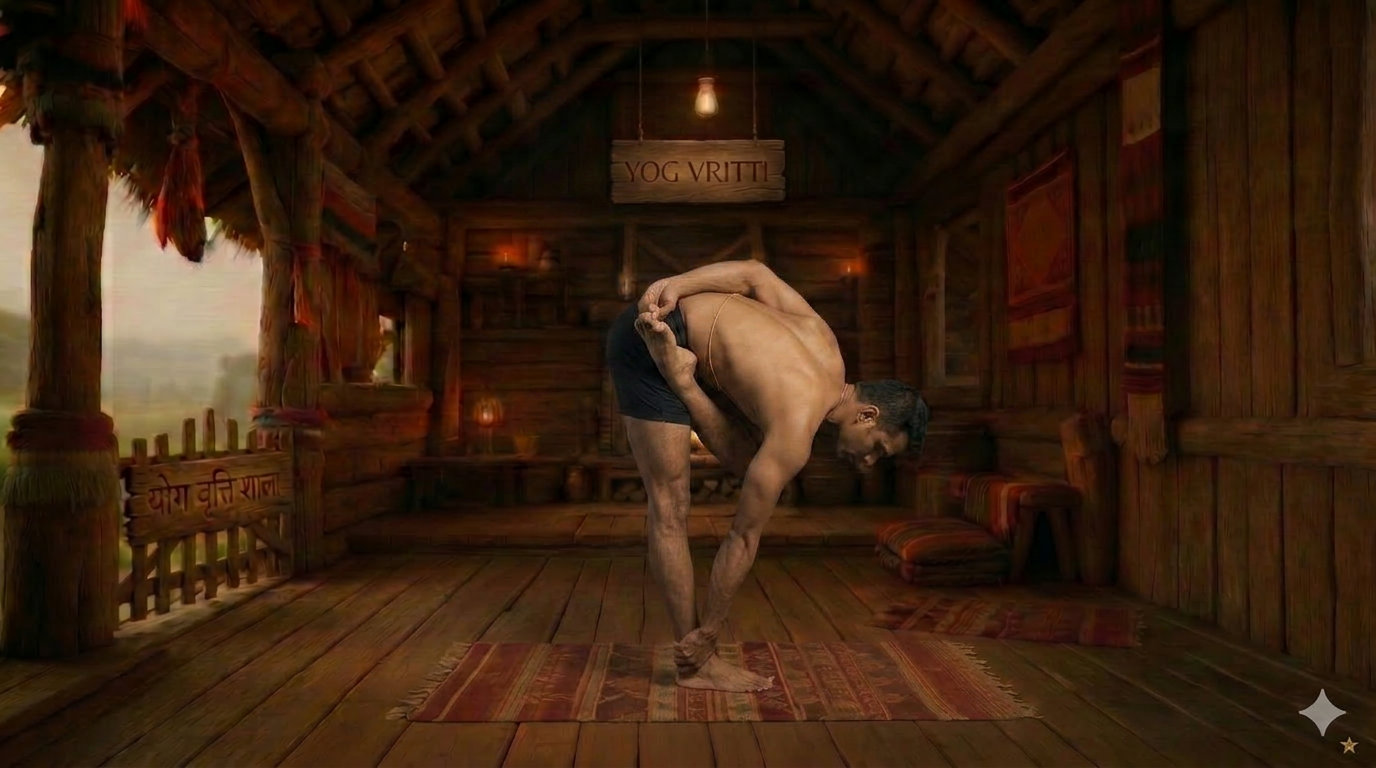
अर्ध बद्ध पद्मोत्तानासन
Half Bound Lotus Standing Forward Fold
खड़े होकर अर्ध बद्ध पद्म — अष्टांग प्राइमरी।
फायदे
3Hamstrings(lengthening | activating)
While still undergoing significant lengthening, the Ashtanga approach often encourages a more active and sustained engagement through the entire posterior chain, driven by the rhythmic breath. This continuous effort within the vinyasa can lead to a deeper, more progressive release in the hamstrings, inviting a profound stretch that is earned through consistent dedication rather than immediate passive yielding. The emphasis shifts towards a deeper, more sustained opening through active engagement with the breath.
Gluteal Muscles(stabilizing)
The muscles on the side of your standing hip (gluteus medius and minimus) are actively engaged, working tirelessly to stabilize the pelvis and prevent it from tilting or collapsing. This deep isometric engagement creates a strong, rooted foundation, allowing for balance and upward lift through the torso. This active rooting helps to cultivate a sense of unwavering stability, mirroring the mental steadiness required to hold such a challenging pose. Strengthening these often-neglected stabilizers is key to healthy hip mechanics and preventing imbalances.
Quadriceps(activating)
On the standing leg, the front thigh muscles (quadriceps) are powerfully engaged, providing eccentric control to protect the knee and lift the kneecap, creating a sense of lift and lightness. This active engagement ensures the knee joint is stable, preventing hyperextension and promoting healthy alignment. Simultaneously, the quadriceps of the lifted leg, particularly the rectus femoris, experience a stretch as the hip flexes and externally rotates, contributing to the overall hip opening. This dynamic interplay of strength and release embodies the yogic principle of Sthira Sukham Asanam – steadiness and ease.
- पूर्ण शारीरिक विश्लेषण →
सावधानियाँ
3Knee Injury
Deep flexion or rotation at the knee can strain ligaments, meniscus, or cartilage, especially in a compromised joint.
Bend the knees generously to protect the joint and keep the weight in the heels rather than the toes.
Hip Injury
Deep hip flexion, external rotation, or weight-bearing can aggravate labral tears, impingement, or bursitis.
Limit the range of hip movement, avoid positions that cause clicking or sharp pain, and use props to support the hip.
Shoulder Injury
Overhead loading and extreme shoulder rotation can impinge the subacromial space and overload rotator cuff tendons.
Reduce the range of motion, avoid full arm extension, and use props to limit load on the shoulder joint.
विधि
चरण-दर-चरण निर्देश
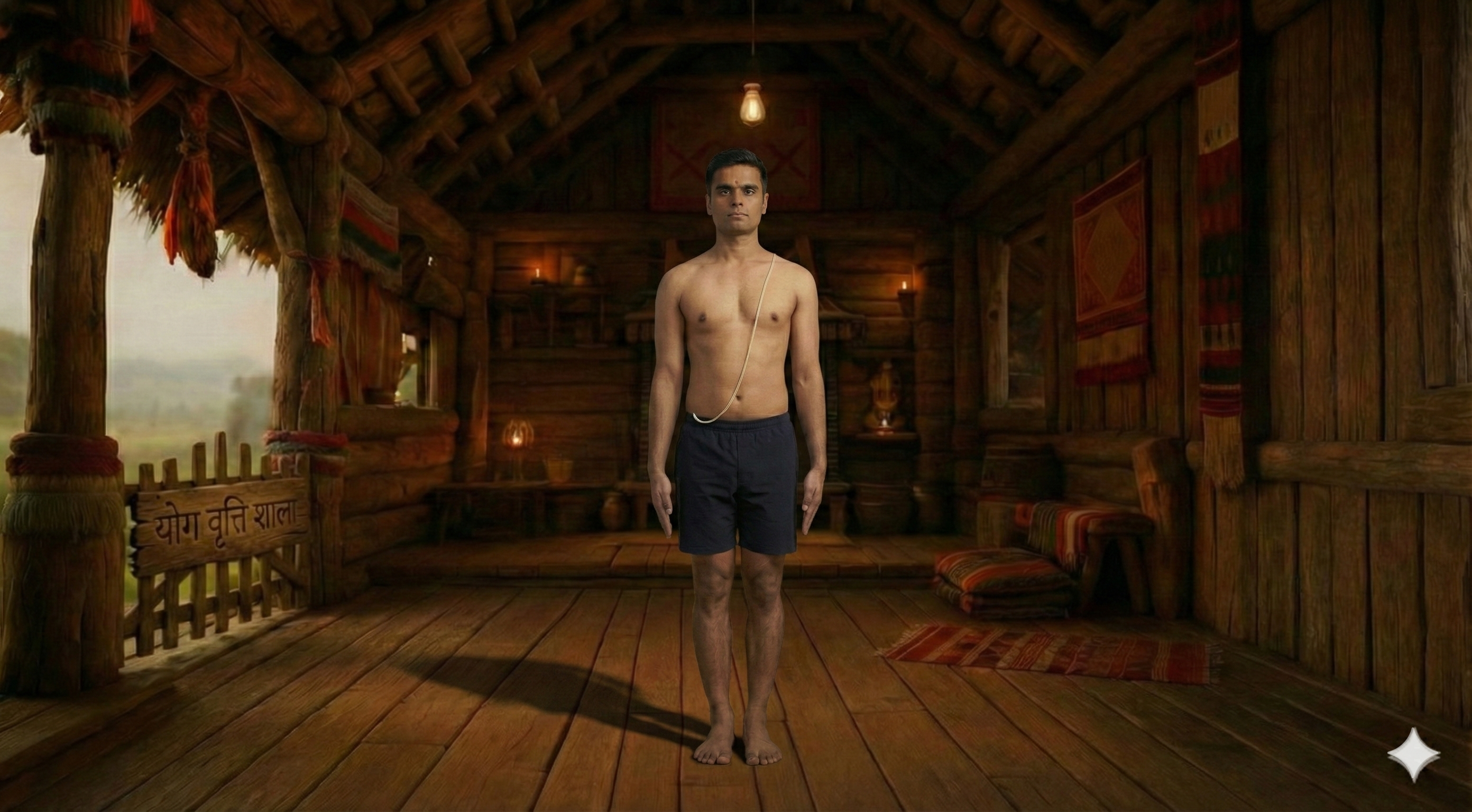
ताड़ासन।
दायां पैर उठाएं, दायां पंजा बाईं जांघ पर (अर्ध पद्म)।
दायां हाथ पीठ के पीछे — दाएं पैर का अंगूठा पकड़ें।
बाएं पैर पर संतुलन।
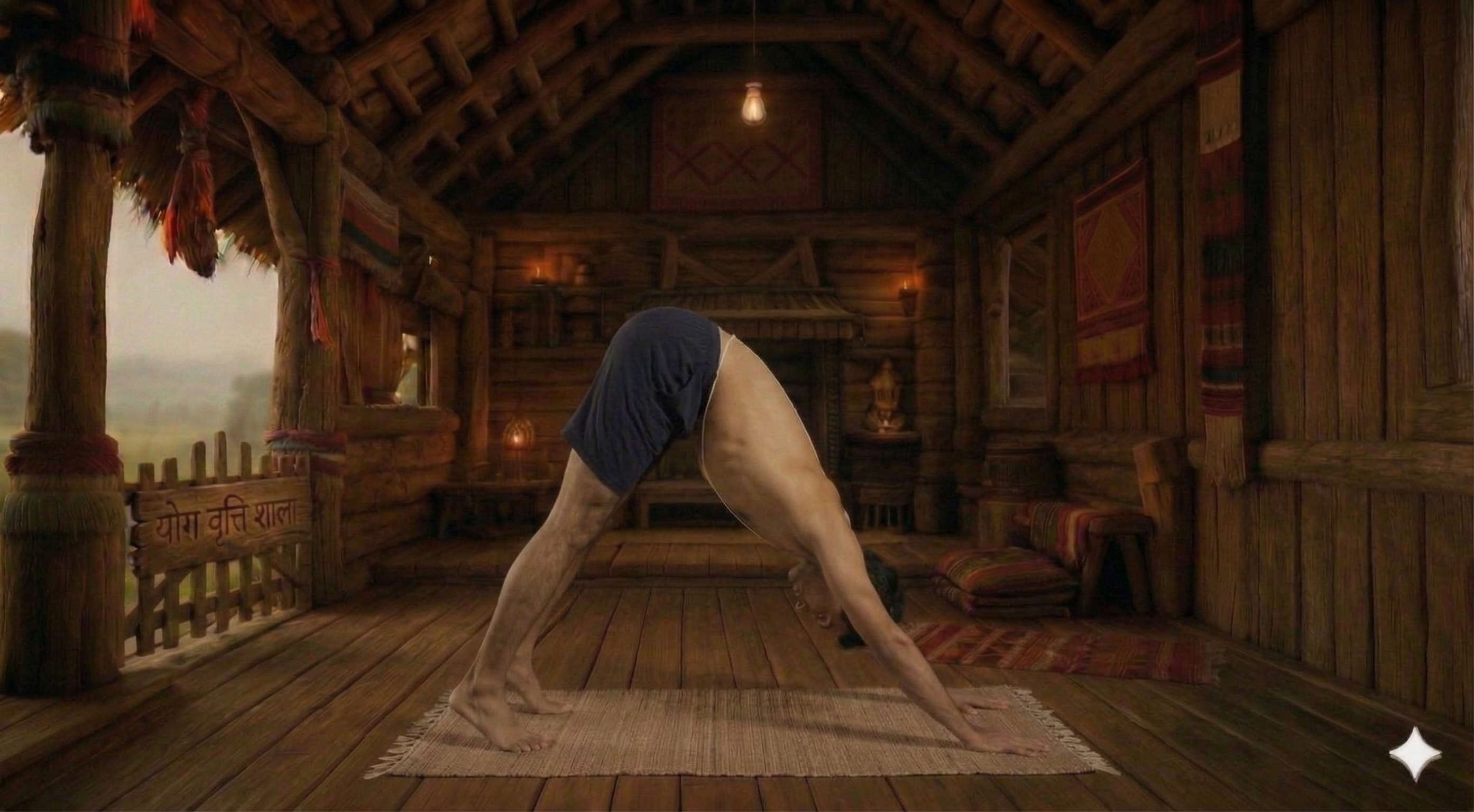
श्वास छोड़ें, आगे झुकें।
बायां हाथ जमीन पर।
माथा बाएं पिंडली की ओर।
5 सांसें।
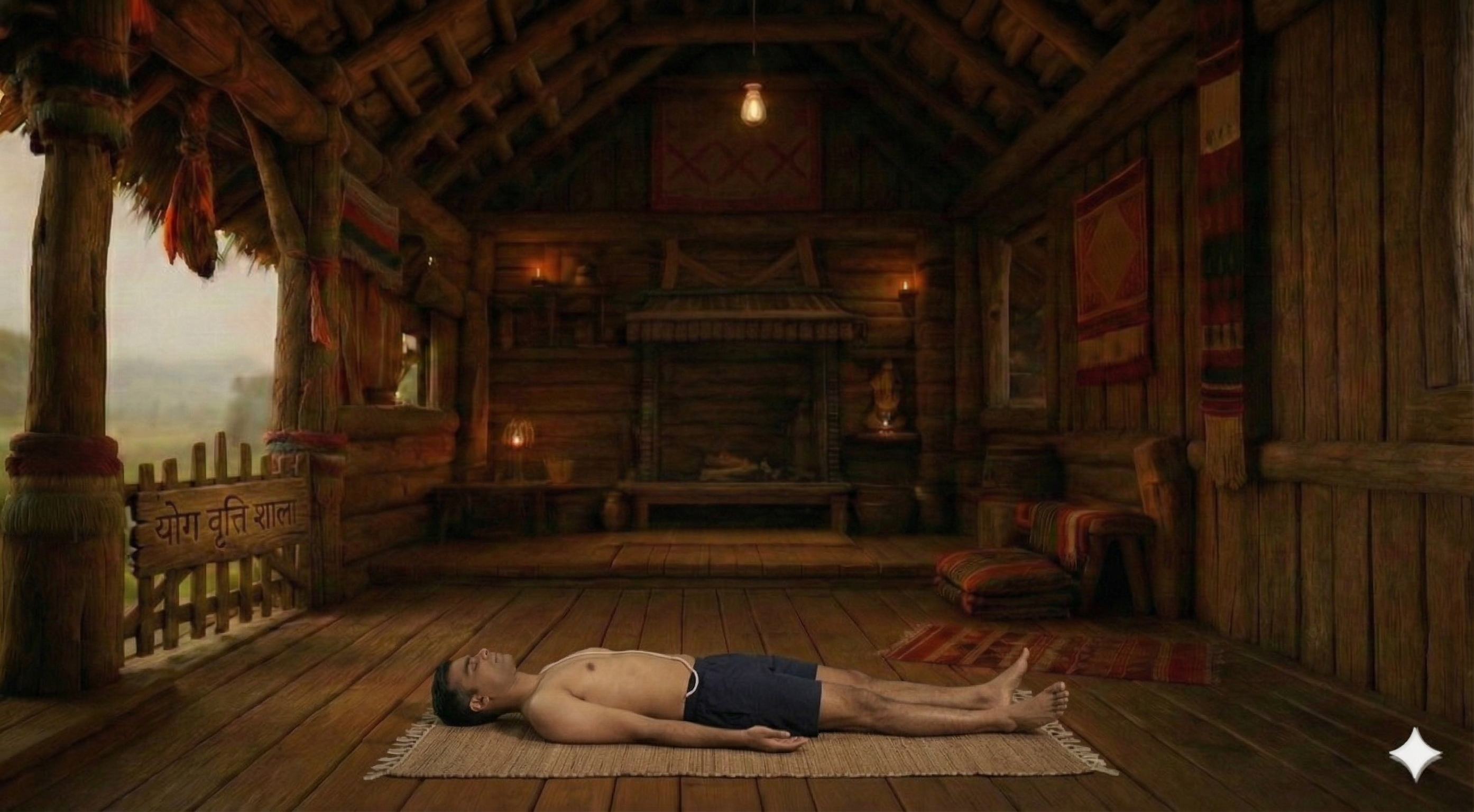
ऊपर आएं।
दूसरी तरफ।
सामान्य गलतियाँ
शिक्षण संकेत
अभ्यास क्रम

अक्सर पूछे जाने वाले प्रश्न
अर्ध बद्ध पद्मोत्तानासन के बारे में सामान्य प्रश्न
अर्ध बद्ध पद्मोत्तानासन क्या है?
खड़े होकर अर्ध बद्ध पद्म — अष्टांग प्राइमरी।
अर्ध बद्ध पद्मोत्तानासन के क्या फायदे हैं?
Combines balance, binding, and forward fold। Ashtanga fundamental। Hip opening with standing balance।
अर्ध बद्ध पद्मोत्तानासन किस स्तर के लिए है?
अर्ध बद्ध पद्मोत्तानासन एक मध्यम स्तर का आसन है। शुरुआती लोग किसी योग गुरु के मार्गदर्शन में अभ्यास करें।
अर्ध बद्ध पद्मोत्तानासन कौन न करे?
Knee injuries, Hip injuries, Shoulder injuries की स्थिति में यह आसन न करें।