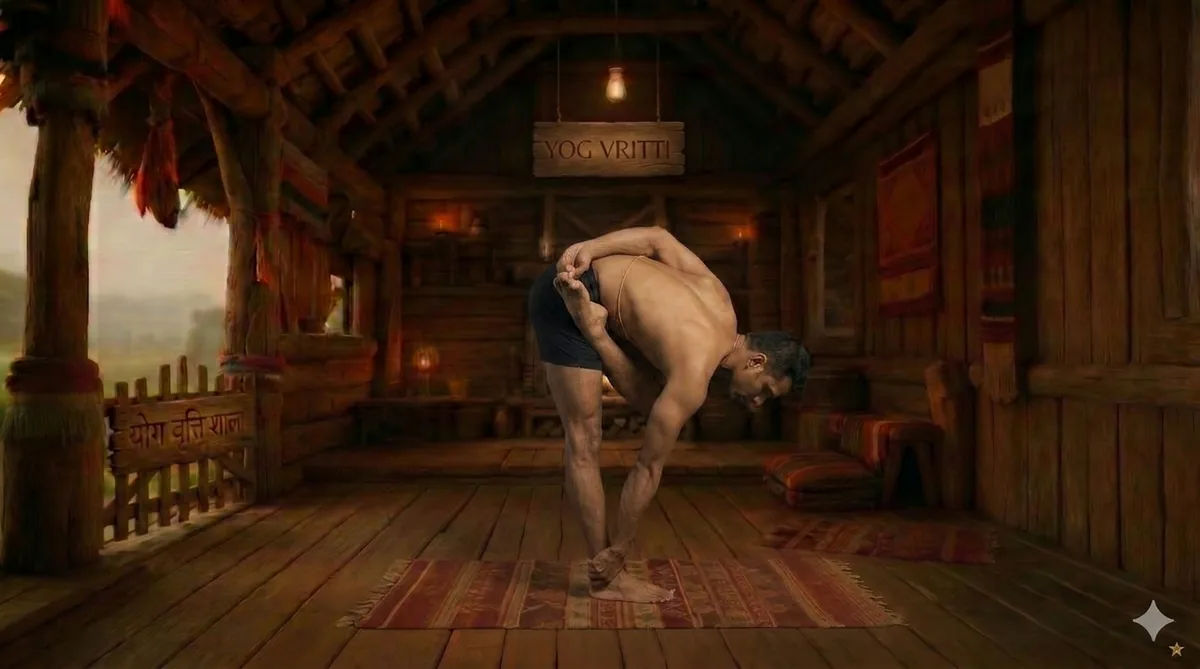
 उन्नतखड़े होकर
अर्ध बद्ध पद्मोत्तानासन
Half Bound Lotus Standing Pose
अर्ध बद्ध पद्मोत्तानासन एक उन्नत आसन है जिसके लिए महत्वपूर्ण लचीलापन और संतुलन की आवश्यकता होती है। यह हैमस्ट्रिंग, हिप फ्लेक्सर और कंधों को खींचता है जबकि खड़े पैर और कोर को मजबूत करता है।
फायदे
5Hamstrings(lengthening)
The powerful muscles at the back of your standing thigh (hamstrings) experience a deep, sustained lengthening as you fold forward and maintain the integrity of your leg. This isn't a forceful stretch but a gradual unwinding, allowing the nervous system to release chronic tension often held from prolonged sitting. In yogic terms, this release facilitates the downward flow of apana vayu, bringing a profound sense of grounding and stability to the lower body. Regular practice helps to elongate this crucial posterior chain, alleviating undue strain on the lumbar spine.
Gluteal Muscles(stabilizing)
The muscles on the side of your standing hip (gluteus medius and minimus) are actively engaged, working tirelessly to stabilize the pelvis and prevent it from tilting or collapsing. This deep isometric engagement creates a strong, rooted foundation, allowing for balance and upward lift through the torso. This active rooting helps to cultivate a sense of unwavering stability, mirroring the mental steadiness required to hold such a challenging pose. Strengthening these often-neglected stabilizers is key to healthy hip mechanics and preventing imbalances.
Quadriceps(activating)
On the standing leg, the front thigh muscles (quadriceps) are powerfully engaged, providing eccentric control to protect the knee and lift the kneecap, creating a sense of lift and lightness. This active engagement ensures the knee joint is stable, preventing hyperextension and promoting healthy alignment. Simultaneously, the quadriceps of the lifted leg, particularly the rectus femoris, experience a stretch as the hip flexes and externally rotates, contributing to the overall hip opening. This dynamic interplay of strength and release embodies the yogic principle of Sthira Sukham Asanam – steadiness and ease.
- पूर्ण शारीरिक विश्लेषण →
सावधानियाँ
5Knee Injury
Deep flexion or rotation at the knee can strain ligaments, meniscus, or cartilage, especially in a compromised joint.
Bend the knees generously to protect the joint and keep the weight in the heels rather than the toes.
Ankle Injury
Unstable or injured ankle joints can be overstressed by weight-bearing, extreme dorsiflexion, or plantar flexion.
Avoid deep dorsiflexion; keep a slight bend in the ankle and use blocks under the hands.
Shoulder Injury
Overhead loading and extreme shoulder rotation can impinge the subacromial space and overload rotator cuff tendons.
Reduce the range of motion, avoid full arm extension, and use props to limit load on the shoulder joint.
Hip Injury
Deep hip flexion, external rotation, or weight-bearing can aggravate labral tears, impingement, or bursitis.
Limit the range of hip movement, avoid positions that cause clicking or sharp pain, and use props to support the hip.
विधि
चरण-दर-चरण निर्देश
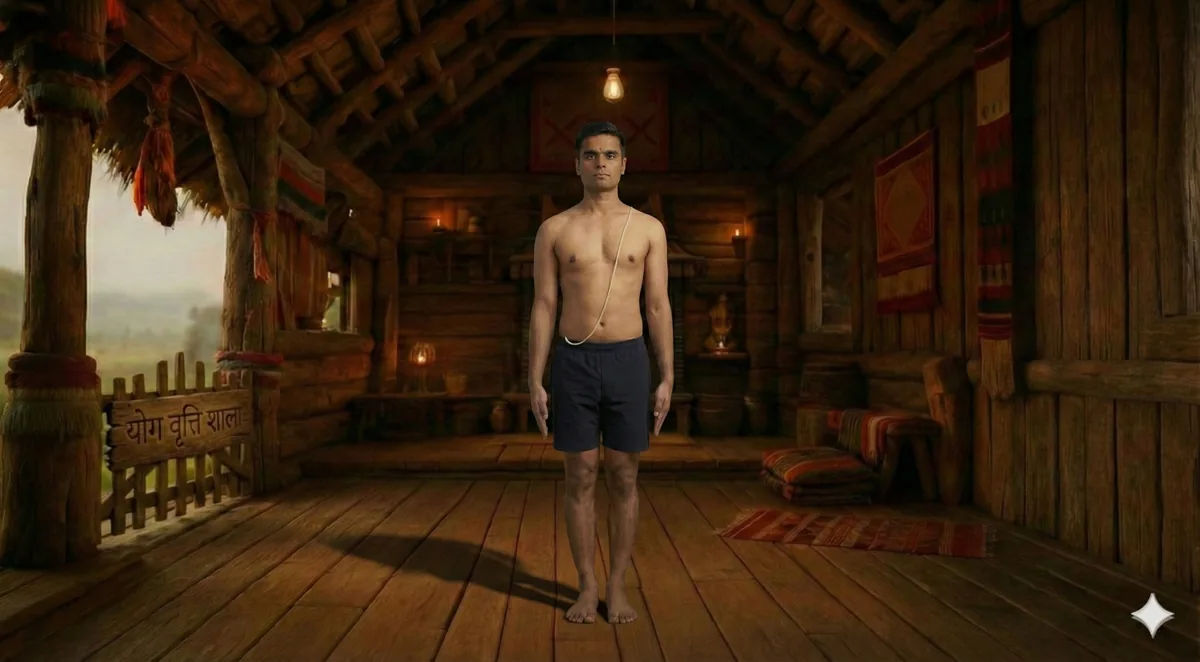
Tadasana में खड़े हो जाएं।
दाहिने पैर को मोड़ें और दाहिने हाथ से दाहिने पैर को पकड़कर पद्म आसन (half lotus) में लाएं, पैर का तलवा बाएं जांघ के ऊपर होना चाहिए।
दाहिने हाथ को पीछे की ओर ले जाएं और दाहिने पैर के अंगूठे को पकड़ें।
श्वास अंदर लें और रीढ़ को लंबा करें।
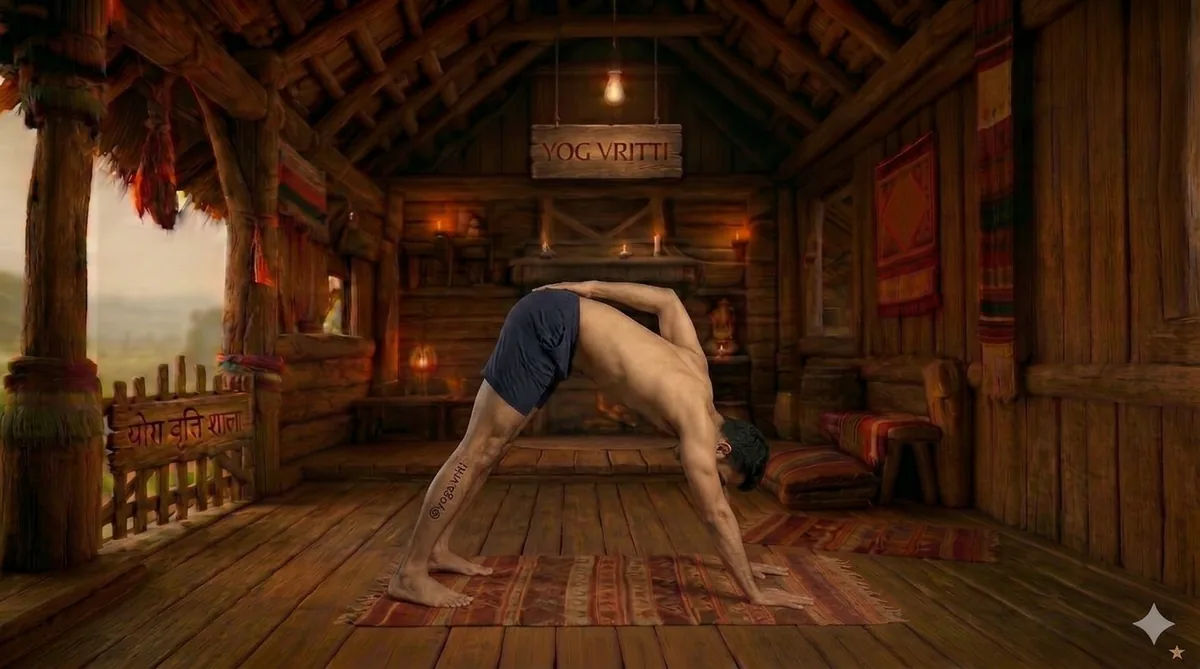
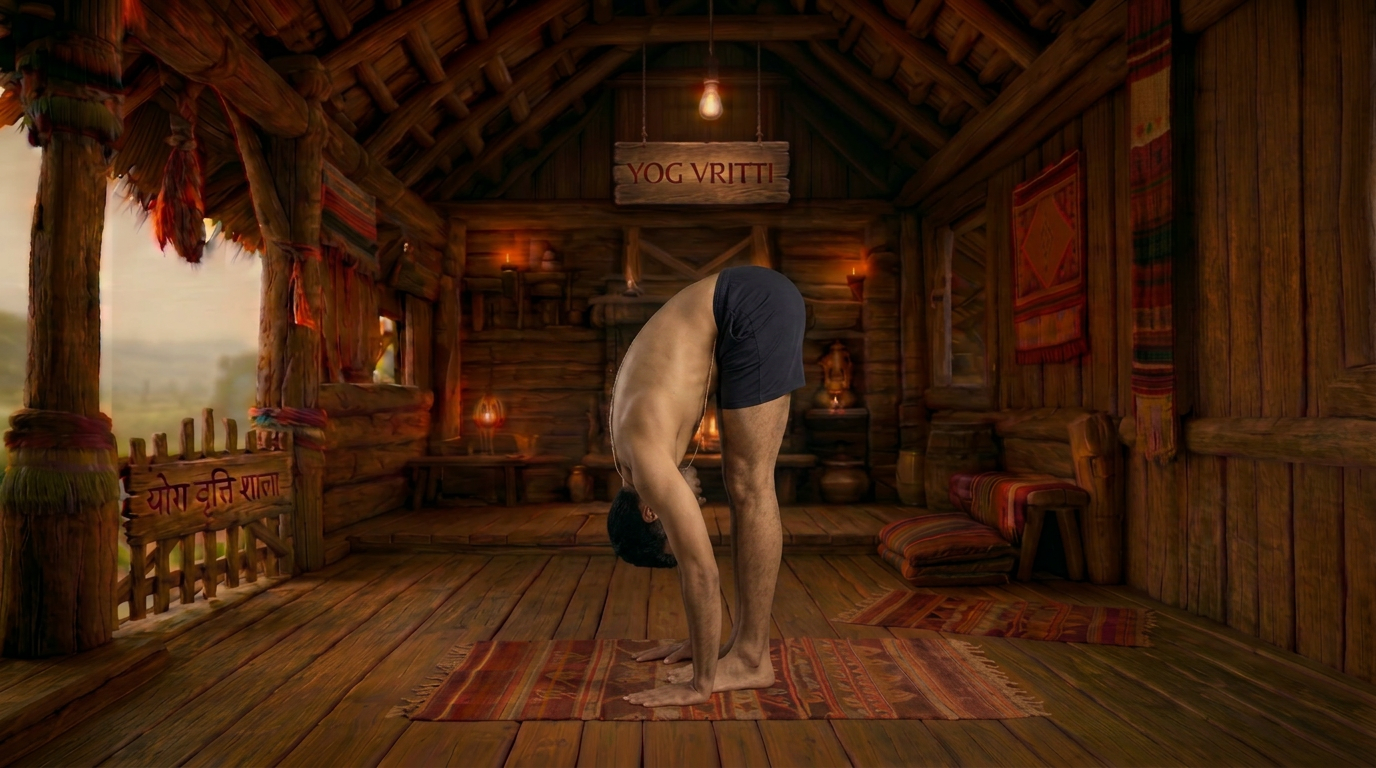
श्वास छोड़ते हुए, धीरे-धीरे आगे झुकें और बाएं हाथ को बाएं पैर के पास जमीन पर रखें। यदि संभव हो, माथे को बाएं घुटने की ओर ले जाएं।
balance बनाए रखें और दृष्टि को स्थिर रखें।
20-30 सेकंड के लिए इस स्थिति में बने रहें, श्वास लेते और छोड़ते रहें।
श्वास अंदर लें और धीरे-धीरे ऊपर उठें।
श्वास छोड़ते हुए, पैर को नीचे Tadasana में लाएं।
अब यही क्रिया बाएं पैर से दोहराएं।
सहायक उपकरण
वैकल्पिक सहायता — आवश्यकतानुसार उपयोग करें
Yoga Block
Place blocks under the hands at any height to allow the spine to lengthen fully before attempting to reach the floor — prioritising posture over depth.
सामान्य गलतियाँ
शिक्षण संकेत
अभ्यास क्रम
अक्सर पूछे जाने वाले प्रश्न
अर्ध बद्ध पद्मोत्तानासन के बारे में सामान्य प्रश्न
अर्ध बद्ध पद्मोत्तानासन क्या है?
अर्ध बद्ध पद्मोत्तानासन एक उन्नत आसन है जिसके लिए महत्वपूर्ण लचीलापन और संतुलन की आवश्यकता होती है। यह हैमस्ट्रिंग, हिप फ्लेक्सर और कंधों को खींचता है जबकि खड़े पैर और कोर को मजबूत करता है।
अर्ध बद्ध पद्मोत्तानासन के क्या फायदे हैं?
Improves balance and coordination। Stretches hamstrings, hip flexors, and shoulders। Strengthens the standing leg and core।
अर्ध बद्ध पद्मोत्तानासन किस स्तर के लिए है?
अर्ध बद्ध पद्मोत्तानासन एक उन्नत स्तर का आसन है। शुरुआती लोग किसी योग गुरु के मार्गदर्शन में अभ्यास करें।
अर्ध बद्ध पद्मोत्तानासन कौन न करे?
Knee injury, Ankle injury, Shoulder injury की स्थिति में यह आसन न करें।
अर्ध बद्ध पद्मोत्तानासन के लिए कौन से उपकरण चाहिए?
block का उपयोग इस आसन को आसान बना सकता है।