

खड़े होकर · शुरुआती
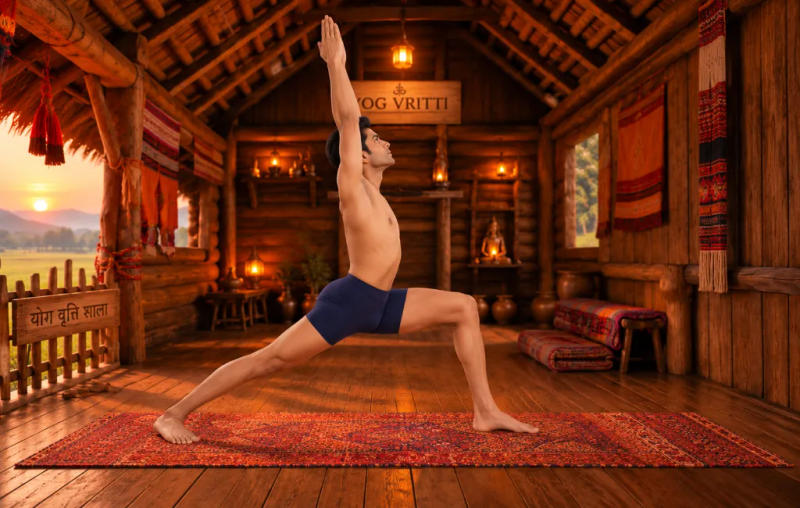
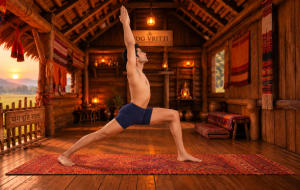
वीरभद्रासन १
Warrior I Pose · Warrior I
VirabhadraWarrior (Divine Hero)AsanaPose — I
वीरभद्रासन 1 पैरों, बाहों और कोर को मजबूत करता है, साथ ही संतुलन और फोकस में सुधार करता है। यह छाती और कंधों को खोलता है, जिससे शक्ति और स्थिरता की भावना को बढ़ावा मिलता है।
स्तर शुरुआतीप्रकार खड़े होकरपक्ष एक ओर
अभ्यास की विधि
- 1
ताड़ासन में पैरों को साथ में और बाँहों को बगल में रखकर खड़े हों।
- 2
साँस लेते हुए, दोनों बाँहों को सिर के ऊपर उठाएँ, ऊपर की ओर खींचते हुए हथेलियों को आपस में जोड़ें।
- 3
साँस लेते हुए, अपने पैरों को 4 से 4.5 फीट की दूरी पर कूदकर या फैलाकर अलग करें, बाँहों को ऊपर उठाए रखें और हथेलियाँ जुड़ी रहें।
- 4
साँस छोड़ते हुए, दाएँ पैर को 90 डिग्री दाएँ मोड़ें और बाएँ पैर को थोड़ा अंदर की ओर (लगभग 45 डिग्री) मोड़ें।
- 5
साँस छोड़ते रहें, दाएँ घुटने को तब तक मोड़ें जब तक दाईं जाँघ फर्श के स्तर पर आ जाए और दाईं पिंडली सीधी रहे, घुटने को टखने के ठीक ऊपर संरेखित करें। सुनिश्चित करें कि घुटना टखने से आगे न निकले।
शिक्षण संकेत
यह कहें
- Step one foot back 4 to 4.5 feet, turning the back foot 45 degrees
- Bend the front knee to 90 degrees, directly above the ankle
- Square the hips toward the front of the mat
- Reach the arms overhead, palms facing each other
- Draw the front ribs in and lift the chest
- Press firmly through the back heel
इन पर ध्यान दें
- Front knee collapsing inward — track it over the second toe
- Lifting the back heel off the floor
- Over-arching the lower back — tuck the tailbone slightly
- Shoulders hiking toward the ears — relax them down
- Leaning the torso forward — keep it upright over the pelvis
शरीर पर प्रभाव
मांसपेशियाँ देखने के लिए किसी भाग पर टैप करें3D anatomy adapted from Z-Anatomy, CC BY-SA 4.0
Hips & glutes
BothWarrior I Pose both stretches and strengthens your hips and buttocks.
Muscles at work
- Gluteus MaximusContracts
Powers hip extension and external rotation in backbends and standing postures while supporting structural grounding.
Main action: extends and outwardly rotates the hip; assists to stabilize fully extended knee via the iliotibial band
- Gluteus MediusContracts
Stabilizes the pelvis and femur in one-legged standing poses and balances internal/external rotation.
Main action: abducts and internally rotates hip; stabilizes pelvis during walking and standing
- Gluteus MinimusContracts
Stabilizes the pelvis and internally rotates the back leg in standing poses like Warrior I to maintain neutral hip alignment.
Main action: Hip abduction and internal rotation
- Tensor Fascia LataContracts
Assists in fine-tuning hip flexion, internal rotation, and turning thighs inward during standing and balancing poses.
Main action: flexes, internally rotates and abducts the hip; supports femur on tibia during standing
- Hip AbductorsStretches
The hip abductors stabilize the pelvis in single-leg balance poses like Tree Pose and maintain external alignment during standing postures.
Main action: Abduction of the hip joint
- Strengthens legs, arms, and core
- Improves balance and focus
- Opens the chest and shoulders
- Increases stamina
- Relieves back pain
सावधानियाँ
High Blood Pressure
Vigorous effort and inverted positions temporarily raise blood pressure in the head, increasing strain on blood vessels.
बदलाव · Keep arms below shoulder height, breathe steadily, and avoid vigorous transitions.
Knee Injury
Deep flexion or rotation at the knee can strain ligaments, meniscus, or cartilage, especially in a compromised joint.
बदलाव · Do not allow the knee to travel beyond the ankle; keep weight evenly distributed and use a block under the hand for support.
Shoulder Injury
Overhead loading and extreme shoulder rotation can impinge the subacromial space and overload rotator cuff tendons.
बदलाव · Keep the arm below shoulder height, avoid full overhead extension, and use a block to reduce reach.
Neck Injury / Cervical Issues
Looking up, bearing head weight, or unsupported neck rotation can compress cervical vertebrae and irritate nerves.
बदलाव · Keep the head in a neutral position aligned with the spine; avoid deep neck extension, flexion, or unsupported rotation.
Neck Pain
बदलाव · Keep head neutral, looking forward instead of up
कक्षा में

त्वरित उत्तर
वीरभद्रासन १ क्या है?
वीरभद्रासन 1 पैरों, बाहों और कोर को मजबूत करता है, साथ ही संतुलन और फोकस में सुधार करता है। यह छाती और कंधों को खोलता है, जिससे शक्ति और स्थिरता की भावना को बढ़ावा मिलता है।
वीरभद्रासन १ कैसे करें?
ताड़ासन में पैरों को साथ में और बाँहों को बगल में रखकर खड़े हों। साँस लेते हुए, दोनों बाँहों को सिर के ऊपर उठाएँ, ऊपर की ओर खींचते हुए हथेलियों को आपस में जोड़ें। साँस लेते हुए, अपने पैरों को 4 से 4.5 फीट की दूरी पर कूदकर या फैलाकर अलग करें, बाँहों को ऊपर उठाए रखें और हथेलियाँ जुड़ी रहें।
क्या शुरुआती लोग वीरभद्रासन १ कर सकते हैं?
हाँ, यह शुरुआती स्तर का आसन है।
- आसन प्रकार
- Balance, Hip Opener
- मुख्य भाग
- Lower Body, Core, Shoulders
- किसके लिए
- Beginners, Athletes, Runners
- योग शैली
- Hatha, Vinyasa, Iyengar, Ashtanga, Power
- कब करें
- Warm Up, Peak Pose, Sun Salutation