 मध्यमखड़े होकर
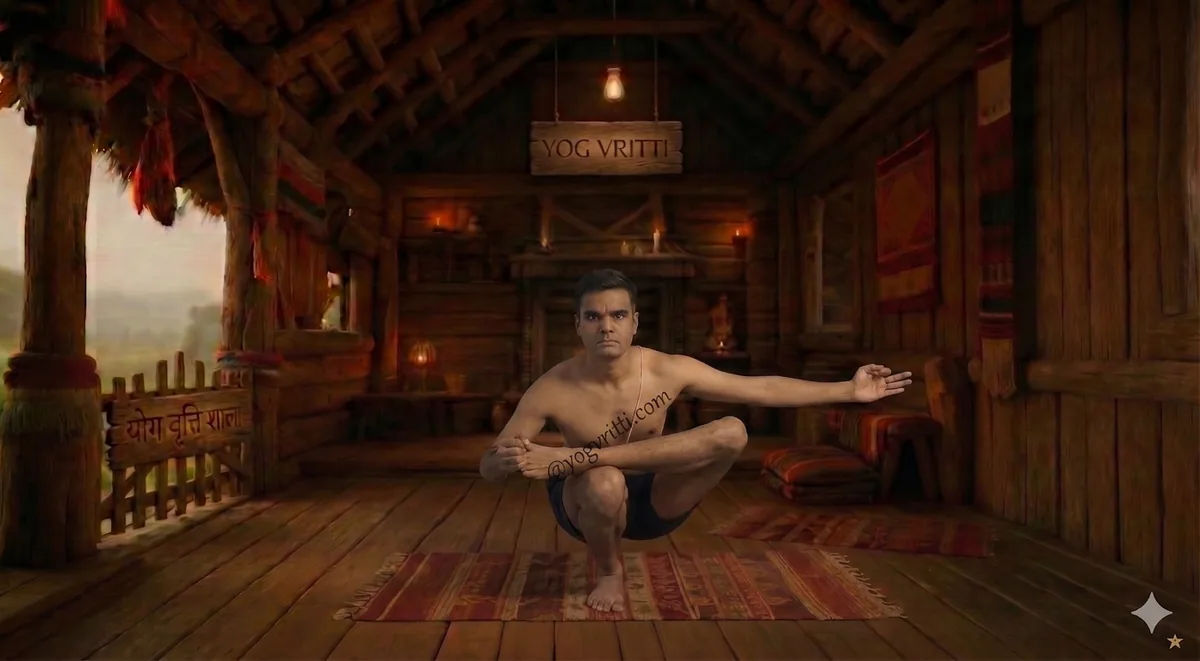
अर्ध पद्म पादांगुष्ठासन
Half Lotus Toe Hold Pose
अर्ध पद्म पादांगुष्ठासन — अर्ध पद्मासन में खड़े होकर आगे झुकना, पीठ के पीछे बाइंड।
फायदे
4Hamstrings(lengthening)
The powerful muscles along the back of your standing thigh (hamstrings) receive a sustained, intelligent lengthening as the pelvis tilts forward over the stable leg. These muscles are gently encouraged to release, not forced, allowing for a deeper forward fold and reducing chronic tension that often pulls on the sitting bones and sacrum. This action frees the downward flow of apana vayu, promoting a feeling of groundedness and ease in the lower body.
Gluteal muscles(lengthening (standing leg), external rotation (lotus leg))
On the standing leg, the large muscles of your buttocks (gluteals) lengthen as the hip flexes deeply, releasing tightness from prolonged sitting and contributing to the forward fold. Simultaneously, on the bent leg, the smaller deep gluteal muscles (such as piriformis) are actively engaged in external rotation to create the half-lotus position. This dual action brings balance to the hips, promoting both stability and openness, and helps to release stagnation in the pelvic region.
Erector Spinae(lengthening)
The long muscles running parallel to your spine (erector spinae) are encouraged to lengthen as you fold forward, creating space between the vertebrae rather than collapsing the trunk. The intention is to draw the spine long from the tailbone to the crown of the head, counteracting the compressive forces of gravity. This gentle traction helps to decompress the spinal column, allowing prana to flow more freely upwards along the central channel (sushumna nadi).
- पूर्ण शारीरिक विश्लेषण →
सावधानियाँ
4Knee Injury
Deep flexion or rotation at the knee can strain ligaments, meniscus, or cartilage, especially in a compromised joint.
Bend the knees generously to protect the joint and keep the weight in the heels rather than the toes.
Hip Injury
Deep hip flexion, external rotation, or weight-bearing can aggravate labral tears, impingement, or bursitis.
Limit the range of hip movement, avoid positions that cause clicking or sharp pain, and use props to support the hip.
Shoulder Injury
Overhead loading and extreme shoulder rotation can impinge the subacromial space and overload rotator cuff tendons.
Reduce the range of motion, avoid full arm extension, and use props to limit load on the shoulder joint.
Balance Disorders
Impaired proprioception increases the risk of falls during standing and balancing poses.
Practise next to a wall or chair for support; keep both feet on the ground wherever possible.
विधि
चरण-दर-चरण निर्देश
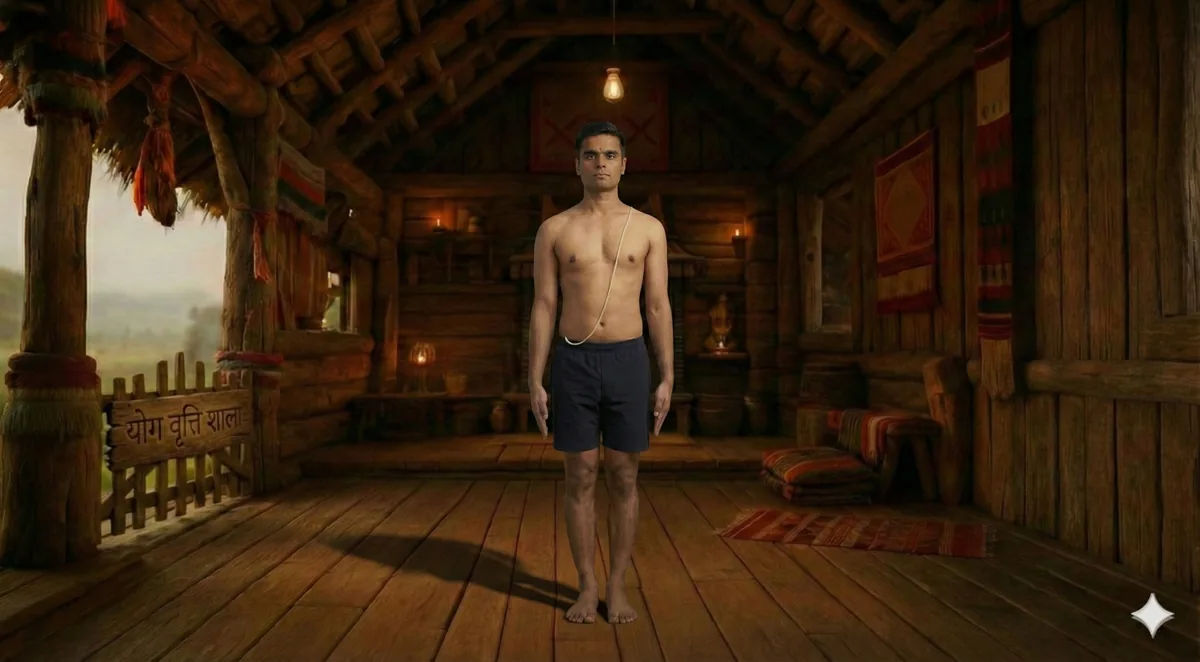
ताड़ासन में खड़े हों।
दायां पैर उठाएं, दायां पंजा बाईं जांघ पर (अर्ध पद्मासन)।
बायां पैर पर संतुलन।
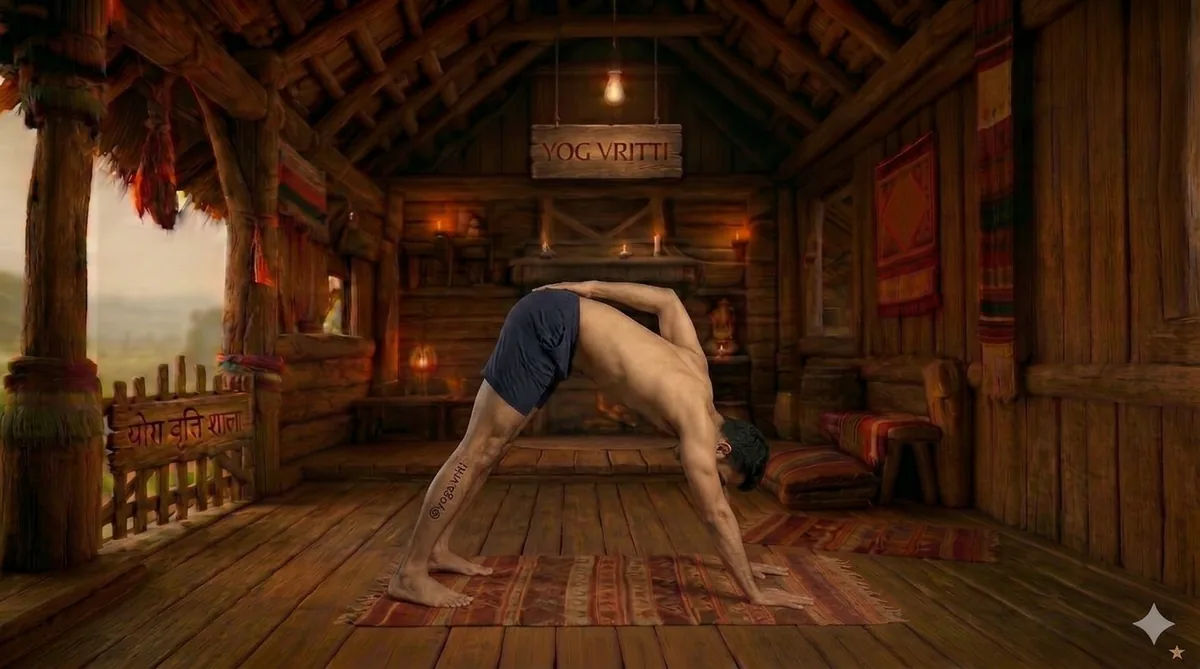
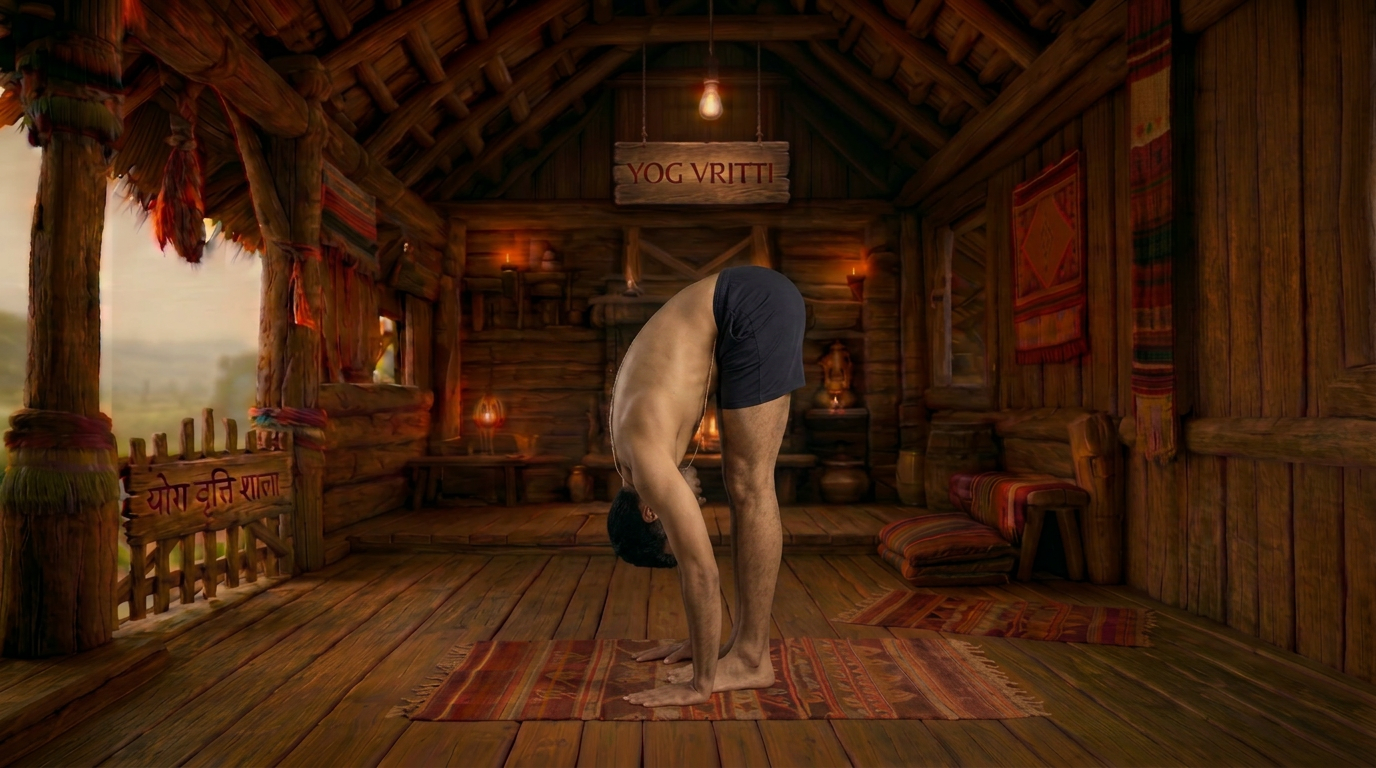
श्वास छोड़ें, आगे झुकें।
दायां हाथ पीठ के पीछे से दाएं पैर का अंगूठा पकड़ें (बाइंड)।
बायां हाथ जमीन पर या बाएं पैर पर।
माथा बाएं पिंडली की ओर।
5 सांसें।
ऊपर आएं।
दूसरी तरफ।
सामान्य गलतियाँ
शिक्षण संकेत
अभ्यास क्रम
अक्सर पूछे जाने वाले प्रश्न
अर्ध पद्म पादांगुष्ठासन के बारे में सामान्य प्रश्न
अर्ध पद्म पादांगुष्ठासन क्या है?
अर्ध पद्म पादांगुष्ठासन — अर्ध पद्मासन में खड़े होकर आगे झुकना, पीठ के पीछे बाइंड।
अर्ध पद्म पादांगुष्ठासन के क्या फायदे हैं?
Combines balance, hip opening, and forward fold। Develops binding ability। Standing balance challenge।
अर्ध पद्म पादांगुष्ठासन किस स्तर के लिए है?
अर्ध पद्म पादांगुष्ठासन एक मध्यम स्तर का आसन है। शुरुआती लोग किसी योग गुरु के मार्गदर्शन में अभ्यास करें।
अर्ध पद्म पादांगुष्ठासन कौन न करे?
Knee injuries, Hip injuries, Shoulder injuries की स्थिति में यह आसन न करें।