 शुरुआतीपीठ के बल
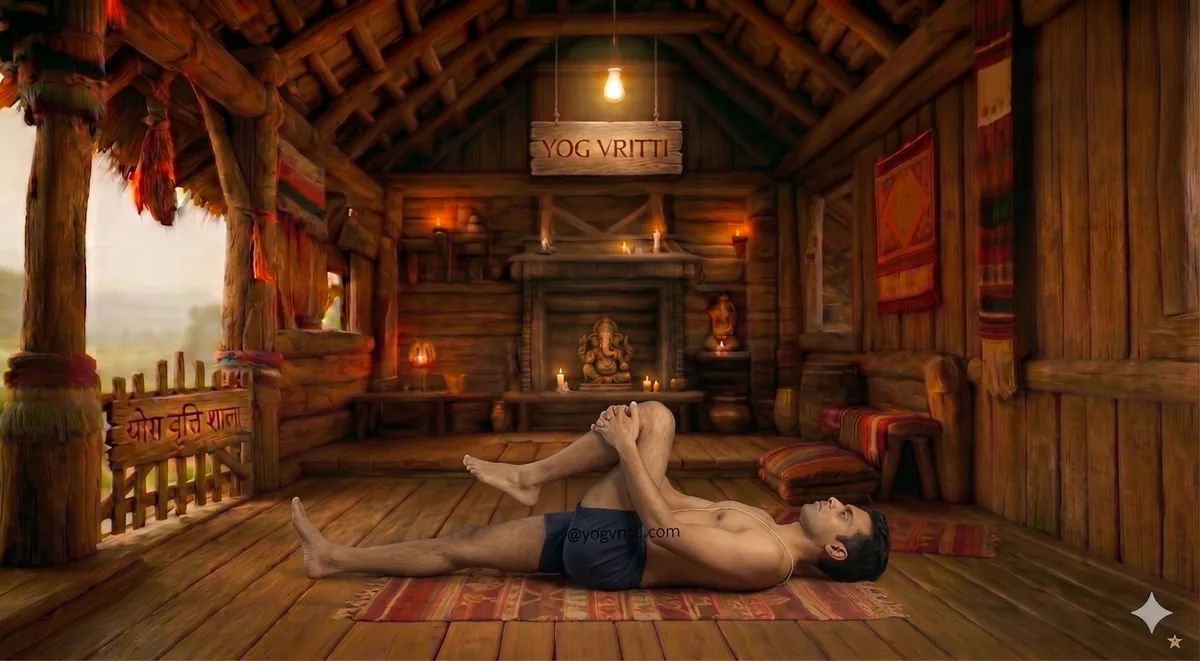
एकपाद पवनमुक्तासन
Single Knee-to-Chest Pose
एकपाद पवनमुक्तासन में एक घुटना छाती से लगाकर दूसरा पैर सीधा रखा जाता है।
फायदे
5Hamstrings(lengthening)
These powerful muscles run down the back of your thigh, from your sitting bones to just below the knee. In this pose, the extended leg remains long and active, promoting a subtle but sustained lengthening through the entire posterior chain of that leg. This gentle stretch, without force, helps to release chronic tightness that often contributes to lower back pain. Yogically, it helps to release deeply held tension, allowing apana vayu (downward-moving energy) to flow more freely, enhancing a sense of stability and groundedness.
Glutes(releasing)
Your gluteal muscles form the bulk of your buttocks, connecting your pelvis to your thigh bone. When you draw the knee towards the chest, these muscles on the bent leg are gently stretched and released, especially if they are tight. This passive lengthening helps to reduce compression in the hip joint and can alleviate referred pain that might be originating from tight glutes, such as piriformis syndrome. The release in this area can feel like an unburdening, allowing a sense of freedom and ease to spread through the pelvis.
Hip Flexors(lengthening)
The hip flexors are deep muscles at the front of your hip, connecting your spine and pelvis to your thigh bone, often shortened from prolonged sitting. In this pose, the extended leg stretches these muscles, particularly the psoas, as the front of the hip gently lengthens away from the torso. This subtle yet significant opening helps to counteract the effects of a sedentary lifestyle, promoting better posture and reducing anterior pelvic tilt. Energetically, releasing the psoas can unlock deep emotional tension, fostering a sense of emotional openness and ease.
- पूर्ण शारीरिक विश्लेषण →
सावधानियाँ
2Recent Surgery
Surgical wounds and healing tissues need time before being subjected to the mechanical stress of yoga postures.
Wait for full medical clearance from your surgeon; begin with gentle breath work and progress only as healing allows.
Hernia
Strong abdominal compression and breath-holding under strain increase intra-abdominal pressure and can worsen a hernia.
Avoid any posture that causes pressure or bulging in the abdomen; work with a qualified teacher and your healthcare provider.
विधि
चरण-दर-चरण निर्देश
पीठ के बल लेटें, दोनों पैर सीधे।
बाहें शरीर के बगल में।
श्वास लें।
श्वास छोड़ते हुए दायां घुटना मोड़ें और छाती की ओर लाएं।
दोनों हाथों से दाएं घुटने या पिंडली को पकड़ें।
दायां घुटना छाती से लगाएं।
बायां पैर सीधा और जमीन पर दबा रहे — उठने न दें।
कंधे और सिर जमीन पर।
5-8 सांसें। फिर धीरे-धीरे दायां पैर सीधा करें।
बाईं तरफ दोहराएं। फिर दोनों पैर एक साथ (द्विपाद वर्जन)।
सामान्य गलतियाँ
शिक्षण संकेत
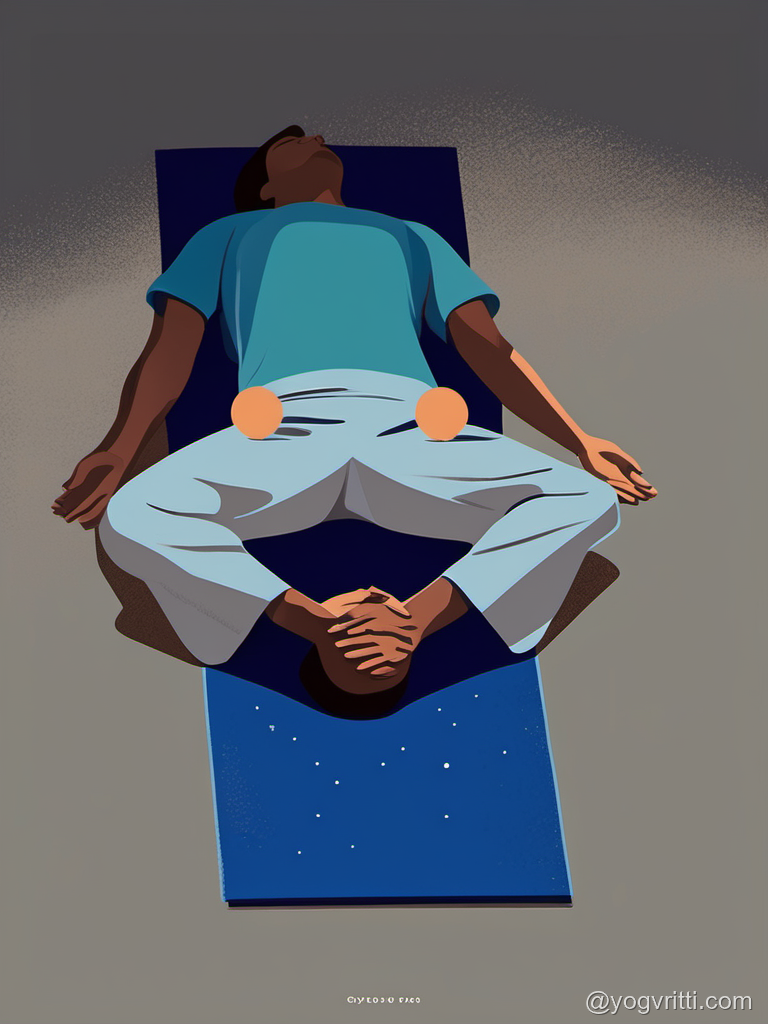
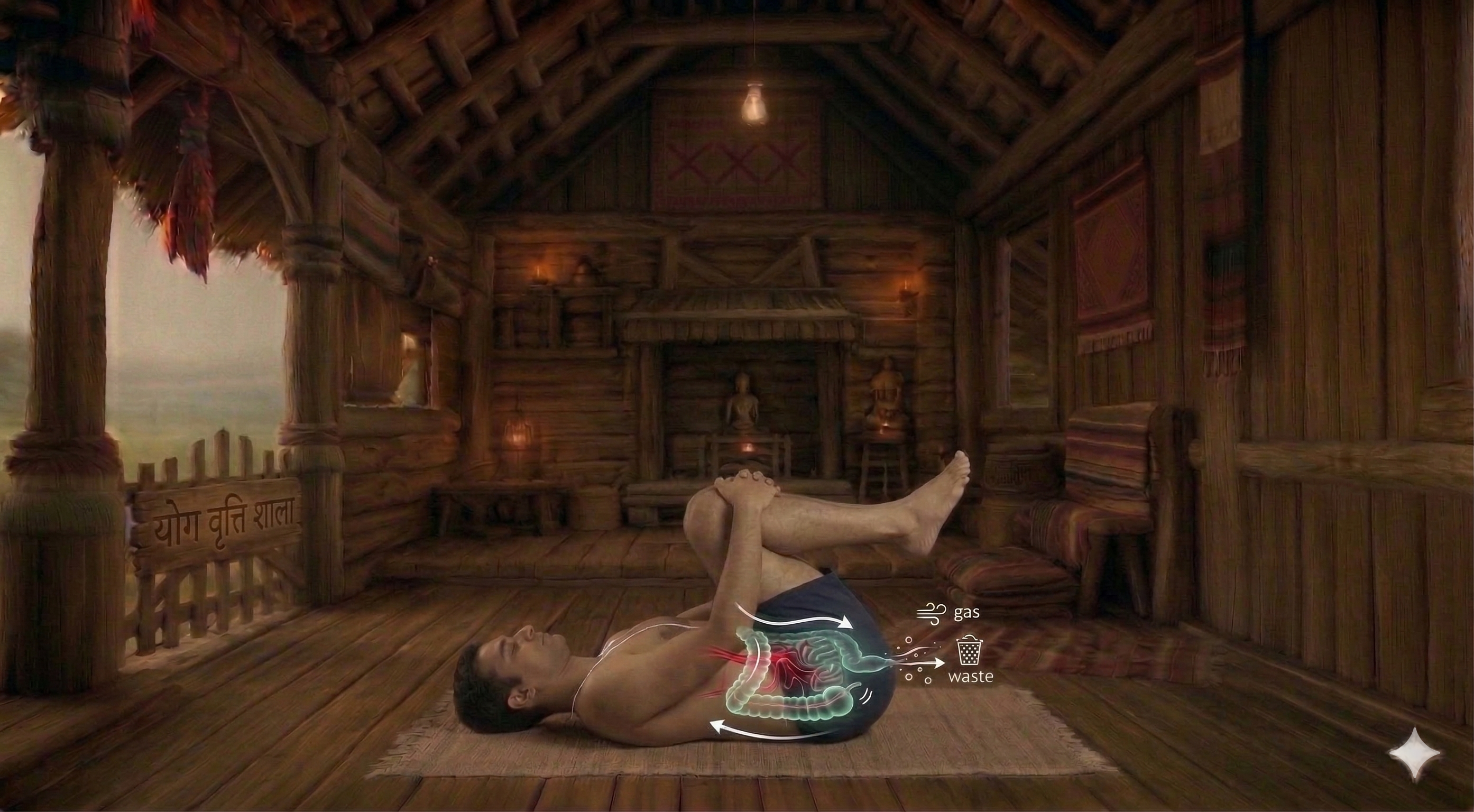
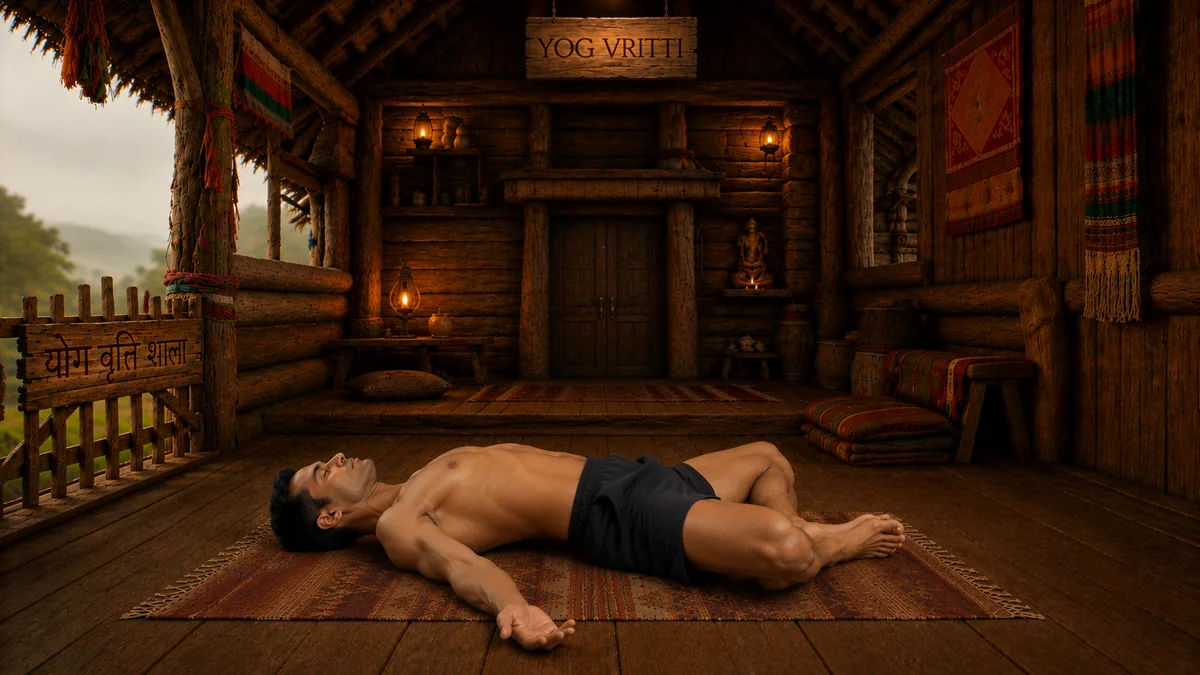
अभ्यास क्रम
अक्सर पूछे जाने वाले प्रश्न
एकपाद पवनमुक्तासन के बारे में सामान्य प्रश्न
एकपाद पवनमुक्तासन क्या है?
एकपाद पवनमुक्तासन में एक घुटना छाती से लगाकर दूसरा पैर सीधा रखा जाता है।
एकपाद पवनमुक्तासन के क्या फायदे हैं?
Relieves lower back pain। Stretches hip flexors of the extended leg। Aids digestion।
एकपाद पवनमुक्तासन किस स्तर के लिए है?
एकपाद पवनमुक्तासन एक शुरुआती स्तर का आसन है। यह सभी के लिए उपयुक्त है।
एकपाद पवनमुक्तासन कौन न करे?
Recent abdominal surgery, Hernia की स्थिति में यह आसन न करें।