 मध्यमखड़े होकर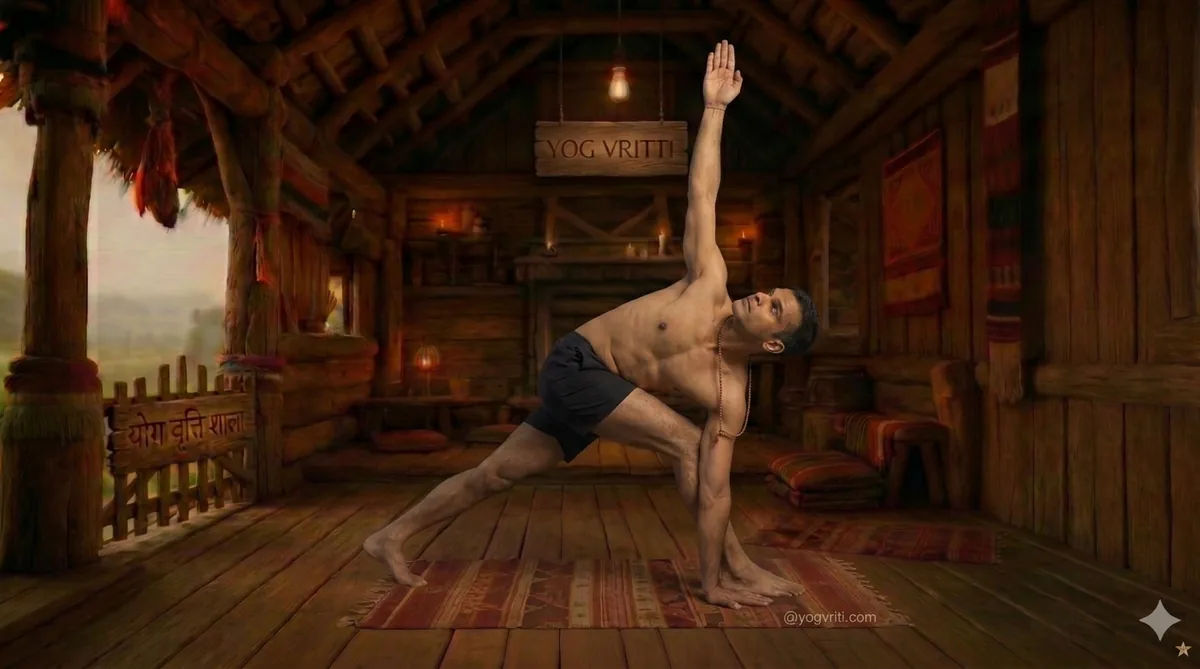

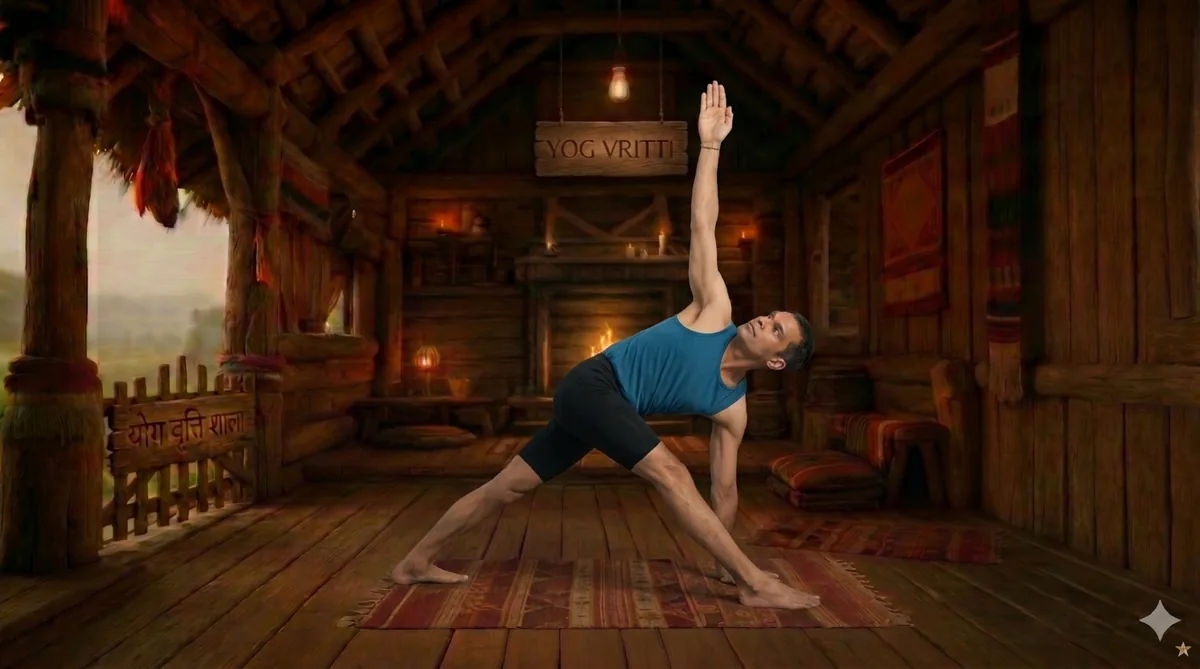
परिवृत्त त्रिकोणासन
Revolved Triangle Pose
परिवृत्त त्रिकोणासन पैरों और कोर को मजबूत करता है, साथ ही संतुलन और रीढ़ की हड्डी के लचीलेपन में सुधार करता है। यह पेट के अंगों को उत्तेजित करता है और तनाव और चिंता को दूर करने में मदद करता है।
फायदे
5Hamstrings(lengthening)
The powerful muscles along the back of your front thigh (hamstrings) are asked to lengthen deeply here, not through force, but with sustained, intelligent extension from the hip. As you maintain a straight front leg and hinge forward, these muscles release chronic tightness, often a legacy of sitting and habitual postures. This unwinding creates a profound sense of spaciousness and grounding in the legs, allowing apana vayu to flow freely and root you more deeply into the earth. Regular practice progressively lengthens this posterior chain, directly reducing the pull on the lower back and improving overall flexibility.
Glutes(strengthening | stabilizing)
The muscles of your buttocks (gluteus maximus and medius) are actively engaged in the front leg to stabilize the hip joint and assist in the internal rotation of the back leg. This deep muscular activation provides a stable foundation for the twist, preventing undue strain on the knee and lower back. By rooting through the glutes, you establish a firm connection to the earth, creating a sense of unwavering stability that allows the upper body to twist freely. This grounding energy helps to calm the mind and focus your awareness within the pose.
Core muscles(activating | stabilizing | eccentric-loading)
The deep muscles of your abdomen and back (transversus abdominis, obliques, and erector spinae) are intensely engaged to stabilize the spine and initiate the twisting action. As you draw the lower abdomen in and up, you create a central axis of strength around which the spine can rotate safely and effectively. This intelligent engagement of the core not only protects the back but also stokes your internal fire (agni), enhancing vitality and the feeling of inner power. The sustained isometric contraction builds endurance and body awareness, vital for all standing poses.
- पूर्ण शारीरिक विश्लेषण →
सावधानियाँ
4Back Injury / Back Pain
Spinal flexion, extension, or rotation under load can compress vertebral discs or strain the paraspinal muscles.
Initiate the twist from the upper spine and ribs rather than forcing from the waist; keep both sitting bones grounded.
High Blood Pressure
Vigorous effort and inverted positions temporarily raise blood pressure in the head, increasing strain on blood vessels.
Keep effort moderate, breathe continuously, and avoid any position that causes pressure or throbbing in the head.
Headache / Migraine
Physical exertion, inversions, and strong breath work can intensify an existing headache or trigger a migraine.
Avoid inversions and strong pranayama; rest in a supported, restorative posture with a cool cloth on the forehead.
विधि
चरण-दर-चरण निर्देश
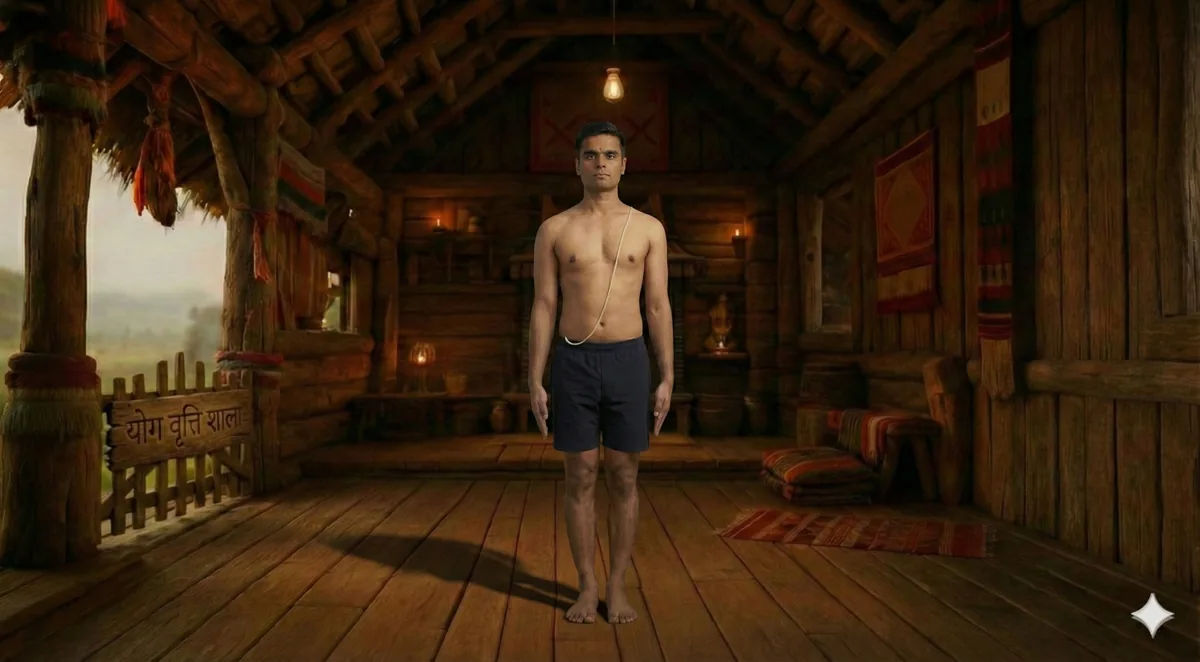
ताड़ासन में खड़े हो जाएं।
श्वास लें, पैरों को 3-4 फीट दूर फैलाएं।
दाहिने पैर को 90 डिग्री बाहर की ओर मोड़ें, बाएं पैर को थोड़ा अंदर की ओर रखें।
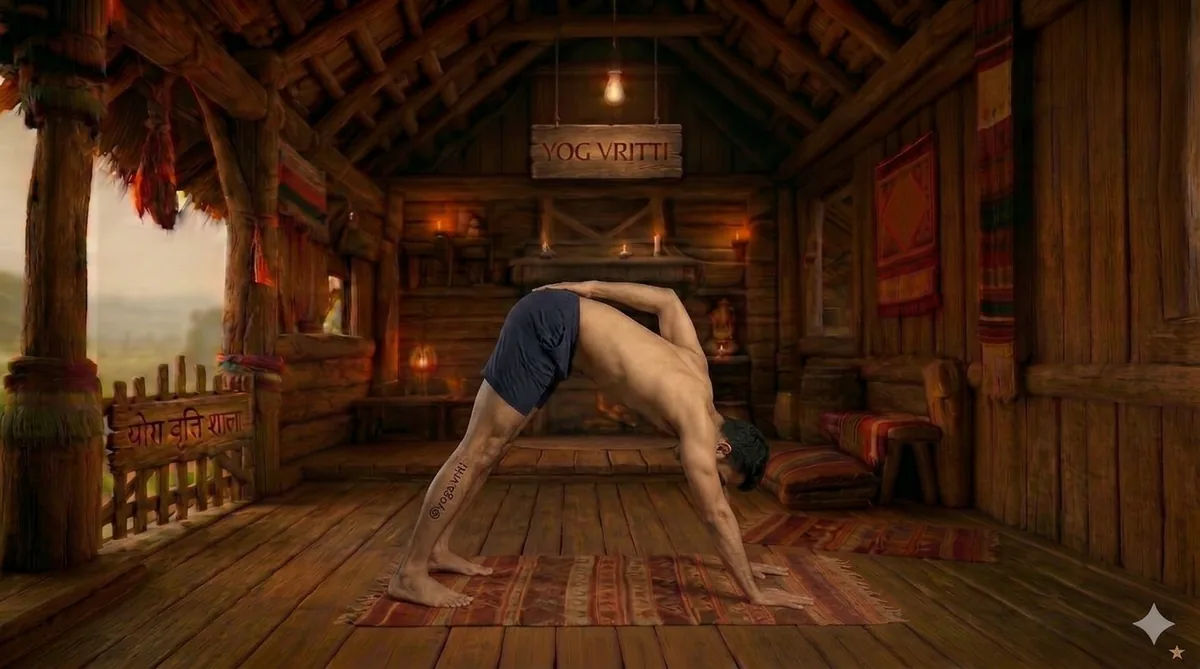
श्वास छोड़ते हुए, बाएं हाथ को दाहिने पैर के बाहर जमीन पर रखें। यदि आवश्यक हो, तो हाथ को शिन पर रखें।
दाहिने हाथ को ऊपर की ओर सीधा उठाएं, उंगलियों को छत की ओर इंगित करें।
अपनी दृष्टि को ऊपर की ओर रखें।
रीढ़ की हड्डी को घुमाएं, छाती को ऊपर की ओर खोलें।
इस स्थिति में 20-30 सेकंड तक बने रहें, गहरी सांस लेते रहें।
श्वास लेते हुए, ऊपर आएं, पैरों को सीधा करें और ताड़ासन में लौट आएं। दूसरे पैर से दोहराएं।
सहायक उपकरण
वैकल्पिक सहायता — आवश्यकतानुसार उपयोग करें
Yoga Block
Use a block to reduce the reach distance, support alignment, and make the posture accessible at your current level of flexibility.
विविधता देखें →सामान्य गलतियाँ
शिक्षण संकेत
अभ्यास क्रम
अक्सर पूछे जाने वाले प्रश्न
परिवृत्त त्रिकोणासन के बारे में सामान्य प्रश्न
परिवृत्त त्रिकोणासन क्या है?
परिवृत्त त्रिकोणासन पैरों और कोर को मजबूत करता है, साथ ही संतुलन और रीढ़ की हड्डी के लचीलेपन में सुधार करता है। यह पेट के अंगों को उत्तेजित करता है और तनाव और चिंता को दूर करने में मदद करता है।
परिवृत्त त्रिकोणासन के क्या फायदे हैं?
Strengthens legs and core। Improves balance and spinal flexibility। Stimulates abdominal organs।
परिवृत्त त्रिकोणासन किस स्तर के लिए है?
परिवृत्त त्रिकोणासन एक मध्यम स्तर का आसन है। शुरुआती लोग किसी योग गुरु के मार्गदर्शन में अभ्यास करें।
परिवृत्त त्रिकोणासन कौन न करे?
Back pain, High blood pressure, Headaches की स्थिति में यह आसन न करें।
परिवृत्त त्रिकोणासन के लिए कौन से उपकरण चाहिए?
block का उपयोग इस आसन को आसान बना सकता है।