सुप्त परिवृत्त अर्ध पवनमुक्तासन
Reclined Revolved Wind-Relieving Pose
यह कोमल लेटा हुआ ट्विस्ट पीठ के निचले हिस्से और कूल्हों में तनाव को कम करने में मदद करता है, रीढ़ की गतिशीलता को बढ़ावा देता है और पाचन में सहायता करता है। यह शुरुआती लोगों के लिए समर्थित तरीके से ट्विस्ट के लाभों का अनुभव करने के लिए एक उत्कृष्ट आसन है।
फायदे
6Obliques(releasing)
These core muscles run along the sides of your torso, responsible for twisting and bending. In this pose, one side gently lengthens while the other contracts, creating a spiral action around your waist. This mindful engagement and release helps to wring out stagnant energy from the abdominal cavity, promoting a feeling of lightness and openness in the core. It directly supports the detoxification process by encouraging fresh circulation to the internal organs.
Glutes(releasing)
The large muscles of your buttocks and hips are gently stretched and released, particularly on the side of the twisted leg. This unwinding helps to alleviate tightness that often accumulates from prolonged sitting or standing, which can pull on the lower back. Energetically, releasing the glutes allows apana vayu – the downward and outward moving energy – to flow more freely, fostering a sense of groundedness and stability in the pelvic region.
Hip Flexors(releasing)
Deep within the front of your hip and groin, these muscles often become chronically tight, contributing to lower back pain and postural imbalances. In this twist, the hip flexors on the side of the bent knee experience a gentle, sustained release, especially if the knee is drawn closer to the chest before twisting. This therapeutic lengthening helps to free the pelvis, releasing not only physical tension but also deeply held emotional patterns often stored in this area, fostering a sense of emotional lightness.
- पूर्ण शारीरिक विश्लेषण →
सावधानियाँ
5Recent Surgery
Surgical wounds and healing tissues need time before being subjected to the mechanical stress of yoga postures.
Wait for full medical clearance from your surgeon; begin with gentle breath work and progress only as healing allows.
Back Injury / Back Pain
Spinal flexion, extension, or rotation under load can compress vertebral discs or strain the paraspinal muscles.
Initiate the twist from the upper spine and ribs rather than forcing from the waist; keep both sitting bones grounded.
Sciatica
Certain hip stretches and forward bends pull on the sciatic nerve, temporarily increasing radiating pain down the leg.
Keep both sitting bones grounded and initiate the twist from the mid-back; stop if any shooting sensation occurs.
Disc Herniation
Spinal flexion and rotation under load increase intradiscal pressure and can push herniated material toward spinal nerves.
Initiate the rotation from the upper thoracic spine; avoid forceful lumbar rotation.
विधि
चरण-दर-चरण निर्देश
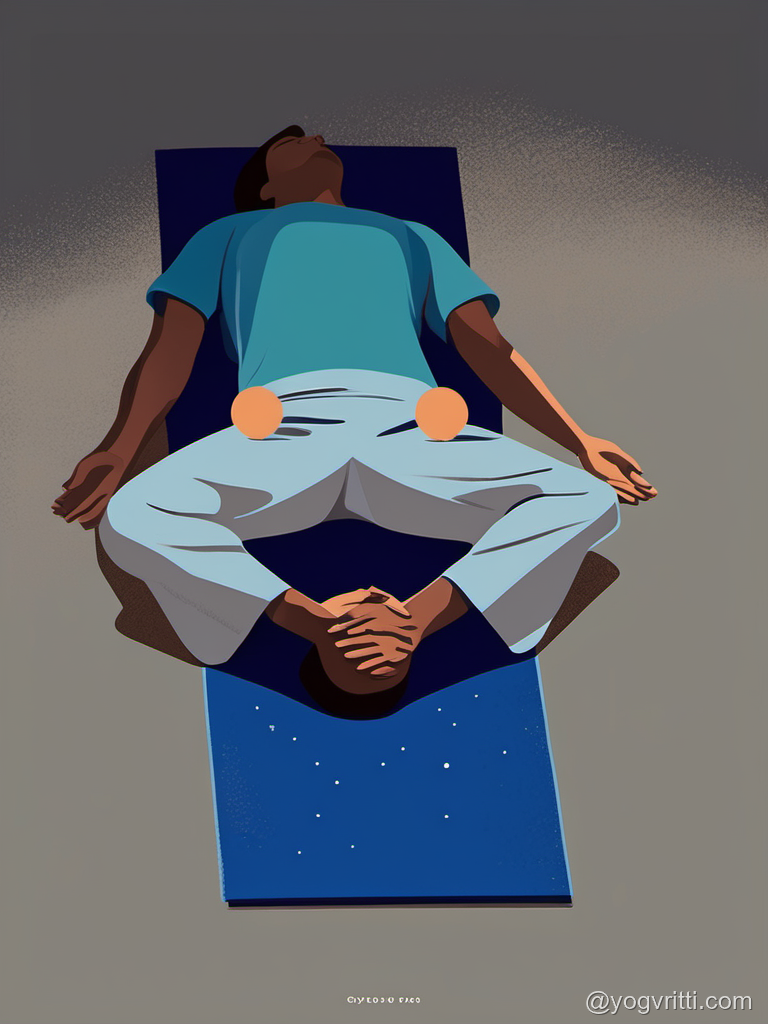
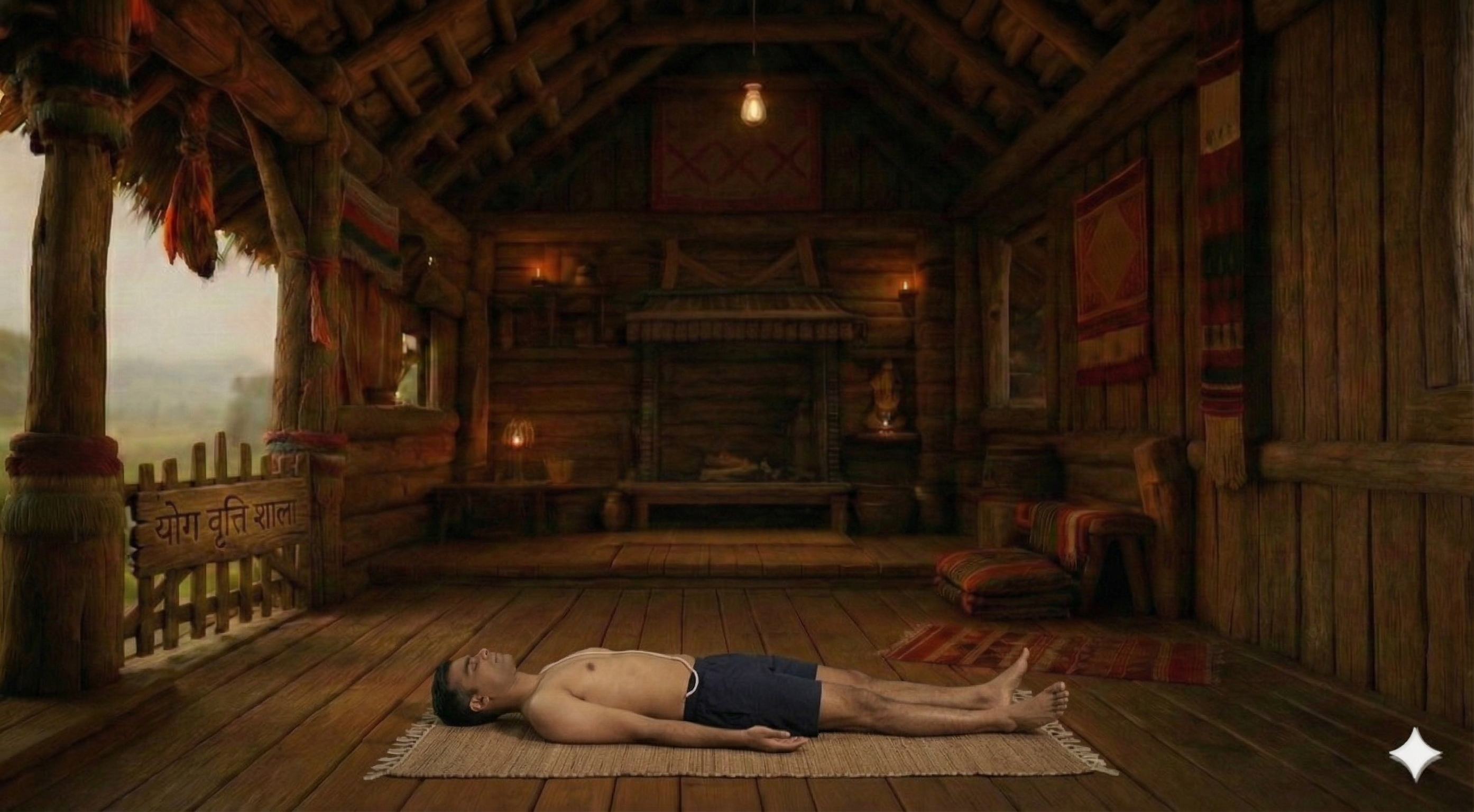
अपनी चटाई पर पीठ के बल लेट जाएं, सिर को एक मुड़े हुए कंबल से सहारा दें, घुटने मोड़ें और पैर फर्श पर कूल्हे-चौड़ाई जितनी दूरी पर रखें।
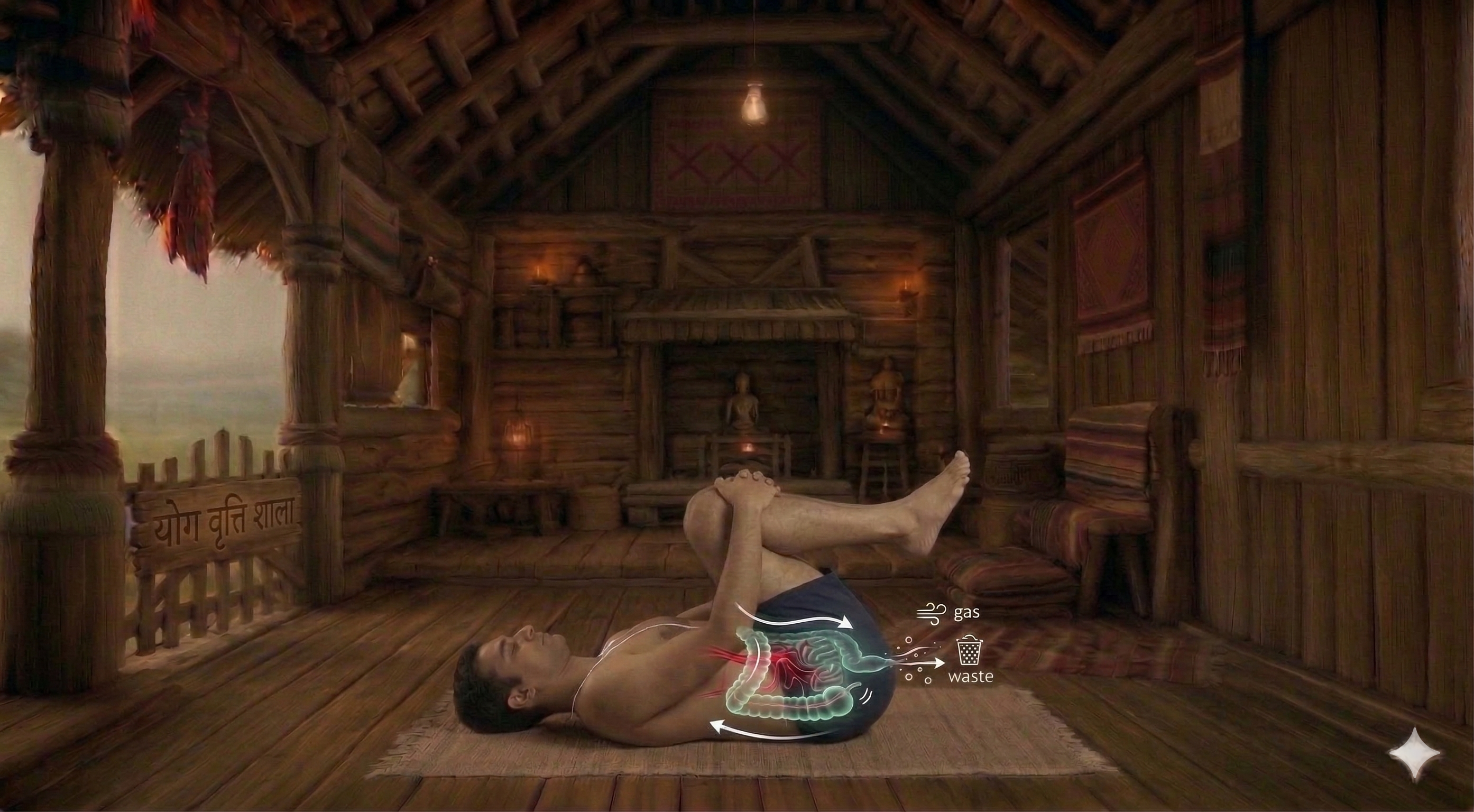
श्वास लें, अपने दाहिने घुटने को अपनी छाती की ओर खींचें, अपनी पिंडली को हाथों से पकड़ें। अपने बाएं पैर को ज़मीन पर टिकाए रखें।
श्वास छोड़ें, और अपने बाएं हाथ से, अपने दाहिने घुटने को धीरे से अपने शरीर के पार अपनी बाईं ओर फर्श की ओर ले जाएं।
अपने दाहिने हाथ को कंधे की ऊंचाई पर बगल में फैलाएं, हथेली ऊपर की ओर रखें, अपने दाहिने कंधे को ज़मीन पर टिकाए रखें।
अपने सिर को दाहिनी ओर मोड़ें, अपनी दाहिनी बांह की ओर देखें, सुनिश्चित करें कि आपकी गर्दन ढीली और लंबी है।
अपने दाहिने कंधे के ब्लेड को चटाई में सक्रिय रूप से दबाएं और अपनी दाहिनी बांह से लंबाई बनाएं।
दोनों कंधों को समतल और ज़मीन पर टिकाए रखें। रीढ़ को स्वाभाविक रूप से मुड़ने दें, ज़बरदस्ती न करें।
5-8 श्वासों तक आसन में बने रहें, श्वास को ट्विस्ट को गहरा करने और तनाव मुक्त करने दें।
श्वास लेते हुए अपने सिर को केंद्र में और घुटने को अपनी छाती पर वापस लाएं।
श्वास छोड़ें, अपने दाहिने पैर को वापस फर्श पर छोड़ दें, और बाईं ओर दोहराएं।
सहायक उपकरण
वैकल्पिक सहायता — आवश्यकतानुसार उपयोग करें
Folded Blanket
Use a blanket for cushioning, elevation, or support — it adapts the pose to your body's current needs without compromising alignment.
सामान्य गलतियाँ
शिक्षण संकेत
अभ्यास क्रम

अक्सर पूछे जाने वाले प्रश्न
सुप्त परिवृत्त अर्ध पवनमुक्तासन के बारे में सामान्य प्रश्न
सुप्त परिवृत्त अर्ध पवनमुक्तासन क्या है?
यह कोमल लेटा हुआ ट्विस्ट पीठ के निचले हिस्से और कूल्हों में तनाव को कम करने में मदद करता है, रीढ़ की गतिशीलता को बढ़ावा देता है और पाचन में सहायता करता है। यह शुरुआती लोगों के लिए समर्थित तरीके से ट्विस्ट के लाभों का अनुभव करने के लिए एक उत्कृष्ट आसन है।
सुप्त परिवृत्त अर्ध पवनमुक्तासन के क्या फायदे हैं?
Relieves lower back pain। Improves spinal flexibility। Stimulates abdominal organs।
सुप्त परिवृत्त अर्ध पवनमुक्तासन किस स्तर के लिए है?
सुप्त परिवृत्त अर्ध पवनमुक्तासन एक शुरुआती स्तर का आसन है। यह सभी के लिए उपयुक्त है।
सुप्त परिवृत्त अर्ध पवनमुक्तासन कौन न करे?
Recent abdominal surgery, Severe spinal injury, Sciatica flare-up की स्थिति में यह आसन न करें।
सुप्त परिवृत्त अर्ध पवनमुक्तासन के लिए कौन से उपकरण चाहिए?
blanket का उपयोग इस आसन को आसान बना सकता है।