सुप्त परिवृत्त ताड़ासन
Supine Revolved Mountain Pose
सुप्त परिवृत्त ताड़ासन एक कोमल पीठ के बल लेटने वाला घुमाव है जो रीढ़ की हड्डी और पेट की मांसपेशियों में तनाव को दूर करने में मदद करता है। यह रीढ़ की हड्डी की गतिशीलता में सुधार करता है, पाचन को उत्तेजित करता है और मन को शांत करता है।
फायदे
5Obliques (side abdominal muscles)(lengthening | activating)
As you twist, the oblique muscles on the side you are twisting towards gently contract to facilitate the rotation, while the obliques on the opposite side experience a sustained, gentle lengthening. This coordinated action helps to wring out tension from the abdominal wall, improving flexibility and subtle strength around the waist. From a yogic perspective, this action helps to stimulate Samana Vayu, the balancing energy responsible for assimilation and digestion in the core.
Spinal Erectors(releasing | lengthening)
These deep muscles run along either side of your spine, responsible for extending and stabilizing the vertebral column. In Supta Parivrtta Tadasana, the gentle twist encourages a subtle lengthening and release of these muscles, particularly on the side away from the twist. This unwinding helps to decompress the spine, creating space between the vertebrae and allowing for a freer flow of Prana along the Sushumna Nadi, the central energy channel.
Quadratus Lumborum (QL)(releasing | lengthening)
Located deep in the lower back, connecting the pelvis to the lowest rib and lumbar spine, the QL is often a culprit in lower back stiffness and pain. This supine twist provides a subtle, sustained stretch to the QL on the side away from the twist, encouraging it to release chronic tension. The gentle release in this muscle can significantly alleviate lower back discomfort, fostering a sense of spaciousness and ease in the lumbar region.
- पूर्ण शारीरिक विश्लेषण →
सावधानियाँ
4Back Injury / Back Pain
Spinal flexion, extension, or rotation under load can compress vertebral discs or strain the paraspinal muscles.
Initiate the twist from the upper spine and ribs rather than forcing from the waist; keep both sitting bones grounded.
Pregnancy
Deep twists, abdominal compression, and lying flat on the back can restrict blood flow or cause discomfort as pregnancy progresses.
Twist from the upper thoracic spine only, opening the chest rather than compressing the abdomen; use a chair for support.
Recent Surgery
Surgical wounds and healing tissues need time before being subjected to the mechanical stress of yoga postures.
Wait for full medical clearance from your surgeon; begin with gentle breath work and progress only as healing allows.
Hip Injury
Deep hip flexion, external rotation, or weight-bearing can aggravate labral tears, impingement, or bursitis.
Limit the range of hip movement, avoid positions that cause clicking or sharp pain, and use props to support the hip.
विधि
चरण-दर-चरण निर्देश
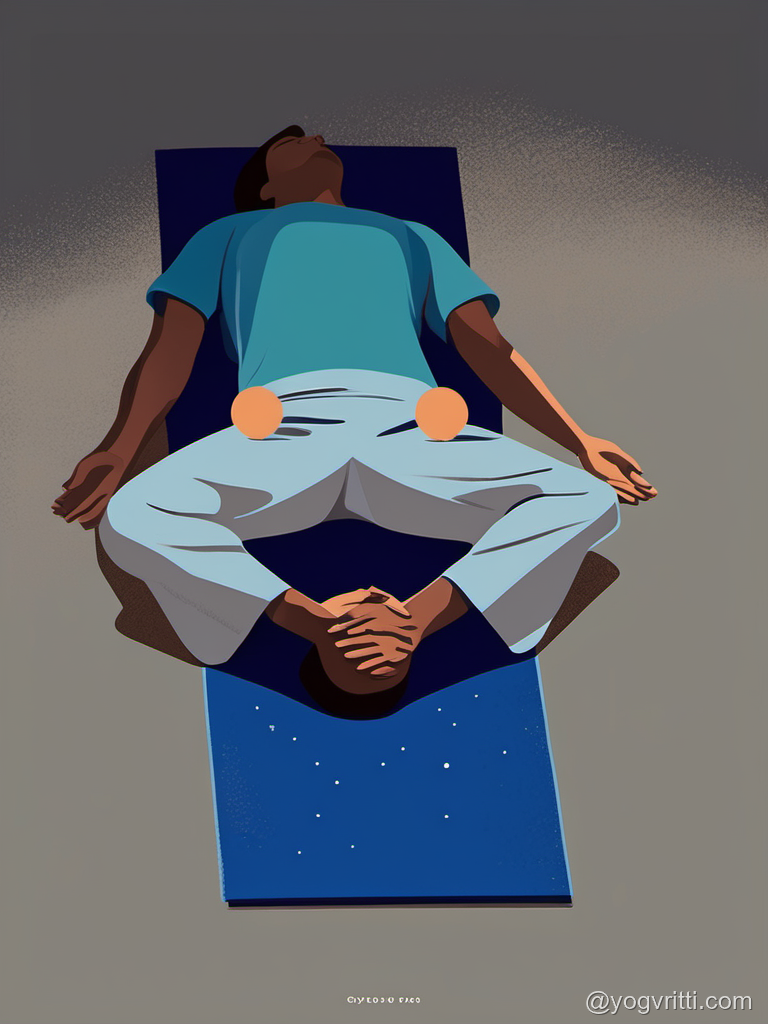
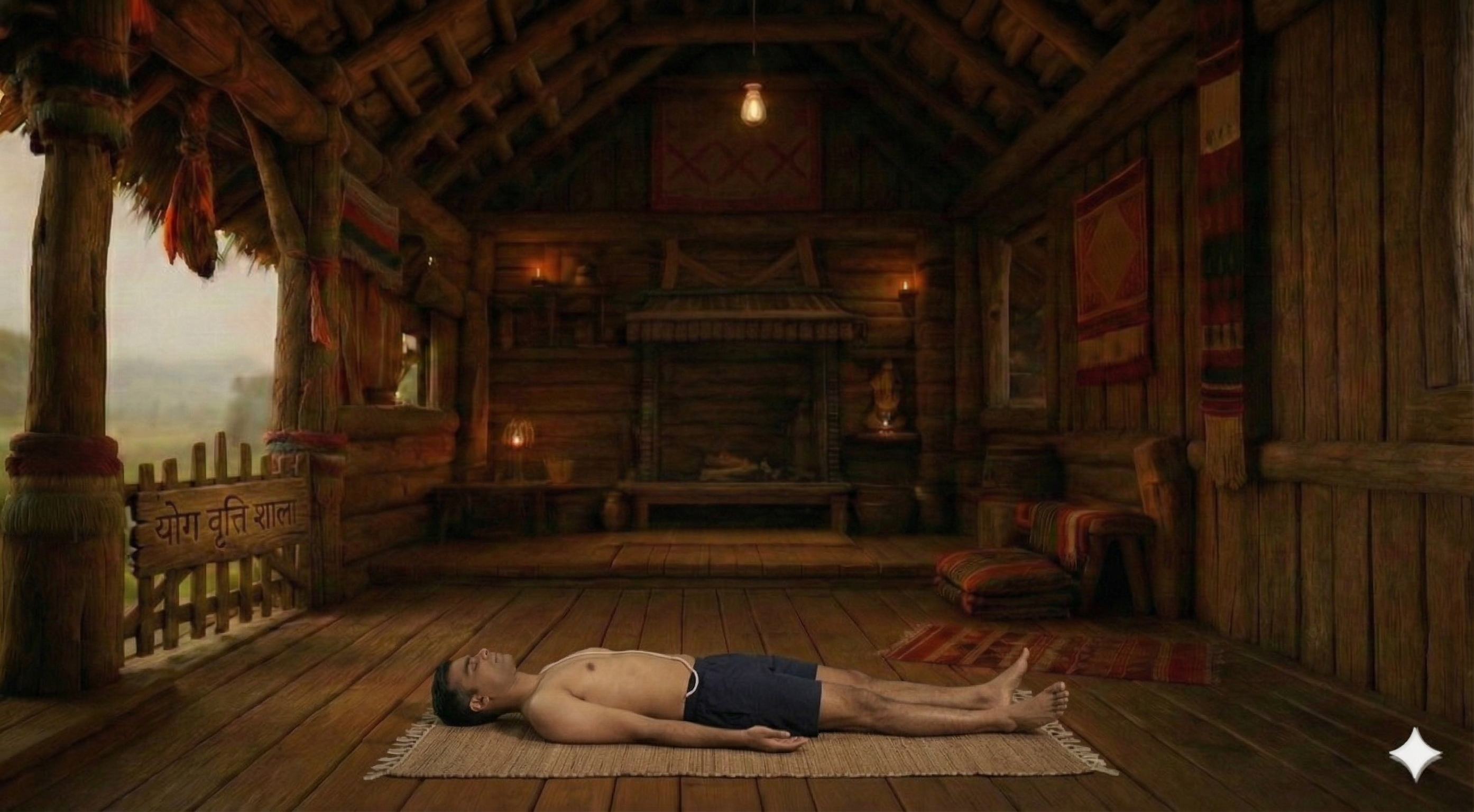
शवासन में पीठ के बल लेट जाएं, पैर सीधे और हाथ शरीर के बगल में। (Shavasana mein peeth ke bal let jaen, pair sidhe aur hath sharir ke bagal mein.)
श्वास अंदर लें और दोनों हाथों को कंधों की सीध में फैलाएं। (Shwas andar len aur donon hathon ko kandhon ki sidh mein phailaen.)
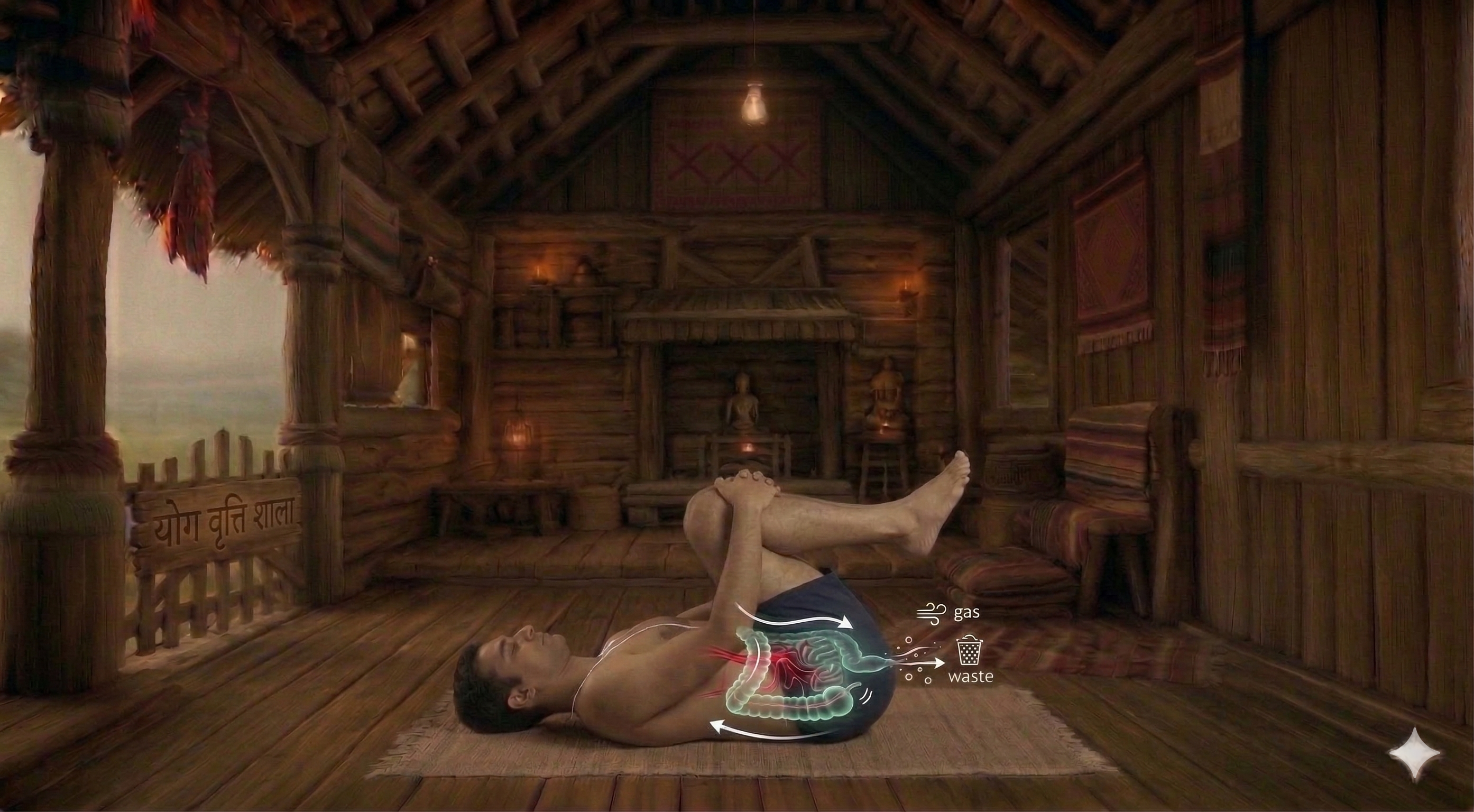
श्वास बाहर छोड़ें और दोनों घुटनों को मोड़ें और छाती की ओर लाएं। (Shwas bahar chhoren aur donon ghutnon ko moden aur chhati ki or laen.)
श्वास छोड़ते हुए, दोनों घुटनों को धीरे-धीरे दाईं ओर जमीन पर ले जाएं, कंधों को जमीन पर टिकाए रखें। (Shwas chhodte hue, donon ghutnon ko dheere-dheere dain or jamin par le jaen, kandhon ko jamin par tikae rakhen.)
गर्दन को बाईं ओर मोड़ें। (Gardan ko bain or moden.)
कुछ श्वासों के लिए इस स्थिति में बने रहें, हर श्वास के साथ रीढ़ की हड्डी में खिंचाव महसूस करें। (Kuch shwason ke lie is sthiti mein bane rahen, har shwas ke sath ridh ki haddi mein khinchav mahsus karen.)
श्वास अंदर लें और घुटनों को वापस छाती की ओर लाएं। (Shwas andar len aur ghutnon ko wapas chhati ki or laen.)
श्वास बाहर छोड़ें और घुटनों को बाईं ओर जमीन पर ले जाएं, कंधों को जमीन पर टिकाए रखें। (Shwas bahar chhoren aur ghutnon ko bain or jamin par le jaen, kandhon ko jamin par tikae rakhen.)
गर्दन को दाईं ओर मोड़ें। (Gardan ko dain or moden.)
कुछ श्वासों के लिए इस स्थिति में बने रहें। (Kuch shwason ke lie is sthiti mein bane rahen.)
श्वास अंदर लें और घुटनों को वापस छाती की ओर लाएं। (Shwas andar len aur ghutnon ko wapas chhati ki or laen.)
श्वास बाहर छोड़ें और पैरों को सीधा करें, शवासन में वापस आ जाएं। (Shwas bahar chhoren aur pairon ko sidha karen, shavasana mein wapas aa jaen.)
सामान्य गलतियाँ
शिक्षण संकेत
अभ्यास क्रम

अक्सर पूछे जाने वाले प्रश्न
सुप्त परिवृत्त ताड़ासन के बारे में सामान्य प्रश्न
सुप्त परिवृत्त ताड़ासन क्या है?
सुप्त परिवृत्त ताड़ासन एक कोमल पीठ के बल लेटने वाला घुमाव है जो रीढ़ की हड्डी और पेट की मांसपेशियों में तनाव को दूर करने में मदद करता है। यह रीढ़ की हड्डी की गतिशीलता में सुधार करता है, पाचन को उत्तेजित करता है और मन को शांत करता है।
सुप्त परिवृत्त ताड़ासन के क्या फायदे हैं?
Relieves back pain and stiffness। Improves spinal mobility। Stimulates digestion।
सुप्त परिवृत्त ताड़ासन किस स्तर के लिए है?
सुप्त परिवृत्त ताड़ासन एक शुरुआती स्तर का आसन है। यह सभी के लिए उपयुक्त है।
सुप्त परिवृत्त ताड़ासन कौन न करे?
Back injuries (acute), Pregnancy (modify or avoid), Recent abdominal surgery की स्थिति में यह आसन न करें।