उत्थित हस्त पादाङ्गुष्ठासन II
Extended Hand-to-Big-Toe Pose II
उत्थित हस्त पादाङ्गुष्ठासन II एक खड़ी संतुलन मुद्रा है जो संतुलन, शक्ति और लचीलापन में सुधार करती है। यह हैमस्ट्रिंग और हिप फ्लेक्सर को खींचता है जबकि पैरों और कोर को मजबूत करता है। यह भिन्नता कूल्हे को किनारे पर खोलती है, जिससे संतुलन और भी चुनौतीपूर्ण हो जाता है।
फायदे
5Hamstrings (raised leg)(lengthening)
These powerful muscles running along the back of your lifted thigh are asked to release deeply, not through force, but through sustained, intelligent extension. As the leg extends out to the side, the medial hamstrings (semitendinosus, semimembranosus) experience a particularly strong stretch, requiring patience and breath to soften. This controlled lengthening helps to release deep-seated tension, often linked to the apana vayu, bringing a sense of freedom and openness to the posterior chain of the leg. Regular practice here can significantly improve hip flexion range and alleviate lower back strain.
Quadriceps (standing leg)(strengthening)
The muscles on the front of your standing thigh are powerfully engaged, working eccentrically to prevent hyperextension of the knee and concentrically to maintain an active lift through the kneecap. This deep activation creates a stable foundation, grounding the pose and providing the necessary support for the balance challenge. Energetically, this engagement fosters an unshakeable sense of sthira (steadiness) in the foundation, allowing the rest of the body to expand with sukha (ease). It builds endurance and resilience in the major weight-bearing muscles.
Gluteus Medius and Minimus (standing leg)(stabilizing)
Located on the outer side of your standing hip, these muscles are crucial for preventing the pelvis from tilting sideways and for keeping the standing leg tracking correctly. They work tirelessly to stabilize the hip joint, ensuring the leg remains centered and strong, counteracting the pull of the lifted leg. This deep, subtle engagement cultivates a profound sense of inner stability and alignment, allowing the practitioner to feel truly centered and integrated within their own structure. Over time, strengthening these muscles significantly improves gait and prevents common hip and knee issues.
- पूर्ण शारीरिक विश्लेषण →
सावधानियाँ
4Hip Injury
Deep hip flexion, external rotation, or weight-bearing can aggravate labral tears, impingement, or bursitis.
Do not force the hip into deep external rotation; keep the foot turned out only as far as is pain-free.
Low Blood Pressure
Rising quickly from low positions can cause a sudden drop in blood pressure, leading to dizziness or fainting.
Rise slowly from seated or lying positions, pause in a mid-level shape before fully standing, and use a wall for support.
Back Injury / Back Pain
Spinal flexion, extension, or rotation under load can compress vertebral discs or strain the paraspinal muscles.
Engage the core before any movement, keep a slight bend in the knees, and avoid locking the lower back.
Hamstring Injury
Aggressive stretching of a torn or strained hamstring can reinjure muscle fibres — the attachment near the sitting bone is especially vulnerable.
Do not try to straighten the legs fully; prioritise a neutral pelvis and neutral lower back over hamstring length.
विधि
चरण-दर-चरण निर्देश
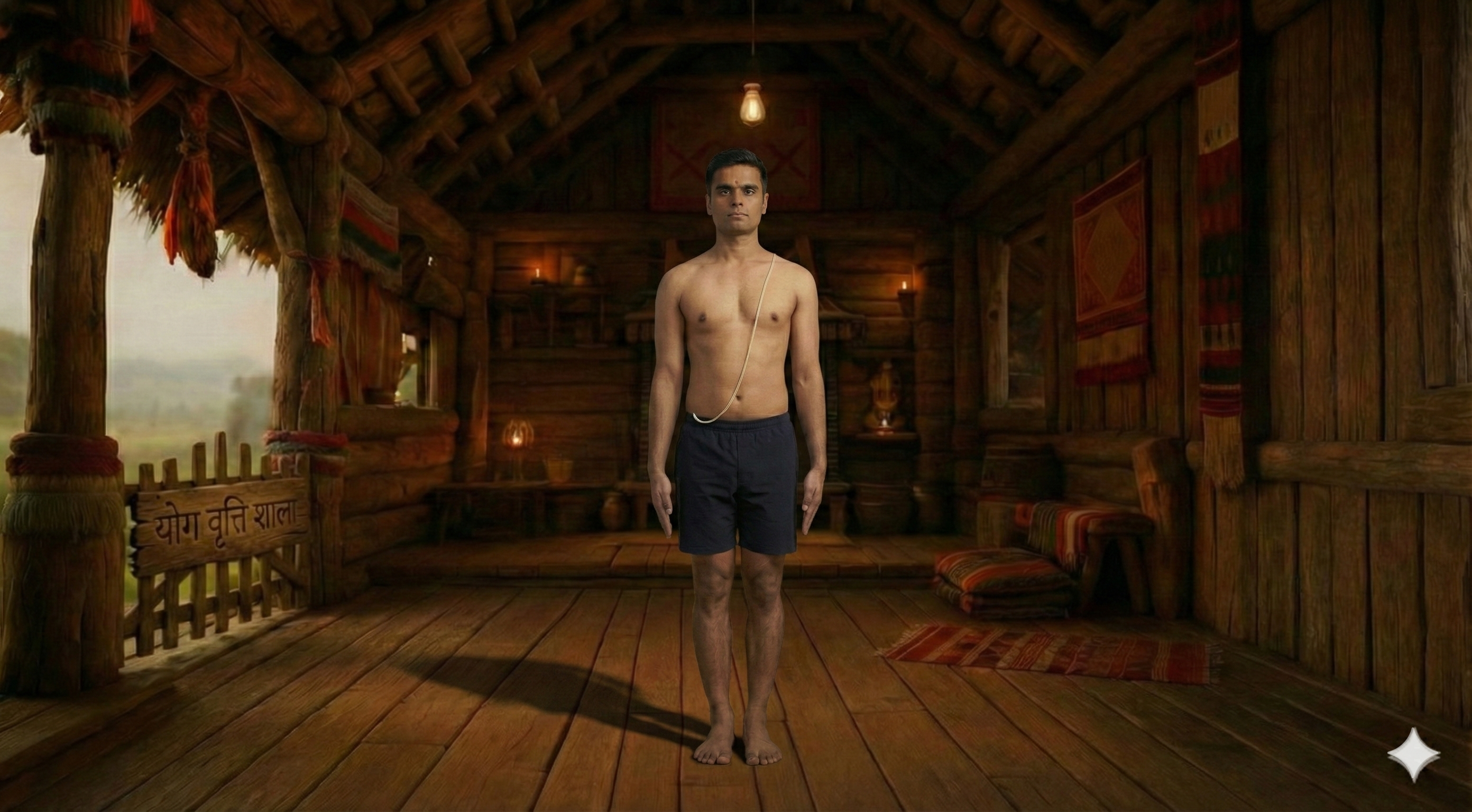
Tadasana में खड़े हो जाएं।
अपने दाहिने घुटने को अपनी छाती की ओर उठाएं।
अपने दाहिने हाथ से अपने दाहिने पैर के बड़े पैर के अंगूठे को पकड़ें। यदि यह संभव नहीं है, तो अपनी जांघ के पीछे या अपने पैर के बछड़े को पकड़ें।
श्वास अंदर लें, और अपनी रीढ़ को लंबा करें।
श्वास छोड़ते हुए, धीरे-धीरे अपने दाहिने पैर को सीधे आगे की ओर फैलाएं।
अपनी पीठ को सीधा रखें और अपने पेट को अंदर खींचें।
श्वास अंदर लें, और अपने दाहिने पैर को दाईं ओर खोलें। अपने बाएं हाथ को अपने कूल्हे पर रखें।
अपनी छाती को खुला रखें और आगे की ओर देखें।
30-60 सेकंड के लिए इस स्थिति में रहें, सामान्य रूप से श्वास लें।
श्वास छोड़ते हुए, अपने पैर को वापस केंद्र में लाएं।
श्वास छोड़ते हुए, अपने पैर को नीचे करें और Tadasana में वापस आ जाएं।
दूसरी तरफ दोहराएं।
सहायक उपकरण
वैकल्पिक सहायता — आवश्यकतानुसार उपयोग करें
Yoga Strap
A strap extends your reach and allows the pose to be held with correct alignment before full flexibility is established.
Wall
Practise near the wall so one fingertip can lightly touch it, giving the nervous system a safety anchor while building proprioceptive confidence.
सामान्य गलतियाँ
शिक्षण संकेत
अभ्यास क्रम

अक्सर पूछे जाने वाले प्रश्न
उत्थित हस्त पादाङ्गुष्ठासन II के बारे में सामान्य प्रश्न
उत्थित हस्त पादाङ्गुष्ठासन II क्या है?
उत्थित हस्त पादाङ्गुष्ठासन II एक खड़ी संतुलन मुद्रा है जो संतुलन, शक्ति और लचीलापन में सुधार करती है। यह हैमस्ट्रिंग और हिप फ्लेक्सर को खींचता है जबकि पैरों और कोर को मजबूत करता है। यह भिन्नता कूल्हे को किनारे पर खोलती है, जिससे संतुलन और भी चुनौतीपूर्ण हो जाता है।
उत्थित हस्त पादाङ्गुष्ठासन II के क्या फायदे हैं?
Improves balance and coordination। Strengthens the legs and core। Stretches the hamstrings and hip flexors।
उत्थित हस्त पादाङ्गुष्ठासन II किस स्तर के लिए है?
उत्थित हस्त पादाङ्गुष्ठासन II एक मध्यम स्तर का आसन है। शुरुआती लोग किसी योग गुरु के मार्गदर्शन में अभ्यास करें।
उत्थित हस्त पादाङ्गुष्ठासन II कौन न करे?
Hip injury, Low blood pressure, Back pain की स्थिति में यह आसन न करें।
उत्थित हस्त पादाङ्गुष्ठासन II के लिए कौन से उपकरण चाहिए?
strap, wall का उपयोग इस आसन को आसान बना सकता है।