 मध्यमखड़े होकर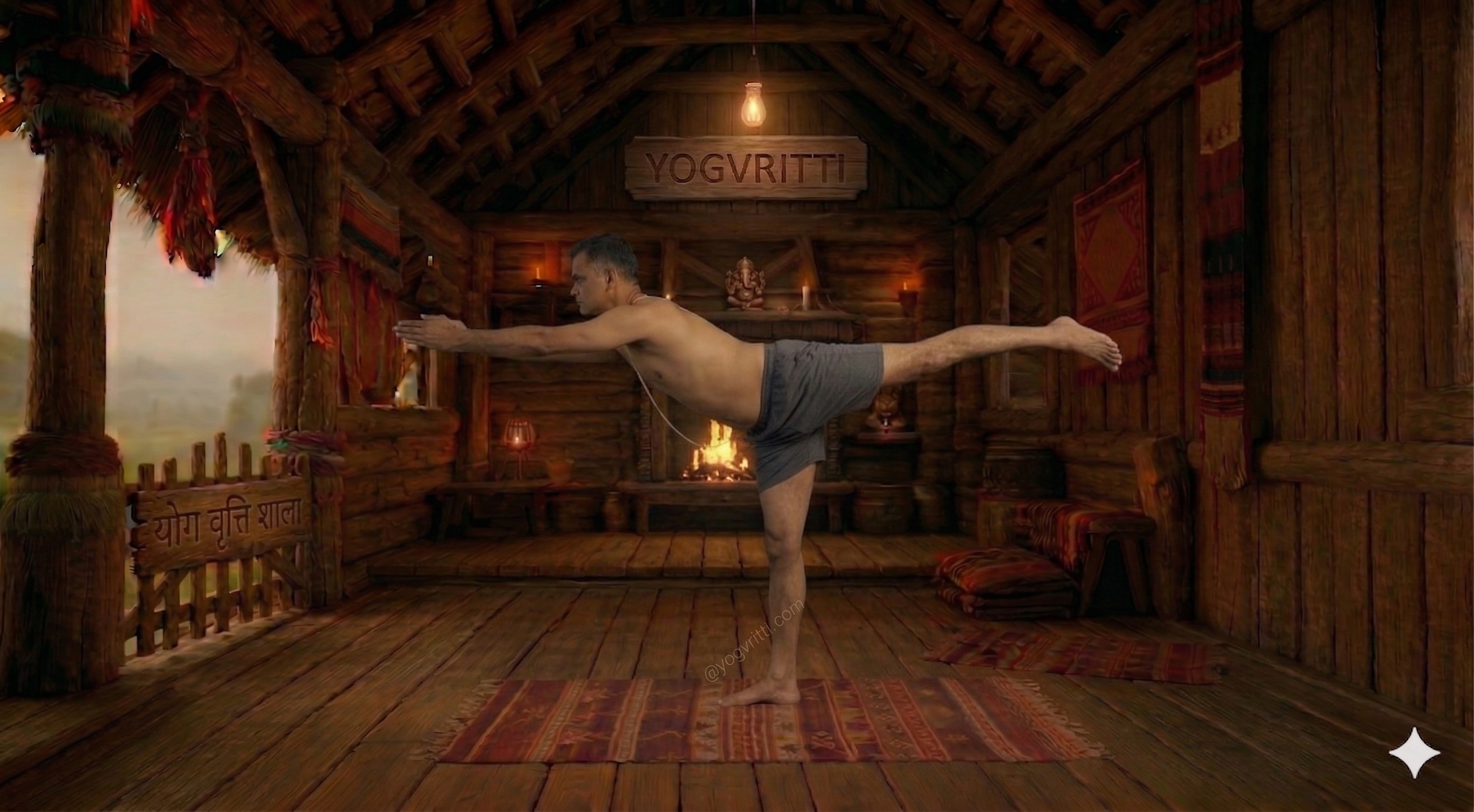

वीरभद्रासन III भिन्नता अग्रहस्त
Warrior III Arms Forward
वीरभद्रासन III हाथों को आगे की ओर करके एक चुनौतीपूर्ण संतुलन आसन है जो पैरों, कोर और पीठ को मजबूत करता है। यह संतुलन, समन्वय और फोकस में सुधार करता है, साथ ही स्थिरता और आत्मविश्वास की भावना को बढ़ावा देता है।
फायदे
6Glutes(strengthening | stabilizing)
While the glutes in the standing leg continue their powerful work of extension and external rotation, their role in hip stabilization becomes even more pronounced. The gluteus medius and minimus are called upon with greater intensity to prevent any lateral sway or collapse in the standing hip, directly countering the increased instability introduced by the forward arm extension. This deeper engagement ensures the foundation remains unwavering amidst the heightened balancing challenge.
Hamstrings(strengthening)
The hamstrings of both the standing and extended legs maintain their primary role in strengthening and lengthening, yet their engagement takes on a new urgency. In the standing leg, they work synergistically with the quadriceps to create a stable, grounded base, while in the extended leg, they powerfully lift and straighten, resisting the tendency for the pelvis to dip due to the increased anterior weight. This sustained effort ensures the back leg remains active and aligned with the torso.
Core(strengthening | stabilizing)
The core muscles—including the transverse abdominis, obliques, and rectus abdominis—are engaged with dramatically increased intensity in this variation. The forward extension of the arms creates a powerful anterior pull, demanding greater abdominal strength to stabilize the lumbar spine and pelvis, preventing hyperextension or rounding. This deeper activation fosters profound central stability, acting as the energetic anchor for the entire pose.
- पूर्ण शारीरिक विश्लेषण →
सावधानियाँ
5High Blood Pressure
Vigorous effort and inverted positions temporarily raise blood pressure in the head, increasing strain on blood vessels.
Keep arms below shoulder height, breathe steadily, and avoid vigorous transitions.
Low Blood Pressure
Rising quickly from low positions can cause a sudden drop in blood pressure, leading to dizziness or fainting.
Rise slowly from seated or lying positions, pause in a mid-level shape before fully standing, and use a wall for support.
Back Injury / Back Pain
Spinal flexion, extension, or rotation under load can compress vertebral discs or strain the paraspinal muscles.
Engage the core before any movement, keep a slight bend in the knees, and avoid locking the lower back.
Hip Injury
Deep hip flexion, external rotation, or weight-bearing can aggravate labral tears, impingement, or bursitis.
Do not force the hip into deep external rotation; keep the foot turned out only as far as is pain-free.
विधि
चरण-दर-चरण निर्देश
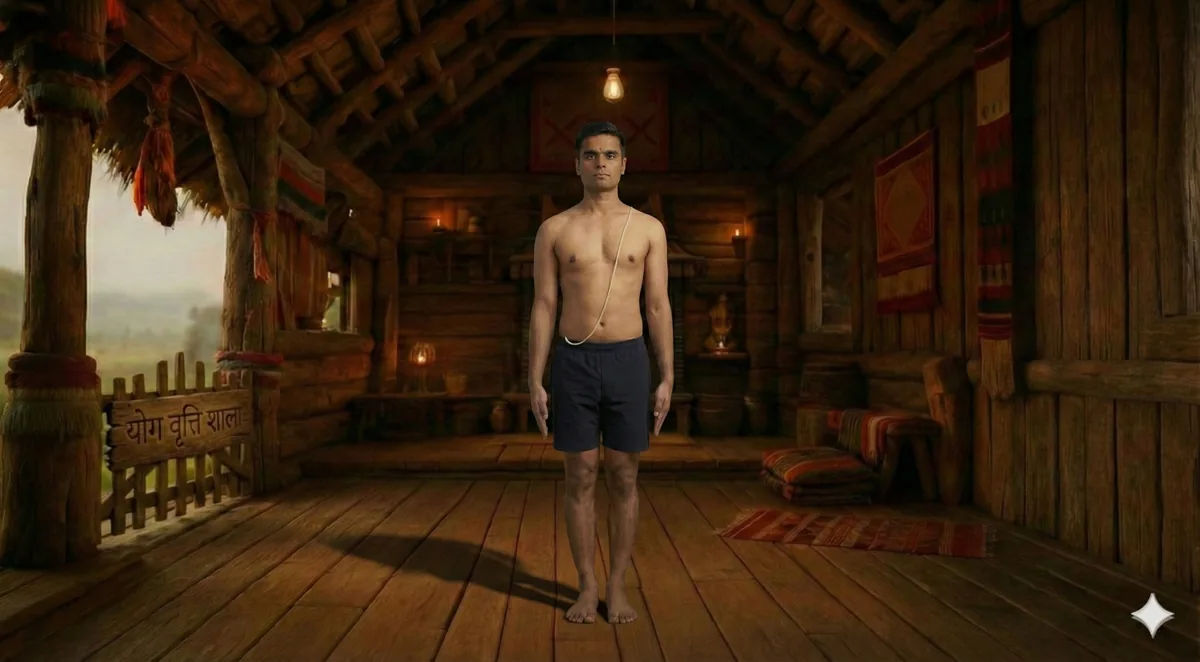
Tadasana में खड़े हो जाएं।
श्वास लें और हाथों को सिर के ऊपर उठाएं, उंगलियों को अलग रखें।
श्वास छोड़ते हुए, दाहिने पैर को पीछे की ओर उठाएं, धड़ को आगे झुकाएं।
शरीर को टी-आकार में लाएं, दाहिना पैर फर्श के समानांतर हो।
हाथों को सिर के ऊपर सीधा रखें, हथेलियाँ अंदर की ओर हों।
बाएं पैर को मजबूत रखें, घुटने को थोड़ा मोड़ें नहीं।
कोर को संलग्न रखें और संतुलन बनाए रखें।
30-60 सेकंड तक रुकें, गहरी सांस लेते रहें।
श्वास लेते हुए, धड़ को ऊपर उठाएं और दाहिने पैर को नीचे लाएं।
हाथों को नीचे लाएं।
Tadasana में वापस आ जाएं।
दूसरे पैर से दोहराएं।
सामान्य गलतियाँ
शिक्षण संकेत
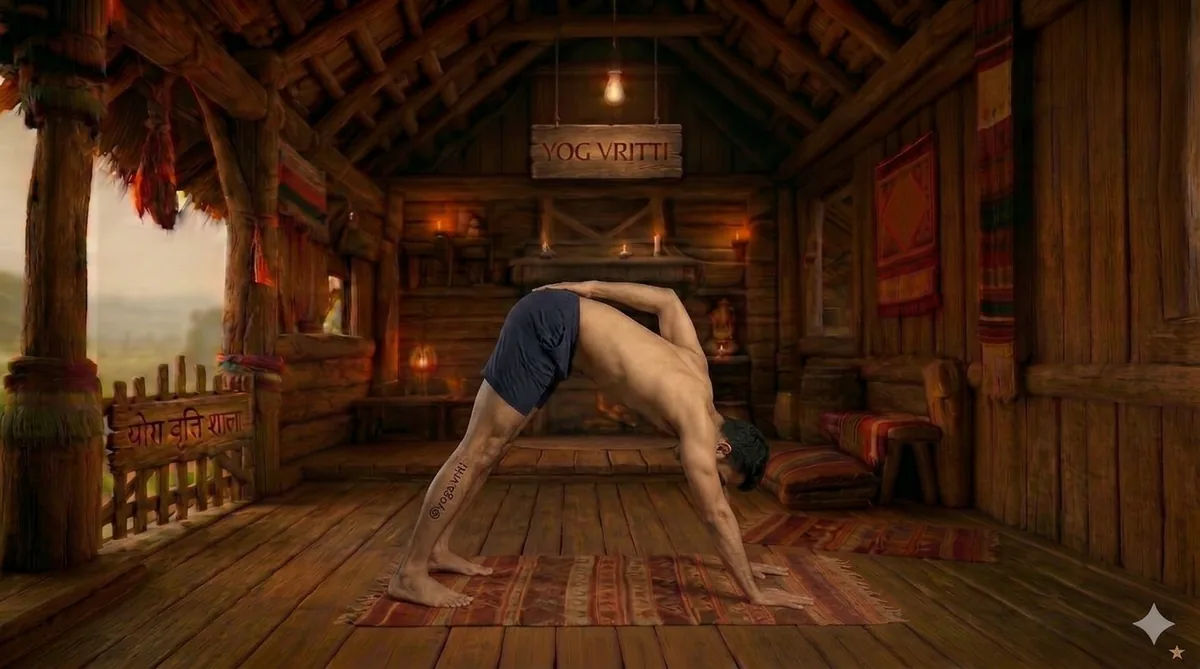
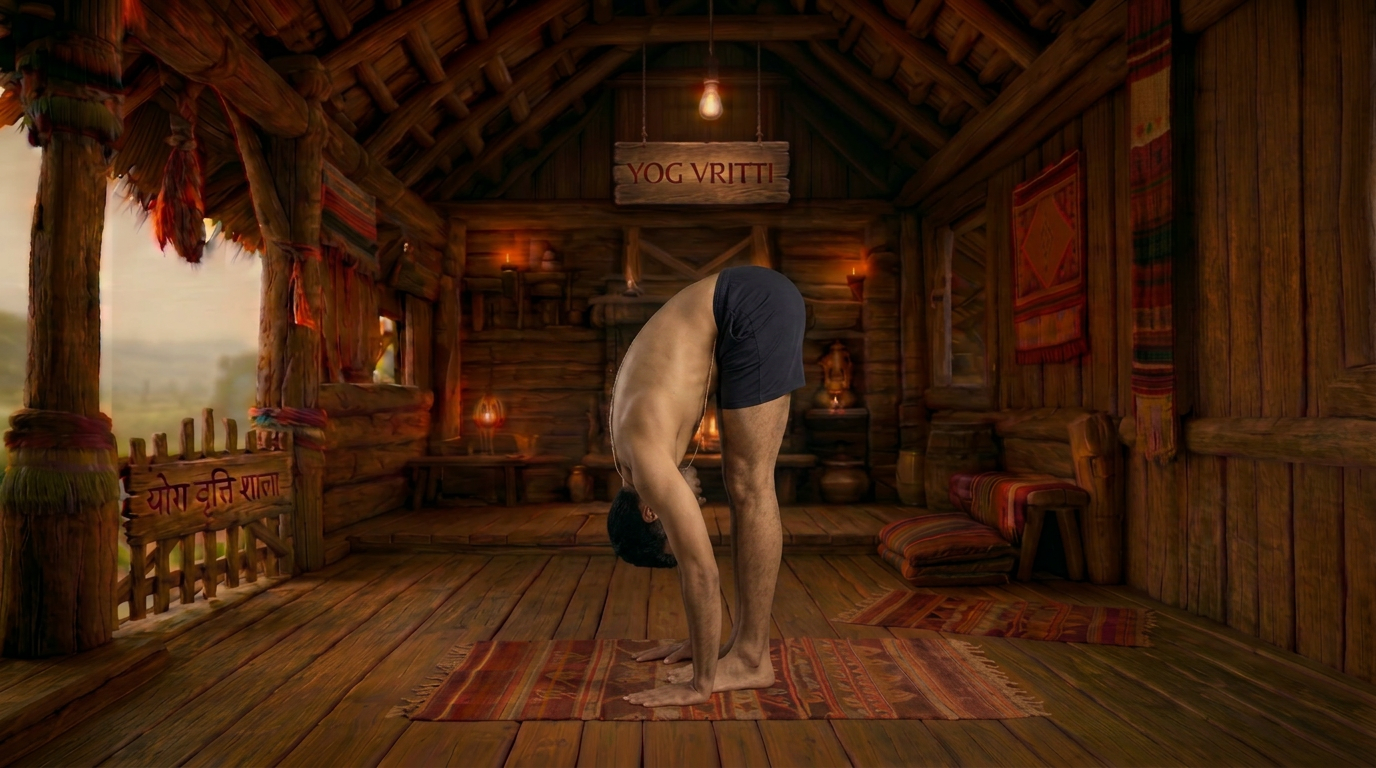
अभ्यास क्रम
अक्सर पूछे जाने वाले प्रश्न
वीरभद्रासन III भिन्नता अग्रहस्त के बारे में सामान्य प्रश्न
वीरभद्रासन III भिन्नता अग्रहस्त क्या है?
वीरभद्रासन III हाथों को आगे की ओर करके एक चुनौतीपूर्ण संतुलन आसन है जो पैरों, कोर और पीठ को मजबूत करता है। यह संतुलन, समन्वय और फोकस में सुधार करता है, साथ ही स्थिरता और आत्मविश्वास की भावना को बढ़ावा देता है।
वीरभद्रासन III भिन्नता अग्रहस्त के क्या फायदे हैं?
Strengthens legs, core, and back। Improves balance and coordination। Increases focus and concentration।
वीरभद्रासन III भिन्नता अग्रहस्त किस स्तर के लिए है?
वीरभद्रासन III भिन्नता अग्रहस्त एक मध्यम स्तर का आसन है। शुरुआती लोग किसी योग गुरु के मार्गदर्शन में अभ्यास करें।
वीरभद्रासन III भिन्नता अग्रहस्त कौन न करे?
High blood pressure, Low blood pressure, Back injury की स्थिति में यह आसन न करें।