Benefits· लाभ
What Forearm Downward Dog Pose does for you
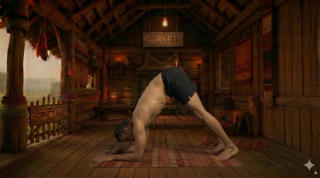
Adho Mukha Svanasana Variation Forearms Down · अधो मुख श्वानासन भिन्नता अग्रबाहु अधः
This variation fundamentally shifts the foundation from the hands to the forearms, profoundly altering the leverage and demand on the upper body. It is typically chosen to alleviate pressure on the wrists, deepen the opening and strengthening of the shoulder girdle, or serve as a preparatory pose for more advanced forearm-balancing inversions like Pincha Mayurasana.
What this version changes: The fundamental shift to grounding the forearms rather than the hands significantly alters the leverage and weight distribution through the upper body. This change shortens the lever arm, often alleviating pressure on the wrists while intensifying the stretch through the latissimus dorsi and triceps brachii. Energetically, it grounds the practitioner more deeply through the elbows, allowing for a profound release in the hamstrings and a more focused opening and broadening across the upper back and shoulders.
Muscles
- Hamstringsstretches
- Deltoidsstabilises
- Triceps Brachiistabilises
- Calvesstretches
- Erector Spinaemobilises
Joints
- Shoulder Girdlestabilises
- Spinedecompressing
- Hip Jointsmobilises
- Ankle Jointsmobilises
Inside the body
- Abdominal Organs
- Brain
- Lungs
- Breathing
Mind
The inverted nature of Adho Mukha Svanasana offers a unique opportunity to literally shift one's perspective, both physically and mentally.
Take care
While offering potential relief for the wrists, this variation can place increased strain on the shoulder joint if not properly aligned, potentially exacerbating issues like shoulder impingement or rotator cuff sensitivities.
Students must actively broaden the upper back and externally rotate the upper arms to avoid collapsing into the shoulder joint and compressing the neck, ensuring the head hangs freely without tension.
Muscles
Hamstrings
StretchesWhile still experiencing a profound lengthening in this variation, the grounded forearms can subtly alter the pelvic tilt, potentially allowing for a more accessible and deeper release in the hamstrings if the shoulders are sufficiently open.
Read moreShow less
This encourages a more even stretch along the entire posterior chain of the leg, promoting greater flexibility from the sit bones to the calves.
Deltoids
StabilisesStretchesThe deltoids, particularly the posterior fibers, become paramount in this variation for actively externally rotating the upper arm and broadening the shoulder blades across the back.
Read moreShow less
Rather than primarily lifting the body as in full Downward Dog, they now focus on drawing the upper arm bone deeply into the shoulder socket, creating the spaciousness necessary to prevent the shoulders from collapsing towards the ears and facilitating a deeper opening across the chest.
Triceps Brachii
StabilisesWith the elbows bent and forearms firmly on the floor, the triceps brachii's primary role shifts from powerful elbow extension to crucial stabilization of the elbow joint and active resistance against internal rotation of the upper arm.
Read moreShow less
They work tirelessly to maintain the integrity of the elbow, preventing it from splaying outwards and providing a stable, firm platform from which the shoulder girdle can lift and broaden.
Calves
StretchesThe calves continue their essential work of lengthening from the Achilles tendon through the gastrocnemius and soleus, supporting the deep stretch into the posterior chain.
Read moreShow less
While the arm position doesn't directly alter their action, the increased stability and grounding offered by the forearm foundation can encourage a more sustained and relaxed release in the lower legs, allowing gravity to gently deepen their stretch.
Erector Spinae
MobilisesStretchesThe erector spinae muscles are called upon with renewed intensity in this variation to actively lift and lengthen the spine, particularly in the thoracic region, to counteract the tendency for the upper back to round when the forearms are grounded.
Read moreShow less
This active engagement creates a powerful sense of extension from the sacrum to the crown, fostering greater spinal mobility and decompressing the vertebral column.
Serratus Anterior
StrengthensStabilisesSerratus Anterior
The serratus anterior becomes a primary actor in this forearm variation, actively protracting the scapulae and drawing them away from the spine to broaden the upper back.
Read moreShow less
This engagement is crucial for lifting the chest and preventing the shoulders from collapsing, creating a stable foundation that allows the spine to lengthen freely and the head to hang without strain.
Latissimus Dorsi
StretchesStabilisesLatissimus Dorsi
While always present in Downward Dog, the latissimus dorsi experiences a profound lengthening and active engagement in Forearm Down Dog as the upper arms are drawn deeply into their sockets and the chest presses back.
Read moreShow less
This dual action helps to stabilize the shoulder girdle, preventing the upper arms from splaying outwards, and facilitates a deeper opening through the side body and armpits.
Transversus Abdominis
StabilisesTransversus Abdominis
The deep engagement of the transversus abdominis is essential in this variation to support the lumbar spine and prevent it from either arching excessively or rounding.
Read moreShow less
By drawing the navel gently towards the spine, this muscle creates a stable core foundation, allowing for sustained length through the entire back and providing the necessary support for the hamstrings to release more deeply.
Joints
Shoulder Girdle
StabilisesThe complex of joints connecting your arms to your torso (glenohumeral and scapulothoracic joints) are asked to stabilize with intelligent action in Adho Mukha Svanasana.
Read moreShow less
By pressing firmly through the hands and drawing the shoulder blades down the back, you create a broad, stable foundation, preventing the shoulders from collapsing or 'hanging.' This conscious engagement protects the delicate rotator cuff muscles and cultivates an open, expansive feeling across the chest, inviting freedom into the heart center.
Spine
DecompressingThe entire length of your spinal column (vertebral column) receives a profound decompression and lengthening in this pose, especially when the pelvis is tilted anteriorly.
Read moreShow less
By actively lifting the sitting bones towards the ceiling and drawing the navel gently in, you create traction through the intervertebral discs, alleviating pressure from gravity.
This therapeutic lengthening encourages vital energy to flow freely along the central axis of the body, releasing stiffness and fostering a sense of lightness and fluidity.
Hip Joints
MobilisesThe ball-and-socket joints of your hips (acetabulofemoral joints) are gently mobilized into flexion and external rotation, allowing for a deeper stretch in the hamstrings and inner thighs.
Read moreShow less
As you lift your sitting bones high and imagine drawing the inner thighs back, you create space and freedom within the hip sockets, improving their range of motion.
This gentle opening releases tension stored in the pelvic region, promoting a sense of ease and allowing the lower body to feel more grounded and integrated.
Ankle Joints
MobilisesYour ankle joints (talocrural joints) receive a significant stretch and mobilization as you press your heels towards the floor, even if they don't touch.
Read moreShow less
This action gently lengthens the Achilles tendon and calf muscles, improving dorsiflexion and overall ankle mobility.
Greater flexibility in the ankles enhances stability in all standing poses and cultivates a deeper connection to the earth, allowing for a more rooted and balanced foundation in your practice and daily life.
Inside the body
Abdominal Organs
In Adho Mukha Svanasana, the gentle inversion and mild compression of the abdominal region stimulate the digestive organs.
Read moreShow less
This position encourages fresh blood flow to the digestive tract after the slight compression, aiding in detoxification and improving metabolic function.
From a yogic perspective, this action helps to balance Samana Vayu, the energy responsible for assimilation, leading to a feeling of inner warmth and improved digestive fire (agni).
Brain
As a mild inversion, Adho Mukha Svanasana gently reverses the flow of gravity to the brain, encouraging increased blood circulation to the head and face.
Read moreShow less
This fresh oxygenated blood nourishes brain cells, potentially improving cognitive function, memory, and concentration.
The subtle shift in perspective also helps to calm an overactive mind, fostering mental clarity and a quiet space for introspection, akin to a gentle cleansing of the thought patterns.
Lungs
The expansive opening of the chest and the gentle inversion in this pose create optimal conditions for deeper, fuller breathing.
Read moreShow less
The diaphragm has more space to descend, allowing the lungs to draw in more oxygen and release stale air efficiently.
This enhanced respiratory capacity not only vitalizes the body but also directly influences the nervous system, inviting a sense of calm and promoting the harmonious flow of prana throughout the entire system.
Breathing
The inverted V-shape of Adho Mukha Svanasana naturally encourages a deep and expansive breath, particularly in the back and side ribs.
Read moreShow less
With the diaphragm having greater freedom to move downwards due to the abdominal compression, the inhalation can become fuller and the exhalation more complete, releasing stale air from the lower lobes of the lungs.
This pose is an excellent preparation for Ujjayi breath, as the stability and length it cultivates allow for a sustained, oceanic sound, deepening concentration and further calming the nervous system.
Fascia (connective tissue)
The interconnected web of connective tissue, or fascia, that encases every muscle, bone, and organ in your body receives a comprehensive release and lengthening in Adho Mukha Svanasana.
Read moreShow less
Specifically, the entire Superficial Back Line, from the soles of the feet to the crown of the head, is gently stretched and hydrated.
This opening helps to unwind chronic tension patterns held deep within the body's matrix, improving overall flexibility and allowing for a more unimpeded flow of prana, releasing energetic blockages that can manifest as physical stiffness.
Mind and nervous system
- Nervous system
The gentle inversion and sustained nature of Adho Mukha Svanasana naturally invite a sense of calm and quiet into the nervous system.
Read moreShow less
By bringing the head below the heart, the vagus nerve, a key player in the parasympathetic 'rest and digest' response, is gently stimulated.
This encourages a down-regulation of stress hormones, allowing the practitioner to feel a profound sense of peace and groundedness, effectively taming the fluctuations of the mind (chitta vritti).
While the pose builds strength and engages muscles, the overall effect is one of balancing the sympathetic (fight or flight) and parasympathetic (rest and digest) branches of the nervous system.
Read moreShow less
The active engagement provides a healthy outlet for pent-up energy, while the sustained stretch and rhythmic breath encourage deep relaxation.
This dynamic equilibrium helps to release chronic tension patterns stored in the body, leading to a more resilient and adaptable nervous system.
- Mind & mood
The inverted nature of Adho Mukha Svanasana offers a unique opportunity to literally shift one's perspective, both physically and mentally.
Read moreShow less
Turning the world upside down can help to dislodge rigid thought patterns and offer a fresh outlook on challenges or anxieties.
This subtle mental recalibration fosters a sense of detachment from daily stressors, allowing for greater clarity and a renewed sense of possibility.
Holding Adho Mukha Svanasana requires both physical stability and mental presence, making it an excellent pose for cultivating dharana, or concentration.
Read moreShow less
The focus on aligning the body, distributing weight evenly, and maintaining a steady breath draws the mind away from external distractions and internal chatter.
This practice of sustained attention strengthens mental discipline, leading to a more centered and unflustered state of being, both on and off the mat.
The combination of physical effort and release in this pose can be deeply cathartic, helping to clear mental clutter and emotional stagnation.
Read moreShow less
As the body lengthens and opens, there's a corresponding spaciousness created in the mind, allowing for a release of worries or habitual thinking patterns.
This process facilitates pratyahara, the withdrawal of the senses, creating an inner sanctuary where the mind can find true rest and peace.
Because it is a inversion pose
As an inversion, Adho Mukha Svanasana reverses the usual gravitational pull on the body, offering a unique form of decompression for the spine and internal organs.
Read moreShow less
This counteracts the compressive forces of daily upright living, creating space between the vertebrae and allowing for improved circulation throughout the upper body and brain.
From a yogic perspective, it helps to redistribute prana, drawing energy upwards and rejuvenating the entire system.
The head-below-heart position inherently has a calming effect on the nervous system, engaging the parasympathetic response.
Read moreShow less
This gentle inversion reduces heart rate and blood pressure, quieting the 'fight or flight' response and encouraging a state of deep relaxation and introspection.
It helps to settle chitta vritti, the fluctuations of the mind, bringing a sense of groundedness and inner peace.
By elevating the hips above the heart, blood flow to the brain and upper extremities is gently increased, providing fresh oxygen and nutrients.
Read moreShow less
This can sharpen mental faculties, improve memory, and alleviate feelings of fatigue or sluggishness.
Energetically, this re-energizes the higher chakras, promoting mental clarity and a brighter, more optimistic outlook.