Benefits· लाभ
What Hip Circles Downward Dog does for you
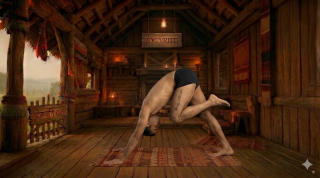
Adho Mukha Svanasana Variation Hip Circles · अधो मुख श्वानासन भिन्नता कटि वृत्त
Adho Mukha Svanasana Variation Hip Circles introduces dynamic movement into the foundational stillness of Downward-Facing Dog, shifting the focus towards liberating the hip joints. This variation actively mobilizes the femurs within their sockets, fostering greater flexibility and releasing deep muscular and fascial tension around the hips.
Muscles
- Hamstringsstrengthens
- Deltoidsstrengthens
- Triceps Brachiistrengthens
- Calvesstretches
- Erector Spinaestretches
Joints
- Shoulder Girdlestabilises
- Spinedecompressing
- Hip Jointsmobilises
- Ankle Jointsmobilises
Inside the body
- Abdominal Organs
- Brain
- Lungs
- Breathing
Mind
The inverted nature of Adho Mukha Svanasana offers a unique opportunity to literally shift one's perspective, both physically and mentally.
Take care
Practitioners with hip injury should approach this variation with particular care.
The dynamic nature of the hip circles can exacerbate existing conditions if not performed with mindful awareness and proper alignment, requiring careful attention to avoid over-rotation or excessive strain on the joint capsule.
Muscles
Hamstrings
StrengthensWhile the standing leg's hamstrings continue their essential role of lengthening, the hamstrings of the circling leg engage dynamically in this variation.
Read moreShow less
They rhythmically lengthen and contract through the hip's range of motion, actively contributing to the circular movement.
This dynamic engagement allows for a more nuanced release of tension, targeting fascial lines and adhesions that might remain untouched by a static stretch, enhancing overall hip mobility.
Deltoids
StrengthensIn the root pose, the deltoids provide static strength to stabilize the shoulder girdle.
Read moreShow less
However, with one leg lifted and circling in this variation, the base of support becomes inherently more asymmetrical and dynamic.
The deltoids must work with heightened awareness and increased isometric demand to stabilize the shoulders, resisting rotational forces and maintaining the integrity of the upper body foundation against the shifting weight.
Triceps Brachii
StrengthensThe triceps brachii maintain essential elbow extension in the root pose.
Read moreShow less
In the hip circles variation, the shifting weight and dynamic movement of the hips demand a more intense and adaptive engagement from these muscles.
They must work harder to keep the arms straight and stable, preventing any collapse in the elbows and supporting the upper body as it counterbalances the movement in the lower body, fostering greater arm strength and resilience.
Calves
StretchesGastrocnemius, Soleus
The muscles at the back of your lower legs (gastrocnemius and soleus), commonly known as the calves, experience a deep stretch as you extend your heels towards the mat.
Read moreShow less
This sustained elongation helps to release tightness that can accumulate from walking, running, or wearing heeled shoes, improving ankle flexibility.
By softening these muscles, you allow for a greater connection to the earth through the feet, enhancing stability and grounding the downward flow of apana vayu.
Erector Spinae
StretchesWhile the erector spinae lengthen and stabilize the spine axially in the root pose, their role becomes more dynamic in this variation.
Read moreShow less
As the pelvis moves through circular patterns, these muscles must actively stabilize the lumbar spine against rotational and lateral forces.
This ensures the trunk remains long and neutral despite the fluid movement in the hip joint, enhancing their functional strength and promoting deeper spinal flexibility.
Gluteus Medius & Minimus
StrengthensStabilisesStretchesGluteus Medius, Gluteus Minimus
These crucial muscles are actively engaged in the hip circles, particularly for abduction and stabilizing the pelvis in a single-leg stance.
Read moreShow less
They work to lift the circling leg out to the side and prevent the standing hip from collapsing, fostering greater pelvic stability and control throughout the dynamic movement.
Their engagement helps articulate the hip joint's full range, promoting both strength and release in the outer hip.
Iliopsoas
StrengthensStretchesIliopsoas (Psoas Major, Iliacus)
The primary hip flexor, the iliopsoas muscle group, becomes vitally engaged to lift the leg off the floor and initiate the forward and upward arc of the hip circle.
Read moreShow less
Its dynamic contraction and subsequent release through the movement helps to improve hip flexion range of motion.
This active engagement facilitates the release of deeply held tension in the front of the hip joint, creating more space and freedom.
Deep Hip Rotators
StrengthensStretchesPiriformis, Gemelli (Superior & Inferior), Obturator (Internus & Externus), Quadratus Femoris
This intrinsic group of muscles is essential for the nuanced rotational aspects of the hip circle.
Read moreShow less
Their coordinated action allows for smooth internal and external rotation of the femur within the acetabulum, enhancing the circular motion and promoting comprehensive release.
By actively engaging and then releasing these deep rotators, practitioners can unlock greater mobility and alleviate tightness in the complex architecture of the hip socket.
Joints
Shoulder Girdle
StabilisesThe complex of joints connecting your arms to your torso (glenohumeral and scapulothoracic joints) are asked to stabilize with intelligent action in Adho Mukha Svanasana.
Read moreShow less
By pressing firmly through the hands and drawing the shoulder blades down the back, you create a broad, stable foundation, preventing the shoulders from collapsing or 'hanging.' This conscious engagement protects the delicate rotator cuff muscles and cultivates an open, expansive feeling across the chest, inviting freedom into the heart center.
Spine
DecompressingThe entire length of your spinal column (vertebral column) receives a profound decompression and lengthening in this pose, especially when the pelvis is tilted anteriorly.
Read moreShow less
By actively lifting the sitting bones towards the ceiling and drawing the navel gently in, you create traction through the intervertebral discs, alleviating pressure from gravity.
This therapeutic lengthening encourages vital energy to flow freely along the central axis of the body, releasing stiffness and fostering a sense of lightness and fluidity.
Hip Joints
MobilisesThe ball-and-socket joints of your hips (acetabulofemoral joints) are gently mobilized into flexion and external rotation, allowing for a deeper stretch in the hamstrings and inner thighs.
Read moreShow less
As you lift your sitting bones high and imagine drawing the inner thighs back, you create space and freedom within the hip sockets, improving their range of motion.
This gentle opening releases tension stored in the pelvic region, promoting a sense of ease and allowing the lower body to feel more grounded and integrated.
Ankle Joints
MobilisesYour ankle joints (talocrural joints) receive a significant stretch and mobilization as you press your heels towards the floor, even if they don't touch.
Read moreShow less
This action gently lengthens the Achilles tendon and calf muscles, improving dorsiflexion and overall ankle mobility.
Greater flexibility in the ankles enhances stability in all standing poses and cultivates a deeper connection to the earth, allowing for a more rooted and balanced foundation in your practice and daily life.
Inside the body
Abdominal Organs
In Adho Mukha Svanasana, the gentle inversion and mild compression of the abdominal region stimulate the digestive organs.
Read moreShow less
This position encourages fresh blood flow to the digestive tract after the slight compression, aiding in detoxification and improving metabolic function.
From a yogic perspective, this action helps to balance Samana Vayu, the energy responsible for assimilation, leading to a feeling of inner warmth and improved digestive fire (agni).
Brain
As a mild inversion, Adho Mukha Svanasana gently reverses the flow of gravity to the brain, encouraging increased blood circulation to the head and face.
Read moreShow less
This fresh oxygenated blood nourishes brain cells, potentially improving cognitive function, memory, and concentration.
The subtle shift in perspective also helps to calm an overactive mind, fostering mental clarity and a quiet space for introspection, akin to a gentle cleansing of the thought patterns.
Lungs
The expansive opening of the chest and the gentle inversion in this pose create optimal conditions for deeper, fuller breathing.
Read moreShow less
The diaphragm has more space to descend, allowing the lungs to draw in more oxygen and release stale air efficiently.
This enhanced respiratory capacity not only vitalizes the body but also directly influences the nervous system, inviting a sense of calm and promoting the harmonious flow of prana throughout the entire system.
Breathing
The inverted V-shape of Adho Mukha Svanasana naturally encourages a deep and expansive breath, particularly in the back and side ribs.
Read moreShow less
With the diaphragm having greater freedom to move downwards due to the abdominal compression, the inhalation can become fuller and the exhalation more complete, releasing stale air from the lower lobes of the lungs.
This pose is an excellent preparation for Ujjayi breath, as the stability and length it cultivates allow for a sustained, oceanic sound, deepening concentration and further calming the nervous system.
Fascia (connective tissue)
The interconnected web of connective tissue, or fascia, that encases every muscle, bone, and organ in your body receives a comprehensive release and lengthening in Adho Mukha Svanasana.
Read moreShow less
Specifically, the entire Superficial Back Line, from the soles of the feet to the crown of the head, is gently stretched and hydrated.
This opening helps to unwind chronic tension patterns held deep within the body's matrix, improving overall flexibility and allowing for a more unimpeded flow of prana, releasing energetic blockages that can manifest as physical stiffness.
Mind and nervous system
- Nervous system
The gentle inversion and sustained nature of Adho Mukha Svanasana naturally invite a sense of calm and quiet into the nervous system.
Read moreShow less
By bringing the head below the heart, the vagus nerve, a key player in the parasympathetic 'rest and digest' response, is gently stimulated.
This encourages a down-regulation of stress hormones, allowing the practitioner to feel a profound sense of peace and groundedness, effectively taming the fluctuations of the mind (chitta vritti).
While the pose builds strength and engages muscles, the overall effect is one of balancing the sympathetic (fight or flight) and parasympathetic (rest and digest) branches of the nervous system.
Read moreShow less
The active engagement provides a healthy outlet for pent-up energy, while the sustained stretch and rhythmic breath encourage deep relaxation.
This dynamic equilibrium helps to release chronic tension patterns stored in the body, leading to a more resilient and adaptable nervous system.
- Mind & mood
The inverted nature of Adho Mukha Svanasana offers a unique opportunity to literally shift one's perspective, both physically and mentally.
Read moreShow less
Turning the world upside down can help to dislodge rigid thought patterns and offer a fresh outlook on challenges or anxieties.
This subtle mental recalibration fosters a sense of detachment from daily stressors, allowing for greater clarity and a renewed sense of possibility.
Holding Adho Mukha Svanasana requires both physical stability and mental presence, making it an excellent pose for cultivating dharana, or concentration.
Read moreShow less
The focus on aligning the body, distributing weight evenly, and maintaining a steady breath draws the mind away from external distractions and internal chatter.
This practice of sustained attention strengthens mental discipline, leading to a more centered and unflustered state of being, both on and off the mat.
The combination of physical effort and release in this pose can be deeply cathartic, helping to clear mental clutter and emotional stagnation.
Read moreShow less
As the body lengthens and opens, there's a corresponding spaciousness created in the mind, allowing for a release of worries or habitual thinking patterns.
This process facilitates pratyahara, the withdrawal of the senses, creating an inner sanctuary where the mind can find true rest and peace.
Because it is a inversion pose
As an inversion, Adho Mukha Svanasana reverses the usual gravitational pull on the body, offering a unique form of decompression for the spine and internal organs.
Read moreShow less
This counteracts the compressive forces of daily upright living, creating space between the vertebrae and allowing for improved circulation throughout the upper body and brain.
From a yogic perspective, it helps to redistribute prana, drawing energy upwards and rejuvenating the entire system.
The head-below-heart position inherently has a calming effect on the nervous system, engaging the parasympathetic response.
Read moreShow less
This gentle inversion reduces heart rate and blood pressure, quieting the 'fight or flight' response and encouraging a state of deep relaxation and introspection.
It helps to settle chitta vritti, the fluctuations of the mind, bringing a sense of groundedness and inner peace.
By elevating the hips above the heart, blood flow to the brain and upper extremities is gently increased, providing fresh oxygen and nutrients.
Read moreShow less
This can sharpen mental faculties, improve memory, and alleviate feelings of fatigue or sluggishness.
Energetically, this re-energizes the higher chakras, promoting mental clarity and a brighter, more optimistic outlook.