Benefits· लाभ
What Supported Child's Pose does for you
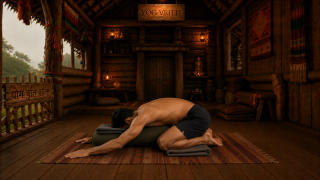
Adho Mukha Virasana (with blanket) · अधो मुख वीरासन (संस्थित)
While the essence of Adho Mukha Virasana lies in its grounding forward fold, this variation, using a carefully placed blanket, profoundly alters the experience by offering direct support. It makes the pose more accessible and encourages a deeper, more passive release, shifting the focus from simply folding to truly surrendering into the earth's embrace.
What this version changes: The blanket's primary effect is to provide cushioning and elevate specific areas, fundamentally altering the tactile and proprioceptive feedback of the pose. By supporting the forehead, shins, or torso, it redistributes weight, reduces pressure points, and allows for a more complete relaxation into gravity. This shift from active holding to passive support deepens the introspective quality of the pose, inviting a profound sense of surrender and ease.
Muscles
- Lower back musclesstretches
- Hip flexorsstretches
- Front thigh musclesstretches
- Shouldersstretches
Joints
- Spinedecompressing
- Hip jointsmobilises
- Knee jointsmobilises
Inside the body
- Abdominal Organs
- Breathing
Mind
Adho Mukha Virasana is a profound antidote to mental agitation and anxiety, offering a sanctuary from external stimuli and internal worries.
Take care
Always ensure students with knee injuries, recent knee surgery, or significant knee pain use ample padding under the buttocks or between the calves and thighs to reduce any potential compression or strain on the knee joint.
Those with severe hip replacements or recent abdominal surgery should approach this pose with extreme caution or modify significantly, ensuring no undue strain on vulnerable areas. Encourage students to listen carefully to their body's signals and always embrace a gentle, non-forcing approach.
Muscles
Lower back muscles
StretchesWhen the forehead or torso is supported by a blanket, the lower back muscles, particularly the erector spinae, can release more completely.
Read moreShow less
This external support minimizes the subtle muscular effort required to maintain the forward fold, allowing for a more passive and sustained lengthening through the lumbar and thoracic spine.
It encourages a deeper unwinding of chronic tension, promoting a profound sense of ease and surrender in the back body.
Hip flexors
StretchesThe blanket, especially when placed under the shins or providing gentle cushioning for the ankles, alleviates potential pressure points and discomfort in the lower legs and feet.
Read moreShow less
This comfort allows the hip flexors, including the psoas and iliacus, to release more fully, as the body isn't subtly bracing against irritation.
The result is a deeper, more sustained lengthening through the front of the hips and a greater sense of ease in the hip joint.
Front thigh muscles
StretchesSimilar to the hip flexors, the cushioning effect of the blanket under the shins or around the ankles significantly reduces strain on the knee joints and the quadriceps tendon.
Read moreShow less
This external support enables the quadriceps femoris to release more completely into their lengthened state, preventing compensatory tension that might arise from discomfort.
It facilitates a gentler, yet profound, stretch along the front of the thighs, making the pose more accessible for those with knee sensitivity.
Shoulders
StretchesDeltoids, Rotator Cuff, Trapezius, Rhomboids
When the forehead is thoughtfully supported by a blanket, the deep muscles of the neck can fully release, which in turn allows the entire shoulder girdle, including the upper trapezius and deltoids, to soften their grip.
Read moreShow less
This profound release in the cervical spine translates into a relaxation of the shoulders, fostering an opening across the collarbones and a sense of 'melting' any habitual tension held in the upper back and shoulders.
The support encourages a wider, more expansive breath, further deepening the release.
Joints
Spine
DecompressingThe entire vertebral column, from the sacrum to the cervical spine, experiences a gentle, passive decompression in this forward fold.
Read moreShow less
As the torso rests and gravity subtly pulls the vertebrae apart, particularly in the lumbar region, pressure on the intervertebral discs is alleviated.
This creates space and fluidity within the spinal column, encouraging improved nerve signal transmission and fostering a profound sense of release and lengthening along the central axis of the body.
Hip joints
MobilisesThe hip joints (acetabulofemoral joints) are deeply flexed in Adho Mukha Virasana, allowing for a gentle, non-weight-bearing mobilization of the femoral heads within the acetabulum.
Read moreShow less
This passive flexion encourages the release of tightness in the surrounding ligaments and joint capsule, which can become stiff from prolonged sitting or standing.
Over time, this consistent, gentle movement can improve range of motion in the hips, reducing stiffness and promoting a feeling of freedom and energetic flow in the pelvis.
Knee joints
MobilisesThe knee joints (tibiofemoral joints) are in a position of deep flexion, which gently mobilizes the articulation between the tibia and femur.
Read moreShow less
With appropriate support, such as a blanket under the buttocks or between the calves and thighs, excessive pressure is avoided, allowing for a safe and sustained stretch of the surrounding soft tissues.
This sustained flexion, without active muscular engagement, can enhance synovial fluid production and circulation, improving joint lubrication and reducing stiffness, leading to greater ease in kneeling and walking.
Inside the body
Abdominal Organs
As the torso folds over the thighs, the abdominal organs, including the stomach, intestines, and liver, receive a gentle, sustained compression.
Read moreShow less
This mild internal massage can stimulate peristalsis, the muscular contractions that move food through the digestive tract, thereby aiding in digestion and promoting healthy elimination.
From a yogic perspective, this action helps to stoke Agni (digestive fire) and release stagnant energy (apana vayu) from the abdominal region, contributing to a sense of lightness and internal cleansing.
Breathing
The forward-folding nature of Adho Mukha Virasana gently compresses the front of the torso, naturally encouraging a deeper, fuller breath into the back and sides of the rib cage.
Read moreShow less
This subtle restriction on the anterior chest wall facilitates a compensatory expansion of the posterior and lateral lungs, inviting a slower, more diaphragmatic breath.
This type of breathing calms the nervous system and naturally deepens the exhalation, making it an excellent pose to prepare for or integrate with pranayama practices focused on lengthening the exhale, such as Viloma or Nadi Shodhana, to further quiet the mind and balance energetic channels.
Fascia (connective tissue)
In Adho Mukha Virasana, the entire posterior fascial line, from the soles of the feet (though less directly here) up through the calves, hamstrings, glutes, and especially the thoracolumbar fascia of the lower back, receives a gentle, sustained stretch and release.
Read moreShow less
This passive lengthening helps to improve the hydration and fluidity of the connective tissue matrix, releasing adhesions that can restrict movement and hold tension.
From a yogic perspective, this opening of the fascial web helps to release stored emotional tension and energetic blockages (prana granthis), allowing for a more harmonious and unrestricted flow of vital energy throughout the body.
Mind and nervous system
- Nervous system
The deep forward fold and the gentle pressure of the torso on the thighs stimulate the vagus nerve, initiating a powerful parasympathetic nervous system response.
Read moreShow less
This immediately shifts the body from a state of 'fight or flight' (sympathetic dominance) to 'rest and digest' (parasympathetic activation), leading to a profound sense of calm and safety.
The slowed heart rate and relaxed muscles signal to the brain that it is safe to let go, allowing deep relaxation to permeate the entire being and soothe an overstimulated system.
The inward focus inherent in the pose, with the eyes closed and the forehead resting on the earth, naturally draws the senses away from external distractions (pratyahara).
Read moreShow less
This reduction in sensory input allows the mind (chitta) to quiet its constant fluctuations (vritti), fostering a state of mental stillness and clarity.
It's a direct invitation to turn awareness inward, cultivating a sense of presence and inner peace that is profoundly restorative for the entire nervous system.
The gentle compression on the front of the body and the lengthening of the entire back body, combined with the grounded nature of the pose, creates a sense of security and containment.
Read moreShow less
This physical containment translates into a psychological feeling of safety, which helps to soothe an overstimulated nervous system and alleviate anxiety.
It's a primal posture of surrender and retreat, allowing the body to release held tension and the mind to unwind from stress.
- Mind & mood
Adho Mukha Virasana is a profound antidote to mental agitation and anxiety, offering a sanctuary from external stimuli and internal worries.
Read moreShow less
By folding inward and resting the forehead on the earth, the mind naturally begins to quiet, shifting focus from outward concerns to the internal landscape of breath and sensation.
This act of surrendering brings a deep sense of peace and helps to dissolve mental chatter, allowing for greater clarity and emotional balance.
This pose cultivates a powerful sense of introspection and self-reflection, acting as a gateway to inner awareness (dharana).
Read moreShow less
By consciously withdrawing the senses and turning inward, practitioners can observe their thoughts and feelings without judgment, fostering a deeper connection to their inner wisdom and intuition.
For a teacher, guiding students into this space helps them develop self-compassion and resilience, essential qualities for navigating life's challenges with grace.
The physical act of bowing down and resting the forehead on the ground can be deeply humbling and helps to release egoic tension and self-judgment.
Read moreShow less
This posture encourages humility and a surrender to the present moment, fostering a non-reactive state of mind that embraces acceptance.
It teaches us to find strength in stillness and vulnerability, allowing for a profound psychological release and a renewed sense of emotional equilibrium.
Because it is a forward bend pose
Forward bends are inherently grounding and calming, bringing the forehead closer to the earth, which is a powerful sensory input for the nervous system.
Read moreShow less
This physical connection to the ground helps to anchor scattered energy and quiet an overactive mind, drawing awareness inward.
Anatomically, it lengthens the entire posterior chain of the body while gently compressing the anterior, creating a sense of containment and safety.
The act of folding forward creates a gentle, sustained compression on the abdominal organs, which can stimulate digestive function and detoxification processes within the body.
Read moreShow less
Energetically, forward bends encourage the downward flow of energy (apana vayu), promoting healthy elimination and a feeling of release from physical and emotional burdens.
This helps to clear stagnation and rejuvenate the internal systems.
Psychologically, forward bends are postures of introspection and surrender, offering a sanctuary from external demands and the constant pull of the outside world.
Read moreShow less
They encourage a turning inward, facilitating pratyahara (withdrawal of the senses) and dharana (concentration), which are vital preparatory steps on the path to meditation.
This cultivation of inner stillness is deeply therapeutic for managing stress and cultivating mental peace.