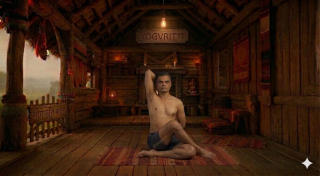
Benefits· लाभ
What Half Lord of the Fishes Pose does for you
Ardha Matsyendrasana · अर्ध मत्स्येन्द्रासन
Ardha Matsyendrasana, the Half Lord of the Fishes Pose, is a profound spinal twist that systematically mobilizes the entire vertebral column, creating space and elasticity from the sacrum to the atlas. This posture deeply engages the oblique muscles and intrinsic spinal stabilizers, initiating a cleansing action on the abdominal organs while simultaneously calming the nervous system.
Muscles
- Obliquesstrengthens
- Spinal Erectorsstabilises
- Gluteal Musclesstabilises
- Hip Flexorsstrengthens
Joints
- Spinal Columnmobilises
- Hip Jointsmobilises
- Sacroiliac Jointstabilises
Inside the body
- Abdominal Organs
- Breathing
Mind
Ardha Matsyendrasana fosters deep introspection and mental focus by turning the practitioner inward, both physically and energetically.
Take care
Teachers must guide students with acute or chronic hip injuries, especially in the sacroiliac joint, to approach this pose with extreme caution, as the twisting action can exacerbate instability.
Pregnant practitioners should avoid deep spinal twists or modify significantly to protect the abdomen and pelvis. For anyone experiencing severe or radiating back pain, it is paramount to consult a medical professional before attempting this posture, ensuring no further harm is caused. Always prioritize safety and listen intently to the body's subtle signals.
Muscles
Obliques
StrengthensExternal and Internal Obliques
These broad sheets of muscle on the sides of your abdomen are the primary engines for your spinal rotation in Ardha Matsyendrasana.
Read moreShow less
As you actively turn the torso, the external oblique on one side and the internal oblique on the opposite side contract synergistically, drawing the rib cage and pelvis closer to facilitate the twist.
This deep engagement not only strengthens the core but also stimulates the abdominal viscera, enhancing digestion and activating samana vayu, the balancing energy of the navel center.
The conscious work here builds intelligent strength that supports the spine in everyday movements.
Spinal Erectors
StabilisesErector Spinae, Multifidus, Rotatores
These deep, intricate muscles run along the entire length of your spine, providing both stability and the subtle movements of extension and rotation.
Read moreShow less
In this pose, they work diligently to maintain length in the spine even as you twist, preventing compression and creating space between the vertebrae.
This intelligent engagement nourishes the spinal column, improving disc health and allowing prana to flow more freely along the sushumna nadi, the central energy channel.
You feel a sense of internal lift and spaciousness, rather than just a simplistic crunch.
Gluteal Muscles
StabilisesGluteus Medius and Minimus
Located on the outer sides of your hips, these muscles play a crucial role in stabilizing the pelvis and assisting with the external rotation of the bent knee.
Read moreShow less
By grounding the sitting bones and ensuring a stable foundation, they allow for a deeper, more refined twist in the upper body without compromising the integrity of the lower spine.
This grounding action helps to root apana vayu, the downward-moving energy, creating a sense of stability and connection to the earth, which is essential for a balanced and safe spinal rotation.
Their intelligent engagement prevents unwanted torquing on the sacroiliac joint.
Hip Flexors
StrengthensPsoas Major and Iliacus (Iliopsoas)
These powerful hip flexor muscles originate from the lumbar spine and pelvis, attaching to the inner thigh bone.
Read moreShow less
In Ardha Matsyendrasana, the psoas on the side of the bent leg helps to maintain hip flexion, anchoring the leg securely to allow for the spinal twist.
While the primary action is twisting, a gentle lengthening can occur on the side of the straight leg (if extended) or the side opposite the twist, which helps to release chronic tension often held deep within the core.
This release can free the lower back and pelvis, allowing for a greater sense of fluidity and ease in movement, and can alleviate deeply held emotional tension.
Joints
Spinal Column
MobilisesThe vertebral column, our central axis, undergoes a profound rotational movement in Ardha Matsyendrasana, primarily in the thoracic and lumbar regions.
Read moreShow less
This gentle yet persistent twisting action works to decompress the intervertebral discs, creating space between each vertebra and encouraging the exchange of synovial fluid.
Practitioners experience a newfound suppleness and freedom in the spine, which translates into reduced stiffness and improved overall spinal health, fostering an unhindered flow of vital energy throughout the body.
Regular practice helps to maintain the natural elasticity and mobility of the spine, counteracting the effects of gravity and sedentary lifestyles.
Hip Joints
MobilisesIn this pose, the hip joints are engaged in a combination of flexion and external rotation for the bent leg, and often a more neutral or slightly internally rotated position for the extended leg.
Read moreShow less
This intricate positioning helps to stabilize the pelvis, providing a firm foundation from which the spine can twist safely and effectively.
The careful alignment ensures that the rotation is initiated from the spinal column rather than forced through the hips, protecting these large weight-bearing joints while simultaneously enhancing their range of motion and vitality.
The practitioner gains a sense of grounding and stability in the lower body, allowing for greater freedom in the upper torso.
Sacroiliac Joint
StabilisesThe sacroiliac joint, where the sacrum meets the iliac bones of the pelvis, is stabilized in Ardha Matsyendrasana by the symmetrical grounding of the sitting bones and the intelligent engagement of the surrounding hip and core muscles.
Read moreShow less
While the primary movement is spinal rotation, the careful setup prevents excessive shearing forces on this often-vulnerable joint, ensuring its integrity.
This stabilization fosters a sense of security and rootedness in the pelvis, allowing the practitioner to twist with confidence and without discomfort, promoting long-term health and balance in the foundational structure of the body.
A stable SI joint is crucial for overall spinal well-being.
Inside the body
Abdominal Organs
Ardha Matsyendrasana provides a gentle yet profound compression and release to the cluster of abdominal organs nestled within your torso.
Read moreShow less
As you twist, organs like the liver, spleen, pancreas, and intestines are softly compressed, which acts like a 'wringing out' action, expelling stagnant blood and toxins.
Upon release from the twist, a fresh surge of oxygenated blood rushes into these organs, revitalizing their function and enhancing digestion, metabolism, and elimination.
This internal massage, revered in yogic tradition, is believed to stimulate the agni, or digestive fire, promoting optimal health and energy throughout the entire system.
Breathing
In Ardha Matsyendrasana, the twisting of the torso naturally creates a gentle restriction around the lungs, which paradoxically encourages a more refined and conscious engagement with the breath.
Read moreShow less
The body is compelled to breathe more deeply into the back and sides of the rib cage, expanding areas that are often neglected in everyday breathing patterns.
This focused, diaphragmatic breath not only massages the internal organs further but also profoundly calms the nervous system, drawing the practitioner into a state of pranayama—the mindful control of life force.
This cultivation of subtle breath awareness enhances vitality and mental clarity.
Fascia (connective tissue)
The intricate web of connective tissue, known as fascia, which envelops every muscle, organ, and nerve in your body, receives significant attention in this twisting posture.
Read moreShow less
Ardha Matsyendrasana specifically targets the spiral lines of fascia that wrap around the torso, as well as the deep front line, by subtly lengthening and releasing tension patterns.
As you twist and breathe, this intelligent matrix is encouraged to unwind, releasing chronic constrictions that can restrict movement and inhibit the free flow of prana.
This deep fascial release contributes to a feeling of greater freedom, fluidity, and internal spaciousness, allowing the body to return to its natural state of ease and alignment.
Mind and nervous system
- Nervous system
This spinal twist has a remarkable capacity to calm and balance the nervous system by gently stimulating the parasympathetic response.
Read moreShow less
As the body enters the twist, the breath naturally deepens and slows, signaling to the brain that it is safe to relax and release tension.
This mindful engagement shifts the nervous system away from the 'fight or flight' (sympathetic) mode, reducing overall stress and anxiety.
The practitioner often feels a profound sense of inner quietude and presence, a direct reflection of the quieting of chitta vritti—the fluctuations of the mind—allowing for a deeper connection to their inner self.
The controlled rotational movement of the spine also helps to release tension held within the muscles surrounding the central nervous system, particularly along the spinal cord.
Read moreShow less
This release can alleviate subtle nerve impingements and improve neural communication throughout the body.
The resulting feeling is one of increased clarity, mental alertness, and a reduction in generalized body aches, fostering a more harmonious energetic flow.
This pose cultivates a balanced state where both alertness and tranquility coexist, preparing the mind for deeper meditative practices.
- Mind & mood
Ardha Matsyendrasana fosters deep introspection and mental focus by turning the practitioner inward, both physically and energetically.
Read moreShow less
The sustained effort required to maintain length while twisting demands a concentrated awareness, drawing the senses away from external distractions.
This practice of pratyahara (withdrawal of the senses) allows the mind to settle and become more present, sharpening concentration and cultivating mental clarity.
It's a powerful tool for developing resilience and unwavering attention in the face of discomfort or challenge.
The twisting action helps to release accumulated mental and emotional tension, often stored as tightness in the physical body, particularly around the spine and shoulders.
Read moreShow less
As the body unwinds from the twist, there's often a palpable sense of emotional release and lightness, promoting a fresh perspective and a feeling of renewal.
This process encourages a shedding of old patterns and an opening to new possibilities, fostering a sense of courage and self-acceptance.
It empowers the practitioner to face life's twists and turns with greater equanimity.
Because it is a twist pose
Twisting postures like Ardha Matsyendrasana are uniquely designed to mobilize the spine in its rotational capacity, which is essential for maintaining its health and flexibility.
Read moreShow less
This rotational movement creates a gentle compression and decompression along the vertebral column, nourishing the intervertebral discs and enhancing spinal fluid circulation.
Energetically, twists are considered profoundly cleansing, acting like a 'wringing out' of stagnation within the body's internal systems and energetic channels, promoting detoxification and revitalizing the entire being.
They help to balance the flow of prana, particularly around the manipura chakra, fostering a sense of inner strength and vitality.