Benefits· लाभ
What Half Standing Forward Bend does for you
Ardha Uttanasana · अर्ध उत्तानासन
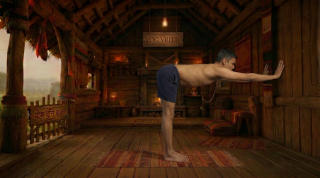
Ardha Uttanasana, or Half Standing Forward Bend, provides a deep architectural release for the entire posterior chain, particularly lengthening the hamstrings and extending the spine with integrity. This posture cultivates a profound sense of grounding through the feet while simultaneously elevating and broadening the chest, fostering an energetic lift through the central axis.
Muscles
- Hamstringsstretches
- Spinal Erectorsstrengthens
- Deep Core Stabilizersstrengthens
- Gluteal Musclesstabilises
Joints
- Hip Jointsmobilises
- Spinal Columndecompressing
- Knee Jointsstabilises
Inside the body
- Abdominal Organs / Digestive System
- Breathing
Mind
Ardha Uttanasana cultivates a powerful sense of mental focus and introspection as the practitioner directs their awareness inward to the subtle sensations of the body and breath.
Take care
When teaching Ardha Uttanasana, please guide students to prioritize a long, flat back over achieving maximum hamstring stretch, especially those with pre-existing spinal injury or disc issues.
Ensure they hinge from the hips and use blocks for hand support if the hamstrings are tight, to prevent rounding the lower back. For students with low blood pressure, advise them to come up slowly and mindfully to avoid dizziness, emphasizing a steady gaze and controlled ascent.
Muscles
Hamstrings
StretchesSemitendinosus, Semimembranosus, Biceps Femoris
The muscles running along the back of your thighs, from the sitting bones to below the knee (hamstrings), receive a sustained, intelligent lengthening in this pose.
Read moreShow less
As the hips hinge and the torso extends forward, these muscles are gently encouraged to release chronic tension, which often accumulates from prolonged sitting and contributes to lower back stiffness.
This action not only increases flexibility in the posterior thigh but also profoundly influences the pelvic tilt, allowing for greater ease in daily movements and deeper forward folding over time, releasing stored apana vayu and promoting a sense of groundedness.
Spinal Erectors
StrengthensErector Spinae Group: Spinalis, Longissimus, Iliocostalis
The powerful muscles running vertically along either side of your spine (spinal erectors) are actively engaged to maintain the long, flat back characteristic of Ardha Uttanasana.
Read moreShow less
By resisting the pull of gravity on the torso, these muscles work concentrically to lift and extend the spine, counteracting the tendency to round the back.
This strengthens the back's intrinsic support system, improving spinal stability and endurance, which translates into better posture and a feeling of uprightness and energetic lift, cultivating a strong inner core of samana vayu.
Deep Core Stabilizers
StrengthensTransversus Abdominis, Multifidus
Beneath the superficial abdominal muscles, the deep core stabilizers, including the transverse abdominis and multifidus, are subtly yet critically engaged to support the lumbar spine.
Read moreShow less
Drawing the navel gently towards the spine creates a corset-like action, protecting the lower back from strain as the hamstrings lengthen and the torso extends.
This intelligent engagement of the core creates a stable foundation for the spinal extension, fostering a sense of inner strength and integration, allowing prana to flow freely through the central channel without dissipation.
Gluteal Muscles
StabilisesGluteus Maximus, Medius, Minimus
The muscles of your buttocks (gluteal muscles) work synergistically with the hamstrings and core to stabilize the pelvis and hips in this standing forward bend.
Read moreShow less
While the gluteus maximus provides mild eccentric control as the hips flex, the gluteus medius and minimus are crucial for maintaining lateral hip stability, preventing any wobbling.
This balanced engagement ensures a secure foundation for the posture, allowing for a deeper and safer hamstring stretch, fostering a feeling of rootedness and integrity in the lower body.
Joints
Hip Joints
MobilisesThe ball-and-socket joints where your thigh bones meet your pelvis (hip joints) undergo significant flexion and mobilization in Ardha Uttanasana.
Read moreShow less
By hinging from the hips rather than rounding the lower back, we encourage a healthy range of motion, improving the flexibility of the hip flexors and extensors.
This targeted action helps to release stiffness in the groin and outer hips, allowing for more fluid movement in daily activities and deeper, more accessible forward folds in your practice, fostering a sense of freedom and openness in the pelvic bowl.
Spinal Column
DecompressingThe entire length of your spine, from the tailbone to the crown of the head (spinal column), experiences a gentle yet profound decompression and lengthening.
Read moreShow less
As the torso extends forward, gravity subtly assists in creating space between the vertebrae, alleviating pressure on the intervertebral discs and spinal nerves.
This sensation of expansion in the spine is deeply therapeutic, reducing chronic back stiffness and fostering an energetic lift, allowing for an unobstructed flow of prana and a feeling of lightness and ease throughout the central channel.
Knee Joints
StabilisesThe hinge joints of your knees are actively involved in maintaining stability and alignment in Ardha Uttanasana.
Read moreShow less
While the legs are typically straight, a micro-bend or intelligent engagement of the quadriceps muscles (thigh muscles) helps to protect the knee ligaments from hyperextension.
This mindful awareness cultivates strength and stability around the knee, ensuring that the stretch in the hamstrings is felt safely and effectively, promoting a sense of grounded support and structural integrity in the lower limbs.
Inside the body
Abdominal Organs / Digestive System
In Ardha Uttanasana, the abdominal organs receive a gentle, internal compression as the torso folds forward towards the thighs.
Read moreShow less
This mild internal massage can stimulate blood flow to the digestive organs, including the stomach, intestines, and liver, aiding in their optimal function.
Practitioners may feel a subtle activation or 'churning' in the core, which in yogic terms is linked to stimulating 'agni' (digestive fire), thereby supporting more efficient digestion and elimination, and fostering a sense of inner cleansing and vitality.
Breathing
In Ardha Uttanasana, the extended length of the torso and the open chest naturally facilitate a deeper, more expansive breath, particularly emphasizing the inhalation.
Read moreShow less
As the spine lengthens forward, the diaphragm has more space to descend, allowing for a fuller engagement of the lungs and increased oxygenation.
This deep, conscious breathing, akin to Ujjayi pranayama, calms the nervous system and creates an internal rhythm that supports the sustained lengthening in the posture, allowing prana to permeate every cell and cultivate a sense of inner spaciousness and vitality.
Fascia (connective tissue)
The extensive web of connective tissue that encases and interlinks every muscle, bone, and organ (fascia) receives a profound release along the entire posterior kinetic chain in Ardha Uttanasana.
Read moreShow less
Specifically, the superficial back line, running from the soles of the feet up the calves, hamstrings, glutes, and along the entire spine, is intelligently lengthened.
This sustained stretch helps to release fascial adhesions and restrictions, improving overall flexibility and mobility, and in yogic terms, opening the energetic channels (nadis) to allow for a more unobstructed flow of prana throughout the body, releasing deeply held patterns of tension.
Mind and nervous system
- Nervous system
The grounded foundation of Ardha Uttanasana, combined with the extended spine and steady breath, cues the nervous system toward a state of calm and integration.
Read moreShow less
As we root through the feet and lengthen the spine, the body communicates safety to the brain, reducing sympathetic 'fight or flight' responses and encouraging parasympathetic 'rest and digest' activity.
This deliberate cultivation of stillness helps to quiet 'chitta vritti' – the restless fluctuations of the mind – fostering a profound sense of inner peace and centered awareness.
The sustained stretch in the hamstrings and the active extension of the back can help to release stored tension along the posterior kinetic chain, which is often linked to chronic stress responses.
Read moreShow less
This physical release sends positive feedback to the brain, modulating pain perception and reducing overall muscular guarding, thereby alleviating physical and mental fatigue.
The practitioner experiences a deep unwinding, allowing for greater relaxation and a more balanced energetic state, promoting a feeling of spaciousness and ease within the body-mind complex.
- Mind & mood
Ardha Uttanasana cultivates a powerful sense of mental focus and introspection as the practitioner directs their awareness inward to the subtle sensations of the body and breath.
Read moreShow less
The precise alignment and sustained effort required for a flat back demand a concentrated mind, drawing the senses away from external distractions in a gentle form of 'pratyahara'.
This focused attention builds mental discipline and clarity, allowing for deeper self-observation and a more present, engaged experience of the posture.
By rooting firmly through the feet and extending the spine, this pose helps to establish a sense of stability and confidence, translating physical alignment into mental fortitude.
Read moreShow less
The act of patiently lengthening the hamstrings and strengthening the back fosters a quality of perseverance and self-reliance, even when faced with physical challenge.
This mental resilience, cultivated on the mat, empowers the practitioner to approach life's challenges with greater steadiness and a grounded perspective, reinforcing the connection between inner strength and outer expression.
Because it is a standing pose
Standing postures like Ardha Uttanasana are foundational for cultivating stability and strength throughout the entire body, establishing a direct connection to the earth's grounding energy.
Read moreShow less
By rooting firmly through the feet and engaging the leg muscles, we build physical resilience and improve balance, creating a stable platform for all other movements.
This connection to the ground fosters a sense of security and presence, allowing the practitioner to feel deeply supported and balanced both physically and energetically, enhancing 'apana vayu' and overall stability.
This standing forward bend offers a unique opportunity to lengthen the spine against gravity while maintaining a strong, active base.
Read moreShow less
The upright nature of the legs allows for a sustained stretch of the hamstrings without excessive compression of the torso, making it accessible for many.
This combination of grounding and lengthening promotes an energetic lift and expansion, cultivating a sense of spaciousness and freedom in the body, which extends into a feeling of mental clarity and openness.