Benefits· लाभ
What Crow Pose II does for you
बकासन २
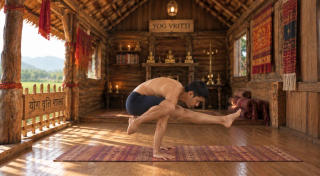
This variation, Crow Pose II, diverges fundamentally from Bakasana by shifting from an arm balance to a standing posture. The primary focus transitions from supporting the entire body weight on the hands to rooting firmly through the feet, emphasizing spinal extension and an upward energetic flow.
What this version changes: In this standing variation, a block can be strategically placed between the inner thighs or under the heels. When positioned between the thighs, it activates the adductor muscles, stabilizing the pelvis and facilitating the upward lift of the spine, enhancing inner body awareness. If placed under the heels, it assists in grounding and allows for a deeper extension through the spine, making the posture more accessible for those with tight hamstrings or calves by redistributing weight and supporting correct alignment.
Muscles
- Core Musclesstabilises
- Shoulder Stabilizersstrengthens
- Tricepsstrengthens
- Wrist Flexorsstrengthens
- Gluteus Mediusstabilises
Joints
- Wrist Jointstabilises
- Elbow Jointstabilises
- Shoulder Jointstabilises
- Hip Jointmobilises
Inside the body
- Abdominal Organs
- Brain
- Breathing
Mind
Bakasana demands unwavering mental focus and concentration, drawing the practitioner's awareness entirely into the present moment, free from external distractions.
Take care
This standing variation introduces specific considerations for practitioners with pregnancy, where maintaining steady balance and avoiding excessive abdominal compression is paramount.
Similarly, individuals with hypertension should approach with care, ensuring the upward spinal extension and any arm movements do not unduly elevate blood pressure, requiring mindful attention to breath and exertion.
Muscles
Core Muscles
StabilisesIn Bakasana, core muscles primarily facilitate deep anterior flexion and lift of the pelvis and legs, working against gravity to suspend the body.
Read moreShow less
In this standing variation, their role shifts to dynamically stabilizing the torso and pelvis, supporting the upward extension of the spine.
They engage more subtly to maintain upright posture, counteracting gravitational pull while allowing for spaciousness in the breath and movement, rather than the intense compressive action of an arm balance.
Shoulder Stabilizers
StrengthensStretchesWhere Bakasana demands robust isometric contraction from the shoulder stabilizers to create a stable platform for weight-bearing, Crow Pose II calls for a more expansive and dynamic engagement.
Read moreShow less
Here, these muscles work to open the chest and broaden the collarbones, facilitating an upward reach of the arms and promoting optimal spinal alignment.
They still provide stability, but with a focus on freedom of movement and postural integrity rather than compressive load.
Triceps
StrengthensIn Bakasana, the triceps are powerfully engaged in isometric contraction to fully extend the elbows, providing the crucial lever for lifting the body.
Read moreShow less
In this standing variation, while they contribute to toning the arms and supporting any arm extension, their primary role shifts from weight-bearing to dynamic activation.
They help to lengthen the arms and create a sense of lightness, rather than pushing against the floor, promoting a more subtle yet active engagement that supports the upward energetic flow.
Wrist Flexors
StrengthensThe wrist flexors in Bakasana are intensely active, creating a powerful grip into the mat to distribute weight and protect the wrist joint from hyperextension.
Read moreShow less
In Crow Pose II, their engagement is dramatically reduced from a weight-bearing capacity, yet they remain subtly active to maintain awareness and integrity in the hands and forearms.
This could involve a gentle activation to keep the fingers alive and receptive, supporting the energetic flow through the arms rather than bearing compressive force.
Gluteus Medius
StabilisesGluteus medius
As a standing pose, Crow Pose II heavily relies on the gluteus medius for critical hip stabilization and maintaining balance.
Read moreShow less
This muscle works to abduct and internally rotate the thigh, preventing excessive sway and ensuring the pelvis remains level over the supporting leg.
Its subtle, continuous engagement underpins the pose's stability, allowing for the upward extension and freedom in the upper body.
Gastrocnemius and Soleus
StrengthensStabilisesGastrocnemius, Soleus
In this standing variation, the gastrocnemius and soleus muscles become fundamental for rooting the body firmly through the feet, as described.
Read moreShow less
They work synergistically to stabilize the ankle joint and dorsiflex the foot, providing a strong foundation for the entire posture.
This active engagement from the calves creates a grounded connection to the earth, facilitating the upward energetic lift through the spine and promoting a sense of unwavering stability.
Erector Spinae
StrengthensErector Spinae
Unlike Bakasana, which focuses on spinal flexion to lift, Crow Pose II explicitly emphasizes the upward extension of the spine.
Read moreShow less
The erector spinae muscles are therefore crucial, actively working to lengthen the vertebral column against gravity and maintain an upright, lifted posture.
Their sustained engagement creates space between the vertebrae, promoting a sense of height and lightness throughout the torso, embodying the pose's aspirational qualities.
Joints
Wrist Joint
StabilisesThe complex wrist joint, comprised of the radiocarpal and intercarpal joints, bears significant body weight in Bakasana, requiring strength and intelligent activation to prevent injury.
Read moreShow less
The even distribution of pressure across the entire palm, from the heel of the hand to the fingertips, is vital for joint protection and stability, preventing undue stress on any single point.
Regular, mindful practice in arm balances strengthens the supporting musculature and connective tissues around the wrist, improving its resilience and range of motion.
This builds a profound sense of connection to the earth, translating into greater stability and ease in all daily movements.
Elbow Joint
StabilisesThe elbow joint, formed by the humerus, ulna, and radius, is held in full extension in Bakasana, with the triceps actively working to maintain straight arms and prevent collapse.
Read moreShow less
It's crucial to maintain a subtle micro-bend, avoiding locking the joint, to protect the cartilage and allow for dynamic muscular engagement rather than passive hanging.
This active, yet fluid, extension of the arms creates a powerful channel for energy flow, symbolizing unwavering determination and clear intention.
Over time, this conscious engagement builds strength and resilience in the elbows, contributing to overall upper body integrity.
Shoulder Joint
StabilisesThe shoulder joint (glenohumeral joint) is actively stabilized by the surrounding muscles, particularly the rotator cuff, to prevent the upper arm bone from collapsing into the shoulder socket.
Read moreShow less
This intelligent engagement creates a broad and lifted chest, preventing slouching and protecting the delicate structures of the shoulder girdle.
This action brings a sense of spaciousness and openness to the upper body, allowing the breath to flow more freely and releasing tension held in the neck and shoulders.
Consistent practice builds strength and mobility in the shoulders, fostering a feeling of freedom and lightness.
Hip Joint
MobilisesThe hip joints (coxal joints) are deeply flexed in Bakasana, bringing the knees high onto the upper arms or into the armpits, requiring flexibility and strength in the groin and hip flexors.
Read moreShow less
This deep flexion creates leverage, allowing the weight of the legs to be supported and the core to engage more effectively, contributing to the lift.
The ability to draw the knees in close to the body signifies a drawing inward of energy and attention (pratyahara), focusing the mind.
With regular practice, this action helps to mobilize the hip joints, improving their range of motion and releasing tension in the inner thighs and groins.
Inside the body
Abdominal Organs
The deep engagement of the core muscles in Bakasana creates a gentle, sustained compression of the abdominal organs, including the stomach, intestines, and liver.
Read moreShow less
This internal massage stimulates circulation within the abdominal cavity, aiding digestion and promoting the healthy functioning of these vital organs.
Yogically, this compression awakens 'agni' (digestive fire) in the Manipura Chakra, enhancing metabolism and the assimilation of both physical nourishment and life experiences.
It helps to tone the entire digestive system, fostering vitality and well-being.
Brain
As a mild inversion, Bakasana subtly reverses the gravitational pull on the head, encouraging a fresh, oxygenated blood flow to the brain and scalp.
Read moreShow less
This increased circulation can enhance mental clarity, focus, and cognitive function, helping to clear mental fog.
This gentle inversion also helps to calm the nervous system, reducing mental fatigue and promoting a sense of inner peace and equilibrium.
It offers a fresh perspective, literally, helping to quiet the mind's incessant chatter.
Breathing
In Bakasana, the deep engagement of the core muscles and the slight compression of the abdomen can initially restrict the natural flow of diaphragmatic breathing.
Read moreShow less
However, with practice, the pose encourages a refined, subtle breath (ujjayi pranayama) that supports stability and focus rather than disrupting it.
The challenge of maintaining balance while consciously breathing deeply trains the practitioner to find stillness and expand their breath capacity even under physical exertion, calming the nervous system.
This mindful breathing cultivates a steady mind and a resilient spirit, allowing prana to flow freely and support the pose from within.
Fascia (connective tissue)
The intricate web of connective tissue (fascia) throughout the body plays a crucial role in Bakasana, particularly in integrating the anterior fascial lines of the core, arms, and shoulders.
Read moreShow less
This pose strengthens and integrates the superficial and deep front lines, creating a cohesive lift and stability from the ground (hands) through the core to the upper body.
By consciously engaging this fascial network, the body learns to distribute tension and support efficiently, releasing old patterns of holding and facilitating a more fluid and integrated movement.
This opening of fascial pathways allows for a freer flow of prana, enhancing overall vitality and ease.
Mind and nervous system
- Nervous system
The intense concentration and singular focus required to balance in Bakasana draws the mind inward, effectively initiating a state of pratyahara (withdrawal of the senses) and dharana (concentration).
Read moreShow less
This focused attention helps to quiet the incessant fluctuations of the mind (chitta vritti), shifting the nervous system from a state of sympathetic arousal (fight-or-flight) towards a more parasympathetic (rest-and-digest) response.
The steady gaze (drishti) further anchors the mind, cultivating a profound sense of presence and inner calm amidst the physical challenge.
This practice trains the nervous system to remain steady and composed, even under pressure, fostering mental resilience.
Successfully navigating the perceived challenge of Bakasana builds a profound sense of self-efficacy and reduces anxiety related to perceived physical limitations.
Read moreShow less
By consciously engaging strength and balance, the practitioner learns to trust their body and mind, fostering a sense of accomplishment that positively impacts emotional regulation.
This mastery over the physical form translates to greater resilience and equanimity in facing life's challenges off the mat.
It cultivates an inner steadiness that helps to regulate the subtle energies (prana) within the body, leading to greater emotional balance.
- Mind & mood
Bakasana demands unwavering mental focus and concentration, drawing the practitioner's awareness entirely into the present moment, free from external distractions.
Read moreShow less
The challenge of maintaining balance requires a quiet, alert mind, thereby cultivating dharana (concentration) and preparing the mind for deeper meditative states.
This intense engagement helps to still the fluctuations of the mind, offering a profound sense of mental clarity and presence.
It trains the mind to be steady and sharp, an invaluable skill for all aspects of life.
Conquering the initial apprehension and fear of falling often associated with arm balances is a significant mental hurdle in Bakasana, leading to a profound boost in confidence and self-belief.
Read moreShow less
Each successful lift off the ground reinforces the idea that perceived limitations can be overcome with consistent effort, intelligent action, and a calm, determined mind.
This mental fortitude, developed through dedicated practice on the mat, translates into greater courage and resilience in navigating life's challenges off the mat.
It truly empowers the practitioner to face fears and trust their inner strength.
Because it is a balance pose
Arm balances like Bakasana build immense upper body and core strength, transforming the arms into strong, intelligent pillars of support.
Read moreShow less
This requires a precise alignment of bones and an intelligent, integrated engagement of muscles, teaching the entire body to work as a unified whole.
Yogically, arm balances cultivate a sense of lightness, agility, and freedom, challenging our perception of gravity and empowering us to lift beyond our perceived limitations.
They awaken a profound sense of inner power and self-reliance.
Although not a full inversion, the head is lower than the hips in Bakasana, gently reversing the gravitational pull on the lower body and internal organs.
Read moreShow less
This encourages a fresh, oxygenated blood flow to the upper body and head, revitalizing the brain and endocrine glands, and promoting mental clarity.
Energetically, inversions are said to reverse the flow of apana vayu (downward energy), bringing energy upwards and promoting a shift in perspective.
This subtle inversion helps to calm the nervous system and refresh the mind, offering a new way of seeing.
The deep hip flexion and bringing the knees high onto the upper arms in Bakasana incorporate elements of a forward fold, drawing the body inward and fostering introspection.
Read moreShow less
This internal focus helps to quiet the mind and connect with inner awareness, promoting a sense of groundedness and calm even within a challenging balance.
This aspect of the pose encourages pratyahara, the withdrawal of the senses from external distractions, leading to deeper self-reflection and inner peace.
It helps to soothe the nervous system and bring a quietness to the mind.