Benefits· लाभ
What Cow Pose does for you
Bitilasana · बितिलासन
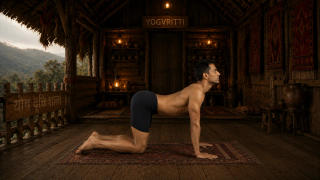
Bitilasana, or Cow Pose, is a foundational kneeling posture that gracefully mobilizes the entire spinal column into extension, creating space and fluidity. It cultivates an expansive opening across the front of the body, from the throat to the deep abdominal core, while simultaneously engaging and strengthening the muscles along the back of the spine.
Muscles
- Spine Extensorsstrengthens
- Abdominalsstretches
- Chest Musclesstretches
- Neck Extensorsstrengthens
- Upper Back Musclesstrengthens
Joints
- Spinemobilises
- Shoulder Girdlemobilises
- Hipsstabilises
- Kneesstabilises
Inside the body
- Lungs
- Abdominal Organs
- Breathing
Mind
The expansive chest opening in Bitilasana can profoundly impact one's mental state, fostering feelings of openness and courage.
Take care
When practicing Bitilasana, be mindful of any knee sensitivity; always place a folded blanket under the knees for cushioning and support.
Take care not to 'crunch' the neck by over-extending; instead, lift the gaze gently from the base of the skull, maintaining length in the back of the neck. For those with lower back concerns, engage the core subtly to support the lumbar spine, ensuring the arch is distributed evenly rather than concentrated in one area.
Muscles
Spine Extensors
StrengthensErector Spinae, Multifidus
These deep muscles run along either side of your spinal column, from the base of your skull down to your sacrum.
Read moreShow less
In Bitilasana, they gently contract to lift and extend each individual vertebra, creating a subtle arch in the back.
This controlled engagement strengthens the posterior chain of the torso, fostering improved postural support and a feeling of inner lift and vitality along the sushumna nadi, the central energy channel.
Abdominals
StretchesRectus Abdominis, Obliques
The muscles forming the front wall of your abdomen, including the rectus abdominis and obliques, are gently stretched and lengthened as the belly softens towards the floor.
Read moreShow less
This release allows for expansion within the abdominal cavity, decompressing the internal organs and promoting better circulation.
Energetically, this opening in the manipura chakra area releases tension, facilitating the free flow of prana and supporting healthy digestion.
Chest Muscles
StretchesPectoralis Major and Minor
Located at the front of your chest, these muscles can often become tight from daily activities like sitting or hunching.
Read moreShow less
In Cow Pose, as you draw your shoulder blades down and back, the chest expands and these muscles are gently lengthened.
This action opens the heart space (anahata chakra), releasing stagnant energy and fostering feelings of courage, compassion, and emotional spaciousness.
Neck Extensors
StrengthensSplenius Capitis, Semispinalis Cervicis
The muscles at the back of your neck gently engage to support the head as you lift your gaze towards the ceiling without compressing the cervical spine.
Read moreShow less
This conscious activation strengthens the often-underutilized muscles responsible for holding the head upright, counteracting the effects of prolonged forward head posture.
This mindful lift brings a sense of lightness and clarity to the mind, freeing the energetic pathways to the brain.
Upper Back Muscles
StrengthensRhomboids, Trapezius (middle and lower fibers)
These muscles between and around your shoulder blades are key in drawing the shoulder blades towards each other and down the back.
Read moreShow less
In Bitilasana, their activation helps to broaden the collarbones and lift the sternum, supporting the expansive chest opening.
This engagement improves scapular stability and promotes an upright posture, fostering a sense of strength and openness in the upper torso and heart center.
Joints
Spine
MobilisesThe entire vertebral column is mobilized into a gentle extension, with each individual vertebra articulating to create a smooth, even arch.
Read moreShow less
This rhythmic movement with breath lubricates the intervertebral discs and improves the flexibility of the spinal ligaments.
Regular practice enhances spinal resilience and vitality, allowing for unrestricted flow of 'prana vayu' along the central axis of the body.
Shoulder Girdle
MobilisesThe shoulder blades (scapulae) gently retract and depress, creating space across the upper back and promoting an open chest.
Read moreShow less
This subtle movement at the scapulothoracic joint, where the shoulder blades glide over the rib cage, improves shoulder mobility and stability.
It releases tension commonly held in the upper back and neck, fostering a sense of freedom and lightness in the upper body and heart.
Hips
StabilisesWhile primarily a spinal pose, the hips (acetabulofemoral joints) are in a stable, flexed position, acting as a grounding point.
Read moreShow less
The even weight distribution through the knees and hands creates a stable base from which the spine can extend without strain.
This foundation provides a sense of security and connection to the earth, anchoring the practitioner and allowing the energy to rise freely through the torso.
Knees
StabilisesThe knees bear a significant portion of the body's weight in this kneeling posture, requiring awareness to prevent discomfort.
Read moreShow less
A blanket placed beneath them provides cushioning, distributing pressure evenly across the joint surfaces and protecting the delicate patella and menisci.
This supportive grounding allows for a longer, more comfortable hold, deepening the connection to the earth element and promoting stability.
Inside the body
Lungs
As the chest expands and the sternum lifts, the rib cage widens, creating more space for the lungs to fully inflate.
Read moreShow less
This increased thoracic volume encourages deeper, more expansive inhalations, allowing for greater oxygen intake and efficient gas exchange.
Yogically, this enhanced capacity for breath directly increases 'prana,' vital life force, invigorating the entire system and clearing stagnant energy.
Abdominal Organs
The gentle lengthening of the abdominal wall in Bitilasana provides a mild stretch and decompression for the organs housed within the abdominal cavity, including the stomach, intestines, and liver.
Read moreShow less
This subtle massage can stimulate peristalsis and improve circulation to these organs, aiding in digestion and elimination.
From a yogic perspective, it helps to release 'apana vayu,' the downward-moving energy, promoting healthy internal cleansing and balance.
Breathing
Bitilasana's expansive shape naturally encourages a fuller, deeper inhalation, as the chest lifts and the diaphragm descends with greater ease.
Read moreShow less
The gentle arch of the spine creates more space in the thoracic cavity, inviting the breath to expand into the entire lung capacity.
This posture is excellent for cultivating a smooth, even 'Ujjayi' breath, which helps to regulate body temperature, calm the nervous system, and deepen the yogic experience by linking movement to conscious prana flow.
Fascia (connective tissue)
The expansive action of Bitilasana gently lengthens the Superficial Front Line (SFL) of fascia, which runs from the tops of the feet, up the shins, thighs, abdomen, chest, and neck.
Read moreShow less
Simultaneously, it engages and strengthens the Superficial Back Line (SBL) along the spine.
This integrated lengthening and strengthening helps to release fascial restrictions that contribute to poor posture and limited mobility, allowing the body's intrinsic energetic pathways to open and vital life force to flow more freely, releasing deeply held patterns of tension.
Mind and nervous system
- Nervous system
The rhythmic, synchronized movement of the spine with the breath in Bitilasana acts as a meditative flow, directly engaging the parasympathetic nervous system.
Read moreShow less
This activation promotes a 'rest and digest' response, calming the fight-or-flight instincts and reducing physiological stress.
The gentle, controlled nature of the movement helps to quiet 'chitta vritti' (mind fluctuations), fostering a state of inner peace and present moment awareness.
By consciously moving each segment of the spine and coordinating it with the breath, proprioceptive feedback to the brain is enhanced, sharpening body awareness.
Read moreShow less
This heightened sensitivity allows the practitioner to perceive subtle tensions and areas of restriction, guiding them towards more integrated movement patterns.
This refined kinesthetic awareness cultivates 'dharana' (concentration), deepening the mind-body connection and promoting mindful engagement in all actions.
- Mind & mood
The expansive chest opening in Bitilasana can profoundly impact one's mental state, fostering feelings of openness and courage.
Read moreShow less
As the physical heart center broadens, it often correlates with a release of emotional constriction, inviting a more positive and optimistic outlook.
This posture teaches us to approach life with an open heart, cultivating resilience and a willingness to embrace new experiences.
The synchronized movement and breath cultivate a deep sense of presence, drawing the mind away from external distractions and into the internal experience.
Read moreShow less
This practice of 'pratyahara' (withdrawal of the senses) helps to quiet the incessant chatter of the mind, promoting mental clarity and focus.
Regular engagement in Bitilasana can therefore be a powerful tool for cultivating inner stillness and reducing anxiety.
Because it is a backbend pose
Bitilasana is a gentle backbend, meaning the spine extends backward, opening the entire front line of the body from the throat to the pelvis.
Read moreShow less
This action counteracts the pervasive forward-folding posture of modern life, strengthening the posterior chain and creating length in the anterior.
Yogically, backbends are considered invigorating and heart-opening, cultivating qualities of courage, enthusiasm, and a positive outlook on life.
As a backbend, this pose naturally encourages a lift of the sternum and an expansion of the rib cage, directly supporting deeper breathing.
Read moreShow less
The gentle arching of the spine creates space between the vertebrae, decompressing the spinal column and improving overall flexibility.
This increased spaciousness allows for an unhindered flow of 'prana,' vitalizing the nervous system and promoting a sense of energetic freedom.