Benefits· लाभ
What Chair Seated Forward Bend does for you
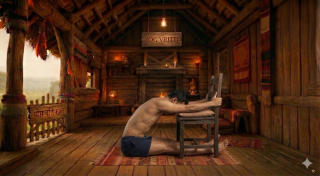
Chair Paschimottanasana (variation) · कुर्सी पश्चिमोत्तानासन (विविधता)
Chair Paschimottanasana offers a profound yet accessible journey inward, gently lengthening the entire posterior chain—from the calves to the base of the skull—while providing a stable, grounded foundation. This variation particularly targets the hamstrings and spinal erectors, fostering spinal extension and release in the lower back.
Muscles
- Hamstringsstretches
- Spinal Erectorsstretches
- Gluteus Maximusstretches
- Shoulder Stabilizersstabilises
Joints
- Hip Jointmobilises
- Spinedecompressing
- Knee Jointstabilises
Inside the body
- Abdominal Organs (Digestive System)
- Kidneys and Adrenal Glands
- Breathing
Mind
Chair Paschimottanasana is a powerful practice for cultivating introspection and turning the senses inward (pratyahara).
Take care
Students with acute lower back pain, disc issues, or recent abdominal surgery should approach this pose with extreme caution, or preferably avoid it.
Emphasize leading with the chest and maintaining a long spine, rather than rounding the back excessively, especially in the initial stages. Listen attentively to any sharp pain, and never force the stretch, reminding students that less can often be more in therapeutic practice.
Muscles
Hamstrings
StretchesBiceps femoris, Semitendinosus, Semimembranosus
The long muscles running along the back of your thighs (hamstrings) get a deep, sustained release here, not a forced stretch but a patient unwinding.
Read moreShow less
As you hold the pose and breathe, the nervous system gradually allows these muscles to let go of years of tension stored from sitting and stress.
In yogic understanding, this releases apana vayu—the downward-moving energy—allowing a feeling of groundedness and ease in the lower body.
Regular practice progressively lengthens this posterior chain, directly reducing the pull on the lower back.
Spinal Erectors
StretchesErector Spinae Group
The deep muscles running vertically along either side of your spine (erector spinae) are encouraged to lengthen and extend here, especially in the lumbar region.
Read moreShow less
Rather than collapsing, the intention is to create space between each vertebra, fostering an intelligent elongation of the spinal column.
This gentle traction helps to decompress the intervertebral discs, alleviating mild back stiffness and promoting a sense of spaciousness along the central axis of the body, allowing prana to flow more freely.
Gluteus Maximus
StretchesGluteus Maximus
The large muscles of your buttocks (gluteus maximus) are gently stretched in this forward fold, particularly as the pelvis tilts anteriorly over the femurs.
Read moreShow less
This sustained, gentle lengthening helps to release tension often held from prolonged sitting or athletic activities, which can impact hip mobility and lower back health.
Energetically, this release contributes to a feeling of 'letting go' in the pelvic bowl, creating a stable foundation for the spine and inviting a deeper sense of groundedness.
Shoulder Stabilizers
StabilisesDeltoids, Rotator Cuff Muscles
While not the primary focus, the muscles capping your shoulders (deltoids) and the deeper stabilizing muscles (rotator cuff) are gently engaged as you reach forward and hold onto your shins or the chair legs.
Read moreShow less
This gentle isometric activation helps to stabilize the shoulder girdle, preventing slumping and encouraging broadness across the collarbones.
This action supports the upper back's lengthening, allowing the breath to expand more fully into the chest and creating a feeling of openness even in a forward bend.
Joints
Hip Joint
MobilisesThe ball-and-socket joints of your hips (acetabulofemoral joints) are primarily flexing in this posture, allowing the torso to fold forward over the legs.
Read moreShow less
This movement encourages an anterior tilt of the pelvis, which is crucial for lengthening the hamstrings effectively and safely.
With consistent practice, this mobilization enhances the range of motion in the hips, translating to greater ease in everyday movements and a release of stored tension in the pelvic region, fostering a sense of freedom and openness.
Spine (Vertebral Joints)
DecompressingThe many small joints between your vertebrae (intervertebral joints) are gently mobilized and decompressed as you lengthen forward, creating space rather than compression.
Read moreShow less
The aim is to articulate the spine, segment by segment, encouraging each vertebra to find its optimal position in relation to its neighbors.
This gentle traction alleviates stiffness, improves spinal flexibility, and allows for a smoother flow of cerebrospinal fluid and prana, contributing to a feeling of lightness and vitality along the central channel.
Knee Joint
StabilisesThe hinge joints of your knees (tibiofemoral joints) are gently extended in this pose, though not locked, maintaining a micro-bend to protect the joint.
Read moreShow less
This mindful extension allows for a deeper and safer stretch of the hamstrings, preventing hyperextension and undue strain on the ligaments.
By maintaining a soft knee, we honor the body's intelligence, ensuring stability and preventing the 'pull' from traveling into the knee itself, thus cultivating a sense of intelligent yielding rather than forcing.
Inside the body
Abdominal Organs (Digestive System)
As the torso folds forward, there is a gentle compression of the abdominal organs, including the stomach, intestines, and liver.
Read moreShow less
This mild pressure acts like a gentle internal massage, stimulating circulation to these organs upon release, which can aid digestion and elimination.
From a yogic perspective, this action can help to stoke Agni, the digestive fire, promoting better assimilation of nutrients and a sense of internal cleansing and renewal.
Kidneys and Adrenal Glands
The kidneys and the small adrenal glands resting atop them receive a gentle compression as the lower back rounds slightly in the deeper phase of the fold.
Read moreShow less
This subtle pressure can stimulate blood flow to these vital organs, supporting their function in detoxification and stress response.
Energetically, this area is associated with stability and fear, and the calming nature of the forward bend, combined with this gentle massage, can help to soothe the nervous system and reduce feelings of anxiety.
Breathing
In this seated forward bend, the gentle compression of the abdomen naturally encourages a fuller, deeper exhalation, as the diaphragm has less space to descend fully on the inhale.
Read moreShow less
This emphasis on the exhale activates the parasympathetic nervous system, promoting relaxation and a sense of calm.
The practice of consciously lengthening the exhalation here, perhaps with a soft Ujjayi breath, deepens the introspective quality of the pose, further pacifying the mind and enhancing the flow of prana.
Fascia (connective tissue)
The fascial web, the intricate network of connective tissue that envelops every muscle, organ, and bone, is extensively addressed in this posture.
Read moreShow less
Specifically, the superficial back line of fascia, running from the soles of the feet up the back of the legs, torso, and neck, receives a sustained and gentle lengthening.
This unwinding of the fascial matrix helps to release chronic tension patterns, improving overall flexibility and allowing for greater freedom of movement.
From a yogic perspective, this opening of the fascial lines can be understood as clearing blockages in the nadis, allowing prana to flow unimpeded throughout the body.
Mind and nervous system
- Nervous system
As the body folds inward and the head releases down, a profound sense of calm often washes over the practitioner.
Read moreShow less
This physical introspection triggers the parasympathetic nervous system (rest and digest), shifting the body away from a state of fight or flight.
The slow, rhythmic breath encouraged by the compressed abdomen further deepens this response, quietening the 'chitta vritti' (mind fluctuations) and inviting a state of deep relaxation and inner peace.
The gentle traction on the spinal column, combined with the release in the posterior chain, helps to alleviate physical tension that often contributes to mental stress.
Read moreShow less
This release of held muscular tension directly signals the brain that it is safe to relax, reducing the production of stress hormones like cortisol.
The downward flow of energy, or apana vayu, is emphasized, promoting a feeling of groundedness and stability, which is deeply soothing for an overactive mind.
- Mind & mood
Chair Paschimottanasana is a powerful practice for cultivating introspection and turning the senses inward (pratyahara).
Read moreShow less
The act of folding forward physically mirrors a mental withdrawal from external distractions, allowing the practitioner to connect with their inner landscape.
This focused attention on the breath and the internal sensations fosters a deeper sense of self-awareness and presence, moving towards dharana (concentration).
This forward bend offers a safe space for emotional release, as many people hold stress and anxiety in their hips and lower back.
Read moreShow less
The sustained stretch and the calming effect on the nervous system can facilitate the gentle unwinding of emotional tension, leading to a feeling of lightness and emotional clarity.
It provides an opportunity to 'let go' not just physically, but mentally and emotionally, fostering resilience and inner peace.
Because it is a forward bend pose
Forward bends are inherently grounding and introspective, drawing our awareness inward, away from external stimuli.
Read moreShow less
This physical action of folding the torso towards the legs encourages a release of the head and neck, which sends a powerful signal to the brain to calm down.
Energetically, this shape cultivates apana vayu, the downward and outward moving energy, promoting stability, elimination, and a profound sense of rootedness.
This shape creates a gentle traction along the entire posterior chain of the body, from the heels to the crown of the head, particularly lengthening the hamstrings and the spinal extensors.
Read moreShow less
This sustained release helps to counteract the effects of prolonged sitting and poor posture, which often lead to stiffness and compression in the spine.
The lengthening action fosters greater flexibility and space within the body, allowing prana to circulate more freely along the sushumna nadi.
The mild compression of the abdominal organs in a forward bend offers a gentle internal massage, stimulating digestion and promoting detoxification.
Read moreShow less
Upon release, fresh blood flow rushes into these areas, invigorating the internal systems.
This gentle activation supports the body's natural processes, enhancing overall vitality and contributing to a sense of internal cleansing and renewal.