Benefits· लाभ
What Savasana in Chair does for you
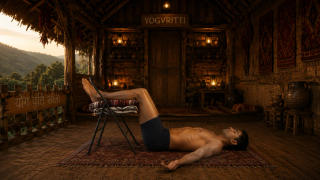
Chair Savasana · कुर्सी शवासन
Chair Savasana is a profoundly grounding and restorative practice, offering the deep solace of final relaxation without requiring one to lie down. This accessible posture gently releases tension across major muscle groups like the psoas and erector spinae, while subtly decompressing the entire spinal column.
Muscles
- Diaphragmstretches
- Psoasstretches
- Erector Spinaestretches
- Neck Musclesstretches
Joints
- Spinedecompressing
- Hip Jointsstabilises
- Shoulder Jointsstabilises
- Knee Jointsstabilises
Inside the body
- Lungs
- Heart
- Brain
- Digestive Organs
- Breathing
Mind
This pose offers a sanctuary from mental fatigue, gently guiding the mind away from external distractions and internal rumination.
Take care
Teachers should be mindful of students who tend to slump or whose heads fall uncomfortably backward, indicating insufficient support.
Ensure the practitioner's back is fully against the chair, and provide a blanket or small cushion behind the head if needed to maintain a neutral neck position. The goal is complete comfort and surrender, so adjust props meticulously for each individual.
Muscles
Diaphragm
StretchesDiaphragma
This primary dome-shaped muscle beneath your lungs finds freedom in Chair Savasana, gently descending with each inhalation and ascending with exhalation, unhindered by abdominal compression.
Read moreShow less
Its rhythmic movement massages the abdominal organs, promoting vagal nerve stimulation and encouraging the deep, diaphragmatic breathing essential for activating the parasympathetic nervous system.
This natural, unforced breath allows prana to flow more freely, soothing the entire system.
Psoas
StretchesIliopsoas
Often chronically shortened from prolonged sitting, the deep hip flexor muscles of the psoas are given an opportunity to release in this supported seated position.
Read moreShow less
With the hips gently flexed and the spine supported, the psoas can soften its grip, releasing tension that often contributes to lower back pain and a feeling of 'holding on'.
Yogically, releasing this muscle can free stagnant energy in the core, promoting a sense of ease and emotional release.
Erector Spinae
StretchesErector Spinae Group
These long, powerful muscles running alongside your spine are constantly working to maintain upright posture.
Read moreShow less
In Chair Savasana, with the back fully supported by the chair, they are finally given permission to completely let go of their habitual holding patterns.
This sustained release allows for a gentle lengthening and decompression of the vertebral column, inviting a profound sense of surrender and spinal freedom.
Neck Muscles
StretchesSternocleidomastoid, Trapezius
The muscles of the neck and shoulders, including the sternocleidomastoid and upper trapezius, are common repositories for stress and tension, often leading to headaches and stiffness.
Read moreShow less
With the head and neck gently supported by the chair or a blanket, these muscles can fully relax and lengthen without effort.
This release facilitates a clearer flow of prana to the head and sense organs, quieting the mind and alleviating mental fatigue.
Joints
Spine
DecompressingVertebral Column
The entire vertebral column, from the sacrum to the atlas, benefits from gentle decompression in this supported seated posture.
Read moreShow less
With the weight of the head and torso no longer actively borne by the spinal muscles, the intervertebral discs experience a subtle release of pressure.
This mechanical decompression allows for increased hydration and nutrient flow to the discs, promoting spinal health and a felt sense of lightness and ease.
Hip Joints
StabilisesCoxal Joints
In Chair Savasana, the hip joints are held in a neutral, gently flexed position, completely free from weight-bearing or active engagement.
Read moreShow less
This allows the deep rotator and flexor muscles surrounding the joint to relax and soften.
Practitioners often feel a deep release in the pelvis and groin, fostering a sense of groundedness and allowing the hips to let go of stored physical and energetic tension.
Shoulder Joints
StabilisesGlenohumeral Joints
The shoulder joints are passively rested with the arms supported, allowing the rotator cuff muscles and surrounding deltoids to completely disengage.
Read moreShow less
This absence of active holding permits the shoulders to drop away from the ears, releasing habitual tension patterns often held from stress or poor posture.
The resulting openness across the chest allows for uninhibited breath and a feeling of energetic expansion.
Knee Joints
StabilisesTibiofemoral Joints
The knee joints are gently flexed and fully supported by the chair, removing any weight-bearing stress or muscular engagement.
Read moreShow less
This neutral, relaxed position is deeply therapeutic, particularly for those with knee sensitivity or discomfort, as it encourages blood flow without strain.
The absence of tension allows for a subtle unwinding in the surrounding ligaments and tendons, contributing to a sense of overall physical ease.
Inside the body
Lungs
With the diaphragm unhindered and the chest gently open, the lungs are given ample space to expand fully with each inhalation and completely empty with each exhalation.
Read moreShow less
This unrestricted movement maximizes gas exchange, bringing fresh oxygen into the bloodstream and efficiently expelling carbon dioxide.
The enhanced respiratory capacity supports overall vitality and calms the nervous system through improved oxygenation.
Heart
As the body enters a state of deep relaxation, the heart rate naturally slows, and blood pressure gently lowers, reducing the overall workload on the cardiovascular system.
Read moreShow less
This respite allows the heart to function more efficiently, conserving energy and promoting long-term cardiovascular health.
From a yogic perspective, this quieting of the physical heart allows one to connect more deeply with the energetic heart center (Anahata Chakra), fostering compassion and inner peace.
Brain
The sustained stillness and inward focus of Chair Savasana reduce external sensory input, allowing the brain to shift from active processing (beta waves) towards more relaxed states (alpha and theta waves).
Read moreShow less
This reduction in cognitive activity offers a profound mental rest, alleviating mental fatigue and quieting the incessant chatter of the mind (chitta vritti).
The brain benefits from a gentle increase in blood flow during relaxation, promoting mental clarity and emotional regulation.
Digestive Organs
The activation of the parasympathetic nervous system during Chair Savasana directly supports optimal digestive function.
Read moreShow less
When the body is relaxed, energy is redirected towards 'rest and digest' processes, enhancing the secretion of digestive enzymes and promoting peristalsis.
This gentle internal massage from diaphragmatic breathing aids digestion and assimilation, while reducing the impact of stress-induced digestive issues.
Breathing
In Chair Savasana, the fully supported torso and relaxed abdominal muscles naturally invite a deeper, more expansive breath, particularly emphasizing the exhalation.
Read moreShow less
The absence of effort in maintaining posture allows the diaphragm to move with greater freedom, encouraging a full release of spent air and a gentle, unforced inhalation.
This rhythmic, unhurried breathing calms the nervous system and prepares the mind for quiet contemplation, making it an ideal prelude to natural breath awareness or subtle pranayama practices.
Fascia (connective tissue)
The interconnected web of connective tissue (fascia) that envelops every muscle, organ, and bone in your body receives a gentle, sustained release in Chair Savasana.
Read moreShow less
As the body is fully supported and relaxed, the superficial and deep fascial lines, particularly along the spine and hips, begin to soften and lengthen without active stretching.
This allows for the release of chronic tension patterns held within the fascial matrix, promoting greater fluidity and reducing feelings of stiffness.
Mind and nervous system
- Nervous system
The profound stillness and supported posture of Chair Savasana signal safety to the nervous system, immediately shifting it from a state of 'fight or flight' (sympathetic dominance) to 'rest and digest' (parasympathetic activation).
Read moreShow less
This transition is felt as a profound sense of calm washing over the body and mind, dissolving anxiety and tension.
The gentle regulation of breath further reinforces this shift, allowing the body to truly unwind.
Deep, unforced breathing in this posture gently stimulates the vagus nerve, a key component of the parasympathetic nervous system that connects the brain to many vital organs.
Read moreShow less
This stimulation lowers heart rate, reduces inflammation, and promotes overall physiological calm.
The practitioner experiences a palpable reduction in inner agitation, fostering emotional resilience and a greater capacity for presence.
By reducing external stimuli and encouraging introspection, Chair Savasana helps to quiet the constant stream of thoughts and sensory input that often overloads the central nervous system.
Read moreShow less
This conscious withdrawal, akin to pratyahara, allows the nervous system to reset and restore itself.
The result is a feeling of mental clarity and a peaceful inner landscape, preparing the mind for deeper states of meditation or restful sleep.
- Mind & mood
This pose offers a sanctuary from mental fatigue, gently guiding the mind away from external distractions and internal rumination.
Read moreShow less
The sustained stillness and support create an environment where the mind can release its grip on worries and tasks, allowing for a profound sense of mental refreshment.
Practitioners emerge feeling more alert, focused, and equipped to handle daily challenges with greater clarity.
Chair Savasana is a powerful antidote to anxiety and stress, as the physical posture directly influences the mental state.
Read moreShow less
By grounding the body and calming the breath, the mind naturally follows suit, reducing the physiological symptoms of stress like racing thoughts and restlessness.
This practice cultivates a deep sense of inner peace, empowering individuals to observe their thoughts without being consumed by them, fostering a greater sense of emotional regulation.
The deliberate act of surrendering into the support of the chair cultivates profound body awareness, drawing attention inwards and away from external concerns.
Read moreShow less
This heightened interoception allows practitioners to notice subtle sensations of release and ease throughout their body, deepening their connection to their physical self.
This process supports Dharana, the cultivation of focused attention, laying the groundwork for deeper meditative states.
Because it is a seated pose
Seated postures inherently connect us to the earth, and Chair Savasana amplifies this by providing full support, allowing the body to release its effort to hold itself upright.
Read moreShow less
This deep physical connection helps to anchor the mind, reducing feelings of scatteredness or anxiety and fostering a profound sense of stability and security.
Energetically, it encourages the downward flow of apana vayu, bringing a sense of rootedness and calm.
This fully supported seated position is deeply restorative, allowing the entire body to completely surrender and conserve vital energy.
Read moreShow less
Unlike active poses, its purpose is to facilitate deep relaxation and cellular repair, offering a profound sense of rest without the need to lie down.
This conservation of prana helps to rejuvenate the nervous system and replenish mental and physical reserves, promoting overall well-being.
The use of a chair makes this classical relaxation pose remarkably accessible to a wide range of practitioners, including seniors, those with mobility limitations, or individuals who find lying flat uncomfortable.
Read moreShow less
It provides invaluable support for the spine, hips, and head, ensuring proper alignment and comfort for everyone to experience the profound benefits of Savasana.
This inclusivity ensures that deep relaxation is available to all, regardless of physical condition.