Benefits· लाभ
What Moon Salutation does for you
Chandra Namaskar · चन्द्र नमस्कार
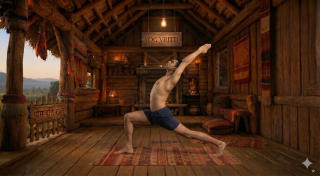
Chandra Namaskar is a beautifully flowing sequence that harmonizes the entire physical and energetic body, acting as a soothing counterpoint to the sun's intensity. It systematically lengthens the lateral lines of the body, opens the deep hip flexors and adductors, and gently strengthens the core obliques, all while promoting spinal mobility.
Muscles
- Side body musclesstretches
- Inner thigh musclesstretches
- Front thigh musclesstrengthens
- Back thigh musclesstretches
- Spinal musclesstabilises
Joints
- Spinemobilises
- Hipsmobilises
- Shouldersmobilises
- Kneesstabilises
Inside the body
- Lungs (Respiratory System)
- Kidneys and Adrenal Glands (Endocrine System)
- Digestive Organs (Gastrointestinal System)
- Breathing
Mind
The deliberate, flowing pace and the emphasis on the side body and hips in Chandra Namaskar invite a deep sense of introspection and release.
Take care
Teachers should guide students to move with acute awareness, especially in the hips, knees, and lower back.
It's crucial to ensure students do not force stretches in the inner thighs or compromise knee stability in wide-legged stances. Encourage listening deeply to the body's signals, moving only to a comfortable, respectful edge, particularly if there are pre-existing knee, hip, or lower back sensitivities, to prevent strain and foster healing.
Muscles
Side body muscles
StretchesStrengthensInternal and External Obliques, Quadratus Lumborum, Intercostals
These muscles run along the sides of your trunk, from your ribs to your pelvis, and between your ribs.
Read moreShow less
In Chandra Namaskar’s lateral bends, the muscles on the lengthening side receive a sustained stretch, while those on the opposite side engage to support the movement.
This action creates space between the ribs and along the spine, enhancing the breath and releasing deep-seated tension often held from daily postural habits.
The practitioner feels an expansive opening, allowing prana to flow more freely through the side channels of the body.
Inner thigh muscles
StretchesStabilisesHip Adductors (Adductor Longus, Magnus, Brevis, Gracilis, Pectineus)
The muscles on the inside of your thighs are actively lengthened in the wide-legged stances and lunges within the Moon Salutation sequence.
Read moreShow less
This sustained stretch works to release chronic tightness in these muscles, which can become shortened from prolonged sitting or athletic activities.
The release in the adductors improves mobility at the hip joint and in the pelvic floor, fostering a sense of openness and fluidity in the lower body.
Energetically, this helps to release stagnation in the root and sacral chakras, promoting a feeling of groundedness and emotional ease.
Front thigh muscles
StrengthensStabilisesQuadriceps (Rectus Femoris, Vastus Lateralis, Medialis, Intermedius)
The quadriceps muscles on the front of your thighs are engaged throughout the standing postures, particularly in the lunges (Anjaneyasana) and wide squats (Utkata Konasana).
Read moreShow less
They work eccentrically to control the descent into these deeper bends and concentrically to lift back to standing, building strength and stability in the legs.
This engagement creates a powerful foundation, rooting the practitioner firmly to the earth and cultivating a sense of steadfastness and inner strength, vital for both physical balance and mental composure.
Back thigh muscles
StretchesHamstrings (Biceps Femoris, Semitendinosus, Semimembranosus)
In the gentle forward folds that punctuate Chandra Namaskar, the long muscles running along the back of your thighs receive a deep, sustained lengthening.
Read moreShow less
This action helps to release chronic tightness in the hamstrings, which often contributes to lower back pain and restricts hip mobility.
As these muscles gradually unwind, the nervous system allows for a deeper release, both physically and energetically.
This release of tension in the posterior chain promotes a sense of surrender and ease, allowing apana vayu—the downward-moving energy—to flow freely, enhancing groundedness.
Spinal muscles
StabilisesStrengthensStretchesErector Spinae, Multifidus
These deep muscles run along the length of your spine, supporting its natural curves and enabling movement.
Read moreShow less
In Chandra Namaskar, they work subtly to stabilize the spine during lateral bends and gentle backbends, maintaining length and integrity.
This constant, mindful engagement strengthens the postural muscles, improving spinal health and creating an energetic lift through the central axis.
The practitioner experiences a greater sense of uprightness and spaciousness, allowing the subtle energy of the sushumna nadi to flow unimpeded.
Joints
Spine
MobilisesDecompressingThe vertebral column, a stack of individual bones, is rhythmically mobilized through all planes of movement in Chandra Namaskar: flexion (forward folds), extension (gentle backbends), and especially lateral flexion (side bends).
Read moreShow less
This multi-directional movement gently lubricates the intervertebral discs and creates space between the vertebrae, decompressing the spinal column.
The practitioner experiences a profound release of stiffness and an increase in spinal fluidity, allowing the central energetic channel (sushumna) to become more unobstructed and vibrant.
Hips
MobilisesThe ball-and-socket joints of the hips are key areas of movement and release in Chandra Namaskar, particularly in wide-legged stances and lunges.
Read moreShow less
The sequence encourages abduction (spreading legs apart), external rotation (turning thighs out), and flexion (bending forward at the hips).
This comprehensive mobilization helps to release deep-seated tension in the hip capsule and surrounding musculature, improving range of motion.
Yogically, the hips are often considered a repository for emotional stress, so opening them can lead to a significant release of stored feelings and a greater sense of freedom in the lower body.
Shoulders
MobilisesStabilisesThe glenohumeral joints of the shoulders are mobilized through various arm movements, particularly when reaching overhead and to the sides.
Read moreShow less
The arm movements are coordinated with the breath, creating a gentle yet expansive opening across the chest and upper back.
This sustained movement helps to release tension often held in the shoulder girdle and neck, improving posture and creating space for fuller breathing.
The practitioner feels a sense of lightness and freedom in the upper body, fostering an open heart and a more expansive energetic field.
Knees
StabilisesThe hinge joints of the knees bear significant weight and undergo flexion and extension throughout the standing sequence.
Read moreShow less
In poses like Anjaneyasana and Utkata Konasana, the quadriceps and hamstrings work synergistically to stabilize the knee, preventing excessive strain.
Mindful alignment and engagement around the knees strengthens the surrounding musculature and improves proprioception, building a stable foundation.
This cultivates a sense of grounded resilience, teaching the practitioner to find both strength and ease in their lower body support.
Inside the body
Lungs (Respiratory System)
The flowing movements and lateral bends in Chandra Namaskar create significant expansion and gentle compression within the thoracic cavity.
Read moreShow less
This action directly massages the lungs and stimulates the intercostal muscles, which are crucial for rib cage expansion during breathing.
The rhythmic movement fosters deeper, more complete breaths, enhancing oxygen intake and promoting efficient carbon dioxide release.
This vital exchange calms the nervous system, purifies the energetic channels, and leaves the practitioner feeling refreshed and clear-headed.
Kidneys and Adrenal Glands (Endocrine System)
Located in the lower back, the kidneys are vital for filtration and fluid balance, while the adrenal glands manage stress response.
Read moreShow less
Chandra Namaskar's gentle lateral bends and subtle twists provide a mild, rhythmic compression and release to the lower back region, encouraging healthy circulation to these organs.
This gentle massage can help to regulate adrenal function, mitigating the effects of chronic stress and fostering a sense of energetic balance and calm throughout the body.
The practitioner may feel a subtle sense of internal soothing and energetic support.
Digestive Organs (Gastrointestinal System)
The gentle twists and lateral bends within the Moon Salutation sequence provide a mild compression and decompression to the abdominal organs, including the stomach, liver, spleen, and intestines.
Read moreShow less
This subtle internal massage stimulates peristalsis, promoting healthy digestion and detoxification.
By encouraging the flow of blood and lymph, the practice helps to regulate apana vayu, the downward-moving energy responsible for elimination.
The practitioner often experiences a feeling of lightness and internal cleansing, contributing to overall well-being.
Breathing
The flowing, rhythmic nature of Chandra Namaskar naturally encourages a deep, even breath, which is artfully coordinated with each movement – typically inhaling for expansive actions and exhaling for releasing actions.
Read moreShow less
The lateral bends are particularly effective in creating more space for the intercostal muscles to work, enhancing lung capacity and allowing for fuller, more expansive breaths into the side body.
This mindful breathing, akin to a gentle Ujjayi pranayama, calms the nervous system, deepens concentration, and helps to draw the practitioner inward, cultivating a meditative state that is profoundly soothing.
Fascia (connective tissue)
The body is encased in a continuous, intricate web of connective tissue called fascia, which wraps and organizes every muscle, organ, and bone into functional lines.
Read moreShow less
In Chandra Namaskar, the entire superficial back line and the lateral lines of the fascial system are gently but thoroughly stretched and released, especially during the flowing forward folds and expansive side bends.
This systematic unwinding helps to release habitual patterns of tension and stiffness held within this intricate web, improving overall flexibility, enhancing fluid movement, and allowing prana to flow unimpeded through the body's subtle energetic channels.
Mind and nervous system
- Nervous system
The slow, deliberate pace and emphasis on elongation and release in Chandra Namaskar naturally encourage a longer, smoother exhalation, which directly stimulates the vagus nerve.
Read moreShow less
This activation shifts the autonomic nervous system towards the 'rest and digest' (parasympathetic) state, counteracting the effects of daily stress and anxiety.
Practitioners feel a profound sense of calm washing over them, as the agitated mind (chitta vritti) begins to settle and quiet.
Moving through the sequence with mindful attention to alignment and the subtle sensations within the body heightens proprioception – the body's sense of its position in space.
Read moreShow less
This focused internal awareness draws attention away from external distractions and worries, anchoring the mind firmly in the present moment.
This cultivation of dharana (concentration) reduces anxiety by bringing the practitioner into their physical reality, fostering a deep sense of presence.
As a cooling and introspective practice, Chandra Namaskar effectively balances the heating and activating energies (pingala nadi) often overstimulated by modern life and more dynamic practices.
Read moreShow less
By cultivating a lunar, receptive energy (ida nadi), it helps to regulate prana, fostering energetic equilibrium.
This balance supports the body's natural rhythms, facilitating deep relaxation and preparing the mind and body for restful, restorative sleep.
- Mind & mood
The deliberate, flowing pace and the emphasis on the side body and hips in Chandra Namaskar invite a deep sense of introspection and release.
Read moreShow less
This physical unwinding directly correlates with a mental quieting, as the mind, often agitated by external stimuli, is drawn inward and allowed to settle.
The practitioner experiences a profound sense of peace, allowing the mental landscape to soften, anxieties to dissipate, and a sense of inner spaciousness to emerge.
Many lateral bends and hip-opening elements in the sequence target areas where emotional tension is often stored, particularly in the deep connective tissues.
Read moreShow less
As these physical spaces open and lengthen, practitioners may find a gentle, often subtle, release of stored emotions, creating a feeling of lightness and freedom.
This process supports emotional regulation and fosters a greater capacity for self-compassion, allowing for a healthy processing of feelings.
Moving through the Moon Salutation with conscious breath and precise awareness of alignment encourages pratyahara, the withdrawal of the senses from external distractions.
Read moreShow less
By focusing internally on the subtle shifts and sensations within the body, the mind becomes absorbed in the present moment, rather than being pulled by external stimuli.
This practice trains the mind to be less reactive and more attuned to inner wisdom, cultivating a stable and peaceful mental state that can be carried off the mat.
Because it is a lateral bend | hip opener | standing | gentle backbend | forward bend pose
Lateral bends in Chandra Namaskar stretch the entire side of the body, from the outer ankle up through the armpit and fingertips.
Read moreShow less
This action lengthens the intercostal muscles between the ribs and the deep fascial lines along the sides of the torso, creating vital space in the trunk.
Energetically, it opens the nadis (subtle energy channels) along the sides of the body, allowing prana to flow more freely, especially through the ida and pingala channels, promoting balance and fluidity in the energetic system.
The sequence incorporates various hip-opening actions, including abduction and external rotation, particularly in poses like Utkata Konasana (Goddess Pose) and Anjaneyasana (Low Lunge).
Read moreShow less
This targets the deep hip flexors and adductors, releasing chronic tension often held in the pelvic region.
From a yogic perspective, the hips are considered a storage house for emotions and stress, so opening them can facilitate emotional release and cultivate a sense of grounded freedom and energetic ease.
Standing poses firmly root the body through the feet, engaging the entire leg musculature and establishing a strong connection to the earth.
Read moreShow less
This physical grounding action strengthens the bones and joints of the lower body, building stability, balance, and proprioceptive awareness.
Energetically, standing postures activate the muladhara chakra, fostering a profound sense of security, stability, and presence, which is invaluable for quieting an anxious mind and cultivating inner resolve.
Chandra Namaskar includes subtle backbends, often integrated into arm raises or lunges, which gently extend the thoracic and lumbar spine.
Read moreShow less
This action counteracts the effects of prolonged sitting and forward slouching, improving posture and creating expansive space in the chest cavity.
Yogically, these gentle extensions are understood to open the anahata (heart) chakra, cultivating qualities of courage, compassion, and an expansive sense of well-being, fostering a feeling of openness and vulnerability.
Forward folds in the sequence, even partial ones, lengthen the entire posterior chain of the body, from the hamstrings up through the spine.
Read moreShow less
This action releases tension in the lower back and calms the nervous system by bringing the head below the heart, shifting blood flow.
Energetically, forward bends encourage introspection and surrender, allowing the practitioner to release external concerns and turn their awareness inward, fostering a sense of peace, humility, and mental quietude.