Benefits· लाभ
What Lotus Pose does for you
Padmasana · पद्मासन
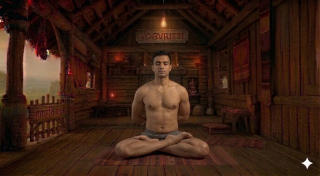
Padmasana, or Lotus Pose, is a profound seated posture that anchors the body through the sit bones while elevating the spine with quiet dignity. It masterfully coaxes a deep release in the often-tight deep hip rotators and inner thigh adductors, while simultaneously stabilizing the ankles and cultivating an unwavering core.
Muscles
- Deep Hip Rotatorsstretches
- Adductorsstretches
- Erector Spinaestrengthens
- Gluteal Musclesstabilises
Joints
- Hipsmobilises
- Kneesmobilises
- Anklesstabilises
- Sacroiliac Jointstabilises
Inside the body
- Pelvic and Abdominal Organs
- Lungs and Diaphragm
- Breathing
Mind
The inherent stillness and symmetry of Padmasana naturally draw the mind inward, making it an exceptional posture for cultivating mindfulness and concentration (dharana).
Take care
Practitioners must approach Padmasana with utmost care, especially concerning the knees and ankles.
Any pre-existing knee instability, meniscus tears, or ligamentous laxity can be exacerbated by forcing the pose, as the knee is vulnerable to twisting forces. Similarly, tight ankles or previous sprains can cause strain, so it's crucial to ensure the external rotation comes from the hip joints and not by torqueing the knees or ankles. Always listen to the body and never push past discomfort, using props like blankets under the knees or hips to support the joints.
Muscles
Deep Hip Rotators
StretchesPiriformis, Gemelli, Obturators, Quadratus Femoris
These small, powerful muscles deeply embedded around your hip joint (piriformis, gemelli, obturators, quadratus femoris) are gently, yet profoundly, lengthened in Padmasana.
Read moreShow less
As the thighs externally rotate and the knees drop towards the floor, these muscles release tension often held from prolonged sitting or athletic activity.
This deep release not only improves hip mobility but also frees up the sciatic nerve, which can be impinged by a tight piriformis.
Energetically, this unwinding helps to clear blockages in the root chakra, fostering a greater sense of stability and connection to the earth.
Adductors
StretchesAdductor longus, brevis, magnus, gracilis, pectineus
The powerful group of muscles along your inner thighs (adductor longus, brevis, magnus, gracilis, pectineus) receive a sustained stretch as the knees draw down towards the floor.
Read moreShow less
This lengthening is crucial for creating the external rotation and abduction necessary for the crossed-leg position, allowing the hips to open more fully.
From a yogic perspective, releasing tension in these inner groin muscles helps to open the energy channels (nadis) in the pelvic bowl, allowing for a freer flow of apana vayu and a deeper sense of grounding.
Over time, this practice cultivates greater flexibility in the entire pelvic region, enhancing comfort in seated meditation.
Erector Spinae
StrengthensSpinalis, Longissimus, Iliocostalis
To maintain the dignified, upright posture of Padmasana, the long muscles running parallel to your spine (erector spinae group) are subtly activated and engaged.
Read moreShow less
This gentle isometric contraction helps to lift and lengthen the spinal column, counteracting the natural tendency to slump, especially during longer holds.
This activation not only strengthens the core support for the spine but also encourages a sense of alertness and inner lift, allowing prana to flow freely upwards towards the crown.
The stability in the trunk provides a firm base for the breath to deepen and the mind to quiet.
Gluteal Muscles
StabilisesGluteus Medius, Minimus
While the Gluteus Maximus is largely relaxed, the smaller gluteal muscles (Gluteus Medius and Minimus) play a key role in stabilizing the pelvis and assisting the deep external rotators in Padmasana.
Read moreShow less
Their subtle engagement ensures that the external rotation comes from the hip joint itself, rather than forcing the knee.
This refined muscular awareness helps protect the knee and encourages a balanced opening in the hip.
Yogically, a stable pelvis is foundational for channeling energy upwards, creating a sense of inner containment and strength.
Joints
Hips
MobilisesThe hip joints (acetabulofemoral joints) are deeply mobilized into external rotation and abduction in Padmasana, requiring a significant degree of flexibility.
Read moreShow less
This sustained positioning encourages the synovial fluid to nourish the joint cartilage, improving range of motion and reducing stiffness over time.
From a therapeutic standpoint, enhancing hip mobility can alleviate compensatory strain on the lower back and knees.
The openness in the hips also symbolically and energetically represents a release of emotional holding, fostering a sense of freedom and ease in the lower body.
Knees
MobilisesThe knees (tibiofemoral joints) are placed in a position of deep flexion and some degree of internal rotation of the lower leg relative to the thigh in Padmasana, which can be vulnerable if not approached with care.
Read moreShow less
This deep bend, when supported by adequate hip external rotation, gently encourages flexibility in the knee's soft tissues.
However, it's paramount that the external rotation comes from the hip, not forced into the knee, to prevent strain on the medial collateral ligament and meniscus.
The mindful engagement here teaches the practitioner to differentiate hip movement from knee strain, cultivating a refined body awareness essential for advanced practice.
Ankles
StabilisesIn Padmasana, the ankles (talocrural and subtalar joints) are held in deep plantarflexion and inversion, requiring both flexibility and stability.
Read moreShow less
This position gently stretches the anterior ankle ligaments and muscles while strengthening the stabilizing muscles around the ankle joint, particularly the everters.
The sustained hold helps to improve proprioception in the feet and ankles, enhancing balance and groundedness in everyday life.
Energetically, stable ankles provide a strong foundation, allowing the energy to rise freely through the central channel without being pulled downwards by instability.
Sacroiliac Joint
StabilisesThe Sacroiliac (SI) joint, where the sacrum meets the pelvis, gains significant stability in Padmasana due to the grounded base and the symmetrical positioning of the legs.
Read moreShow less
The even distribution of weight through the sit bones and the upward lift of the spine help to create a stable foundation for the entire trunk.
This stability can be therapeutic for those with minor SI joint imbalances, reducing undue torsion and promoting a sense of integration within the pelvis.
Energetically, a stable SI joint supports the integrity of the root chakra, enhancing feelings of security and groundedness.
Inside the body
Pelvic and Abdominal Organs
The gentle compression and lift in the pelvic and lower abdominal region in Padmasana subtly stimulates the organs housed there, including the reproductive, digestive, and excretory systems.
Read moreShow less
This mild internal massage encourages better circulation to these areas, promoting their healthy function and aiding in detoxification processes.
From a yogic perspective, this posture helps to consolidate and draw apana vayu upwards, preventing its dissipation and supporting the energetic integrity of the lower chakras.
The stable, upright seat allows for a sense of inner containment and strength.
Lungs and Diaphragm
With the spine erect and the chest naturally open in Padmasana, the lungs have ample space to expand fully, allowing for deeper and more complete diaphragmatic breathing.
Read moreShow less
The diaphragm, your primary breathing muscle, can descend freely, drawing air into the lower lobes of the lungs and promoting optimal gas exchange.
This unimpeded breath not only oxygenates the blood more efficiently but also calms the nervous system, inviting a profound sense of ease and stillness, making it an ideal posture for pranayama and meditation practices.
Breathing
The tall, stable spine and open chest cultivated in Padmasana naturally invite a deeper, more refined breath, promoting full diaphragmatic engagement.
Read moreShow less
The grounded seat allows for a steady, rhythmic breath, with a natural lengthening of both inhalation and exhalation.
This posture is ideal for practicing Nadi Shodhana or Ujjayi pranayama, as the physical stillness supports mental focus on the breath, harmonizing the energetic currents and calming the nervous system deeply.
Fascia (connective tissue)
Padmasana deeply influences the fascial network, particularly releasing the connective tissue around the hips, inner thighs, and ankles.
Read moreShow less
The sustained external rotation and flexion unwind restrictions in the deep fascia of the pelvic floor and adductor compartment, which often hold chronic tension.
This release helps to restore elasticity and hydration to the fascial lines, improving overall body mobility and promoting a freer flow of energy (prana) throughout the entire lower body and pelvis.
Mind and nervous system
- Nervous system
The inherent stability and groundedness of Padmasana, combined with a naturally lengthened spine and unhindered breath, powerfully activates the parasympathetic nervous system (PNS).
Read moreShow less
This shift from 'fight or flight' to 'rest and digest' allows the body to deeply relax, reducing heart rate and blood pressure, and promoting systemic healing.
The quiet stillness cultivated in the pose encourages the nervous system to unwind deeply, releasing chronic tension and fostering a profound sense of inner peace and equilibrium.
The deep, rhythmic diaphragmatic breathing naturally encouraged by the upright, stable seat in Padmasana directly stimulates the vagus nerve, a key component of the parasympathetic nervous system.
Read moreShow less
This stimulation helps to regulate mood, reduce inflammation, and improve resilience to stress, creating a profound sense of calm.
By consciously lengthening the exhalation in this posture, practitioners can further enhance vagal tone, leading to a more settled mind and body, and a greater capacity for sustained focus.
Holding Padmasana with mindful awareness significantly refines proprioception, your body's sense of its position in space without looking.
Read moreShow less
The precise alignment of the hips, knees, and ankles, along with the upright spine, requires a heightened internal awareness of subtle bodily cues.
This improved proprioceptive feedback enhances body intelligence, allowing for more efficient movement patterns and a deeper connection to the physical self.
From a yogic perspective, this refined awareness helps to bridge the gap between the physical body (annamaya kosha) and the energetic body (pranamaya kosha).
- Mind & mood
The inherent stillness and symmetry of Padmasana naturally draw the mind inward, making it an exceptional posture for cultivating mindfulness and concentration (dharana).
Read moreShow less
With the body stably anchored and the spine effortlessly tall, the external distractions diminish, creating an ideal environment for sustained focus.
This practice strengthens the mental faculties, allowing the practitioner to observe thoughts without attachment, leading to greater clarity and presence in daily life.
Padmasana is a master posture for quieting the fluctuations of the mind (chitta vritti nirodha), fostering a deep sense of inner calm.
Read moreShow less
The physical stability of the pose directly translates to mental stability, as the grounded base and upright spine create a feeling of unshakeable presence.
As the body settles, the mind naturally follows, releasing anxiety and promoting a state of profound tranquility, preparing the practitioner for deeper states of meditation.
Padmasana is revered as the quintessential posture for meditation, as its stable and symmetrical form creates an optimal container for inner exploration.
Read moreShow less
The physical stillness achieved in the pose minimizes distractions from the body, allowing the mind to turn inward with greater ease and sustain focus for extended periods.
This readiness for meditation cultivates profound insight and self-awareness, making it an invaluable tool for spiritual growth and mental clarity.
Because it is a hip opener pose
As a profound hip opener, Padmasana works deeply into the complex architecture of the pelvic girdle, encouraging external rotation and abduction of the thigh bones within the hip sockets.
Read moreShow less
This action releases long-held tension in the deep hip flexors and rotators, improving overall hip mobility and functionality.
Energetically, opening the hips is understood to release stored emotions and energetic blockages, particularly those related to security and survival, cultivating a sense of freedom and emotional release.
The seated nature of Padmasana inherently fosters a deep sense of grounding and stability, connecting the practitioner firmly to the earth through the sit bones.
Read moreShow less
This stable base allows the spine to rise effortlessly, creating a harmonious balance between earth and sky, stillness and lift.
From a yogic perspective, a well-grounded seated posture consolidates apana vayu, providing a firm foundation for the upward flow of prana and supporting a centered, meditative state.