Benefits· लाभ
What Side Crow Pose does for you
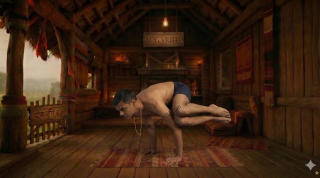
Parsva Bakasana · पार्श्व बकासन
Parsva Bakasana, or Side Crane Pose, is an advanced twisted arm balance that demands and cultivates integrated strength, profound focus, and refined body control. It meticulously sculpts the core, particularly the oblique muscles, while calling upon the shoulders and wrists to act as resilient weight-bearing pillars.
Muscles
- Rectus Abdominisstrengthens
- External and Internal Obliquesstrengthens
- Transversus Abdominisstabilises
- Deltoidsstrengthens
- Triceps Brachiistrengthens
Joints
- Shoulder Jointstabilises
- Elbow Jointstabilises
- Wrist Jointstabilises
- Spinemobilises
- Hip Jointmobilises
Inside the body
- Abdominal Organs (Digestive System)
- Kidneys
- Breathing
Mind
Parsva Bakasana demands unwavering focus and one-pointed attention (Dharana) to maintain balance and coordinate the complex actions of the body.
Take care
Teachers, please guide students to approach Parsva Bakasana with utmost care, especially concerning the wrists.
Encourage them to spread fingers wide, press firmly through the base of the fingers and knuckles, and distribute weight evenly to protect these delicate joints; any sharp pain warrants immediate release. Be vigilant for collapsing shoulders; ensure active engagement to lift away from the floor, as integrity of the shoulder joint is paramount. Also, emphasize that the twist should originate from the thoracic spine, not the neck, to protect the cervical vertebrae from strain.
Muscles
Rectus Abdominis
StrengthensRectus Abdominis
These prominent 'six-pack' muscles, running vertically along the front of your abdomen, contract forcefully to maintain the necessary spinal flexion.
Read moreShow less
This action pulls the rib cage towards the pelvis, creating a stable, compact foundation for the entire pose.
Yogically, this engagement ignites Agni, our inner digestive fire, and strengthens the Manipura Chakra, fostering willpower and a deep sense of core power.
External and Internal Obliques
StrengthensObliquus externus abdominis, Obliquus internus abdominis
The oblique muscles, located along the sides of your abdomen, are paramount in Parsva Bakasana, contracting intensely on the side of the twist to rotate the torso and lift the legs.
Read moreShow less
They work in a sophisticated synergy, with the internal oblique on one side and the external oblique on the opposite side driving the rotation.
This deep engagement 'wrings out' accumulated tension and stagnation from the lateral body, awakening vitality and promoting detoxification.
Transversus Abdominis
StabilisesTransversus Abdominis
This deepest abdominal muscle, acting like a natural corset, draws the navel towards the spine, creating essential intra-abdominal pressure.
Read moreShow less
It provides foundational stability for the entire core, allowing the more superficial muscles to perform the twisting and lifting actions without compromising the lumbar spine.
Its subtle yet profound activation supports the upward flow of Udana Vayu, providing a sense of lightness and inner lift from the body's center.
Deltoids
StrengthensDeltoideus
The deltoid muscles, forming the rounded cap of your shoulders, work powerfully to stabilize the glenohumeral joint and bear the body's weight.
Read moreShow less
They prevent collapse in the shoulder girdle, maintaining the integrity of the shoulder as the arms support the entire structure from the ground.
This active engagement builds resilience and intelligent openness in the shoulders, metaphorically allowing one to carry life's challenges with greater ease and stability.
Triceps Brachii
StrengthensTriceps Brachii
The triceps, located at the back of your upper arms, are crucial for extending the elbows and maintaining the straightness of the arms against the downward force of gravity.
Read moreShow less
They work concentrically to lift and eccentrically to control the descent, ensuring a stable, unwavering platform for the pose.
This strength in the arms translates to a feeling of self-reliance and the capacity to support oneself, both physically and energetically, through focused effort.
Wrist Flexors
Strengthense.g., Flexor Carpi Radialis, Flexor Carpi Ulnaris
The muscles on the palm side of your forearms, the wrist flexors, are actively engaged to maintain the integrity of the wrist joint and prevent hyperextension under significant weight-bearing.
Read moreShow less
They work to grip the floor, distributing pressure evenly across the palm and fingers to create a secure foundation.
This strong, stable connection to the earth channels a grounded energy throughout the pose, fostering a sense of rootedness and control.
Gluteus Medius & Minimus
StabilisesGluteus Medius, Gluteus Minimus
While not primary movers, these muscles on the sides of your hips work subtly but importantly to stabilize the pelvis and hips.
Read moreShow less
They prevent unwanted lateral tilt or rotation as the legs lift and the body twists, contributing to the overall integration of the lower body with the engaged core.
This subtle yet profound engagement fosters pelvic stability, allowing the practitioner to feel more integrated and centered in their lower extremities and throughout the entire posture.
Joints
Shoulder Joint (Glenohumeral Joint)
StabilisesThe shoulder joint experiences significant compression and requires active stabilization from the surrounding rotator cuff muscles and the deltoids to prevent collapse.
Read moreShow less
The head of the humerus is pressed firmly into the glenoid fossa, maintaining its integrity under load.
This mindful stabilization strengthens the entire shoulder girdle, fostering resilience and preventing injury, while energetically opening the channels (pranamaya kosha) through the upper limbs.
Elbow Joint (Humeroulnar & Humeroradial Joints)
StabilisesThe elbow joints are deeply flexed and bear substantial body weight, necessitating strong co-contraction of the biceps and triceps to maintain a stable angle.
Read moreShow less
The olecranon process of the ulna articulates with the humerus, forming a strong hinge that supports the structure.
This controlled flexion and stabilization build profound strength in the surrounding tissues, cultivating a sense of steadfastness and grounded support through the arms, translating to mental fortitude.
Wrist Joint (Radiocarpal Joint)
StabilisesThe wrist joint is in hyperextension and bears the entire body weight, demanding robust engagement of the intrinsic hand muscles and forearm flexors.
Read moreShow less
The carpals articulate with the radius and ulna, distributing the load across the hand and fingers to create a broad base.
This intense yet controlled weight-bearing strengthens the entire wrist complex, enhancing grip strength and developing a profound, conscious connection to the earth through the palms.
Spine (Vertebral Column)
MobilisesThe thoracic and lumbar spine undergo a deep rotational movement, with the individual vertebrae twisting around their central axis.
Read moreShow less
This spiraling action gently mobilizes the intervertebral discs and surrounding ligaments, improving spinal flexibility and circulation within the spinal column.
This profound twist invigorates the central nervous system, releasing stagnant energy (apana vayu) and promoting a feeling of lightness and purification throughout the torso.
Hip Joint (Acetabulofemoral Joint)
MobilisesThe hip joints are deeply flexed and slightly adducted as the knees draw towards the chest and press firmly into the triceps.
Read moreShow less
The head of the femur sits deeply within the acetabulum, providing essential stability in this closed-chain position.
This intense flexion strengthens the hip flexors and deepens the range of motion, releasing tension in the groin and promoting a sense of freedom and openness in the pelvic region, where much emotional tension can be stored.
Inside the body
Abdominal Organs (Digestive System)
The deep twist and compression from the legs against the torso gently massage the abdominal organs, including the stomach, liver, spleen, and intestines.
Read moreShow less
This 'wringing out' action stimulates blood flow upon release, aiding in detoxification and improving overall digestive function.
From a yogic perspective, this ignites Agni, the digestive fire, supporting the elimination of ama (toxins) and enhancing overall vitality and clarity of mind.
Kidneys
The kidneys, situated in the posterior abdomen, receive a gentle but sustained compression during the twist, particularly on the side where the legs press into the arm.
Read moreShow less
This mild pressure, followed by release, encourages fresh blood flow to these vital organs, supporting their filtration and detoxification processes.
Energetically, this can stimulate the water element, bringing a sense of balance and calm to the body's fluid systems and regulating energy levels.
Breathing
The intense muscular engagement and deep spinal twist in Parsva Bakasana naturally restrict the full, expansive movement of the diaphragm and rib cage, making conscious, controlled breathing paramount.
Read moreShow less
Ujjayi breath (Victorious Breath) is invaluable here, creating a soft, audible constriction in the throat that calms the nervous system and provides a steady, rhythmic cadence to the practice.
This controlled breathing ensures a continuous supply of oxygen to the working muscles and, more importantly, anchors the mind in the present moment, transforming struggle into sustained, mindful effort and deepening the meditative aspect of the pose.
Fascia (connective tissue)
The deep twist in Parsva Bakasana particularly engages and lengthens the fascial spiral lines that run diagonally across the torso, while simultaneously strengthening the deep front line as it works to stabilize the core.
Read moreShow less
This intricate interplay helps to release myofascial restrictions that can accumulate from habitual postures and repetitive movements, often holding physical and emotional tension.
By consciously working these interconnected fascial lines, we encourage the free flow of prana, releasing held patterns and promoting greater fluidity and energetic openness throughout the entire body.
Mind and nervous system
- Nervous system
Parsva Bakasana, while physically demanding, requires immense mental focus and controlled breathing, which helps to balance the autonomic nervous system.
Read moreShow less
The initial effort might trigger a sympathetic (fight-or-flight) response, but sustained, mindful breathing and deep concentration gradually shift the balance towards the parasympathetic (rest-and-digest) system.
This dynamic interplay cultivates a sense of calm strength, allowing the practitioner to remain poised and centered amidst intense physical challenge.
The intricate balance and precise placement of the body parts in Parsva Bakasana demand heightened proprioceptive awareness — the body's sense of its position in space.
Read moreShow less
The proprioceptors in the joints and muscles send constant, detailed feedback to the brain, refining motor control and enhancing body mapping.
This deep sensory engagement fosters a profound connection to the physical self, anchoring the mind in the present moment and sharpening inner awareness, which is a key aspect of Pratyahara.
The act of balancing on the hands while twisted and inverted fundamentally challenges the vestibular system in the inner ear, which is responsible for spatial orientation and balance.
Read moreShow less
As the body learns to adapt to this new and complex orientation, the vestibular system becomes more refined and efficient, improving overall coordination and equilibrium.
This leads to a greater sense of steadiness and composure, allowing one to navigate life's unexpected twists with increased grace and mental stability.
- Mind & mood
Parsva Bakasana demands unwavering focus and one-pointed attention (Dharana) to maintain balance and coordinate the complex actions of the body.
Read moreShow less
The mind must be entirely present, free from external distractions, to execute and sustain the pose with integrity.
This intense concentration cultivates mental discipline, sharpening the intellect and training the mind to remain steady and unwavering, a vital skill for deeper meditation practices.
The intricate demands of this arm balance naturally draw the senses inward, away from external stimuli, fostering a natural state of Pratyahara (withdrawal of the senses).
Read moreShow less
As the practitioner becomes fully engrossed in the internal experience of the pose – the breath, the muscular engagement, the subtle shifts in balance – external chatter fades into the background.
This practice of sensory withdrawal quiets the fluctuations of the mind (chitta vritti), cultivating a profound state of introspection and inner calm.
Successfully achieving and holding Parsva Bakasana, an advanced and challenging posture, instills a profound sense of accomplishment and self-belief.
Read moreShow less
Overcoming the perceived difficulty builds significant mental resilience and reinforces the understanding that with dedication and consistent effort, seemingly impossible feats can be achieved.
This translates into greater confidence, courage, and self-efficacy, inspiring practitioners to face challenges both on and off the mat with renewed determination.
Because it is a twist pose
The deep spinal rotation in Parsva Bakasana creates a unique 'wringing out' action on the internal organs, particularly those within the abdominal cavity.
Read moreShow less
This compression and subsequent release stimulate circulation, flushing stagnant blood and encouraging a fresh, oxygenated supply to these vital areas.
Yogically, twists are revered for their purifying qualities, believed to release energetic blockages (granthis) and promote the healthy, unobstructed flow of prana throughout the subtle energy channels (nadis).
Balancing poses, especially complex arm balances like Parsva Bakasana, demand incredible stability and refined proprioceptive awareness from the entire body.
Read moreShow less
They challenge the practitioner to meticulously find and maintain their center of gravity in new and dynamic ways, strengthening the deep core muscles and refining neuromuscular coordination.
This cultivation of physical balance directly translates to mental and emotional equilibrium, fostering a profound sense of steadiness, composure, and inner stability in daily life.
Arm balances build immense upper body and core strength, transforming the arms and shoulders into a stable, powerful foundation for the entire body.
Read moreShow less
They empower the practitioner by shifting perspective, literally elevating the body and requiring a profound trust in one's own physical capabilities and inner resources.
Energetically, arm balances are deeply invigorating, awakening a sense of lightness and freedom, and cultivating the inner strength and courage to uplift oneself and transcend perceived limitations.