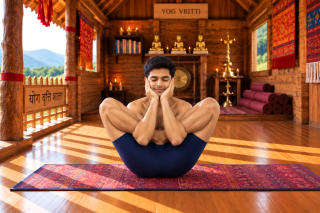
Benefits· लाभ
What Embryo Pose does for you
Embryo in Womb Pose · पिण्डासन
Embryo in Womb Pose, or Pindasana, invites the entire spine into a gentle, supported flexion, allowing gravity to release deep-seated tension along the back body. This supine shape encourages the nervous system to shift into a state of profound calm, fostering introspection and surrender.
Muscles
- Spinal extensorsstretches
- Gluteal muscles and deep hip rotatorsstretches
- Hip flexorsstretches
- Posterior neck musclesstretches
Joints
- Spinemobilises
- Hip jointsmobilises
- Cervical spinemobilises
Inside the body
- Abdominal organs (digestive system)
- Lungs and Diaphragm
- Breathing
Mind
Embryo Pose offers a profound opportunity for introspection and self-reflection, as the physical shape naturally encourages turning inward.
Take care
Practitioners with acute lower back pain, especially disc herniations, should approach this deep spinal flexion with utmost care or avoid it entirely, as it may exacerbate their condition.
Those with glaucoma or uncontrolled high blood pressure should also be cautious due to the mild inversion of the head below the heart, which could increase intraocular or intracranial pressure. Always guide students to listen intently to their body's signals and modify the pose if any discomfort arises, consulting a qualified medical professional if concerns persist.
Muscles
Spinal extensors
StretchesErector Spinae, Multifidus
The muscles running along either side of your spine, from your tailbone up to your skull, are gently lengthened as the spine rounds into a deep flexion.
Read moreShow less
This passive stretch releases chronic holding patterns often accumulated from upright posture and stress, allowing these muscles to soften and unwind.
Energetically, this unwinding facilitates a smoother flow of prana along the central channel (sushumna nadi), bringing a sense of lightness and freedom to the back.
Gluteal muscles and deep hip rotators
StretchesGluteus Maximus, Medius, Piriformis
The strong muscles of your buttocks and the smaller, deeper muscles surrounding your hip joints receive a profound release in this deep hip flexion.
Read moreShow less
As your knees draw towards your chest, these muscles are lengthened over the rounding pelvis, helping to release tightness that can contribute to lower back or sciatic discomfort.
This release creates a feeling of spaciousness and ease in the sacral area, allowing a sense of grounding and stability to permeate the lower body.
Hip flexors
StretchesIliopsoas, Rectus Femoris
While the hip flexors are in a shortened position, the intention here is not a lengthening stretch but a deep release of chronic tension held within these often overworked muscles.
Read moreShow less
By allowing the hips to fully flex and soften into the support of the floor, the nervous system receives a signal to let go of their habitual gripping.
This release can feel like an unwinding, freeing the pelvic bowl and allowing apana vayu—the downward-moving energy—to flow more freely, enhancing a sense of release and grounding.
Posterior neck muscles
StretchesSplenius, Semispinalis, Suboccipitals
As the head gently tucks and the chin draws towards the chest, the muscles at the back of your neck, particularly those at the base of the skull, receive a delicate and sustained lengthening.
Read moreShow less
This action helps to decompress the cervical spine and release tension that often contributes to headaches and stiffness.
Yogically, this gentle tuck encourages pratyahara, drawing the senses inward and preparing the mind for deeper states of introspection and stillness.
Joints
Spine (vertebral joints)
MobilisesEach segment of your spinal column, from the sacrum to the atlas, is encouraged into gentle, uniform flexion as you curl into the pose.
Read moreShow less
This action mobilizes the small facet joints between the vertebrae, promoting synovial fluid circulation and reducing stiffness.
The gentle traction created by gravity on the rounded spine helps to decompress the intervertebral discs, bringing a feeling of spaciousness and freedom to the entire back body, and encouraging the vital flow of prana up and down the spine.
Hip joints (femoroacetabular)
MobilisesThe ball-and-socket joints of your hips are deeply flexed, bringing the femurs closer to the pelvis.
Read moreShow less
This range of motion helps to maintain the health and lubrication of the hip capsules, promoting greater ease in daily movements and other yoga postures.
The passive nature of this flexion, supported by the floor, allows for a release of tension around the hips, fostering a sense of surrender and openness in the pelvic region, which is often a storage site for emotional stress.
Cervical spine
MobilisesThe joints of your neck are gently articulated into flexion as you tuck your chin towards your chest, lengthening the posterior aspect of the neck.
Read moreShow less
This mobilization helps to release stiffness and improve the range of motion in the upper spine, often counteracting the effects of prolonged computer use or poor posture.
The subtle release in the neck can alleviate tension headaches and, in a yogic sense, promotes a clear channel for energy to flow between the body and the mind.
Inside the body
Abdominal organs (digestive system)
The gentle compression of your knees towards your chest provides a soft, internal massage to your abdominal organs, including the stomach, intestines, and liver.
Read moreShow less
This action can stimulate peristalsis, aiding in digestion and elimination, and promoting a feeling of inner cleansing.
From a yogic perspective, this internal massage helps to balance samana vayu, the vital energy responsible for assimilation and digestion, bringing a sense of harmony and vitality to the core.
Lungs and Diaphragm
In this curled position, the abdomen is gently compressed, which naturally encourages a deeper, more profound diaphragmatic breath.
Read moreShow less
The diaphragm has to work slightly more against this gentle resistance, strengthening its action and promoting fuller exhalations.
This deep, abdominal breathing calms the nervous system and allows for a greater intake and distribution of prana throughout the body, fostering a sense of peace and energetic balance.
Breathing
The compact shape of Embryo Pose naturally encourages a deep, abdominal breath, where the exhalation becomes longer and more complete.
Read moreShow less
As the knees gently compress the abdomen, the diaphragm is encouraged to move more fully, pushing down on the viscera during inhalation and allowing for a thorough emptying of the lungs during exhalation.
This rhythmic, deep breathing pattern, akin to Ujjayi or Viloma pranayama, directly stimulates the vagus nerve, calming the nervous system and deepening the state of relaxation and inner quiet.
Fascia (connective tissue)
The entire posterior superficial fascial line, running from the soles of your feet up the back of your legs, trunk, and neck, receives a gentle, sustained lengthening in this rounded posture.
Read moreShow less
Simultaneously, the anterior fascial lines of the body are softened and allowed to release tension in their shortened state.
This global unwinding of the fascial network helps to release stored physical and emotional patterns, promoting greater fluidity of movement and energetic flow throughout the body, and allowing for a profound sense of release and integration.
Mind and nervous system
- Nervous system
As you curl into the shape of Embryo Pose, the body's natural 'rest and digest' response (parasympathetic nervous system) is profoundly activated.
Read moreShow less
The gentle compression of the abdomen and the quiet, introspective shape of the pose send signals of safety and security to the brain, effectively down-regulating the 'fight or flight' (sympathetic) response.
This shift brings an immediate sense of calm, reducing heart rate and muscle tension, and allowing the practitioner to release deeply held stress.
This posture naturally facilitates a profound withdrawal of the senses (pratyahara), as the external world is gently muted by the inward-folding shape.
Read moreShow less
With the eyes closed and the body curled, the mind is less distracted by external stimuli, allowing for a deeper focus on internal sensations and the breath.
This inward turning cultivates a sense of quietude and presence, preparing the mind for meditation and fostering a deeper connection to one's inner wisdom.
- Mind & mood
Embryo Pose offers a profound opportunity for introspection and self-reflection, as the physical shape naturally encourages turning inward.
Read moreShow less
By literally curling away from the external world, the mind is given permission to quiet its incessant chatter (chitta vritti) and settle into a state of deep contemplation.
This mental stillness allows for a clearer perspective on one's thoughts and emotions, fostering a sense of mental clarity and emotional release.
This posture cultivates a powerful sense of grounding and security, reminiscent of being held safely within the womb.
Read moreShow less
The full support of the floor beneath the rounded back provides a feeling of stability, allowing the practitioner to surrender emotional burdens and anxieties.
This feeling of being utterly supported can be deeply therapeutic, fostering a sense of inner peace and resilience, and helping to release fear and cultivate trust in the present moment.
Because it is a forward bend pose
As a forward bend, Pindasana encourages profound introspection and mental quietude.
Read moreShow less
The act of folding inward physically and energetically draws the senses away from external distractions, creating a cocoon for the mind to rest and observe without judgment.
This shape helps to calm the fluctuations of the mind (chitta vritti), fostering a deep sense of peace and mental clarity, essential for cultivating dharana (concentration) and dhyana (meditation).
The rounded, compact shape of Embryo Pose is inherently grounding and surrendering, allowing the body to release into the unwavering support of the earth.
Read moreShow less
This physical surrender translates into a mental and emotional letting go, helping to dissipate feelings of anxiety and overwhelm.
The pose encourages the practitioner to release control and embrace a state of acceptance, fostering a deep connection to the root chakra (Muladhara) and promoting a powerful sense of stability and security.