Benefits· लाभ
What Wide-Legged Forward Bend C does for you
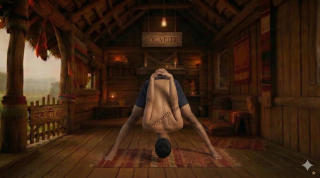
Prasarita Padottanasana C · प्रसारित पादोत्तानासन C
Prasarita Padottanasana C transforms the introspective release of Prasarita I into an expansive journey, primarily through the profound change in arm position. By interlacing the fingers behind the back and extending the arms, this variation dramatically opens the chest and shoulders, creating a powerful counterpoint to the deep forward bend.
What this version changes: The absence of external props in Prasarita C emphasizes the body's internal architecture, with the clasped arms acting as an 'internal prop' to deepen the pose. This positional change dramatically shifts the leverage, using the weight and extension of the arms to pull the torso further into the forward bend. This action creates a unique spinal traction and intensifies the opening across the chest and shoulders, allowing gravity to work differently on the upper body while maintaining the grounding through the legs.
Muscles
- Hamstringsstretches
- Adductorsstretches
- Spinal Erectorsstretches
- Calvesstretches
- Quadricepsstrengthens
Joints
- Hip Jointmobilises
- Sacroiliac Jointstabilises
- Spinedecompressing
- Ankle Jointmobilises
Inside the body
- Abdominal Organs (Digestive System)
- Brain
- Breathing
Mind
Prasarita Padottanasana I is a deeply introspective pose that encourages a turning inward (pratyahara), shifting awareness from the external world to the inner landscape.
Take care
Due to the intense shoulder extension and external rotation, practitioners with pre-existing shoulder injuries, impingement, or rotator cuff issues must approach Prasarita C with extreme caution.
The leverage created by the arms can exacerbate existing conditions if not mindfully engaged. It is crucial to respect any pain signals and modify the arm position, perhaps by holding a strap, to prevent strain or further injury.
Muscles
Hamstrings
StretchesWhile the hamstrings remain the primary target for lengthening in this forward bend, their experience shifts subtly in Prasarita C.
Read moreShow less
The leverage created by the arms pulling the torso deeper into the fold can intensify the stretch across the posterior thigh, demanding a greater surrender and release.
This external pull can encourage a more profound elongation, challenging the muscles to find new depth beyond what gravity alone might provide in Prasarita I.
Adductors
StretchesAdductor magnus, longus, brevis, Gracilis, Pectineus
The inner thigh muscles (adductors) are meticulously lengthened as the legs are spread wide and the pelvis folds forward.
Read moreShow less
This action gently stretches the connective tissue and muscle fibers that often hold tightness from prolonged sitting or athletic activity.
Anatomically, the origins on the pelvis are drawn away from their insertions on the femur, creating space in the inner groin and hips.
Yogically, this opening in the pelvic region can release emotional blockages, promoting a sense of liberation and energetic flow in the root and sacral chakras.
Spinal Erectors
StretchesIn Prasarita C, the spinal erectors, particularly in the thoracic region, experience a different quality of lengthening.
Read moreShow less
While still extending to allow the forward fold, the active lift and pull of the clasped arms behind the back creates a unique traction on the spine.
This action can encourage a more even release through the upper and middle back, decompressing the vertebrae and fostering a sense of spaciousness that complements the deep spinal flexion.
Calves
StretchesGastrocnemius, Soleus
The large muscles at the back of your lower legs (gastrocnemius and soleus) receive a significant stretch, particularly as you press actively through the outer edges of your feet and lift the arches.
Read moreShow less
This gentle dorsiflexion of the ankle joint, combined with the grounding action of the feet, helps to release tightness in the posterior lower leg.
This foundational stretch improves ankle mobility and stability, which is crucial for balance, and energetically connects you more deeply to the earth, enhancing a sense of stability and rootedness.
Quadriceps
StrengthensRectus Femoris, Vastus Lateralis, Medialis, Intermedius
The front thigh muscles (quadriceps) are actively engaged in this pose, particularly to lift the kneecaps and firm the thighs.
Read moreShow less
This isometric contraction stabilizes the knee joint, preventing hyperextension and allowing for a safer, deeper stretch in the hamstrings.
This intelligent engagement creates a sense of strength and integrity in the legs, channeling energy upwards from the earth and providing a stable foundation from which the torso can release into the forward fold.
Pectoralis Major and Minor
StretchesPectoralis major, Pectoralis minor
These powerful chest muscles, often shortened from daily activities, receive a significant and active stretch in Prasarita C.
Read moreShow less
As the arms lift overhead while clasped behind the back, the pectorals are drawn into a deep elongation, promoting expansion across the front of the chest.
This action helps to counteract slouched posture, improving breath capacity and fostering a sense of openness and confidence.
Anterior Deltoid
StretchesDeltoideus (anterior fibers)
The anterior fibers of the deltoid, responsible for shoulder flexion and internal rotation, are actively lengthened as the arms extend and lift behind the back.
Read moreShow less
This targeted stretch contributes significantly to the overall shoulder opening characteristic of Prasarita C.
Releasing tension in the anterior deltoid helps improve the shoulder joint's range of motion, preparing it for more complex arm balances and inversions.
Rhomboids
StrengthensStabilisesRhomboid major, Rhomboid minor
To achieve the full expression of the arm lift and chest opening, the rhomboid muscles, situated between the shoulder blades, become actively engaged.
Read moreShow less
They work to retract and stabilize the scapulae, drawing the shoulder blades towards the spine and preventing them from winging.
This activation not only supports the upward lift of the arms but also contributes to a broader, more open feeling across the upper back and chest.
Triceps Brachii
StrengthensTriceps brachii
The triceps brachii, located on the back of the upper arm, are actively engaged to maintain extension at the elbow joint as the arms lift and straighten behind the back.
Read moreShow less
This isometric contraction provides stability and strength to the extended arm position, ensuring the integrity of the shoulder opening.
Strong triceps support the full expression of the pose, allowing for a deeper and more sustained stretch in the chest and anterior shoulders.
Joints
Hip Joint
MobilisesThe ball-and-socket joints where your thigh bones meet your pelvis (hip joints) are the primary hinges for the deep flexion in Prasarita Padottanasana I.
Read moreShow less
As you fold forward, the femoral heads move deeply within the acetabulum, facilitating an anterior pelvic tilt and increasing the range of motion in hip flexion.
This mobilization not only improves flexibility in the entire hip girdle but also releases chronic tension often held in this area, which yogically correlates to stored emotional patterns and a sense of freedom in movement.
Sacroiliac (SI) Joint
StabilisesThe joints connecting your sacrum to your pelvis (sacroiliac joints) are subtly stabilized in this pose through the intelligent engagement of the legs and the careful articulation of the pelvis.
Read moreShow less
While allowing for the natural nutation of the sacrum during the forward tilt, the muscular actions around the hips ensure these joints remain supported and aligned.
This fosters a sense of integrated stability in the pelvic bowl, connecting to a foundational strength that supports the entire spine and allows for a deeper, safer exploration of the forward bend.
Spine (Vertebral Joints)
DecompressingThe many small joints along your spine (vertebral joints) receive a gentle decompression and lengthening as you fold forward with a long, extended torso.
Read moreShow less
The natural pull of gravity, when combined with the intention to lengthen from the tailbone to the crown of the head, creates space between the vertebral bodies and discs.
This gentle traction can alleviate stiffness, improve spinal mobility, and yogically encourages an unobstructed flow of prana through the central energetic channel, fostering clarity and vitality.
Ankle Joint
MobilisesThe joints where your lower leg meets your foot (ankle joints) are subtly mobilized and stabilized in this pose as you press firmly through the feet.
Read moreShow less
The action of lifting the arches and pressing the outer edges of the feet helps to create a stable foundation while allowing for the necessary dorsiflexion that stretches the calves.
This engagement not only improves the flexibility and strength of the ankles but also deeply connects you to the earth, enhancing your sense of grounding and energetic stability throughout the entire posture.
Inside the body
Abdominal Organs (Digestive System)
As the torso folds deeply towards the legs, the abdominal organs receive a gentle, internal compression.
Read moreShow less
This mild pressure, followed by the release upon exiting the pose, acts like a gentle internal massage, stimulating peristalsis and enhancing circulation within the digestive tract.
This 'wringing out' action can help to alleviate stagnation, support healthy digestion, and is particularly beneficial for those experiencing mild digestive sluggishness or discomfort, contributing to the balance of samana vayu.
Brain
In Prasarita Padottanasana I, the head is positioned below the heart, creating a mild inversion that gently encourages blood flow to the brain.
Read moreShow less
This subtle increase in cerebral circulation has a profoundly calming effect on the nervous system, helping to quiet the incessant chatter of the mind.
This gentle inversion alleviates mental fatigue, sharpens focus, and offers a fresh perspective, making it a powerful antidote for anxiety and mild depression, inviting a state of inner tranquility.
Breathing
In Prasarita Padottanasana I, the forward fold naturally encourages a lengthening and deepening of the exhalation, as the diaphragm has less space to descend fully on the inhale.
Read moreShow less
This emphasis on exhalation activates the parasympathetic nervous system, promoting a profound sense of calm and relaxation.
The sustained posture invites a quiet, rhythmic breath, preparing the mind for pranayama practices that focus on exhalation retention or simply observing the natural ebb and flow, further stilling the mind (chitta vritti).
Fascia (connective tissue)
The extensive web of connective tissue that encases and interlinks all muscles and organs (fascia) receives a profound release throughout the entire posterior superficial line in this pose.
Read moreShow less
This line, running from the soles of the feet, up the calves, hamstrings, glutes, and along the spinal erectors, is meticulously lengthened.
By holding the pose with awareness, we encourage this intricate fascial network to soften and release restrictions, improving overall fluidity of movement and opening energetic channels (nadis) that may have been constricted by chronic tension or trauma.
Mind and nervous system
- Nervous system
As you fold forward and the head descends below the heart, the nervous system naturally shifts towards a parasympathetic dominance, initiating the 'rest and digest' response.
Read moreShow less
This deep forward bend gently calms the brain, reducing the constant input of external stimuli and allowing the mind to turn inward.
The sustained stretch in the posterior body, coupled with the rhythmic breathing, directly signals the nervous system to release tension, leading to a palpable sense of peace and reduced anxiety.
The introspective nature of the pose, combined with the mild inversion, helps to quiet the fluctuations of the mind (chitta vritti nirodhah).
Read moreShow less
This internal focus allows the practitioner to become more present and less reactive to external stressors.
The gentle pressure on the forehead, when the crown is on the floor or a block, can also stimulate the frontal lobe, further enhancing a meditative state and promoting mental clarity, offering a respite from an overstimulated mind.
- Mind & mood
Prasarita Padottanasana I is a deeply introspective pose that encourages a turning inward (pratyahara), shifting awareness from the external world to the inner landscape.
Read moreShow less
The physical act of folding forward naturally quiets the mind, fostering a sense of humility and surrender.
This mental quietude creates fertile ground for self-reflection and allows for the release of mental and emotional tension, promoting a sense of inner peace and acceptance.
By inverting the relationship between the head and the heart, this pose subtly shifts one's perspective, both physically and psychologically.
Read moreShow less
This change in orientation can help to alleviate feelings of overwhelm or stuckness, offering a new way of viewing challenges.
The steady focus required to maintain the posture also cultivates dharana (concentration), building mental resilience and the capacity for sustained attention, which translates into greater clarity and equanimity off the mat.
Because it is a forward bend pose
Forward bends are inherently calming and introspective shapes that encourage the body to turn inward, away from external distractions.
Read moreShow less
Physiologically, they provide a comprehensive stretch to the entire posterior chain of the body, from the heels to the crown of the head, lengthening muscles and connective tissues.
Energetically, forward bends help to ground the practitioner, drawing energy downwards and fostering a sense of surrender and emotional release, which is deeply therapeutic for an overactive mind.
As a mild inversion, Prasarita Padottanasana I gently reverses the gravitational pull on the body, particularly benefiting the circulatory and nervous systems.
Read moreShow less
This subtle inversion encourages fresh blood flow to the brain and sense organs, calming the mind and alleviating mental fatigue.
From a yogic perspective, inversions are powerful for shifting perspective, rejuvenating the system, and promoting a sense of inner peace and clarity by rebalancing the flow of prana.