Benefits· लाभ
What Wide-Legged Forward Bend II does for you
Prasarita Padottanasana II · प्रसारित पादोत्तानासन २
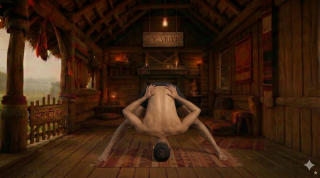
Prasarita Padottanasana II is a deeply grounding forward bend that skillfully unwinds tension throughout the entire posterior chain, from the heels to the crown of the head. This posture elongates the hamstrings and adductors, while simultaneously strengthening and opening the often-restricted chest and shoulders.
Muscles
- Hamstringsstretches
- Adductorsstretches
- Spinal Erectorsstretches
- Deltoids and Rotator Cuff musclesstrengthens
Joints
- Hip Jointsmobilises
- Spinedecompressing
- Shoulder Girdlemobilises
Inside the body
- Abdominal Organs
- Brain
- Breathing
Mind
This deeply introspective forward bend invites a profound shift in mental perspective, moving awareness from the external world to the inner landscape (pratyahara).
Take care
Teachers should guide students to move into this forward bend from the hips, maintaining a long spine, rather than rounding the lower back, especially if they have a history of disc issues or sacroiliac instability.
For those with tight hamstrings, using a block under the hands or keeping a slight bend in the knees is crucial to protect the hamstrings from overstretching and prevent strain on the lower back. Always prioritize a feeling of intelligent release over forcing depth, ensuring a safe and therapeutic experience for every practitioner.
Muscles
Hamstrings
StretchesBiceps femoris, Semitendinosus, Semimembranosus
These long muscles running along the back of your thighs are experiencing a deep, sustained lengthening in this forward fold.
Read moreShow less
As you root through your feet and extend the spine, the nervous system is encouraged to release chronic tension, allowing for a gradual increase in their resting length.
This release of apana vayu from the lower body fosters a sense of groundedness and ease, directly alleviating strain on the lower back and hips from habitual tightness.
Adductors
StretchesAdductor magnus, longus, brevis, Pectineus, Gracilis
Located on the inner thighs, these muscles are actively lengthening as you widen your stance and fold forward, particularly if you maintain parallel feet.
Read moreShow less
This action helps to release tightness that often restricts hip mobility and can contribute to knee discomfort, creating more space within the pelvis.
Energetically, releasing these muscles can open up channels in the pelvic region, promoting a feeling of spaciousness and freedom in the hips and lower extremities.
Spinal Erectors
StretchesErector Spinae group: Iliocostalis, Longissimus, Spinalis
These powerful muscles running along either side of your spine are challenged to lengthen and release as you fold forward, yet remain intelligently active in maintaining spinal extension in the initial phase of the pose.
Read moreShow less
Even in the deepest forward bend, there is an engagement to prevent collapsing, promoting a healthy, natural curve rather than a slouched position.
This conscious engagement cultivates a heightened awareness of the spine's length, fostering a sense of uprightness and vitality even when inverted.
Deltoids and Rotator Cuff muscles
StrengthensSupraspinatus, Infraspinatus, Teres minor, Subscapularis
When the hands are interlaced behind the back and lifted, these shoulder muscles are actively strengthening as they resist gravity and work to externally rotate and lift the arms away from the back.
Read moreShow less
This action helps to counteract the common rounding of the upper back and shoulders from daily activities, creating expansive space across the chest.
The opening across the front of the body allows the heart to feel more expansive, releasing emotional constriction and promoting a sense of courage and openness.
Joints
Hip Joints
MobilisesThese ball-and-socket joints (acetabulofemoral joints) are mobilized into deep flexion as the torso folds towards the legs, while the wide stance encourages a neutral or slightly externally rotated position, depending on foot placement.
Read moreShow less
This combination deeply lubricates the joint capsules and increases the range of motion in the hips, enhancing their natural fluidity.
Over time, this enhanced mobility translates into greater ease in walking, sitting, and accessing deeper meditative poses, releasing stiffness that can hold emotional tension.
Spine
DecompressingThe entire spinal column (vertebral joints and intervertebral discs) undergoes gentle traction and decompression as you lengthen forward from the hips, particularly if you maintain a long spine before releasing the head.
Read moreShow less
This action helps to create space between the vertebrae, nourishing the intervertebral discs and alleviating compression that can accumulate from gravity and sedentary habits.
Yogically, this lengthening sensation helps to awaken the central channel (sushumna nadi), allowing prana to flow more freely and contributing to a feeling of lightness and mental clarity.
Shoulder Girdle
MobilisesWhen the arms are actively engaged, for instance, by interlacing hands and lifting them, the entire shoulder girdle (glenohumeral, acromioclavicular, sternoclavicular, and scapulothoracic joints) is mobilized and strengthened.
Read moreShow less
This action draws the shoulder blades down and back, creating significant space across the front of the chest and improving the overall alignment of the shoulders relative to the spine.
This freeing of the chest area allows for deeper breathing and a sense of emotional release, counteracting the protective hunch often adopted when facing stress.
Inside the body
Abdominal Organs
In this forward bend, the abdominal organs (stomach, intestines, liver, spleen, pancreas) receive a gentle, internal massage as the torso folds towards the thighs.
Read moreShow less
This mild compression stimulates peristalsis and enhances circulation to the digestive tract, aiding in the detoxification process.
This internal cleansing action helps to alleviate digestive sluggishness, promoting healthy elimination and a feeling of lightness and vitality in the core of the body.
Brain
As a mild inversion, Prasarita Padottanasana II gently reverses the flow of blood and lymph, bringing fresh, oxygenated blood to the brain cells and improving cerebral circulation.
Read moreShow less
This increased circulation, combined with the calming effect of the forward fold, helps to quiet mental chatter and reduce fatigue, enhancing cognitive function.
This allows the mind (chitta) to settle, fostering a state of introspection and clarity that prepares one for deeper meditative states.
Breathing
In Prasarita Padottanasana II, the forward-folding action naturally encourages a longer, more complete exhalation, as the diaphragm gently compresses against the abdominal organs.
Read moreShow less
This subtle compression helps to empty the lungs more fully, creating space for a deeper, more expansive inhalation upon release.
This emphasizes the calming effect of the exhalation, making it an excellent pose to pair with Nadi Shodhana or Ujjayi breath, as it deepens the introspective quality and facilitates the release of accumulated tension and mental agitation.
Fascia (connective tissue)
This posture provides a comprehensive release for the superficial back line of fascia, which is a continuous web of connective tissue running from the soles of the feet, up the back of the legs, across the spine, and over the skull.
Read moreShow less
By extending through the heels and lengthening the spine from the hips, we encourage this continuous fascial sheath to unwind and release, improving overall flexibility and reducing restrictive patterns.
This deep unwinding helps to free up the body's energetic channels, allowing for a more unencumbered flow of prana and a greater sense of bodily ease and integration.
Mind and nervous system
- Nervous system
The sustained forward fold in Prasarita Padottanasana II naturally activates the parasympathetic nervous system, shifting the body from a state of 'fight or flight' to 'rest and digest.' The gentle inversion and the inward focus encourage a longer, softer exhalation, which is a direct pathway to calming the vagus nerve and reducing physiological stress responses.
Read moreShow less
This deep calming effect helps to quiet the fluctuations of the mind (chitta vritti), fostering a profound sense of internal peace and emotional regulation.
The act of folding forward, especially with the head below the heart, reduces sensory input from the external world, encouraging a state of pratyahara or withdrawal of the senses.
Read moreShow less
This internal focus diminishes the constant stimulation that can keep the nervous system in a state of alert.
As the body releases tension, the nervous system also unwinds, leading to a palpable sense of serenity and quietude.
- Mind & mood
This deeply introspective forward bend invites a profound shift in mental perspective, moving awareness from the external world to the inner landscape (pratyahara).
Read moreShow less
The act of folding forward requires a surrender of ego, cultivating humility and a willingness to look inward, away from outward distractions and judgment.
This sustained focus on the internal experience can transform anxiety into a quiet presence, strengthening one's capacity for concentration (dharana) and fostering emotional resilience against life's challenges.
The physical act of bowing the head in a forward fold can symbolize a release of mental burdens and a softening of rigid thought patterns.
Read moreShow less
As the brain is gently inverted, a fresh perspective can emerge, allowing us to detach from overwhelming thoughts and find mental clarity.
This cultivation of inner quietude is invaluable for managing stress and cultivating a more balanced and mindful approach to daily life.
Because it is a forward bend pose
Forward bends create a profound sense of introspection and calm by drawing the senses inward, away from external stimuli, and quieting the mind.
Read moreShow less
Physiologically, they decompress the posterior spine and lengthen the entire posterior chain of muscles, releasing tension often stored from upright activities and habitual postures.
Energetically, they encourage the downward flow of apana vayu, grounding the practitioner and fostering emotional stability and a sense of surrender.