Benefits· लाभ
What Auspicious Pose does for you
स्वस्तिकासन
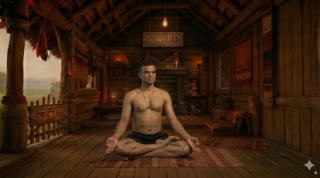
Auspicious Pose, Swastikasana, is a foundational seated posture that masterfully blends grounded stability with an upward spinal lift, creating a profound sense of inner calm. It gently yet effectively opens the deep hip flexors and rotator muscles, fostering flexibility while simultaneously stabilizing the ankles and knees.
Muscles
- Hip Flexorsstretches
- Outer Hip Rotatorsstretches
- Spinal Erectorsstrengthens
- Inner Thigh Musclesstretches
Joints
- Hipsmobilises
- Kneesmobilises
- Anklesstabilises
- Sacroiliac Jointstabilises
Inside the body
- Abdominal Organs
- Lungs and Diaphragm
- Breathing
Mind
Swastikasana's inherent stability and simplicity make it an ideal posture for cultivating 'dharana' (concentration).
Take care
Teachers should carefully observe students with pre-existing knee or ankle injuries, as these joints are in a flexed and rotated position.
Encourage the use of a blanket under the sit bones to elevate the hips and reduce strain on the knees, and advise placing a folded blanket or block under the outer thighs if the knees lift excessively. Always emphasize listening intently to the body, ensuring no sharp pain is felt in the joints, and modifying the pose or offering alternatives like Sukhasana or Virasana if discomfort persists.
Muscles
Hip Flexors
StretchesIliopsoas, Rectus Femoris
The deep muscles at the front of your hip, connecting your spine and pelvis to your thigh bone, are gently encouraged to release in this cross-legged position.
Read moreShow less
As the hips externally rotate, these muscles experience a sustained, mild stretch, counteracting the shortening that often comes from prolonged sitting.
This release not only improves hip mobility but also helps to free up the 'apana vayu,' the downward-moving energy, which can feel deeply grounding and calming in the lower abdomen.
Outer Hip Rotators
StretchesPiriformis, Gemelli, Obturators
Nestled deep within your glutes, these small but powerful muscles are responsible for externally rotating your thigh.
Read moreShow less
In Swastikasana, the gentle external rotation of the femurs in the hip sockets provides a subtle, sustained stretch to these often-tight muscles.
Releasing tension here can alleviate pressure on the sciatic nerve, which translates to a feeling of greater freedom and less compression in the entire pelvic girdle, allowing for a more stable and comfortable seat.
Spinal Erectors
StrengthensErector Spinae
These muscles run along either side of your spine, from the sacrum all the way up to your skull, working to keep your trunk upright.
Read moreShow less
In this pose, they are subtly engaged to create length through the spine, lifting the chest and creating space between each vertebra.
This activation encourages a natural, healthy spinal curve and an upward flow of 'prana' (life force), promoting alertness and mental clarity even as the lower body grounds.
Inner Thigh Muscles
StretchesAdductor Group
The muscles along the inside of your thighs, which usually bring your legs together, receive a gentle, passive stretch as the knees open outwards.
Read moreShow less
This sustained lengthening helps to release any gripping in the groin and inner thighs, improving circulation in the pelvic region.
Energetically, this opening in the 'adductor magnus' and other adductors can help to release stored emotional tension, fostering a sense of openness and ease in the root and sacral chakras.
Joints
Hips
MobilisesThe hip joints (acetabulofemoral joints) are gently taken into external rotation and flexion in Swastikasana.
Read moreShow less
This sustained, mild movement encourages the synovial fluid within the joint to circulate, nourishing the cartilage and improving overall range of motion without force.
Over time, this consistent gentle mobilization helps to maintain hip health, reduce stiffness, and cultivate a sense of ease and freedom in the pelvic region, which directly supports a stable meditation seat.
Knees
MobilisesThe knee joints (tibiofemoral joints) are held in a state of gentle flexion in this pose, promoting circulation and mild decompression.
Read moreShow less
When practiced with awareness and appropriate props, this position can help to maintain the health of the menisci and ligaments by encouraging a balanced distribution of pressure.
The subtle stretch on the connective tissues around the knee, when done mindfully, can enhance flexibility and reduce stiffness, contributing to greater comfort in daily activities and other seated poses.
Ankles
StabilisesIn Swastikasana, the ankles (talocrural and subtalar joints) are positioned in a gentle dorsiflexion and eversion, which provides a mild stretch to the ankle joint capsules and ligaments.
Read moreShow less
The weight of the legs resting on the feet, when properly supported, helps to stabilize these joints, improving proprioception and balance.
This subtle engagement and stretch foster greater awareness and strength in the often-overlooked ankle complex, creating a firm and steady foundation that extends upward through the entire body.
Sacroiliac Joint
StabilisesThe sacroiliac (SI) joint, where your sacrum meets your pelvis, finds a natural stability when the sit bones are evenly grounded and the spine is lengthened.
Read moreShow less
The symmetrical nature of Swastikasana encourages a balanced distribution of weight across the pelvis, which can help to reduce undue strain or torsion in this crucial joint.
A stable SI joint provides a solid base for the entire spinal column, allowing the practitioner to feel deeply rooted and supported, which is essential for both physical comfort and mental focus.
Inside the body
Abdominal Organs
In Swastikasana, maintaining an upright, elongated spine creates ample space for the abdominal organs.
Read moreShow less
This gentle decompression, combined with diaphragmatic breathing, provides a subtle internal massage to the digestive system, encouraging healthy peristalsis and improved circulation to the organs.
This internal 'awakening' supports efficient digestion and elimination, harmonizing 'samana vayu' (balancing energy) and fostering a sense of inner lightness and vitality.
Lungs and Diaphragm
The tall, open chest and lengthened spine in this pose directly facilitate deeper, more expansive breathing.
Read moreShow less
By removing any slumping or compression, the rib cage can fully expand, allowing the diaphragm to descend more completely with each inhalation, drawing fresh air into the lower lobes of the lungs.
This increased lung capacity and efficient breath work enhances oxygen uptake and 'prana' assimilation, leading to a profound sense of calm and energetic renewal throughout the entire system.
Breathing
The erect and expansive posture of Swastikasana naturally encourages a deeper, more profound diaphragmatic breath.
Read moreShow less
With the chest lifted and the spine lengthened, the diaphragm has ample room to descend fully on inhalation, drawing air into the deepest parts of the lungs, and to rise completely on exhalation.
This unhindered breath pattern becomes a powerful tool for calming the nervous system, and it perfectly complements 'Ujjayi Pranayama,' as the gentle constriction in the throat is easily maintained while the body remains still and stable, further deepening concentration and inner awareness.
Fascia (connective tissue)
In Swastikasana, the sustained, gentle stretch in the hips and inner thighs, along with the lengthening of the spine, works to rehydrate and release tension in the fascial network.
Read moreShow less
Specifically, the deep front line, which often shortens with prolonged sitting, is gently encouraged to lengthen, while the superficial back line is supported in its extension.
This subtle release in the connective tissue helps to unravel held patterns of tension throughout the body, improving overall fluidity of movement and allowing for a more unencumbered flow of 'prana' along these energetic pathways.
Mind and nervous system
- Nervous system
The grounded, stable nature of Swastikasana, coupled with the emphasis on a tall, relaxed spine, is inherently calming for the nervous system.
Read moreShow less
By creating a steady physical container, the body signals safety to the brain, activating the parasympathetic nervous system – our 'rest and digest' response.
This shift reduces the physiological markers of stress, such as heart rate and muscle tension, leading to a felt experience of profound tranquility and a quieting of the 'chitta vritti' (mind fluctuations).
The deliberate act of sensing the sit bones grounding and the spine lifting brings the practitioner into a heightened state of proprioception and interoception, cultivating deep body awareness.
Read moreShow less
This mindful presence in the physical form naturally draws attention away from external distractions and internal anxieties, acting as a gentle anchor to the present moment.
Through this focused awareness, the mind begins to settle, allowing for a clearer, more centered state of being that is less reactive to external stimuli.
- Mind & mood
Swastikasana's inherent stability and simplicity make it an ideal posture for cultivating 'dharana' (concentration).
Read moreShow less
By focusing on the subtle alignment cues—the rooting of the sit bones, the lift of the spine, the gentle opening of the hips—the mind is given a single point of focus, drawing it away from its usual scattered patterns.
This consistent practice of directed attention strengthens mental discipline, leading to improved clarity and a sense of inner quietude that extends beyond the mat.
The act of finding a comfortable, upright seat, particularly when supported by props, fosters a sense of self-acceptance and patience.
Read moreShow less
Rather than striving for an ideal shape, the pose encourages students to meet their bodies where they are, releasing judgment and cultivating a compassionate inner dialogue.
This gentle self-inquiry can be deeply therapeutic for those experiencing anxiety or depression, as it builds a foundation of inner resilience and a calm, centered perspective.
Because it is a seated pose
The seated shape of Swastikasana, with its firm connection to the earth through the sit bones, is profoundly grounding and stabilizing for both body and mind.
Read moreShow less
This direct contact with the ground fosters a sense of security and rootedness, which is essential for cultivating a steady foundation for all other practices.
Anatomically, it stabilizes the pelvis and lower spine, while energetically, it connects us deeply to the 'Muladhara Chakra,' enhancing feelings of safety and belonging.
As a gentle hip opener, this posture works to slowly release tension in the deep muscles surrounding the hip joints, encouraging greater flexibility and range of motion over time.
Read moreShow less
The external rotation of the femurs in the hip sockets helps to create space in the pelvis, which can alleviate stiffness and improve circulation in the lower body.
From a yogic perspective, opening the hips can release stored emotional tension and promote a freer flow of 'prana' throughout the pelvic region.
The upright and lengthened spinal alignment encouraged by this seated posture is crucial for improving overall posture and spinal health.
Read moreShow less
By actively extending the spine upwards from a stable base, Swastikasana counteracts the effects of slouching and compression, creating space between the vertebrae.
This axial extension not only supports the integrity of the spinal column but also facilitates an unhindered flow of 'prana' upwards, promoting alertness, mental clarity, and a sense of dignified presence.