Benefits· लाभ
What Mountain Pose at Wall does for you
Tadasana at wall · ताड़ासन (दीवार पर)
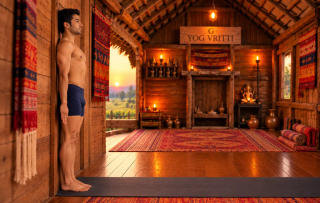
Tadasana at the wall offers a profound external reference, transforming the internal quest for verticality into a tangible dialogue with a fixed plane. This variation provides immediate, objective feedback on postural alignment, compelling the practitioner to confront and refine subtle deviations that might go unnoticed in free-standing Tadasana.
What this version changes: The wall acts as an invaluable external plumb line, providing immediate, objective feedback on the body's alignment and revealing subtle postural deviations. It physically supports the posterior chain, allowing practitioners to experience true spinal lengthening and decompression without the compensatory habits often present in free-standing poses. This external reference fosters a deeper proprioceptive awareness, guiding the body towards its optimal vertical axis and revealing the blueprint of inner alignment.
Muscles
- Intrinsic Foot Musclesstabilises
- Quadricepsstrengthens
- Erector Spinaemobilises
- Transversus Abdominisstabilises
- Deep Neck Flexorsstabilises
Joints
- Ankle Jointstabilises
- Knee Jointstabilises
- Vertebral Columndecompressing
- Shoulder Girdleneutral alignment
Inside the body
- Lungs
- Abdominal Organs
- Circulatory System
- Breathing
Mind
Tadasana cultivates an unwavering sense of presence and mental focus (Dharana), as the mind is meticulously engaged in refining the alignment from the ground up.
Take care
A primary caution in Tadasana at the wall is the tendency to *force* the body flat against the wall, particularly in the lumbar and cervical regions.
Aggressively flattening the natural curves of the spine can lead to strain rather than release, potentially exacerbating existing discomfort. The intention is a gentle, intelligent dialogue with the wall, allowing the body to unfold towards alignment, not to rigidly adhere to it.
Muscles
Intrinsic Foot Muscles
StabilisesRootingRefiningWhile still rooting firmly, the wall offers immediate feedback on how weight distribution through the feet impacts the entire vertical axis.
Read moreShow less
This external reference allows for a more precise calibration of grounding, revealing imbalances that might go unnoticed in free-standing Tadasana, thus refining their stabilizing action.
The wall helps to translate the subtle energetic lift from the arches into a clear understanding of its effect on the entire posterior chain.
Quadriceps
StrengthensStretchesBalancingWhile still engaging to lift the kneecaps, the wall provides a reference for the posterior chain of the legs, prompting a subtle pressing of the heels and calves into the wall.
Read moreShow less
This encourages a more balanced engagement, preventing hyperextension of the knees by ensuring the quadriceps work in harmony with the hamstrings.
It cultivates an awareness of drawing energy up from the earth through the legs, without gripping, to create a stable, extended foundation.
Erector Spinae
MobilisesStretchesCorrectingThe wall transforms the action of these muscles from general spinal extension into a nuanced engagement that addresses specific postural curves.
Read moreShow less
By pressing points like the sacrum, shoulder blades, and back of the head gently into the wall, the erector spinae are activated to *unfold* the spine, often requiring a more focused effort to lengthen and flatten areas of excessive lordosis or kyphosis against the external plane.
This external support allows for a precise refinement of the spine's natural curves, encouraging a harmonious upward lift.
Transversus Abdominis
StabilisesStrengthensRefiningThe wall provides critical feedback for the lower back's position, directly influencing the engagement of the transversus abdominis.
Read moreShow less
Instead of merely drawing in, these muscles now engage with the specific intention of gently flattening the lumbar spine against the wall, without tucking the tailbone.
This cultivates a deeper, more precise understanding of core support for spinal integrity, allowing the spine to decompress and lengthen upward with greater ease and stability.
Deep Neck Flexors
StabilisesStrengthensLongus Colli, Longus Capitis
With the back of the head gently resting against the wall, these often-underused muscles are subtly activated to lengthen the posterior neck and maintain optimal cervical alignment.
Read moreShow less
This engagement prevents the chin from jutting forward and encourages a graceful extension of the crown of the head, promoting a sense of ease and spaciousness in the neck and upper spine.
It supports the energetic lift (Uddiyana Bandha) by ensuring the cervical spine is aligned with the rest of the axial skeleton.
Joints
Ankle Joint
StabilisesThe ankle joint (talocrural joint) is the crucial interface between your feet and legs, bearing the entire body's weight in Tadasana.
Read moreShow less
We learn to distribute weight evenly through the four corners of the feet, creating a stable, yet not rigid, foundation, which in turn protects the knees and hips.
This mindful weight distribution refines proprioception, enhancing your sense of balance and connection to the ground.
Over time, this practice stabilizes the ankles, preventing common sprains and cultivating a feeling of unwavering support from below.
Knee Joint
StabilisesDecompressingThe knee joint (tibiofemoral joint) is held in a neutral, unlocked position in Tadasana, with the kneecaps gently lifted by the engaged quadriceps.
Read moreShow less
This alignment prevents hyperextension and ensures that the weight is distributed through the bones rather than collapsing into the ligaments.
Therapeutically, this creates a gentle decompression, fostering healthy joint space and synovial fluid distribution.
Yogically, it teaches the legs to be intelligently strong without rigidity, allowing energy to flow freely upwards from the earth.
Vertebral Column
DecompressingStretchesStabilisesThe entire spinal column (vertebral column) is actively lengthened in Tadasana, with each vertebra gently separating from its neighbor, creating space for the intervertebral discs.
Read moreShow less
This axial extension alleviates compression, improves nerve conductivity, and allows the spinal cord to function optimally.
This conscious lengthening is a cornerstone of spinal health, promoting an upward flow of prana through the central energetic channel (Sushumna Nadi) and fostering a sense of inner spaciousness and freedom.
Regular practice directly contributes to improved posture and reduced back pain.
Shoulder Girdle
Neutral AlignmentMobilisesIn Tadasana, the shoulder girdle (scapulothoracic joint and glenohumeral joint) is drawn gently back and down, creating broadness across the collarbones and opening the chest.
Read moreShow less
This action corrects rounded shoulders, which are common in modern life, and allows the arms to hang freely by the sides with a subtle external rotation of the upper arm bones.
Therapeutically, this alleviates tension in the neck and upper back, while yogically, it opens the heart center (Anahata Chakra), inviting feelings of courage, compassion, and expansive breath.
Inside the body
Lungs
By establishing an upright posture and broadening the chest in Tadasana, the thoracic cavity expands, providing optimal space for the lungs.
Read moreShow less
This allows for deeper, fuller inhalations and complete exhalations, increasing vital lung capacity and improving gas exchange (oxygen-carbon dioxide exchange).
Yogically, this enhanced breathing invigorates prana, purifying the nadis (energy channels) and creating a sense of clarity and energetic uplift.
It's a foundational step towards mastering pranayama.
Abdominal Organs
The gentle lift of the lower abdomen (Uddiyana Bandha) combined with the lengthening of the spine in Tadasana creates a subtle decompression for the abdominal organs.
Read moreShow less
This prevents slumping and compression, allowing organs like the stomach, intestines, and liver to function with greater ease.
This internal lift is believed to stimulate digestive fire (agni), improving nutrient absorption and elimination, and fostering a sense of lightness and vitality in the core.
Circulatory System
The aligned, upright posture of Tadasana, coupled with deep, steady breathing, supports efficient blood flow throughout the body.
Read moreShow less
By engaging the muscles of the legs and core, we encourage venous return, preventing blood from pooling in the lower extremities, which is particularly beneficial for conditions like low blood pressure.
This optimized circulation ensures that oxygen and nutrients are effectively delivered to all cells, leaving the practitioner feeling energized, refreshed, and mentally alert.
Breathing
Tadasana's upright and expansive posture naturally invites a full, diaphragmatic breath, allowing the diaphragm to descend fully on inhalation and ascend completely on exhalation.
Read moreShow less
The open chest and lengthened spine remove physical impediments to optimal lung expansion, encouraging a slow, steady rhythm that calms the nervous system.
This pose is an ideal preparation for foundational pranayama practices like Ujjayi, as it cultivates the physical and mental stability required to observe and control the flow of prana through the breath, deepening one's internal awareness and vitality.
Fascia (connective tissue)
Fascia, the intricate web of connective tissue that envelops every muscle, bone, and organ, plays a crucial role in Tadasana, linking the entire body into an integrated whole.
Read moreShow less
In this pose, the Deep Front Line fascia, which runs from the arches of the feet up through the inner legs, pelvis, and core to the neck, is actively engaged and strengthened, providing internal support and lift.
Simultaneously, the Superficial Back Line is subtly lengthened through the gentle spinal extension, releasing held patterns of tension and allowing for an unhindered upward flow of energy, creating a feeling of integrated strength and spaciousness throughout the entire body.
Mind and nervous system
- Nervous system
As you stand tall and steady in Tadasana, you begin to feel a profound sense of calm and centeredness wash over you, a quiet stillness amidst the external world.
Read moreShow less
This grounding sensation comes from the conscious engagement of your feet and legs, sending clear proprioceptive feedback to the brain, which in turn signals safety and stability to the nervous system.
The steady, diaphragmatic breath cultivated in this pose further activates the parasympathetic nervous system, easing 'chitta vritti'—the fluctuations of the mind—and guiding you into a state of present awareness.
The precise alignment and subtle muscular engagement in Tadasana bring a heightened sense of body awareness (interoception) that can be deeply therapeutic for anxiety.
Read moreShow less
By focusing your attention inward, on the subtle actions of the body, you draw your awareness away from external stressors and internal anxieties.
This deliberate shift helps to regulate the autonomic nervous system, moving from a 'fight or flight' (sympathetic) response towards a 'rest and digest' (parasympathetic) state, fostering a feeling of inner peace and security.
- Mind & mood
Tadasana cultivates an unwavering sense of presence and mental focus (Dharana), as the mind is meticulously engaged in refining the alignment from the ground up.
Read moreShow less
This sustained attention to subtle bodily cues trains the mind to be fully here, now, rather than wandering into past regrets or future anxieties.
The physical act of standing tall and centered directly translates to a mental state of clarity and steadfastness, building the capacity for sustained concentration essential for deeper meditative practices.
The pose instills a deep sense of inner strength and self-possession, mirroring the unyielding stability of a mountain.
Read moreShow less
As you physically root down and lift up, you cultivate a mental resilience, an ability to stand firm in your own truth amidst life's challenges.
This embodiment of strength and dignity empowers the practitioner, fostering self-confidence and a quiet courage that radiates from within, making it a powerful tool for cultivating mental fortitude.
Because it is a standing pose
The standing shape of Tadasana immediately engages the entire musculoskeletal system against gravity, demanding active engagement from the feet through the crown.
Read moreShow less
This full-body activation builds foundational strength in the legs, core, and back, creating a stable platform for all movements.
In yogic terms, standing poses are profoundly grounding, connecting us to the earth element (Prithvi Tattva) and anchoring our energetic body, cultivating stability and presence.
Standing upright in Tadasana inherently promotes spinal lengthening and decompression, counteracting the compressive forces of gravity and sedentary lifestyles.
Read moreShow less
This axial extension creates space between the vertebrae, improving nerve transmission and blood flow along the spine.
Energetically, this upward lift encourages the flow of Prana Vayu, awakening the central energy channel (Sushumna Nadi) and fostering a sense of lightness and inner spaciousness.
The meticulous alignment required in Tadasana cultivates a profound awareness of one's posture and bodily architecture.
Read moreShow less
By learning to distribute weight evenly and align the major joints, practitioners develop improved proprioception and kinesthetic intelligence.
This heightened awareness not only corrects postural imbalances but also translates into a more mindful presence in daily life, allowing one to move with greater ease, efficiency, and grace.