Benefits· लाभ
What Extended Head-to-Knee Pose does for you
Utthita Janu Sirsasana · उत्थित जानु शीर्षासन
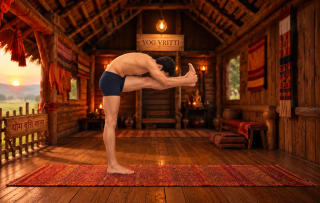
Utthita Janu Sirsasana, when approached with precision, offers a profound release along the entire posterior chain of the body, particularly the hamstrings, while simultaneously opening the hip flexors and strengthening the core. This kneeling forward bend cultivates a deep sense of introspection and balance, drawing the practitioner's awareness inward to calm the nervous system.
Muscles
- Hamstringsstretches
- Hip Flexorsstretches
- Core Stabilizersstabilises
- Quadricepsstrengthens
Joints
- Hip Jointsmobilises
- Knee Jointsstabilises
- Spinemobilises
Inside the body
- Abdominal Organs
- Breathing
Mind
This pose demands sustained concentration and a patient approach, fostering a deep sense of mental discipline (dharana) and focus.
Take care
Teachers must guide students with utmost care, especially those with pre-existing knee or hip injuries.
Ensure the kneeling knee is adequately padded and that the extended leg's hamstring stretch is gradual and intelligent, never forced, to protect the knee joint from strain. Always prioritize spinal length and integrity over the depth of the forward fold, preventing undue compression or strain on the lower back and promoting a safe, sustainable practice for all.
Muscles
Hamstrings
StretchesBiceps Femoris, Semitendinosus, Semimembranosus
The long muscles running along the back of your extended thigh (hamstrings) receive a deep, sustained release here — not a forced stretch but a patient unwinding.
Read moreShow less
As you hold the pose and breathe, the nervous system gradually allows these muscles to let go of years of tension stored from sitting and stress.
In yogic understanding, this releases apana vayu — the downward-moving energy — allowing a feeling of groundedness and ease in the lower body.
Regular practice progressively lengthens this posterior chain, directly reducing the pull on the lower back.
Hip Flexors
StretchesPsoas Major, Iliacus
The muscles at the front of your kneeling hip and thigh (hip flexors) are gently stretched and encouraged to lengthen in this pose.
Read moreShow less
Often tight from prolonged sitting, these muscles can create a tug on the lumbar spine and pelvis.
Releasing tension in this area creates space within the pelvic bowl, which in yogic philosophy is often associated with releasing stored emotional tension and fostering a sense of freedom in movement.
This gentle elongation helps to restore balance to the pelvis and alleviate lower back compression.
Core Stabilizers
StabilisesTransversus Abdominis, Multifidus
The deep muscles of your abdomen and spine (transversus abdominis and multifidus) are actively engaged to stabilize the torso and protect the spine as you fold forward.
Read moreShow less
This intelligent engagement prevents collapsing into the lower back and maintains length through the spinal column.
Cultivating strength and awareness in these deep core muscles creates an internal support system, centralizing energy (samana vayu) and fostering a sense of inner integrity and stability throughout the pose.
This engagement is key for both safety and energetic containment.
Quadriceps
StrengthensRectus Femoris, Vastus Lateralis, Medialis, Intermedius
The muscles at the front of your extended thigh (quadriceps) are actively engaged to lift the kneecap and protect the knee joint.
Read moreShow less
This co-activation with the hamstring stretch ensures that the lengthening is intelligent and safe, preventing hyperextension of the knee.
This balance of strength and flexibility in the extended leg fosters a sense of intelligent action and stability, cultivating a body that is both strong and supple.
It teaches the practitioner to work actively within the stretch rather than passively collapsing.
Joints
Hip Joints
MobilisesThe ball-and-socket joints of your hips (coxal joints) experience deep flexion in the extended leg and gentle extension/stabilization in the kneeling leg.
Read moreShow less
This asymmetrical action mobilizes the joint capsules, improving their range of motion and encouraging synovial fluid production, which acts as a natural lubricant.
Greater mobility in the hips translates to less stiffness in daily movements and a feeling of greater freedom in the pelvic region, essential for a comfortable seated meditation practice.
Consistent practice helps to decompress and nourish these vital joints.
Knee Joints
StabilisesYour knee joints (tibiofemoral joints) are pivotal in this pose, with the kneeling knee bearing weight and the extended knee undergoing extension.
Read moreShow less
Careful attention is required to ensure the kneeling knee is adequately padded and aligned, preventing lateral strain.
In the extended leg, active engagement of the quadriceps is crucial to protect the joint from hyperextension, fostering a sense of intelligent action rather than passive hanging.
This mindful engagement cultivates awareness of knee health and promotes long-term joint stability and resilience.
Spine
MobilisesThe entire length of your spine (vertebral column) undergoes a gentle, even flexion in this forward bend, from the sacrum to the cervical vertebrae.
Read moreShow less
This action helps to decompress the intervertebral discs and lengthen the deep paraspinal muscles, enhancing overall spinal flexibility.
As the spine lengthens and mobilizes, it creates more space for the flow of prana, promoting a sense of lightness and ease.
Regular practice can alleviate stiffness and improve postural alignment, supporting the natural curves of the spine.
Inside the body
Abdominal Organs
The gentle compression of the abdomen in this forward fold provides a soft, internal massage to the digestive organs located within the belly.
Read moreShow less
This subtle pressure can help stimulate peristalsis, the rhythmic contractions that move food through the digestive tract, and improve circulation to the abdominal region.
From a yogic perspective, this action helps to balance Agni, the digestive fire, promoting efficient digestion and elimination.
This internal 'hug' also encourages a deeper connection to the core and visceral awareness.
Breathing
The forward-folding nature of Utthita Janu Sirsasana naturally invites a deeper, more elongated exhalation, as the gentle compression of the abdomen assists the diaphragm in expelling air.
Read moreShow less
This emphasis on exhalation encourages a profound release of physical and mental tension, fostering a greater sense of surrender within the pose.
By consciously extending the out-breath, practitioners can deepen their connection to the parasympathetic nervous system, making it an excellent preparation for calming pranayama practices such as Chandra Bhedana (Moon-piercing breath) or Nadi Shodhana (Alternate Nostril Breathing), promoting inner quietude.
Fascia (connective tissue)
The intricate web of connective tissue (fascia) that envelops every muscle, organ, and bone is deeply engaged and lengthened in Utthita Janu Sirsasana.
Read moreShow less
The entire superficial back line, running from the soles of the feet up the back of the leg, along the spine, and into the neck, receives a sustained, intelligent stretch.
Simultaneously, the superficial front line, particularly through the hip flexors, is encouraged to lengthen and release, creating a balanced opening.
This integrated fascial release helps to unwind chronic holding patterns throughout the body, improving overall fluidity of movement and allowing prana to flow unimpeded through the energetic channels (nadis).
Mind and nervous system
- Nervous system
The deep introspection required to balance and fold in this pose naturally quiets the external senses and turns awareness inward.
Read moreShow less
This shift from outer distraction to inner focus helps to calm the fluctuations of the mind (chitta vritti nirodha), fostering a sense of peace and mental clarity.
By directing attention to the subtle sensations of the body, the nervous system begins to unwind.
The gentle compression of the abdomen in the forward bend encourages a fuller, diaphragmatic breath, which directly stimulates the vagus nerve.
Read moreShow less
This activation shifts the autonomic nervous system towards parasympathetic dominance, inducing a profound state of relaxation and reducing physiological stress.
This conscious breathing pattern is a powerful tool for regulating emotional states.
The combination of balance, precise alignment, and mindful breathing in Utthita Janu Sirsasana cultivates a profound sense of presence and self-awareness.
Read moreShow less
By anchoring the mind in the immediate physical experience and the subtle energetic shifts, it helps to release anxiety about the past or future, bringing the practitioner fully into the present moment and fostering inner steadiness.
- Mind & mood
This pose demands sustained concentration and a patient approach, fostering a deep sense of mental discipline (dharana) and focus.
Read moreShow less
The challenge of balancing while lengthening the body teaches the mind to remain steady and unwavering amidst physical sensation, building mental fortitude and resilience.
It's a practice in unwavering attention.
The forward-folding nature of the pose encourages introspection and a turning inward, helping to quiet external distractions (pratyahara) and cultivate inner silence.
Read moreShow less
This inward journey allows for a deeper connection with one's inner self, promoting self-awareness and a sense of surrender to the present experience, moving beyond superficial thoughts.
This introspection fosters emotional integration.
Working with the body's natural resistance in this pose cultivates patience, self-compassion, and non-violence (ahimsa) towards oneself.
Read moreShow less
It teaches us to observe limitations without judgment, fostering a compassionate self-dialogue and a deeper understanding of the body's wisdom and rhythms.
This patient engagement with the body translates into greater patience in daily life.
Because it is a forward bend pose
Forward bends gently compress the front of the body while lengthening the entire posterior chain, from the heels to the crown of the head.
Read moreShow less
This action encourages introspection and a profound sense of grounding, drawing the practitioner's awareness inward and away from external distractions.
Anatomically, it creates space between the vertebrae and stretches the spinal ligaments, promoting greater flexibility.
Energetically, it calms prana and soothes the nervous system, fostering a state of quietude, surrender, and deep inner peace.
Balancing poses demand intense focus and engagement of the deep core stabilizers, refining proprioception and interoception, our sense of body position and internal state.
Read moreShow less
This intricate dance of subtle muscular adjustments sharpens the mind and enhances neural coordination throughout the entire body.
From a yogic perspective, cultivating balance on the mat translates to greater equanimity and steadiness in the face of life's challenges, unifying body and mind and building unwavering concentration.
This pose specifically targets the deep muscles around the hip joint, including the hamstrings and hip flexors, promoting greater range of motion and flexibility.
Read moreShow less
Anatomically, it helps to release tension in the connective tissues surrounding the pelvis, which can often become tight from prolonged sitting or emotional holding.
Energetically, opening the hips is believed to release stored emotions and stagnant energy (apana vayu), creating a sense of liberation, emotional lightness, and improved vitality in the lower body.