Benefits· लाभ
What Side Plank Pose does for you
Vasisthasana · वसिष्ठासन
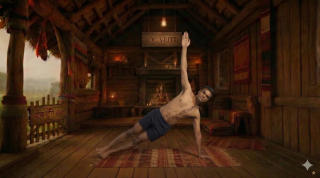
Vasisthasana, or Side Plank Pose, is a profound expression of integrated strength and expansive awareness. It meticulously sculpts the entire lateral chain of the body, from the grounding hand and foot through the lifting core and extended limbs.
Muscles
- Deep Abdominal Musclesstrengthens
- Shoulder Stabilizersstrengthens
- Outer Hip Musclesstrengthens
- Inner Thigh Musclesstrengthens
- Wrist and Forearm Musclesstrengthens
Joints
- Shoulder Jointstabilises
- Wrist Jointstabilises
- Hip Jointstabilises
- Spinal Columnstabilises
Inside the body
- Abdominal Organs
- Lungs
- Kidneys and Adrenal Glands
- Breathing
Mind
Vasisthasana is a powerful practice for cultivating unwavering focus and concentration.
Take care
Teachers should advise students with acute wrist pain or carpal tunnel syndrome to modify by coming onto the forearm, or to avoid the pose entirely if pain persists.
Those with shoulder injuries, particularly rotator cuff issues, must approach with extreme caution, ensuring the shoulder is stable and not collapsing. Individuals with low blood pressure should transition slowly out of the pose to avoid dizziness, and pregnant practitioners should modify with a knee down or consult their healthcare provider, as strong abdominal engagement might be contraindicated.
Muscles
Deep Abdominal Muscles
StrengthensTransversus Abdominis, Internal and External Obliques
These deep muscles wrap around your midsection like a natural corset, from your spine to your front.
Read moreShow less
In Vasisthasana, they work intensely to stabilize your trunk and prevent your hips from collapsing towards the floor, maintaining a straight line from head to heels.
This powerful engagement not only tones the abdominal wall but also supports the lumbar spine, cultivating a strong inner core (agni) that feels both grounded and lifted.
Shoulder Stabilizers
StrengthensSerratus Anterior, Deltoids, Rotator Cuff Muscles (Supraspinatus, Infraspinatus, Teres Minor, Subscapularis)
The muscles surrounding your shoulder blade and shoulder joint are crucial here, particularly the serratus anterior which anchors the scapula to your rib cage.
Read moreShow less
They work synergistically to press the floor away, preventing the shoulder from sinking and creating a strong foundation.
This active lift protects the shoulder joint from compression, fostering a feeling of lightness and expansive strength in the upper body, allowing prana to flow freely.
Outer Hip Muscles
StrengthensGluteus Medius, Gluteus Minimus
Located on the sides of your hips, these muscles are vital for stabilizing the pelvis and preventing it from dropping.
Read moreShow less
They actively abduct and subtly externally rotate the top leg, while the bottom leg's glutes work to maintain the lift of the entire hip structure.
This engagement creates a sense of integrity and power through the lower body, grounding the practitioner while allowing for an upward energetic lift.
Inner Thigh Muscles
StrengthensAdductor Magnus, Longus, Brevis
Even though the legs are stacked, the adductor muscles of both thighs are subtly engaged, particularly if you press the top inner thigh into the bottom one.
Read moreShow less
This creates a powerful energetic draw towards the midline, contributing to the overall stability of the pose.
This activation helps to integrate the legs with the pelvis and core, fostering a sense of energetic containment and focus (bandha) throughout the lower extremities.
Wrist and Forearm Muscles
StrengthensFlexor and Extensor Carpi Muscles
The muscles in your forearms and hands work intensely to distribute weight evenly through the palm, particularly the base of the index finger and thumb.
Read moreShow less
This creates a broad, stable platform for the entire posture, protecting the delicate wrist joint from undue pressure.
Strengthening these muscles builds resilience in the hands and wrists, preparing them for other weight-bearing poses and enhancing the sensitivity of the contact point with the earth.
Joints
Shoulder Joint
StabilisesThe glenohumeral joint, where your arm bone meets your shoulder blade, is under significant load in Vasisthasana.
Read moreShow less
The active engagement of the surrounding muscles ensures the joint is stabilized and protected, preventing impingement or collapse.
This creates a feeling of integrated strength and space in the shoulder, allowing for a healthy range of motion and preventing accumulated tension often held in this area.
Wrist Joint
StabilisesYour radiocarpal joint, the primary wrist articulation, bears a substantial portion of your body weight here.
Read moreShow less
Proper hand alignment, with fingers spread and palm rooted, ensures the weight is distributed broadly, strengthening the ligaments and muscles around the wrist.
This careful loading builds resilience and stability in the wrist, essential for daily activities and other arm-balancing postures, fostering a sense of reliable foundation.
Hip Joint
StabilisesThe acetabulofemoral joint, where your thigh bone meets your pelvis, is stabilized by the strong engagement of the gluteal and core muscles.
Read moreShow less
This prevents the hips from sagging or rotating excessively, maintaining a neutral pelvic alignment.
This active stabilization improves overall hip strength and mobility, enhancing the feeling of a grounded and integrated lower body, which translates to ease in walking and standing.
Spinal Column
StabilisesYour entire vertebral column is held in a long, neutral line, resisting both lateral flexion and rotation.
Read moreShow less
The deep core muscles provide crucial support, creating space between the vertebrae and decompressing the spinal discs.
This sustained engagement cultivates spinal health and flexibility, allowing the central nervous system to function optimally and promoting a feeling of inner spaciousness and energetic flow (prana).
Inside the body
Abdominal Organs
The deep engagement of the oblique and transverse abdominal muscles in Vasisthasana creates a gentle yet firm compression on the organs within the abdominal cavity.
Read moreShow less
This internal massage can stimulate digestion and detoxification processes, promoting healthy organ function and invigorating the digestive fire (agni).
Practitioners often report a feeling of internal cleansing and renewed vitality in the gut.
Lungs
The expansive stretch along the entire side of the body, from the armpit to the outer hip, creates significant space for the lungs to expand, particularly the lower lobes.
Read moreShow less
This encourages deeper, fuller breaths, increasing oxygen intake and vital capacity.
This enhanced respiratory function allows for a greater absorption of prana, leading to increased energy and a sense of calm spaciousness within the chest.
Kidneys and Adrenal Glands
The strong core engagement and lengthening of the side body subtly stimulate the area where the kidneys and adrenal glands reside, in the upper lumbar region.
Read moreShow less
While not a direct massage, the support and toning of the surrounding musculature can positively influence their function.
This activation can contribute to balancing energy levels and reducing feelings of fatigue, fostering a sense of inner strength and resilience.
Breathing
The shape of Vasisthasana, with its strong core engagement and expansive side body stretch, naturally encourages a deeper, more refined breath.
Read moreShow less
While initial effort might restrict breath, the sustained hold, once stability is found, invites a full diaphragmatic breath that expands into the side ribs.
This promotes a conscious, rhythmic Ujjayi breath, which not only supports core stability but also calms the nervous system, transforming a challenging posture into a meditative, prana-enhancing experience.
Fascia (connective tissue)
In Vasisthasana, the entire lateral fascial line, running from the outer edge of the foot, up the outer leg, across the hip, along the side of the trunk, and down the arm to the grounding hand, is intensely engaged and lengthened.
Read moreShow less
This integrated fascial tension creates a feeling of whole-body support and expansion, releasing tightness and improving connectivity through the body's 'side seam'.
This activation helps to open energetic channels (nadis) along the side body, allowing prana to flow more freely and promoting a sense of spaciousness and ease.
Mind and nervous system
- Nervous system
The intense demand for balance in Vasisthasana immediately draws the nervous system into a state of heightened awareness and focus.
Read moreShow less
Your proprioceptors, tiny sensors in your muscles and joints, send constant feedback to your brain, refining your body's map of itself in space.
This concentrated effort quiets the incessant chatter of the mind (chitta vritti), bringing a profound sense of presence and mental clarity, much like a moving meditation.
Holding this challenging posture with steady breath requires a delicate balance between effort and surrender, engaging both the sympathetic and parasympathetic nervous systems.
Read moreShow less
Initially, the challenge might activate a 'fight or flight' response, but as you settle and breathe, the parasympathetic system gently guides you towards a state of calm alertness.
This cultivates the yogic principle of sthiram (steadiness) and sukham (ease), teaching the nervous system resilience under pressure.
The continuous feedback loop between the brain, muscles, and joints in Vasisthasana significantly enhances neuromuscular coordination.
Read moreShow less
This improves the efficiency with which your brain communicates with your body, leading to better balance, agility, and reaction time in daily life.
This refined connection fosters a deeper sense of embodiment and control, allowing the practitioner to move through the world with greater grace and confidence.
- Mind & mood
Vasisthasana is a powerful practice for cultivating unwavering focus and concentration.
Read moreShow less
The sheer demand for balance and stability requires the mind to be fully present, drawing attention away from external distractions and into the intricate sensations of the body.
This active engagement of dharana (concentration) trains the mind to be less scattered, fostering a profound sense of inner quiet and mental discipline.
The challenge of holding Vasisthasana builds immense willpower and determination.
Read moreShow less
When the body tires, the mind's resolve is tested, pushing practitioners to find strength beyond perceived limits.
This cultivation of tapas (disciplined effort) extends beyond the mat, empowering individuals to face life's difficulties with courage and a resilient spirit, knowing they can sustain effort even when uncomfortable.
Successfully navigating the complexities of Vasisthasana cultivates a deep sense of self-trust and inner strength.
Read moreShow less
Each breath held in balance reinforces the belief in one's capacity to maintain stability amidst dynamic movement, both physically and mentally.
This fosters a quiet confidence and an unshakeable inner foundation, allowing practitioners to stand firm in their own truth and navigate challenges with greater equanimity.
Because it is a balance pose
Balance poses like Vasisthasana intricately engage the nervous system to coordinate multiple muscle groups, particularly the deep core stabilizers and proprioceptors in the feet and hands.
Read moreShow less
This refines proprioception – your body's awareness in space – enhancing agility, stability, and reducing the risk of falls in daily life, fostering a greater sense of groundedness.
To maintain equilibrium in Vasisthasana, the entire core musculature, including the deep transversus abdominis and multifidus, works synergistically to stabilize the spine and pelvis.
Read moreShow less
This foundational strength supports all movement, protects the back, and cultivates a steady inner center, translating to improved posture and a feeling of integrated power throughout the trunk.
Balancing postures demand undivided attention, drawing the mind away from external distractions and into the present moment and the subtle shifts of weight and muscle engagement.
Read moreShow less
This active cultivation of dharana (concentration) leads to a calmer, more focused mental state, sharpening cognitive abilities and fostering a profound connection between body and mind.