 शुरुआतीkneeling
विविधताएँ (1)
आञ्जनेयासन
Low Lunge Pose
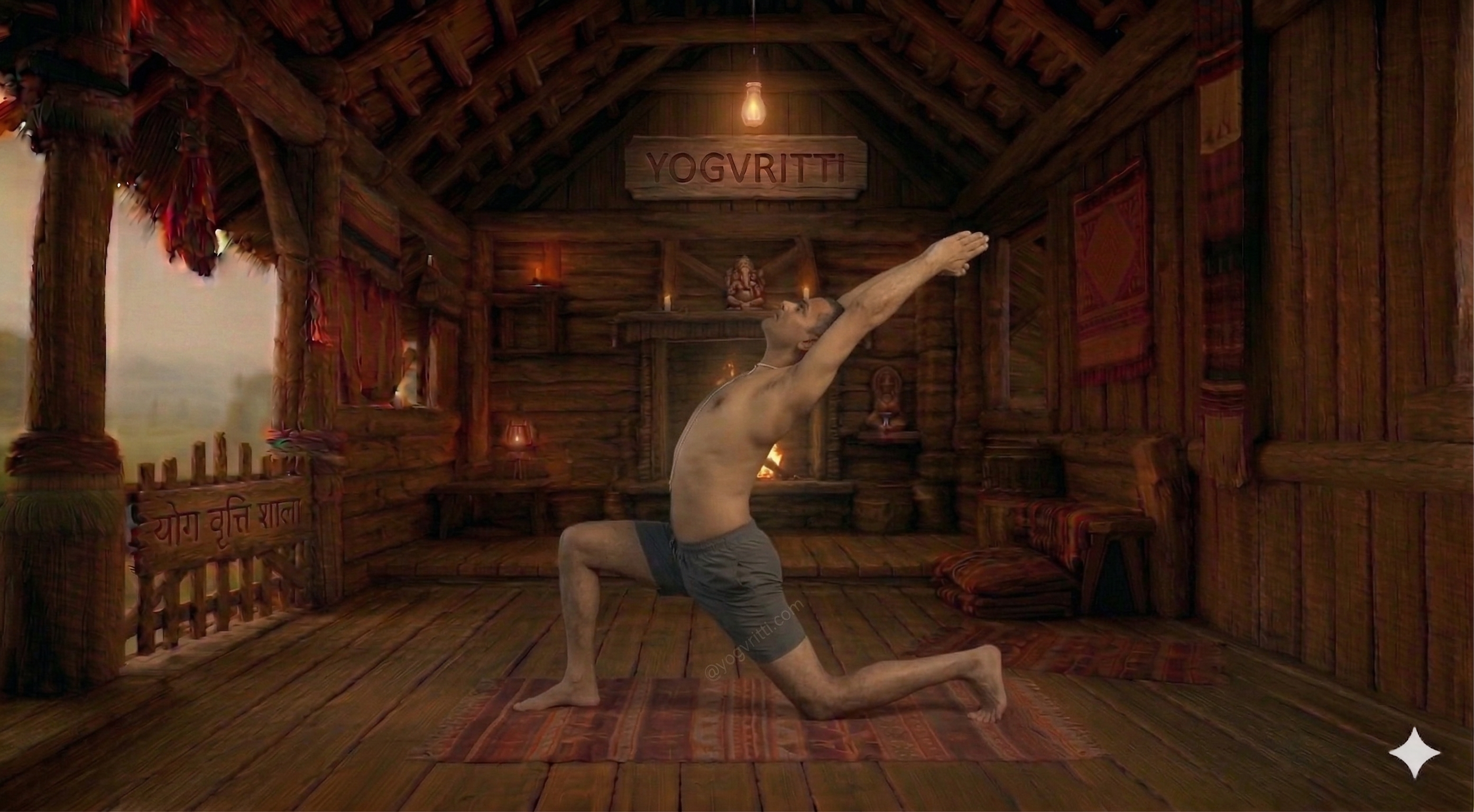
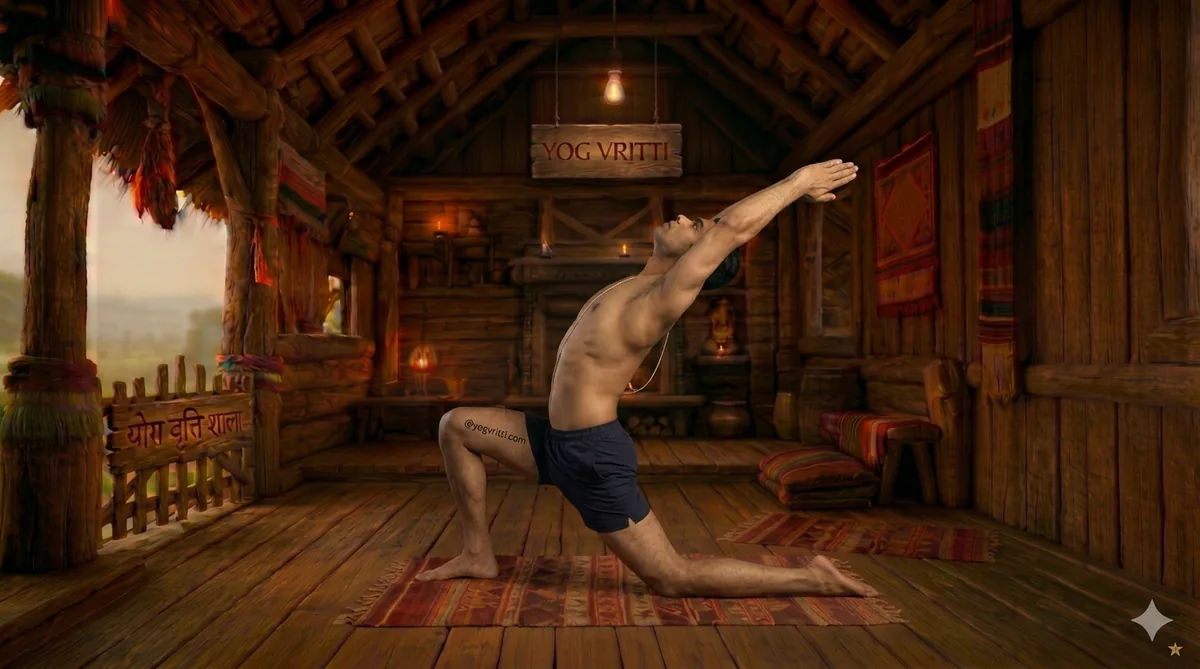
आंजनेयासन एक घुटने टेकने वाला पश्चिमासन है जो हिप फ्लेक्सर्स और क्वाड्रिसेप्स को फैलाता है जबकि पैरों और कोर को मजबूत करता है। यह संतुलन में सुधार करता है और छाती को खोलता है, ऊर्जा और जीवन शक्ति को बढ़ावा देता है।
फायदे
5Hip Flexors(lengthening)
The deep muscles at the front of your hip and thigh on the back leg (iliopsoas and rectus femoris) receive a profound, sustained stretch here. This action helps to release chronic tightness often caused by prolonged sitting, which can pull on the lower back and compromise posture. As these muscles lengthen, a sense of freedom expands from the pelvis, allowing for greater mobility and an uninhibited flow of apana vayu, the grounding energy, through the lower abdomen.
Quadriceps(lengthening (back leg), strengthening (front leg))
On the back leg, the large muscles on the front of your thigh (quadriceps, particularly the rectus femoris) are actively lengthened as you deepen into the lunge, improving flexibility. Simultaneously, the quadriceps of the front leg engage powerfully to stabilize the knee and support your body weight, building strength and endurance. This dual action cultivates both flexibility and stability, bringing an intelligent balance to the legs and preparing them for dynamic movement.
Glutes(strengthening (front leg), stabilizing)
The powerful muscles in your buttocks (gluteus maximus and medius) on the front leg are actively engaged to stabilize the hip joint and support the deep flexion of the front knee. This engagement prevents undue strain on the knee and lumbar spine, creating a solid foundation for the pose. By consciously activating these muscles, we foster a sense of rootedness and power, channeling energy upwards from the earth through the legs and establishing a firm base.
- पूर्ण शारीरिक विश्लेषण →
सावधानियाँ
3Knee Injury
Deep flexion or rotation at the knee can strain ligaments, meniscus, or cartilage, especially in a compromised joint.
Bend the knees generously to protect the joint and keep the weight in the heels rather than the toes.
Hip Injury
Deep hip flexion, external rotation, or weight-bearing can aggravate labral tears, impingement, or bursitis.
Limit the range of hip movement, avoid positions that cause clicking or sharp pain, and use props to support the hip.
Back Injury / Back Pain
Spinal flexion, extension, or rotation under load can compress vertebral discs or strain the paraspinal muscles.
Bend both knees generously, hinge from the hips rather than rounding the spine, and rest hands on blocks or thighs.
विधि
चरण-दर-चरण निर्देश
Adho Mukha Svanasana से शुरू करें।
दाहिना पैर आगे लाएँ, दोनों हाथों के बीच रखें।
बाएँ घुटने को जमीन पर टिकाएँ।
श्वास लें, और हाथों को ऊपर उठाएँ, हथेलियाँ एक दूसरे की ओर हों।
छाती को ऊपर उठाएँ, और हल्के से पीछे की ओर झुकें।
कुछ सांसों के लिए आसन में बने रहें, गहरी सांस लें।
श्वास छोड़ें, और हाथों को नीचे लाएँ, दाहिने पैर के दोनों ओर रखें।
Adho Mukha Svanasana में वापस आ जाएँ।
दूसरी तरफ से दोहराएँ।
सहायक उपकरण
वैकल्पिक सहायता — आवश्यकतानुसार उपयोग करें
Folded Blanket
Place a folded blanket under the sitting bones to ease the forward tilt of the pelvis and reduce strain at the hamstring attachment.
Yoga Block
Place blocks under the hands at any height to allow the spine to lengthen fully before attempting to reach the floor — prioritising posture over depth.
सामान्य गलतियाँ
शिक्षण संकेत
अभ्यास क्रम
अक्सर पूछे जाने वाले प्रश्न
आञ्जनेयासन के बारे में सामान्य प्रश्न
आञ्जनेयासन क्या है?
आंजनेयासन एक घुटने टेकने वाला पश्चिमासन है जो हिप फ्लेक्सर्स और क्वाड्रिसेप्स को फैलाता है जबकि पैरों और कोर को मजबूत करता है। यह संतुलन में सुधार करता है और छाती को खोलता है, ऊर्जा और जीवन शक्ति को बढ़ावा देता है।
आञ्जनेयासन के क्या फायदे हैं?
Stretches hip flexors and quadriceps। Strengthens legs and core। Improves balance।
आञ्जनेयासन किस स्तर के लिए है?
आञ्जनेयासन एक शुरुआती स्तर का आसन है। यह सभी के लिए उपयुक्त है।
आञ्जनेयासन कौन न करे?
Knee injuries, Hip injuries, Lower back pain की स्थिति में यह आसन न करें।
आञ्जनेयासन के लिए कौन से उपकरण चाहिए?
blanket, block का उपयोग इस आसन को आसान बना सकता है।