 शुरुआतीमोड़
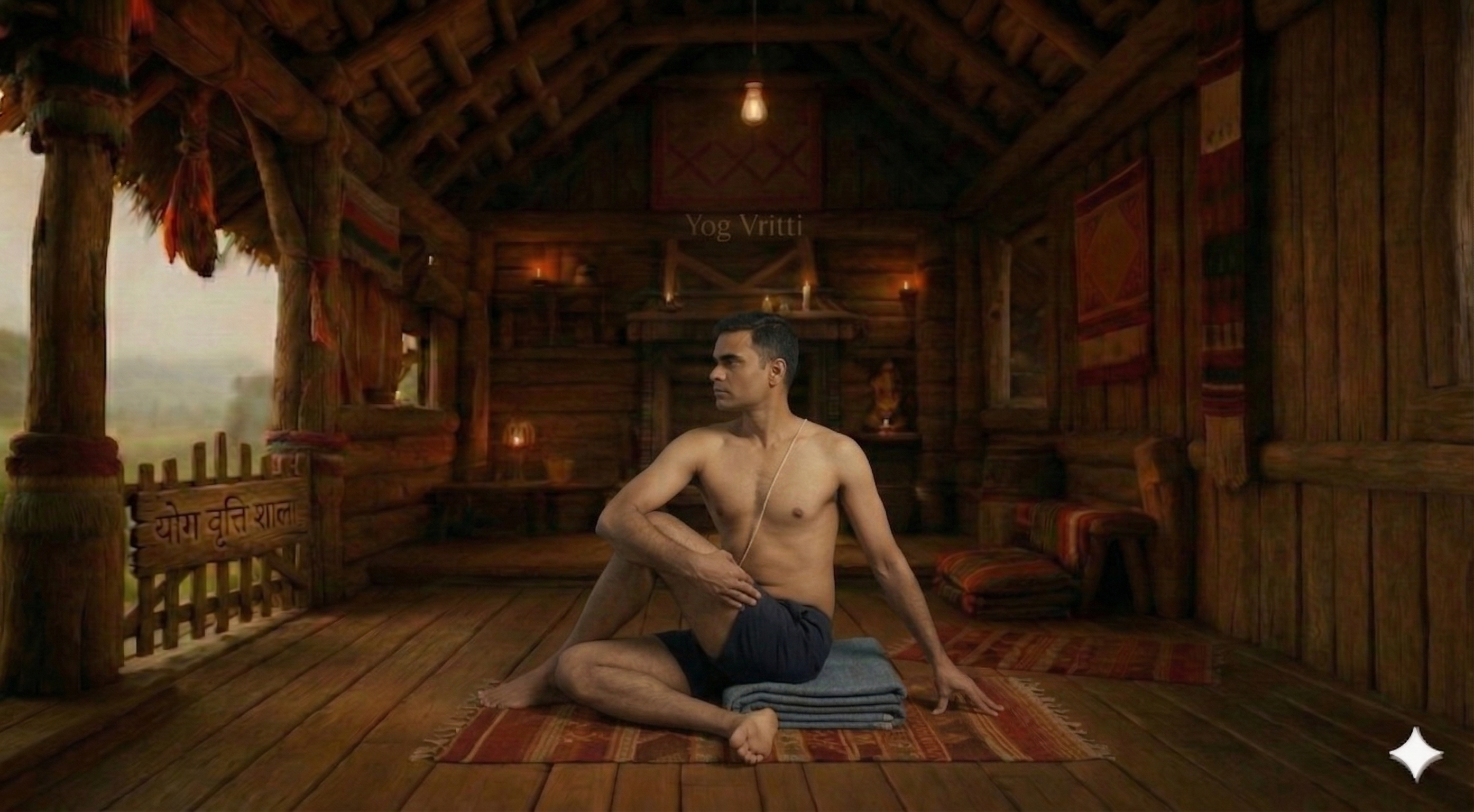
भरद्वाजासन (बैठे, कम्बल के सहारे)
Bharadvaja's Twist with Blanket Support
भारद्वाजासन की यह समर्थित भिन्नता कूल्हों के नीचे एक कंबल का उपयोग करती है जो श्रोणि को ऊपर उठाती है और एक गहरे, अधिक आरामदायक मोड़ की सुविधा प्रदान करती है।
फायदे
5Obliques (side abdominal muscles)(activating)
These strong sheets of muscle wrap around your waist, forming the sides of your abdominal wall. In Bharadvajasana, the obliques on one side actively contract to initiate and deepen the spinal twist, drawing the rib cage towards the opposite hip. Simultaneously, the obliques on the other side lengthen, creating a gentle stretch and release across the abdomen. This balanced action helps to wring out tension from the midsection, promoting a feeling of lightness and improved energy flow (prana) in the core.
Spinal Erectors (muscles alongside the spine)(stabilizing)
These long, powerful muscles run vertically along either side of your spine, responsible for keeping your back upright and extended. In this supported twist, the erector spinae work subtly to maintain the length of the spine as you rotate, preventing collapse or compression. This co-contraction ensures that the twist happens with integrity, creating space between the vertebrae rather than crunching them, which translates into a feeling of elongation and freedom throughout the entire spinal column, allowing energy to flow unimpeded upwards (udana vayu).
Quadratus Lumborum (deep lower back muscle)(stabilizing)
The QL is a deep muscle located in your lower back, connecting your pelvis to your lowest rib and lumbar vertebrae. While primarily a lateral flexor, in a twist, it works to stabilize the lumbar spine, preventing excessive or uncontrolled rotation in this vulnerable area. The blanket support under the hips helps to ground the pelvis, allowing the QL to subtly engage and protect the lower back, fostering a sense of security and stability (sthira) in the foundation of the pose.
- पूर्ण शारीरिक विश्लेषण →
सावधानियाँ
4Disc Herniation
Spinal flexion and rotation under load increase intradiscal pressure and can push herniated material toward spinal nerves.
Initiate the rotation from the upper thoracic spine; avoid forceful lumbar rotation.
Back Injury / Back Pain
Spinal flexion, extension, or rotation under load can compress vertebral discs or strain the paraspinal muscles.
Initiate the twist from the upper spine and ribs rather than forcing from the waist; keep both sitting bones grounded.
Diarrhea
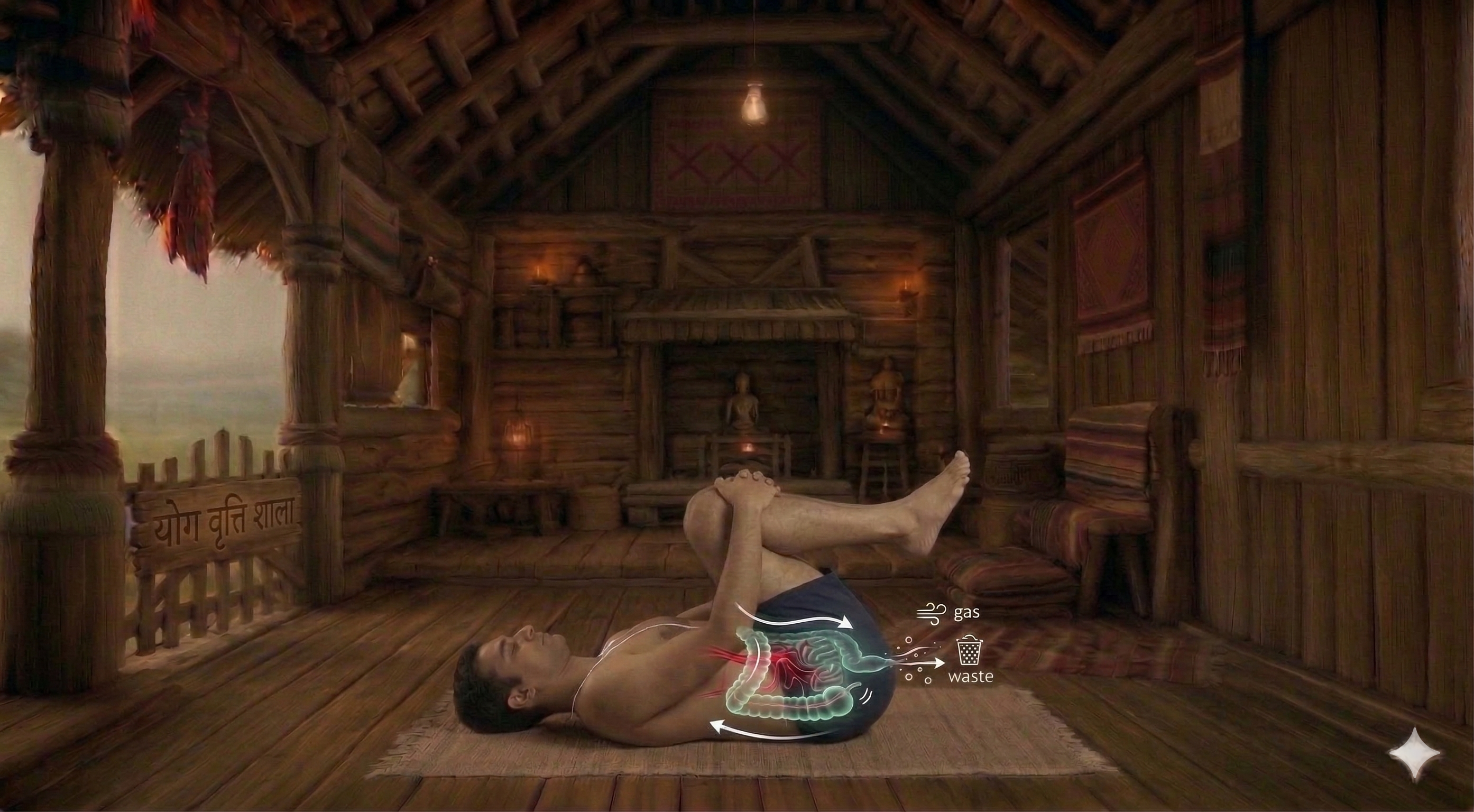
Twisting and strong abdominal compression stimulate intestinal peristalsis, which can worsen diarrhoea.
Rest and allow the digestive system to recover; practise only very gentle, restorative postures.
Pregnancy
Deep twists, abdominal compression, and lying flat on the back can restrict blood flow or cause discomfort as pregnancy progresses.
Twist from the upper thoracic spine only, opening the chest rather than compressing the abdomen; use a chair for support.
विधि
चरण-दर-चरण निर्देश
Sit on the floor with your legs extended in front of you.
Bend your knees and bring your feet to the left side of your body.
Place your feet near your left hip.
Ensure both sit bones are grounded on the floor or a folded blanket.
Inhale and lengthen your spine upwards.
Exhale and twist your torso to the right.
Place your right hand on the floor behind you for support.
Place your left hand on your right knee.
Keep your shoulders relaxed and your chest open.
Breathe deeply and evenly, deepening the twist gently with each exhale.
फर्श पर बैठें और अपने पैरों को अपने सामने फैलाएं।
अपने घुटनों (knees) को मोड़ें और अपने पैरों को अपने body के बाईं ओर लाएँ।
अपने पैरों को अपने बाएं hip के पास रखें।
सुनिश्चित करें कि दोनों sit bones फर्श या एक मुड़े हुए कम्बल पर grounded हैं।
Inhale करें और अपनी रीढ़ (spine) को ऊपर की ओर लंबा करें।
Exhale करें और अपने torso को दाईं ओर twist करें।
Support के लिए अपने दाहिने हाथ को अपने पीछे फर्श पर रखें।
अपने बाएं हाथ को अपने दाहिने घुटने (knee) पर रखें।
अपने कंधों (shoulders) को relax रखें और अपनी छाती (chest) को खुला रखें।
गहरी और समान रूप से श्वास (breath) लें, प्रत्येक exhale के साथ twist को धीरे से गहरा करें।
सहायक उपकरण
वैकल्पिक सहायता — आवश्यकतानुसार उपयोग करें
Folded Blanket
Use a blanket for cushioning, elevation, or support — it adapts the pose to your body's current needs without compromising alignment.
Wall
The wall provides support, proprioceptive feedback, and confidence — use it to learn the correct alignment before practising independently.
Chair
Sit sideways on a chair and use the back rest for leverage — this is the most accessible form of a spinal twist for any body.
सामान्य गलतियाँ
शिक्षण संकेत
अभ्यास क्रम
अक्सर पूछे जाने वाले प्रश्न
भरद्वाजासन (बैठे, कम्बल के सहारे) के बारे में सामान्य प्रश्न
भरद्वाजासन (बैठे, कम्बल के सहारे) क्या है?
भारद्वाजासन की यह समर्थित भिन्नता कूल्हों के नीचे एक कंबल का उपयोग करती है जो श्रोणि को ऊपर उठाती है और एक गहरे, अधिक आरामदायक मोड़ की सुविधा प्रदान करती है।
भरद्वाजासन (बैठे, कम्बल के सहारे) के क्या फायदे हैं?
Gently rotates the thoracic spine। Relieves stiffness in the back and shoulders। Massages the abdominal organs।
भरद्वाजासन (बैठे, कम्बल के सहारे) किस स्तर के लिए है?
भरद्वाजासन (बैठे, कम्बल के सहारे) एक शुरुआती स्तर का आसन है। यह सभी के लिए उपयुक्त है।
भरद्वाजासन (बैठे, कम्बल के सहारे) कौन न करे?
Spinal disc herniation, Acute back pain, Diarrhoea की स्थिति में यह आसन न करें।
भरद्वाजासन (बैठे, कम्बल के सहारे) के लिए कौन से उपकरण चाहिए?
blanket, wall, chair का उपयोग इस आसन को आसान बना सकता है।