 उन्नतखड़े होकर
दुर्वासासन
Sage Durvasa's Pose
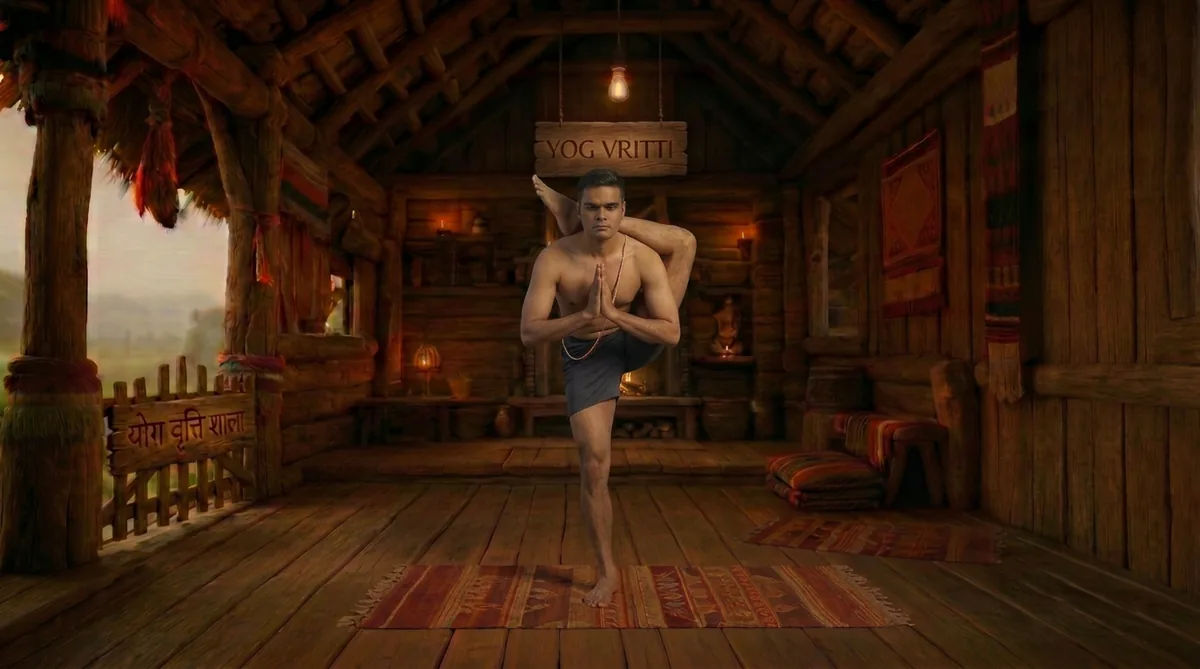
दुर्वासासन एक उन्नत खड़े होकर किया जाने वाला संतुलन आसन है जिसमें एक पैर सिर के पीछे रखकर दूसरे पैर पर खड़े रहते हैं।
फायदे
4Hamstrings(lengthening)
The long muscles running along the back of your lifted thigh (hamstrings) experience an extraordinary, sustained lengthening here, far beyond typical stretches. As you patiently guide the leg behind the head, the nervous system is encouraged to release its protective tension, allowing these muscles to truly unwind from their origins at the sitting bones to their insertions below the knee. In yogic terms, this deep release of the posterior chain helps to free apana vayu, facilitating a sense of lightness and unburdening in the lower body, and directly addressing tightness that can pull on the pelvis and lower back.
Deep Hip Rotators(lengthening)
These small but mighty muscles, nestled deep within your buttocks (deep hip rotators), are crucial for enabling the extreme external rotation required to bring the leg behind the head. They are not merely stretching but are being coaxed into a new range of motion, which can feel intensely liberating as chronic tension held in this region begins to dissipate. From an energetic perspective, opening these deep hip structures can release stored emotional patterns and blockages, allowing for a freer flow of prana through the pelvic bowl and sacral area.
Quadriceps(strengthening)
The powerful muscles on the front of your standing thigh (quadriceps) are working intensely to maintain stability and prevent the knee from collapsing. They are actively engaged in isometric contraction, providing the foundational support necessary for the balance and the lift of the torso. This engagement builds significant strength and endurance in the standing leg, cultivating sthira (steadiness) not just physically but also energetically, grounding your awareness deeply into the earth through your foot.
- पूर्ण शारीरिक विश्लेषण →
सावधानियाँ
5Hip Injury
Deep hip flexion, external rotation, or weight-bearing can aggravate labral tears, impingement, or bursitis.
Do not force the hip into deep external rotation; keep the foot turned out only as far as is pain-free.
Hamstring Injury
Aggressive stretching of a torn or strained hamstring can reinjure muscle fibres — the attachment near the sitting bone is especially vulnerable.
Do not try to straighten the legs fully; prioritise a neutral pelvis and neutral lower back over hamstring length.
Neck Injury / Cervical Issues
Looking up, bearing head weight, or unsupported neck rotation can compress cervical vertebrae and irritate nerves.
Keep the head in a neutral position aligned with the spine; avoid deep neck extension, flexion, or unsupported rotation.
Balance Disorders
Impaired proprioception increases the risk of falls during standing and balancing poses.
Practise with one hand on a wall or chair back; keep both feet wider than hip-width for a stable base.
विधि
चरण-दर-चरण निर्देश
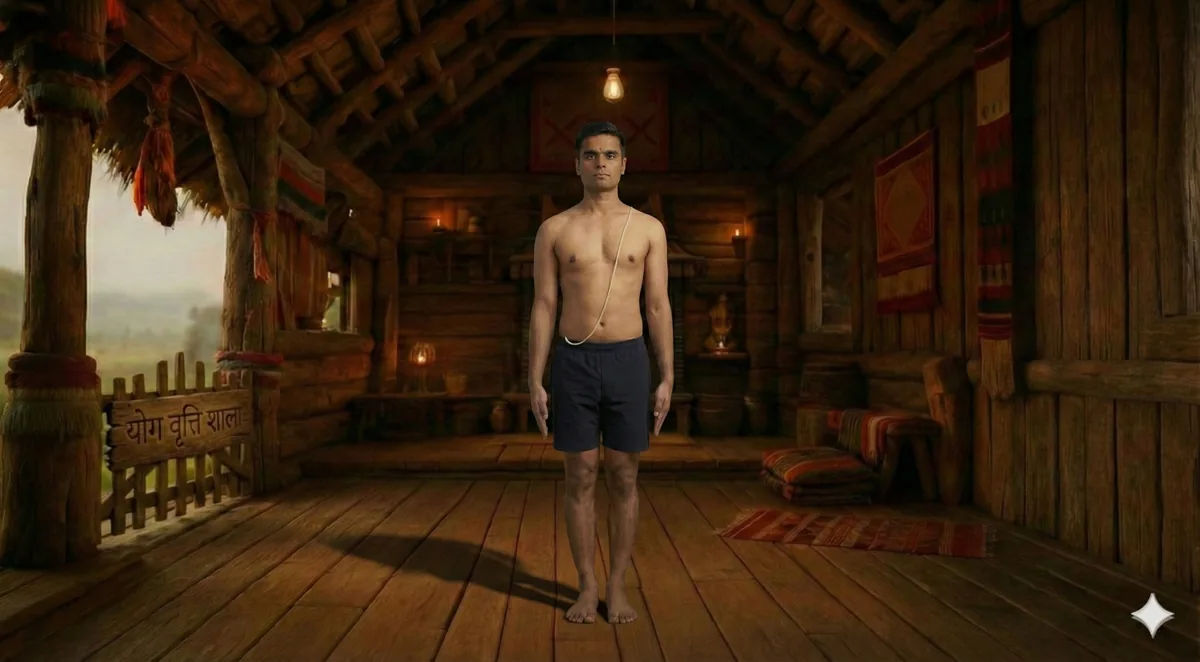
ताड़ासन में खड़े हों।
दायां घुटना मोड़ें, दाएं पैर को दोनों हाथों से पकड़ें।
दाएं पैर को धीरे-धीरे ऊपर उठाएं।
दाएं पैर को सिर के पीछे से ले जाकर गर्दन के पीछे रखें।
बाएं पैर पर संतुलन बनाएं — बायां पैर मजबूत और सीधा।
हाथों को नमस्कार मुद्रा में छाती के सामने लाएं।
रीढ़ सीधी, दृष्टि सामने एक बिंदु पर (दृष्टि)।
3-5 सांसें लें।
धीरे-धीरे हाथों से पैर को नीचे लाएं।
दूसरी तरफ दोहराएं।
सामान्य गलतियाँ
शिक्षण संकेत
अभ्यास क्रम
अक्सर पूछे जाने वाले प्रश्न
दुर्वासासन के बारे में सामान्य प्रश्न
दुर्वासासन क्या है?
दुर्वासासन एक उन्नत खड़े होकर किया जाने वाला संतुलन आसन है जिसमें एक पैर सिर के पीछे रखकर दूसरे पैर पर खड़े रहते हैं।
दुर्वासासन के क्या फायदे हैं?
Extreme hip flexibility। Standing balance mastery। Mental focus and determination।
दुर्वासासन किस स्तर के लिए है?
दुर्वासासन एक उन्नत स्तर का आसन है। शुरुआती लोग किसी योग गुरु के मार्गदर्शन में अभ्यास करें।
दुर्वासासन कौन न करे?
Hip injuries, Hamstring injuries, Neck injuries की स्थिति में यह आसन न करें।