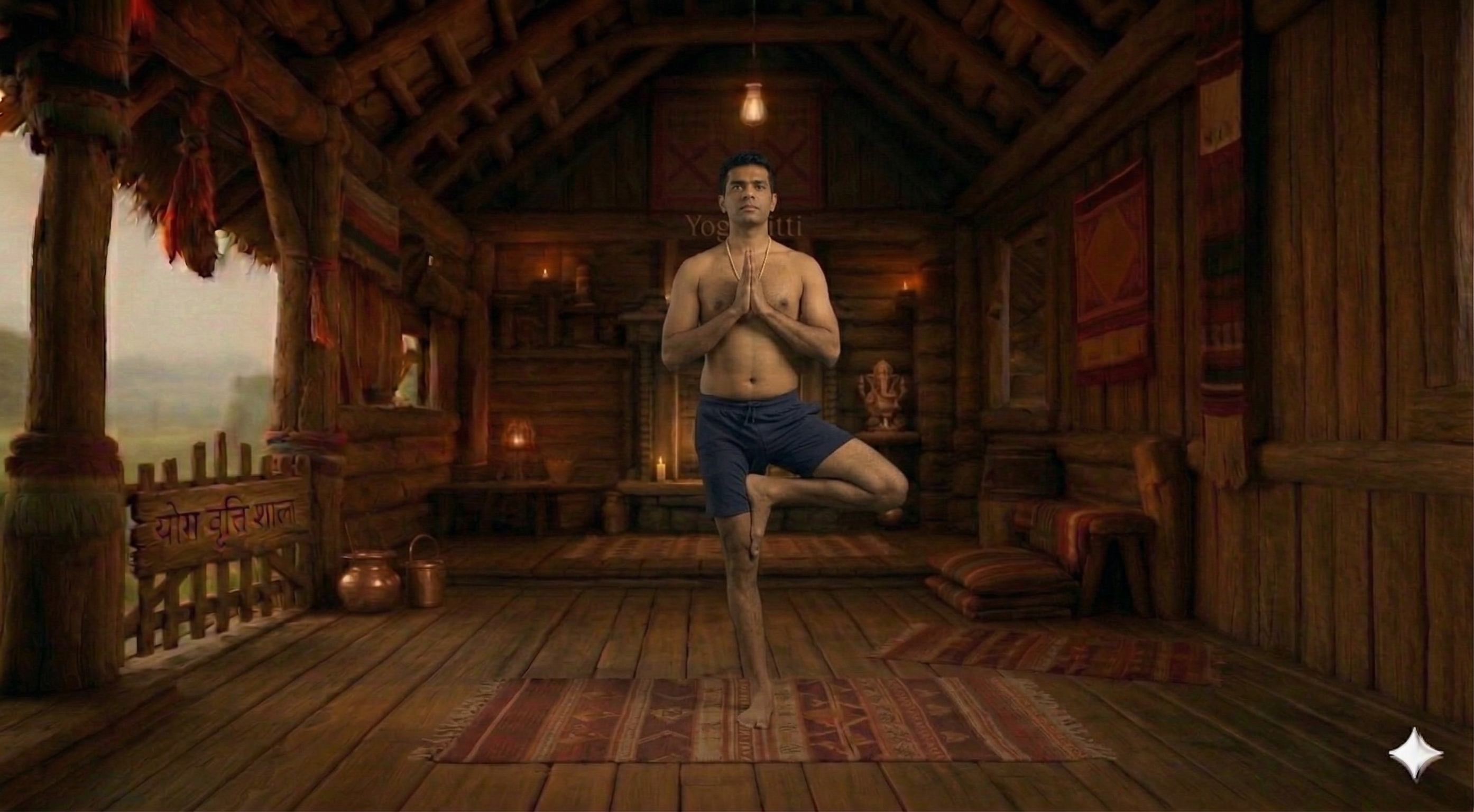
 मध्यमखड़े होकर
एक पाद प्रणामसन
Standing Praying Pose
एक पाद प्रणामसन संतुलन को चुनौती देता है, खड़े पैर को मजबूत करता है और ध्यान केंद्रित करने की क्षमता में सुधार करता है। यह उठे हुए पैर के कूल्हे को भी खोलता है।
फायदे
5Quadriceps (standing leg)(strengthening)
The large muscles on the front of your standing thigh (quadriceps) are powerfully engaged, working to extend and stabilize the knee joint. This active engagement creates a firm foundation, preventing the knee from collapsing and protecting its integrity under weight. Energetically, this firming action cultivates a sense of unwavering determination and strength, building a solid base for the entire posture. It teaches the leg to be both strong and intelligently yielding.
Glutes (standing leg)(strengthening)
The powerful muscles of your standing buttock (glutes) are crucial for stabilizing the hip and pelvis, preventing any lateral sway or misalignment. Specifically, Gluteus Medius and Minimus work tirelessly to keep the pelvis level and the femur centered in the hip socket, providing a sense of rootedness. This deep engagement grounds the lower body, allowing the upper body to feel light and expansive, fostering a sense of inner security and balance.
Hamstrings (standing leg)(stabilizing)
While not primarily lengthening, the muscles on the back of your standing thigh (hamstrings) are eccentrically engaged, providing crucial dynamic stability to the knee joint in conjunction with the quadriceps. They subtly resist hyperextension, creating a balanced tension across the knee. This nuanced action brings awareness to the entire posterior chain, contributing to the overall steadiness and intelligent engagement of the standing leg, preventing rigidity and encouraging a fluid strength.
- पूर्ण शारीरिक विश्लेषण →
सावधानियाँ
4Knee Injury
Deep flexion or rotation at the knee can strain ligaments, meniscus, or cartilage, especially in a compromised joint.
Do not allow the knee to travel beyond the ankle; keep weight evenly distributed and use a block under the hand for support.
Ankle Injury
Unstable or injured ankle joints can be overstressed by weight-bearing, extreme dorsiflexion, or plantar flexion.
Place a folded blanket under the ankle to cushion it, or practise a seated version of the pose.
Hip Injury
Deep hip flexion, external rotation, or weight-bearing can aggravate labral tears, impingement, or bursitis.
Do not force the hip into deep external rotation; keep the foot turned out only as far as is pain-free.
Low Blood Pressure
Rising quickly from low positions can cause a sudden drop in blood pressure, leading to dizziness or fainting.
Rise slowly from seated or lying positions, pause in a mid-level shape before fully standing, and use a wall for support.
विधि
चरण-दर-चरण निर्देश
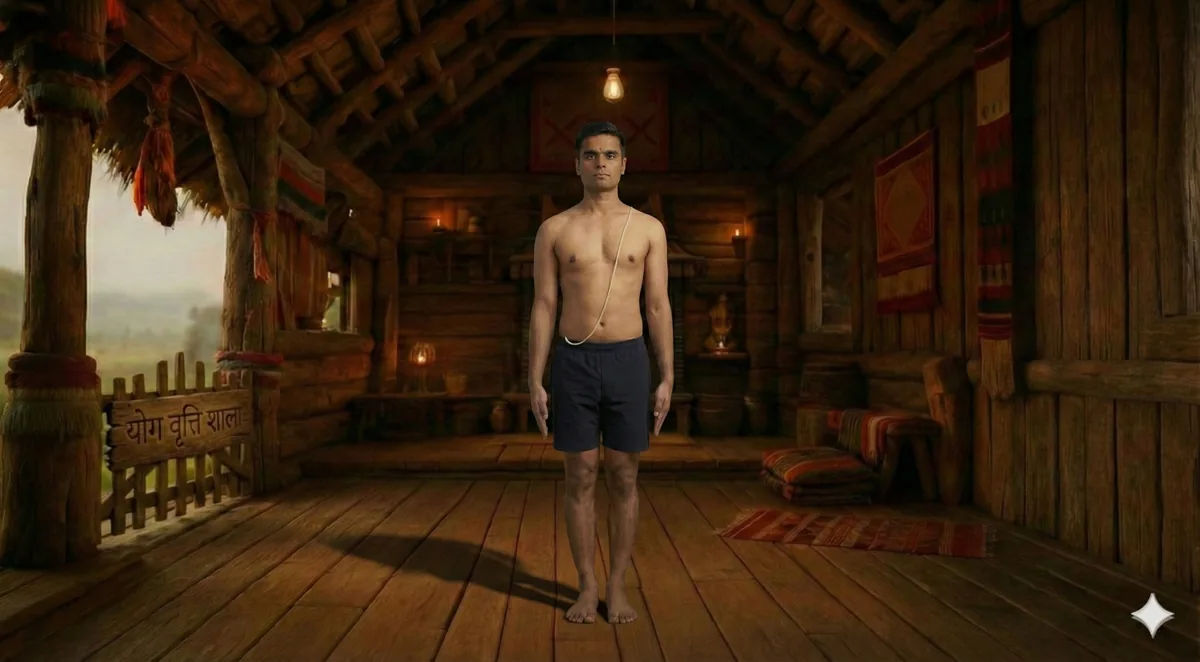
Tadasana में खड़े हो जाएं।
श्वास अंदर लें और हाथों को नमस्कार मुद्रा में छाती के सामने लाएं।
दाहिने पैर को ऊपर उठाएं और बाएं जांघ के ऊपर रखें, पैर का तलवा जांघ के अंदरूनी हिस्से पर होना चाहिए।
श्वास छोड़ते हुए, धीरे-धीरे घुटनों को मोड़ें और नीचे बैठें, जब तक कि बायां जांघ जमीन के समानांतर न हो जाए।
रीढ़ को सीधा रखें और दृष्टि को सामने की ओर रखें।
balance बनाए रखें।
20-30 सेकंड के लिए इस स्थिति में बने रहें, श्वास लेते और छोड़ते रहें।
श्वास अंदर लें और धीरे-धीरे ऊपर उठें।
श्वास छोड़ते हुए, पैर को नीचे Tadasana में लाएं।
अब यही क्रिया बाएं पैर से दोहराएं।
सहायक उपकरण
वैकल्पिक सहायता — आवश्यकतानुसार उपयोग करें
Wall
Practise near the wall so one fingertip can lightly touch it, giving the nervous system a safety anchor while building proprioceptive confidence.
सामान्य गलतियाँ
शिक्षण संकेत
अभ्यास क्रम
अक्सर पूछे जाने वाले प्रश्न
एक पाद प्रणामसन के बारे में सामान्य प्रश्न
एक पाद प्रणामसन क्या है?
एक पाद प्रणामसन संतुलन को चुनौती देता है, खड़े पैर को मजबूत करता है और ध्यान केंद्रित करने की क्षमता में सुधार करता है। यह उठे हुए पैर के कूल्हे को भी खोलता है।
एक पाद प्रणामसन के क्या फायदे हैं?
Improves balance and coordination। Strengthens the standing leg। Opens the hip of the lifted leg।
एक पाद प्रणामसन किस स्तर के लिए है?
एक पाद प्रणामसन एक मध्यम स्तर का आसन है। शुरुआती लोग किसी योग गुरु के मार्गदर्शन में अभ्यास करें।
एक पाद प्रणामसन कौन न करे?
Knee injury, Ankle injury, Hip injury की स्थिति में यह आसन न करें।
एक पाद प्रणामसन के लिए कौन से उपकरण चाहिए?
wall का उपयोग इस आसन को आसान बना सकता है।