विविधताएँ (1)
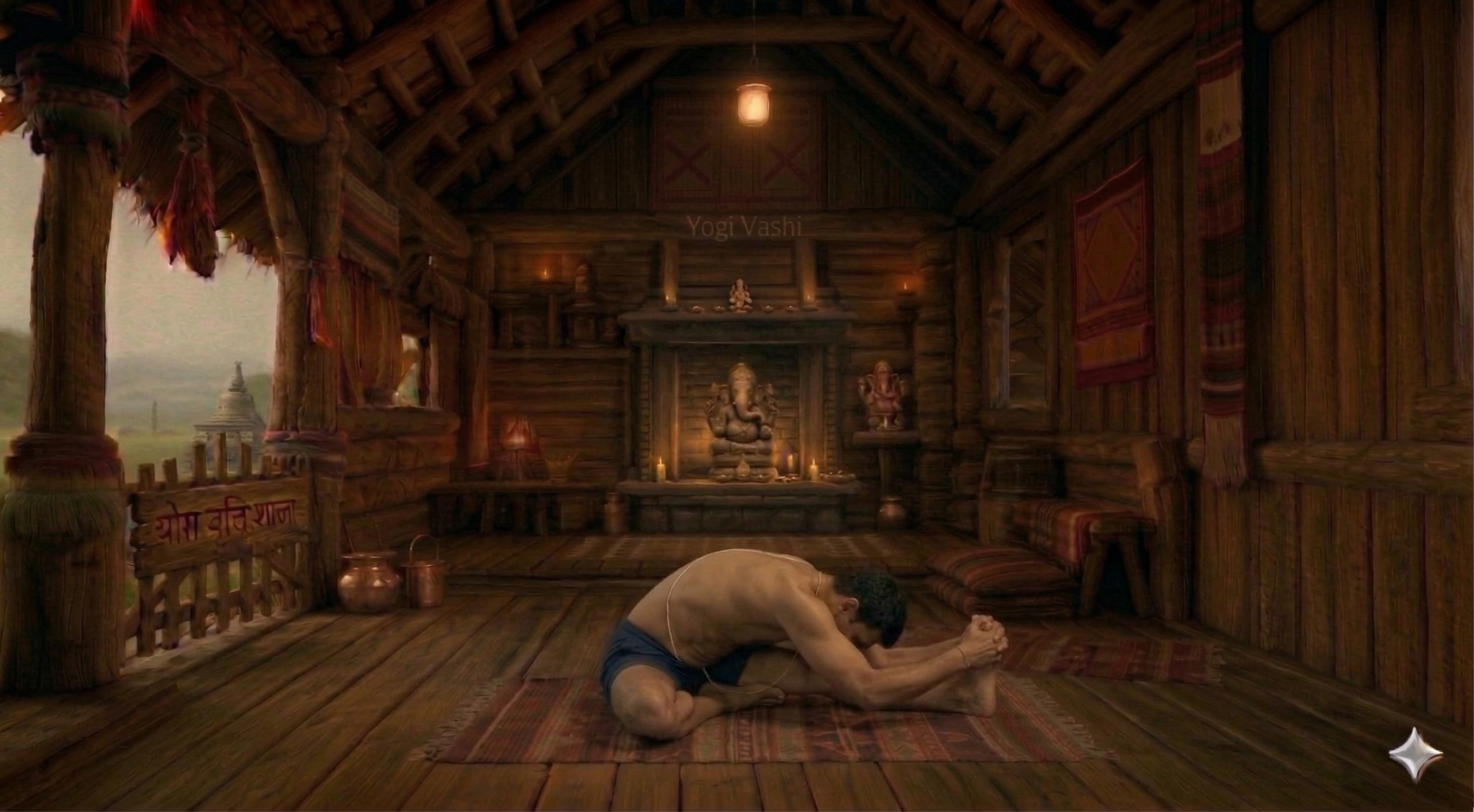
जानु शीर्षासन (संस्थित)
Supported Head-to-Knee Pose
जानु शीर्षासन एक बैठा हुआ आगे की ओर झुकने वाला आसन है जो हैमस्ट्रिंग, रीढ़ और कमर को खींचता है। बैठने की हड्डियों के नीचे या विस्तारित पैर के घुटने के नीचे कंबल जैसे समर्थन का उपयोग करने से आसन शुरुआती लोगों के लिए अधिक सुलभ हो जाता है।
फायदे
5Hamstrings(lengthening)
In this supported variation, the hamstrings experience a gentler, yet often more effective, lengthening. When a blanket is placed under the sitting bones, it encourages an anterior pelvic tilt, effectively lengthening the hamstrings from their origin without demanding excessive flexibility. If the blanket supports the knee of the extended leg, it slightly flexes the knee joint, immediately reducing the intense stretch on the hamstring belly and allowing for a more relaxed release.
Erector Spinae(lengthening)
With the pelvis either elevated or tilted forward by a blanket under the sitting bones, the erector spinae can lengthen more uniformly and without strain. This support helps to establish and maintain the natural lumbar curve, preventing the common tendency to round the lower back prematurely. Consequently, the entire spine can extend more freely, allowing for a deeper, more therapeutic release along the entire posterior chain, rather than just forcing the upper back forward.
Gluteal Muscles(releasing)
The support under the sitting bones helps to stabilize the pelvis in a more neutral or slightly anteriorly tilted position, which directly facilitates a deeper release in the gluteal muscles. Rather than gripping to compensate for tight hamstrings or a posteriorly tilted pelvis, these muscles can soften and unwind. This allows for a more profound internal rotation of the femur in the hip socket, especially on the extended leg side, aiding in the overall surrender of the hip joint.
- पूर्ण शारीरिक विश्लेषण →
सावधानियाँ
4Asthma
Vigorous effort and deep chest compression can trigger bronchospasm in those with reactive airways.
Avoid deep forward folds that compress the chest; keep the torso at 45 degrees with hands on blocks.
Diarrhea
Twisting and strong abdominal compression stimulate intestinal peristalsis, which can worsen diarrhoea.
Rest and allow the digestive system to recover; practise only very gentle, restorative postures.
Knee Injury
Deep flexion or rotation at the knee can strain ligaments, meniscus, or cartilage, especially in a compromised joint.
Bend the knees generously to protect the joint and keep the weight in the heels rather than the toes.
Back Injury / Back Pain
Spinal flexion, extension, or rotation under load can compress vertebral discs or strain the paraspinal muscles.
Bend both knees generously, hinge from the hips rather than rounding the spine, and rest hands on blocks or thighs.
विधि
चरण-दर-चरण निर्देश
दंडासन में बैठें, पैरों को सीधा रखें।
दाहिने पैर को मोड़ें और दाहिने पैर की एड़ी को पेरिनेम की ओर लाएँ।
बाएं पैर को सीधा रखें।
श्वास अंदर लें, रीढ़ की हड्डी को लंबा करें।
श्वास बाहर छोड़ें, आगे झुकें, छाती को बाएं पैर की ओर लाएँ।
यदि आवश्यक हो तो बाएं पैर पर एक मुड़ी हुई कंबल रखें।
हाथों से बाएं पैर को पकड़ें या पैर के बगल में फर्श पर रखें।
साँस लेते रहें और छोड़ते रहें, आसन में बने रहें।
धीरे-धीरे आसन से बाहर आएं।
दूसरी तरफ दोहराएं।
सहायक उपकरण
वैकल्पिक सहायता — आवश्यकतानुसार उपयोग करें
Folded Blanket
Place a folded blanket under the sitting bones to ease the forward tilt of the pelvis and reduce strain at the hamstring attachment.
Yoga Strap
Loop a strap around the feet when the hands cannot reach — this maintains proper spinal length and prevents rounding the lower back to close the gap.
Bolster
Rest the torso on a bolster in the fold for a completely supported, restorative version that releases the back body without effort.
Yoga Block
Place blocks under the hands at any height to allow the spine to lengthen fully before attempting to reach the floor — prioritising posture over depth.
सामान्य गलतियाँ
शिक्षण संकेत
अभ्यास क्रम
अक्सर पूछे जाने वाले प्रश्न
जानु शीर्षासन (संस्थित) के बारे में सामान्य प्रश्न
जानु शीर्षासन (संस्थित) क्या है?
जानु शीर्षासन एक बैठा हुआ आगे की ओर झुकने वाला आसन है जो हैमस्ट्रिंग, रीढ़ और कमर को खींचता है। बैठने की हड्डियों के नीचे या विस्तारित पैर के घुटने के नीचे कंबल जैसे समर्थन का उपयोग करने से आसन शुरुआती लोगों के लिए अधिक सुलभ हो जाता है।
जानु शीर्षासन (संस्थित) के क्या फायदे हैं?
Stretches the hamstrings, spine, and shoulders। Stimulates the liver and kidneys। Calms the brain।
जानु शीर्षासन (संस्थित) किस स्तर के लिए है?
जानु शीर्षासन (संस्थित) एक शुरुआती स्तर का आसन है। यह सभी के लिए उपयुक्त है।
जानु शीर्षासन (संस्थित) कौन न करे?
Asthma, Diarrhea, Knee injury (modify with support under the knee) की स्थिति में यह आसन न करें।
जानु शीर्षासन (संस्थित) के लिए कौन से उपकरण चाहिए?
blanket, strap, bolster, block का उपयोग इस आसन को आसान बना सकता है।