रूपांतर


उपकरण के साथ

बैठकर · शुरुआती
बद्ध कोणासन
Bound Angle Pose · Baddha Konasana
BaddhaBoundKonaAngleAsanaPose
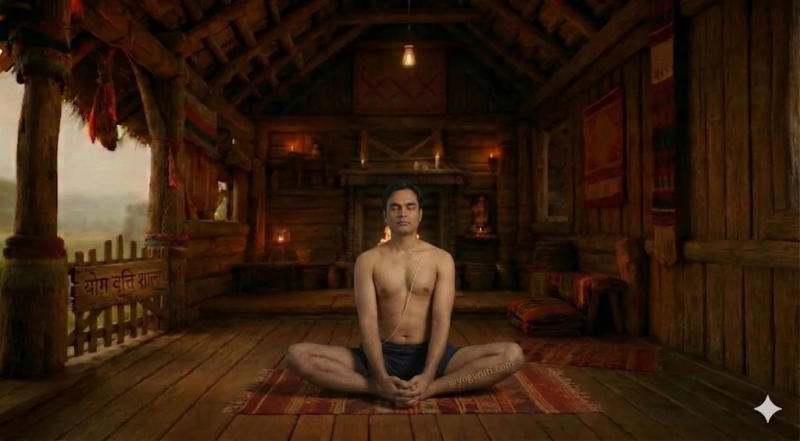
बद्ध कोणासन, बंधा कोण मुद्रा, एक बैठी हुई कूल्हे खोलने वाली मुद्रा है जहां पैरों के तलवे जुड़े होते हैं और श्रोणि की ओर खींचे जाते हैं।
स्तर शुरुआतीप्रकार बैठकरपक्ष दोनों ओर
अभ्यास की विधि
फर्श पर दंडासन में बैठें और अपने दोनों पैरों को सामने की ओर सीधा फैलाएं।
अपने घुटनों को मोड़ें, पैरों को धड़ के पास लाएं और तलवों और एड़ियों को आपस में मिला लें।
उंगलियों को आपस में फंसाकर पैरों के पंजों को पकड़ें और एड़ियों को कामेन्द्रिय (perineum) के पास खींचें।
दोनों पैरों के बाहरी हिस्सों को फर्श पर टिकाएं और घुटनों को नीचे लाने के लिए अपनी जांघों को फैलाएं।
अपनी रीढ़ को सीधा तानें, छाती को ऊपर उठाएं और कंधों को ढीला रखते हुए सीधे सामने की ओर देखें।
शिक्षण संकेत
यह कहें
- Sit on the front edge of your sitting bones
- Lengthen the spine upward on each inhalation
- Keep the chest lifted and shoulders relaxed
- Ground down through the sitting bones
- Maintain an elongated spine — avoid rounding the back
- Allow the hip joints to open gradually — never force
- Surrender the weight of the body to the props and the floor
इन पर ध्यान दें
- Rounding the lower back — sit on a folded blanket if needed
- Forcing the knees down — let gravity work naturally
- Collapsing the chest and slouching forward
- Tensing the neck and jaw
- Rushing into the pose without proper alignment first
- Forcing the hips open beyond their current range
- Holding tension — allow complete release in the supported position
शरीर पर प्रभाव
मांसपेशियाँ देखने के लिए किसी भाग पर टैप करें3D anatomy adapted from Z-Anatomy, CC BY-SA 4.0
Hips & glutes
BothBound Angle Pose both stretches and strengthens your hips and buttocks.
Muscles at work
- GemelliContracts
These muscles assist in externally rotating and stabilizing the hip, particularly in seated twists and standing poses like Warrior II.
Main action: Lateral rotation and abduction of the thigh at the hip joint
- Gluteus MaximusContractsStretches
Powers hip extension and external rotation in backbends and standing postures while supporting structural grounding.
Main action: extends and outwardly rotates the hip; assists to stabilize fully extended knee via the iliotibial band
- Obturator ExternusContractsStretches
The obturator externus actively stabilizes and laterally rotates the femur in standing external rotation poses and seated hip openers.
Main action: Lateral rotation of the thigh at the hip joint
- Obturator InternusContracts
Engages to externally rotate and stabilize the hip joint in poses like Baddha Konasana and Padmasana.
Main action: Lateral rotation of the hip (extended thigh), abduction of the hip (flexed thigh)
- PiriformisContractsStretches
Engages to stabilize the sacroiliac joint and control internal/external hip rotation in standing poses and hip openers like Pigeon Pose.
Main action: Lateral rotation, abduction, and stabilization of the thigh at the hip joint
- Quadratus FemorisContractsStretches
The quadratus femoris stabilizes and externally rotates the hip, maintaining alignment during standing poses and seated hip openers.
Main action: Lateral rotation and stabilization of the thigh at the hip joint
- Opens the hips and stretches the inner thighs
- Stimulates the abdominal organs and improves digestion
- Therapeutic for the urinary and reproductive systems
- Relieves mild depression and fatigue
- Improves circulation in the pelvic region
सावधानियाँ
Groin / Hip Flexor Strain
Excessive hip abduction or deep hip flexor lengthening can tear already-strained muscle fibres in the groin.
बदलाव · Support the outer knees with blocks; do not allow the thighs to splay to the point of stretching the groin aggressively.
Sciatica
Certain hip stretches and forward bends pull on the sciatic nerve, temporarily increasing radiating pain down the leg.
बदलाव · Sit on a folded blanket to tilt the pelvis forward; avoid rounding the lower back and do not pull aggressively on the foot.
Hip Injury
Deep hip flexion, external rotation, or weight-bearing can aggravate labral tears, impingement, or bursitis.
बदलाव · Sit on a folded blanket or bolster to reduce the depth of hip flexion and external rotation.
Knee Injury
बदलाव · Place blankets or blocks under the knees for support, keep feet further from the groin.
Groin Injury
बदलाव · Use support under knees, keep stretch very gentle, or avoid if acute.
Pregnancy
बदलाव · Sit on a bolster to elevate hips, lean back against a wall or props for support.
कक्षा में
 बद्ध कोणासनयह आसन


इन क्रमों में शामिल
त्वरित उत्तर
बद्ध कोणासन क्या है?
बद्ध कोणासन, बंधा कोण मुद्रा, एक बैठी हुई कूल्हे खोलने वाली मुद्रा है जहां पैरों के तलवे जुड़े होते हैं और श्रोणि की ओर खींचे जाते हैं।
बद्ध कोणासन कैसे करें?
फर्श पर दंडासन में बैठें और अपने दोनों पैरों को सामने की ओर सीधा फैलाएं। अपने घुटनों को मोड़ें, पैरों को धड़ के पास लाएं और तलवों और एड़ियों को आपस में मिला लें। उंगलियों को आपस में फंसाकर पैरों के पंजों को पकड़ें और एड़ियों को कामेन्द्रिय (perineum) के पास खींचें। दोनों पैरों के बाहरी हिस्सों को फर्श पर टिकाएं और घुटनों को नीचे लाने के लिए अपनी जांघों को फैलाएं।
क्या शुरुआती लोग बद्ध कोणासन कर सकते हैं?
हाँ, यह शुरुआती स्तर का आसन है।
- आसन प्रकार
- Hip Opener, Restorative
- मुख्य भाग
- Hips, Inner Thighs, Groin
- किसके लिए
- Beginners, Seniors, Prenatal, Postnatal, Kids, Desk Workers, Plus Size, Runners
- योग शैली
- Iyengar, Hatha, Yin, Restorative, Prenatal
- कब करें
- Warm Up, Cool Down, Restorative, Morning, Evening